Your evening can calm your mind or make stress stick around longer than it should. A few evening habits can support a better mood, less anxiety, and more restful sleep, even if your days feel packed.
You don’t need a perfect nighttime routine to feel better. A few simple habits, repeated most nights, can help your brain slow down and make sleep come easier. Small changes, like lowering stimulation, reflecting on the day, or setting a steady bedtime, can make a real difference.
If you want a deeper look at calmer night routines, this productive night routines for sleep guide fits well. The habits below are a simple place to start, especially if evenings often leave you wired instead of rested.
Why your evening routine affects your mental health
What you do at night does more than set up sleep. It affects how much stress you carry into tomorrow, how clear your thoughts feel, and how steady your emotions are when the day starts again.
A calm evening gives your brain a chance to slow down after constant input. A rushed or noisy one keeps your nervous system alert, which can make sleep lighter and mood swings worse the next day. If you want your nights to support your mind, a steady routine matters just as much as bedtime itself. Small habits like dimming lights, cutting screen time, and creating a repeatable wind-down can help. For more support with that, calming evening rhythms can make the shift feel easier.

How a calm night helps your brain reset
Your brain is always working, even after the day ends. A slower evening gives it room to recover, sort through the noise, and get ready for rest. That matters because poor sleep does not just make you tired, it also affects focus, patience, and emotional balance the next day.
Simple habits help create that reset. Reading, stretching, journaling, or sitting in low light tells your body it can stand down. Research on sleep timing and mood supports this idea, too, and Stanford’s findings on late bedtimes and mental health show that staying up late can raise mental strain for many adults.
A calm night is a signal, not just a routine. It tells your brain the workday is over.
Why stress feels louder at night
Evening can make worries seem bigger because the day gets quiet. Once the noise drops, your mind has more space to replay problems, unfinished tasks, and small regrets. That is why stress often feels sharper at night than it did earlier.
Structure helps break that loop. A predictable routine gives your brain something to follow instead of letting it spin. That might mean setting a cutoff for work, keeping your phone away, or following the same wind-down steps each night. Consistency lowers mental clutter, and that can help you fall asleep with less tension and wake up feeling more stable the next day.
Start with a screen cutoff that gives your mind a break
A screen cutoff before bed gives your brain room to slow down. Phones, TVs, and laptops keep feeding you light, alerts, and one more thing to look at. That constant pull can leave you alert when you want to feel sleepy.
A simple cutoff also makes your evening feel more intentional. If you want a helpful next step, how to fall asleep faster pairs well with this habit because it gives your mind a cleaner landing point.
Use a simple time limit that feels doable
Start with 30 minutes off screens, then stretch it to an hour if that feels good. A short cutoff is easier to keep, and consistency matters more than a perfect rule.
Try a nightly timer so you do not have to keep checking the clock. You can also charge your phone outside the bedroom, which removes the temptation to grab it after lights out. The National Sleep Foundation’s consensus statement on screen use and sleep health found that pre-bed screen habits can hurt sleep, especially when the content keeps your brain engaged.
If you can reach for your phone without thinking, the habit is still in charge.

Replace scrolling with a low-stress habit
When the cutoff starts, swap scrolling for something that lowers tension instead of raising it. Read a few pages, do light stretching, color, or get tomorrow ready with clothes, a water bottle, or a packed bag.
A few easy options work well:
- Reading: Choose something calm and familiar, not a page-turner that keeps you wired.
- Stretching: Keep it gentle and slow, especially if your body feels tight.
- Coloring: Repetitive, low-effort motion can help your mind settle.
- Preparing for tomorrow: Small tasks help clear mental clutter before bed.
The goal is not to fill every minute. It is to give your brain a softer landing, so sleep feels closer and your mind feels less crowded.
Use journaling to clear out racing thoughts
A notebook can do what your mind sometimes cannot at night. When thoughts keep looping, writing them down gives them a place to land, so they stop bouncing around in your head.
This works best when you keep it simple. You are not trying to write a polished entry. You are just giving worry, pressure, and loose ends somewhere to go before bed.

Try a short brain dump before bed
A short brain dump can make messy thoughts feel smaller. Write whatever is on your mind, even if it sounds scattered, repetitive, or blunt. Once it is on paper, it no longer has to float around while you are trying to sleep.
You can keep this to a few minutes and a single page. The point is to clear mental clutter, not solve every problem. Research on bedtime writing found that putting thoughts on paper can help people fall asleep faster, especially when they write about upcoming tasks rather than replaying the day bedtime writing study.
A simple format helps if your mind feels extra busy:
- Worries: Write the thing that keeps circling back.
- Tasks: List anything you need to remember tomorrow.
- Feelings: Name the emotion, even if it is just “stressed” or “off.”
If you want more structure, bedtime journal prompts can make the habit easier to start.
Ask yourself a few gentle questions
Gentle prompts help you reflect without turning the page into a full to-do list. They keep the focus on release, not pressure. That makes it easier to wind down instead of getting pulled into problem-solving mode.
Try questions like these:
- What went well today?
- What felt hard today?
- What needs my attention tomorrow?
- What can wait until morning?
- What am I carrying that I can set down for tonight?
You can answer in one sentence each. Even that small habit can stop the mental replay and help your evening feel more settled.
Add a calming reset for your body and nervous system
A calm evening does more than help you feel relaxed. It tells your body to slow its pace, lower its guard, and ease out of the day. That shift matters when stress shows up as tight shoulders, a busy mind, or a chest that feels a little too full.
Start small. One short practice is enough to help your nervous system settle, especially when you repeat it often. If you want a simple place to begin, deep breathing to calm the nervous system is one of the easiest habits to keep.
Try slow breathing for just a few minutes
Slow breathing can lower tension fast because it gives your body a clear signal to relax. A simple pattern works well: inhale through your nose for 4 counts, exhale for 6 counts, and keep going for 3 to 5 minutes. The longer exhale helps your body shift toward rest mode.
You do not need to force deep breaths. Instead, let the breath get smooth and steady. Recent research on slow breathing before bed found it can improve self-reported sleep quality and sleep time, especially when practiced regularly. You can read the study on slow breathing before bedtime if you want the details.

Use light stretching to release the day
Gentle stretching helps when your body feels stiff from work, driving, or too much sitting. Keep the movements slow and easy, then breathe through each one.
A few simple options work well:
- Neck rolls: Move slowly and stop if anything feels sharp.
- Shoulder circles: Roll them back and down to ease built-up tension.
- Seated forward fold: Let your back and hamstrings soften without forcing the stretch.
- Child’s pose or legs-up-the-wall: Both can help your body feel supported and calm.
Even a few minutes can make a difference. A recent review on stretching and sleep found that gentle stretch routines can support relaxation and sleep quality, especially when done consistently. If you want to pair movement with breath, evening stretching for tension release fits this habit well.
Pick one calming practice and repeat it nightly
Consistency does more for sleep than a long list of relaxation tricks. Choose one habit, then keep it simple enough that you can repeat it almost every night. That might be breathing, stretching, a short meditation, or sitting in silence with a cup of herbal tea.
The point is to train your body to recognize the pattern. When the same action shows up each night, it becomes a cue for rest. If you want more structure, calming bedtime rituals for rest can help you build a routine that feels steady, not stressful.
One small ritual, repeated often, works better than a perfect routine you never keep.
A few minutes is enough. Keep it gentle, keep it familiar, and let your body learn that the day is over.
Make your bedroom feel restful before sleep
Your bedroom should help your mind slow down, not keep it alert. When the room feels calm, your body gets clearer signals that sleep is near, and that can make it easier to fall asleep and stay asleep. It also helps the next morning feel less heavy, because a peaceful night often leads to a steadier mood.
The basics matter more than fancy sleep gear. Light, temperature, noise, and clutter all shape how relaxed you feel in bed. A good bedroom setup for restful sleep gives your brain fewer things to process, so bedtime feels less like a second shift and more like a real pause.
Lower the lights as part of your routine
Dim light tells your body the day is ending. As the room gets softer, your brain takes in less visual stimulation, and that helps your sleep drive build naturally.
Start lowering the lights an hour before bed if you can. Use a bedside lamp, warm bulbs, or one small light instead of bright overhead lighting. That simple change acts like a cue, almost like closing the curtain on the day.
Keep the room cool, quiet, and uncluttered

A simple room feels easier to rest in because it gives your mind less to track. Cooler air also helps your body drop into sleep mode, while a quiet space reduces the chance that small noises will pull you back to alertness. The Sleep Foundation notes that bedroom temperature, light, and noise all affect sleep quality and how you feel the next day, which is why a calm setup matters so much. See their bedroom environment guide for a clear breakdown.
If your room feels busy, clear it back a little. A tidy nightstand, closed drawers, and a fan or white noise machine can make the space feel settled instead of mentally crowded. If the room runs warm, cool bedroom temperature tips can help you adjust it.
Remove little distractions that wake your brain up
Small things can keep your mind active longer than you expect. Silence noisy alerts, move bright chargers out of sight, and clear extra clutter from the bed area so nothing feels unfinished.
A phone buzzing nearby, a glowing charger, or stacks of paper on the nightstand can all make your brain stay on guard. Keep the bedroom for sleep, and it becomes much easier for your body to settle into it.
Choose calming activities that help you unwind
A good evening habit should feel like a soft landing. The goal is to lower stress, not squeeze one more task out of your night, and the Sleep Foundation’s bedtime routine advice backs up that simple idea with calm, repeatable habits like reading, stretching, and a warm drink.
Pick activities that feel relaxing, not demanding
Choose something that helps your mind unclench. A few pages of a physical book, gentle coloring, a simple puzzle, or a cup of warm tea can work well because they are easy to start and easy to stop.
Keep the bar low. If an activity feels like work, it probably belongs earlier in the day. Your evening should feel more like dimming the lights than turning on another spotlight.

Match the activity to your energy level
Some nights call for something quiet and still. Other nights need a little movement to shake off the day.
- Tired nights: read, sip herbal tea, or listen to soft music.
- Restless nights: try gentle yoga, stretching, or slow breathing.
- Busy-mind nights: use coloring, a puzzle, or a short journaling session.
The best choice is the one you actually enjoy and can repeat. A routine only helps if it feels realistic on a Wednesday night when you are already worn out. Keep it simple, keep it soothing, and let the habit do the heavy lifting.
Use a few simple habits to support better sleep and mood
A steady evening routine can calm both your body and your mind. When you repeat a few small cues each night, your brain starts to expect rest, not more stimulation. That makes it easier to fall asleep, and better sleep often means less stress, steadier moods, and less next-day fog.

Keep your bedtime and wake time steady
Going to bed and waking up at about the same time helps your body clock stay on track. That rhythm matters because irregular sleep timing can leave you groggy in the morning and more irritable by afternoon. The CDC notes that regular sleep habits support better sleep quality and mood, and research on sleep regularity points to the same pattern.
Even on weekends, a consistent schedule helps your body know when to wind down and when to rise. You do not need a perfect schedule, just one that stays close enough to feel familiar.
Use warm water or herbal tea as a nighttime cue
A warm bath, shower, or cup of herbal tea can act like a small signal that the day is ending. These rituals do more than feel nice, they tell your body to slow its pace and move toward rest.
Warm water helps create a clear break between day mode and sleep mode. A non-caffeinated tea can do the same, especially when you pair it with low lights and a quiet room. If you want a simple cue, keep it repeatable and calm.
Aim for a routine you can actually stick with
A short routine you repeat most nights works better than a long one you only do sometimes. Choose a few steps in the same order, such as shower, tea, brush teeth, then bed. That consistency makes the habit easier to keep and easier for your brain to recognize.
Start small, then build only if the routine still feels easy. A plan you can follow on tired nights is the one that helps most.
Conclusion
Evening habits do not have to be complicated to support better mental health. A calmer screen routine, a few minutes of journaling, slower breathing, or a more restful bedroom can ease stress and help your mind settle before sleep.
The biggest takeaway is simple, small actions work best when they happen often. When you repeat the same cues each night, your brain starts to expect rest, and that can lead to better sleep, less tension, and a steadier mood the next day.
You do not need to change everything at once. Choose just one or two habits to start with tonight, then keep them easy enough to repeat.
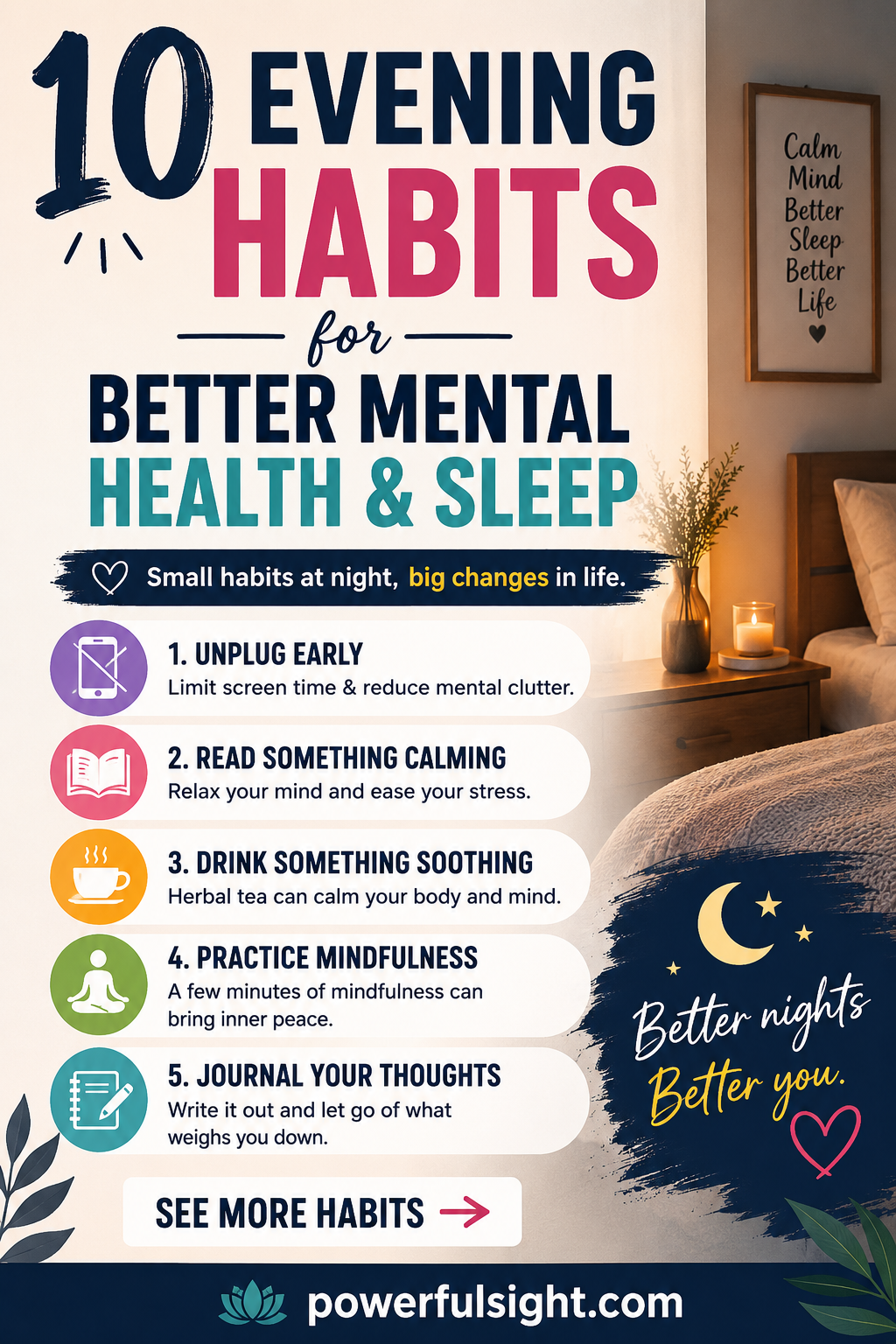
Save pin for later

- 60 Color Tattoos That Healed Beautifully - 25/09/2026
- 40 Most Painful Tattoo Spots - 24/09/2026
- 20 Tattoo Aftercare Mistakes That Ruin Fresh Ink - 23/09/2026

