A Thanksgiving table feels complete when warm rolls meet the savory aroma of stuffing, jewel-toned cranberries brighten the plates, and colorful vegetables bring freshness beside every comfort-food favorite.
The best Thanksgiving side dishes balance familiar flavors with creamy textures, crisp toppings, bright accents, and make-ahead convenience, so you can enjoy your guests instead of rushing between the oven and the table.
This post includes classic potatoes and stuffing, cozy casseroles, roasted vegetables, cranberry sides, homemade breads, lighter salads, and dietary-friendly options for vegetarian, vegan, and gluten-free guests.
You’ll find dependable recipes for a traditional spread, along with modern ideas such as grain salads, globally inspired sweet potatoes, and vegetable-forward dishes. For more help planning food that keeps hosting manageable, these make-ahead menu ideas for entertaining can help you organize the meal. Start with the comforting potato dishes everyone reaches for first.
Best Thanksgiving Side Dishes for a Classic Holiday Table
A classic Thanksgiving table feels generous without becoming repetitive. The strongest menus combine creamy, savory, sweet, bright, and crisp elements, so each bite adds something different. These six anchor dishes create a familiar spread that appeals to children, grandparents, and guests with varied tastes.
Creamy Mashed Potatoes and Rich Potato Bakes
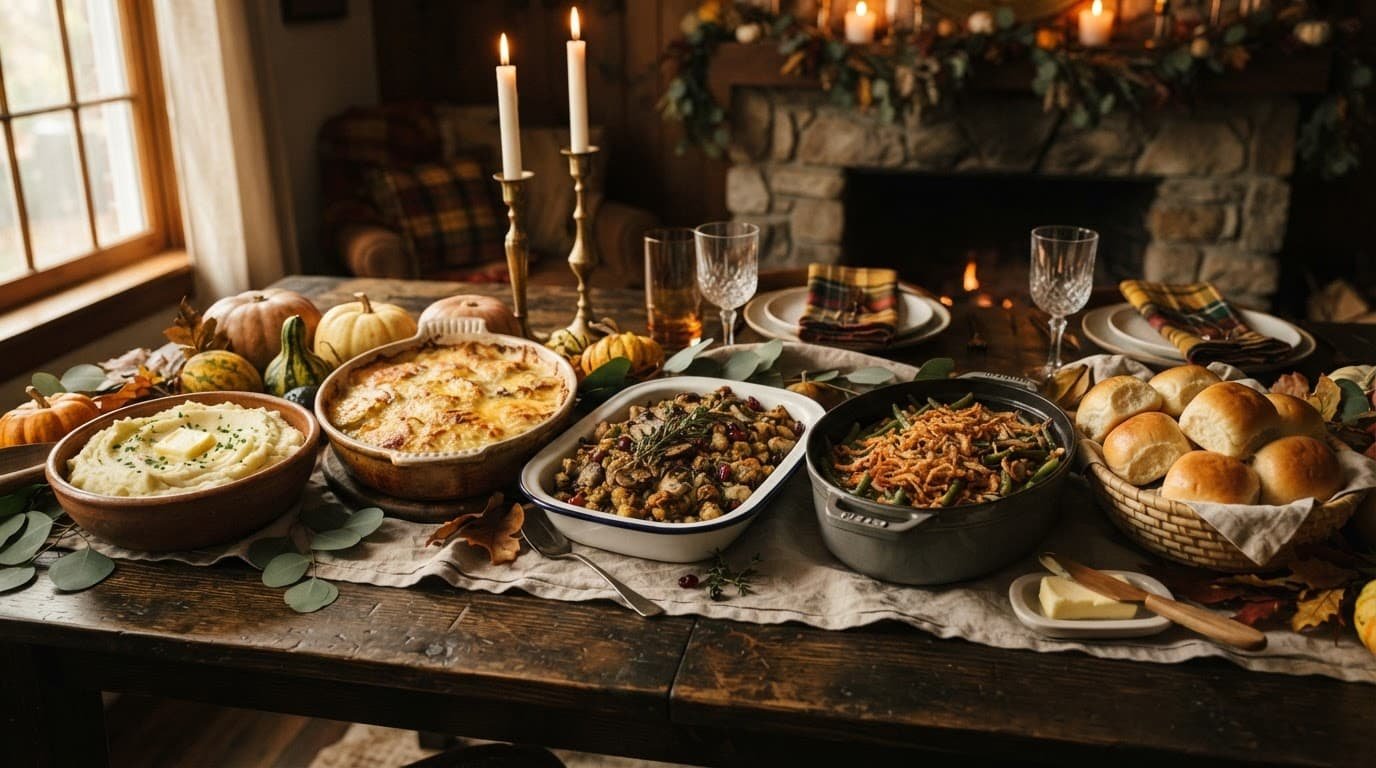
Mashed potatoes bring buttery comfort and a smooth texture that pairs with turkey and gravy. Butter adds richness, while cream makes the potatoes soft and luxurious. Sour cream contributes a gentle tang and helps prevent the dish from tasting flat.
For more flavor, fold in roasted garlic, fresh herbs, or grated Parmesan. Roasted garlic tastes mellow and sweet, while Parmesan adds salty depth. A cheesy potato casserole can use Gruyere for a nutty, bubbling finish, and potato gratin layers thin slices with cream, herbs, and browned cheese. Hasselback-style potatoes offer a different texture, with crisp edges and tender centers that catch butter in every slit.
Avoid overmixing mashed potatoes, since too much stirring releases starch and creates a gluey texture. Keep them warm in a covered dish over low heat or in a slow cooker, adding a little warm cream if they begin to dry out. Mashed potatoes are also one of the easiest Thanksgiving sides to prepare ahead. Reheat them in a covered dish at 350°F until hot, checking that the center reaches 165°F.
Stuffing, Dressing, and Savory Bread-Based Favorites
Stuffing is cooked inside poultry, while dressing is baked separately in a casserole. Both can use the same flavor base: slightly stale bread, sautéed onions and celery, fragrant herbs, and flavorful stock. Stale bread absorbs the liquid without collapsing, which helps create a moist center and crisp top.
Traditional herb stuffing keeps the flavor familiar, while sausage and sage dressing adds savory richness. Cornbread dressing brings a lightly sweet, tender crumb, and mushroom stuffing gives the table an earthy vegetarian option. Slow-cooker stuffing frees oven space, although a short finish in the oven can add better color to the top.
For easier timing and a crisper surface, bake dressing separately. If stuffing cooks inside poultry, the center must reach 165°F. The USDA’s stuffing safety guidance recommends cooking it outside the bird for better control.
Green Bean Casserole and Other Comforting Casseroles
Green bean casserole adds color and a creamy vegetable bite to the holiday plate. Upgrade the standard version with homemade mushroom sauce, fresh blanched green beans, toasted breadcrumbs, or fried onions added near the end.
Blanch fresh beans for about four minutes, then combine them with the sauce and bake at 375°F for roughly 20 minutes. Add the crispy topping and bake for about eight minutes longer. This timing keeps the onions and breadcrumbs crunchy instead of soggy.
Broccoli casserole, spinach gratin, mushroom casserole, and cheesy vegetable bakes offer similar comfort with different flavors. Choose one or two, rather than filling the table with heavy dishes. Crispy toppings belong near serving time, while the creamy vegetable base can often be prepared earlier.
Potato, Stuffing, and Casserole Alternatives for Different Tastes
A balanced Thanksgiving menu gives guests more than one way to enjoy familiar ingredients. Pair rich comfort foods with roasted vegetables, tart cranberry sides, and fresh herbs so the plate feels generous without becoming too heavy.
Sweet Potato Casserole, Gratin, and Savory Variations
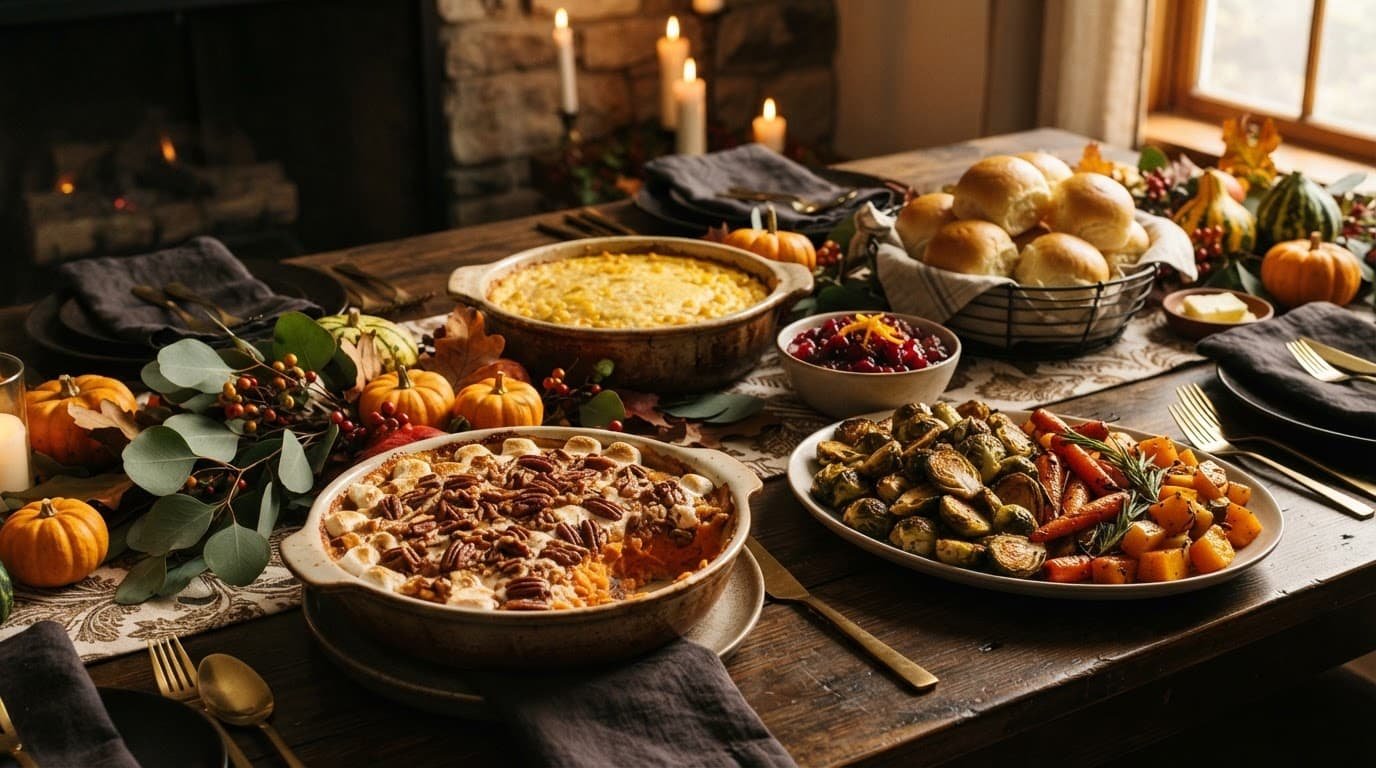
Sweet potato casserole suits guests who enjoy a sweet holiday side. A brown sugar and butter base, toasted pecans, and a layer of marshmallows create a soft, dessert-like dish with a golden topping. You can find more inspiration among these Thanksgiving side dish ideas.
For a less sweet option, layer thinly sliced sweet potatoes with cream, thyme, garlic, and Parmesan. This gratin tastes savory and rich, with browned edges that pair well with turkey and gravy. Maple syrup, brown sugar, cinnamon, and nutmeg push the casserole toward sweetness, while chipotle, rosemary, sage, or fresh thyme create a more savory flavor.
Sweet potato gratin also works well as a make-ahead side. Bake it covered at 375°F for about 45 minutes, then remove the cover and continue baking for 25 to 35 minutes. Let it rest for 15 minutes before serving, so the cream settles and the slices hold together.
If you need a nut-free topping, replace pecans with seasoned oats, pumpkin seeds, sunflower seeds, or breadcrumbs. A crisp topping gives the dish contrast without changing its main flavor.
Roasted Brussels Sprouts, Carrots, and Squash
Hot-oven vegetables develop browned edges and natural sweetness, which makes them a welcome change beside creamy casseroles. Roast Brussels sprouts with bacon, balsamic glaze, honey, or Dijon. Maple-Dijon carrots add gentle sweetness with a sharp finish, while butternut squash tastes warm and earthy with sage butter.
Acorn squash, parsnips, and celery root also bring variety to the table. Roast the first two for caramelized edges, or turn celery root into a smooth mash when you want a potato alternative.
Cut vegetables into even pieces so they finish at the same time. Dry them well, leave space between pieces, and place cut sides down on the pan. Crowded, damp vegetables steam instead of browning.
At 425°F, carrots usually need 25 to 32 minutes, while Brussels sprouts take about 25 to 30 minutes. Check early if the pieces are small, especially when your oven is already full.
Cranberry Sauce, Corn Sides, and Homemade Rolls
Bright cranberry dishes keep a rich Thanksgiving plate from feeling weighed down. Whole-berry cranberry sauce offers tart pops of flavor, while cranberry-apple relish tastes fresher and more textured. Orange zest, ginger, maple syrup, rosemary, and toasted spices can shift the flavor without adding much work.
Cranberry sauce is easy to prepare early and can be served chilled or at room temperature. That flexibility makes it especially useful when oven space is limited. For more make-ahead planning ideas, these weekly meal prep strategies can help organize the cooking schedule.
Choose between creamed corn, corn casserole, cornbread, biscuits, and soft dinner rolls based on the rest of your menu. When several starchy dishes are already planned, select one corn side and one bread side. That leaves room for vegetables and gives every dish a clear place on the plate.
Fresh and Lighter Thanksgiving Side Dishes That Balance the Meal
A Thanksgiving menu doesn’t need to be made entirely of rich baked sides. Fresh salads and quick vegetable dishes add color, crunch, acidity, and relief beside turkey, gravy, mashed potatoes, stuffing, and casseroles.
Crisp Salads With Apples, Citrus, Herbs, and Cranberries
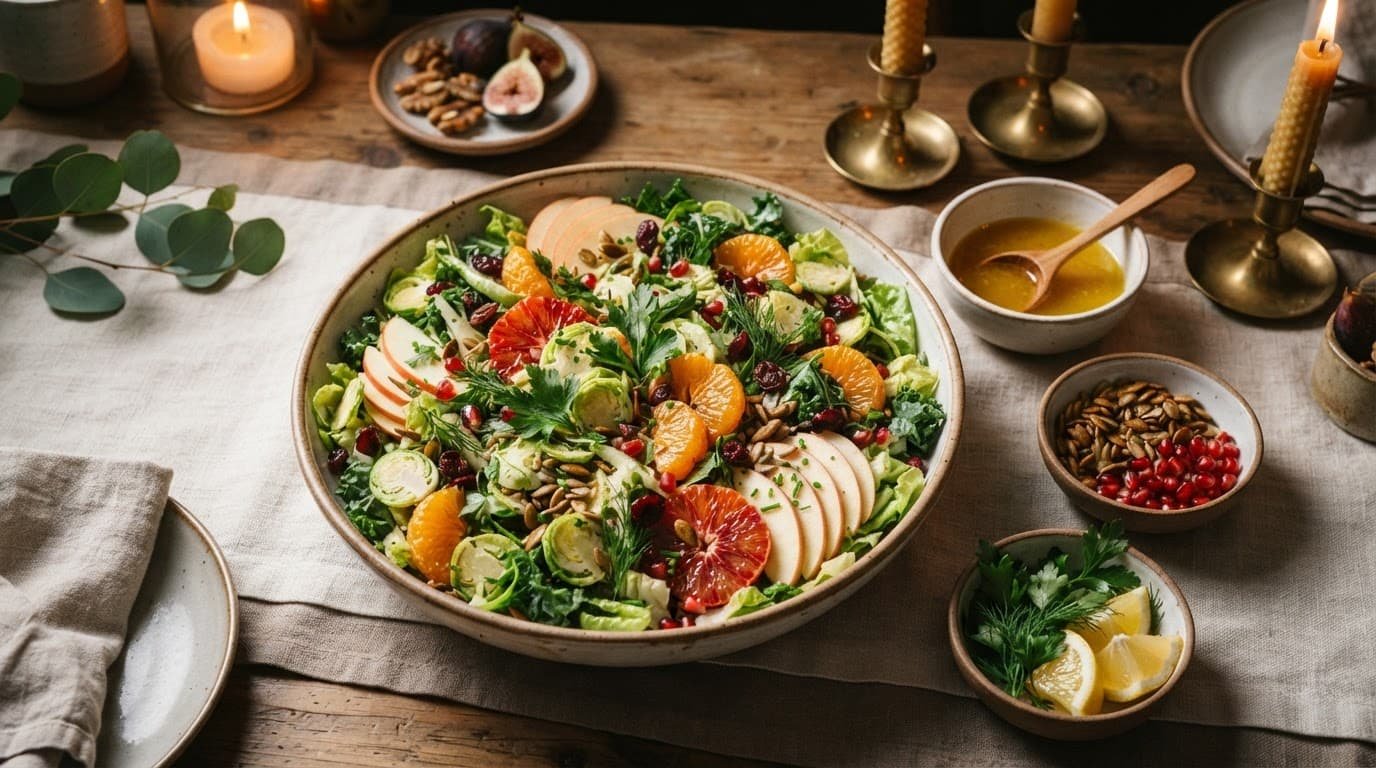
A crisp salad gives each bite a clean, tart finish after creamy or buttery foods. Choose sturdy greens such as kale, shredded cabbage, shaved Brussels sprouts, or romaine because they hold their texture through a long holiday meal.
Try shaved Brussels sprouts with thin apples, dried cranberries, toasted pumpkin seeds, and parsley. Kale and orzo make a heartier combination with lemon dressing, feta, and cranberries. For a jewel-toned salad, pair roasted beets with oranges, arugula, herbs, and a few pomegranate seeds. Apples with toasted seeds, citrus with fennel, and cranberries with walnuts also create appealing sweet-and-sharp contrasts.
If you need a nut-free salad, replace walnuts or pecans with pumpkin seeds, sunflower seeds, crispy chickpeas, or seasoned breadcrumbs. These additions still bring the crunch that makes a salad satisfying. You can also find more ideas in these healthy salads with vegetables and grains.
A simple dressing can pull the ingredients together without weighing them down. Whisk lemon juice or apple cider vinegar with Dijon mustard, olive oil, and a small amount of maple syrup or honey. Add black pepper, minced garlic, or fresh thyme for extra character.
Prepare sturdy ingredients and dressing several hours ahead, then refrigerate them separately. Keep delicate greens, avocado, toasted toppings, and dressing apart until shortly before serving. The USDA’s safe Thanksgiving guide also recommends keeping ready-to-eat produce separate from raw poultry during preparation.
Simple Vegetable Sides for a Colorful, Less Heavy Menu
Quick vegetable sides can bring brightness without taking over the oven. Green beans tossed with lemon, olive oil, and toasted almonds take only a few minutes, while roasted broccoli develops crisp edges with garlic, lemon zest, and red pepper flakes.
Glazed carrots need little more than butter, honey or maple syrup, and a splash of apple cider vinegar. Sautéed spinach cooks quickly with garlic, and honey-roasted squash gains balance from fresh sage or a squeeze of lemon. Herb-butter vegetables are easy, too, especially when you finish them with parsley, chives, or thyme.
Avoid bland vegetables by adding at least one sharp or aromatic element. Lemon juice, vinegar, fresh herbs, toasted spices, garlic, and a small amount of Parmesan or feta can give a simple side a fuller flavor.
When mashed potatoes, stuffing, and several casseroles already fill the menu, choose two lighter vegetable dishes instead of adding more rich sides. Prep the vegetables early, but roast or sauté them close to dinner so they keep their color, warmth, and bite.
How to Choose the Right Thanksgiving Side Dish Combination
A good Thanksgiving menu needs a simple structure. Choose one dish from each major category, then adjust based on your guest list, kitchen space, and family favorites. This approach keeps the table varied without turning dinner into a crowded collection of casseroles.
Build a Menu Around Flavor, Texture, and Color
Start with creamy mashed potatoes and one stuffing or dressing with a crisp golden top. Add green beans or Brussels sprouts for freshness, sweet potatoes or roasted squash for gentle sweetness, and cranberry sauce for a bright, tangy bite. A fresh salad and soft dinner rolls can complete the spread when you have enough room and guests enjoy them.
This combination works because every dish brings something different. Mashed potatoes carry gravy beautifully, while crisp-topped stuffing adds chew and savory herbs. Green vegetables cut through rich flavors, and orange squash or sweet potatoes warm the plate with color. Cranberries act like a sharp punctuation mark, while salad contributes crunch and a cool finish.
Avoid serving several soft, beige dishes together. Mashed potatoes, creamy corn, macaroni and cheese, and multiple bread-based casseroles may all taste good, but the plate can feel heavy and look dull. Instead, add green beans, ruby cranberries, orange squash, purple cabbage, roasted beets, or a salad with colorful fruit.
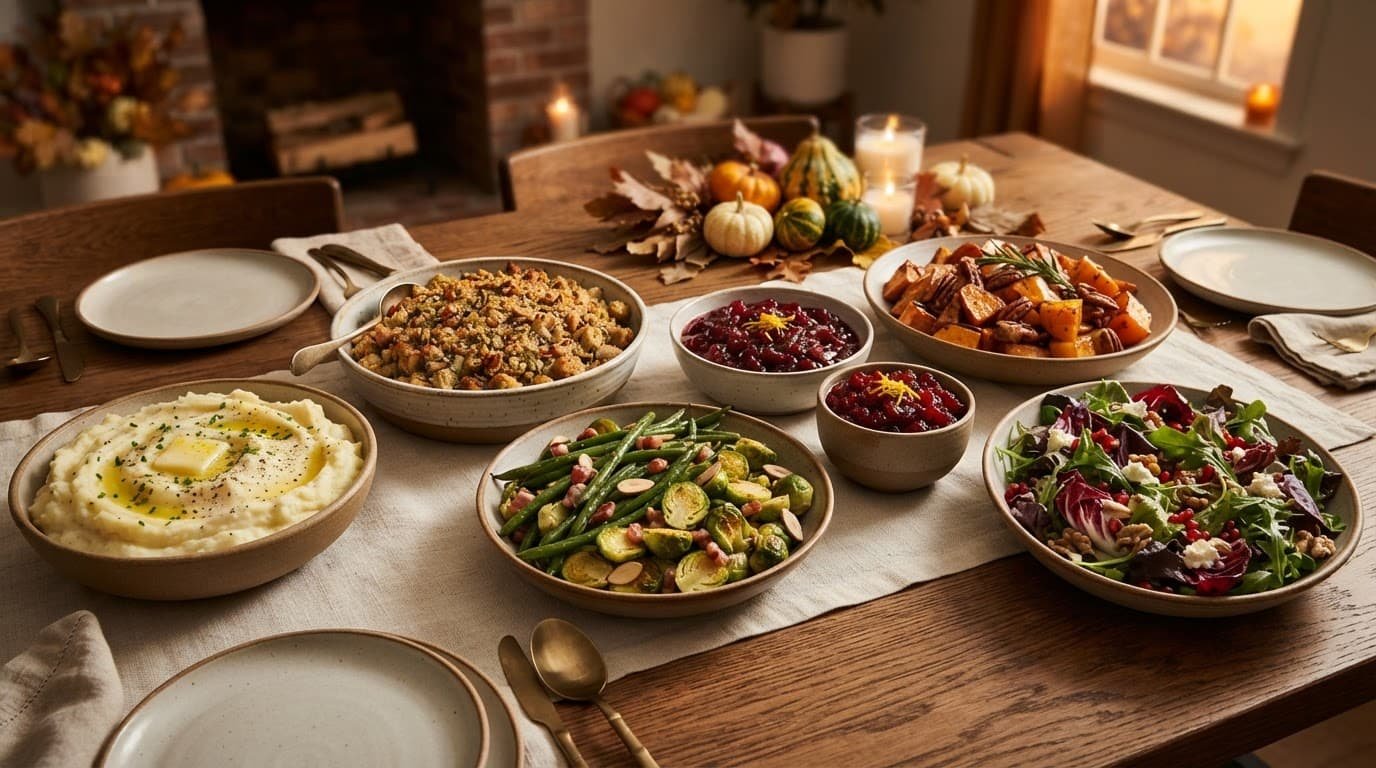
You can swap dishes without losing balance. Replace mashed potatoes with a potato gratin, but keep a green vegetable nearby. Trade sweet potato casserole for maple-roasted carrots, then retain cranberry sauce or a citrusy salad for acidity. If you choose a rich stuffing with sausage, select lighter vegetables and skip another meat-filled casserole.
For a smaller dining area, serving food buffet-style can keep plates and serving bowls from crowding the table. These Thanksgiving buffet-style serving ideas can help you organize the space while leaving room for conversation.
Plan Portions, Serving Dishes, and Kitchen Equipment
For several side choices, allow roughly 1/2 to 3/4 cup of sides per guest, then prepare more of the dishes your family reaches for first. A small gathering may need three or four sides, a medium group often works well with five or six, and a large crowd can support additional choices if you have enough help, serving space, and storage.
Leftovers are useful, but too many similar casseroles can overwhelm the meal and crowd the oven. Before choosing recipes, check which dishes need baking, their temperatures, and how long each one takes. Label serving dishes in advance, especially when several recipes look alike.
Useful equipment includes:
- A 9-by-13-inch baking dish for stuffing, casseroles, or sweet potatoes.
- Sheet pans for roasted vegetables and squash.
- A slow cooker for mashed potatoes, stuffing, or another warm side.
- A muffin tin for individual potato stacks.
- A large skillet for green beans, spinach, or sautéed vegetables.
- Insulated serving bowls that keep food warm without taking oven space.
One slow-cooker side or a room-temperature salad can relieve pressure when the turkey and casseroles compete for oven time. After dinner, refrigerate perishable leftovers within two hours, preferably in small, shallow containers, as USDA leftover safety guidance recommends.
Make-Ahead Thanksgiving Side Dishes and a Stress-Free Cooking Timeline
A calm Thanksgiving kitchen starts before the holiday. Prepare foods that improve with rest early, protect crisp textures until the last moment, and reserve oven space for dishes that truly need fresh heat.
What to Prepare Several Days Before Thanksgiving
Three days before dinner, make cranberry sauce, cranberry relish, and sturdy salad dressings. Cranberry sauce often tastes better after the flavors have time to blend, and it can wait in the refrigerator until the meal. Homemade stock can also be prepared early for stuffing, gravy, or casseroles.
Bake bread components, such as cornbread for dressing or rolls that freeze well, up to three days ahead. Store bread in an airtight container once completely cool. For salads, wash and dry sturdy greens, toast seeds, and prepare fruit separately. Keep delicate greens, crunchy toppings, and dressing apart so nothing turns limp.
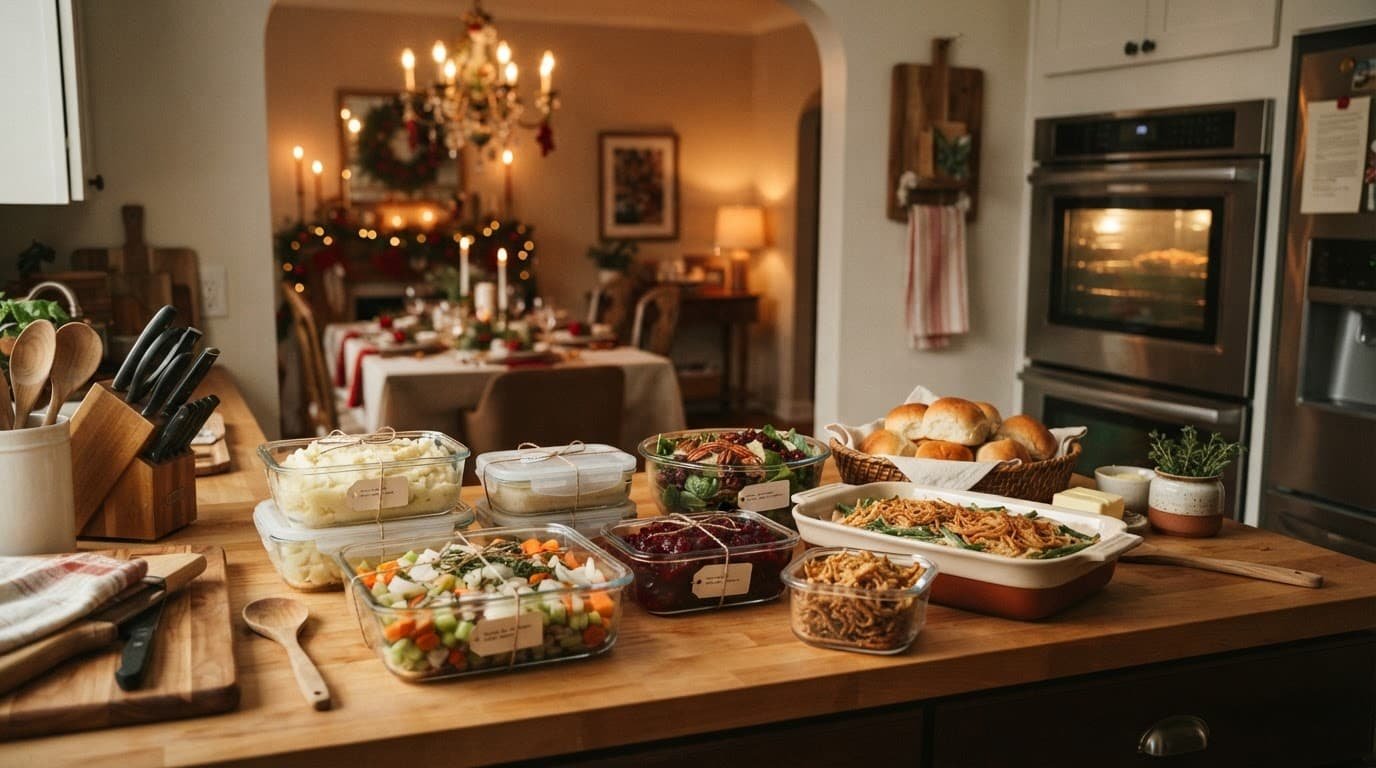
One day before Thanksgiving, assemble casseroles and cover them tightly. Chop onions, celery, carrots, Brussels sprouts, squash, and other vegetables, then refrigerate them in separate containers. Prepare stuffing ingredients, but store the bread, vegetables, herbs, and stock separately if you want the best texture.
Mashed potatoes can also be cooked the day before. Cool them promptly, refrigerate them covered, and plan to reheat them gently with warm cream or butter. Measure seasonings into small containers, label each dish, and write simple instructions such as “cover, bake at 350°F, add topping near the end.”
Cool cooked food in small, shallow containers rather than one deep pan. Refrigerate perishable foods within two hours, and follow USDA leftover safety guidance for covered storage and quicker cooling.
What to Finish on Thanksgiving Day
In the morning, assemble the stuffing, set casseroles on a schedule, and move cranberry sauce from the refrigerator if you plan to serve it chilled or at room temperature. Toss sturdy salad ingredients together, but wait to add dressing. Prepare rolls on their baking sheet so they can go straight into the oven later.
During the afternoon, reheat mashed potatoes and casseroles covered at 350°F to 375°F. Keep crispy onions, breadcrumbs, nuts, and fried toppings separate until the final baking minutes. If a dish contains cooked eggs, dairy, meat, or poultry, check the center with a food thermometer and reheat it to 165°F.
A simple oven plan might look like this:
- Start covered casseroles and mashed potatoes while the turkey rests.
- Add stuffing or another baked side when space opens.
- Remove covers near the end so the surfaces brown.
- Roast vegetables close to dinner, then warm rolls during the final minutes.
- Let gratins and baked casseroles rest for 10 to 15 minutes before serving.
Roasted vegetables taste best soon after cooking, while cranberry sauce and sturdy salads can wait. During the final 30 to 60 minutes, finish the vegetables, warm rolls, dress the salad, and add every crisp topping. That order protects contrast, so creamy centers stay soft and golden surfaces stay crunchy.
Slow Cooker, Air Fryer, and No-Oven Strategies
Use a slow cooker for mashed potatoes, stuffing, or the creamy base of green bean casserole. Add fried onions, toasted breadcrumbs, or another crisp topping after transferring the dish to the oven or broiler for a short finish.
An air fryer can handle Brussels sprouts, green beans, and small portions of potatoes while the main oven stays busy. Cook in batches, leave space around the food, and serve each batch promptly so the edges remain crisp.
Room-temperature salads, cranberry relish, and stovetop creamed corn need no oven at all. These flexible sides fill the table while casseroles reheat, vegetables roast, and rolls warm.
Thanksgiving Side Dishes for Vegetarian, Vegan, Gluten-Free, and Dairy-Free Guests
Inclusive Thanksgiving side dishes can fit naturally beside traditional favorites. A few smart ingredient swaps keep mashed potatoes creamy, dressing savory, and casseroles satisfying without forcing guests to eat a separate meal. Start with recipes that are already vegetable-based, then adjust the ingredients that commonly contain dairy, wheat, or nuts.
Easy Vegetarian and Vegan Swaps That Keep the Flavor
Mushrooms, caramelized onions, roasted garlic, and fresh herbs add savory depth without meat or dairy. Miso brings a salty, fermented flavor to vegetable sauces, while vegetable stock gives dressing, gravy, and casseroles a flavorful base. Roasted squash, carrots, green beans, potatoes, and sautéed greens are naturally adaptable, so you can serve them to nearly everyone at the table.
For vegan mashed potatoes, replace butter and cream with olive oil, plant-based butter, or unsweetened non-dairy milk. Roasted garlic adds sweetness and body, while chives, parsley, rosemary, or thyme keep the flavor fresh. Add the milk slowly, since different potato varieties absorb liquid at different rates.
Mushroom and herb dressing is another easy swap. Use gluten-free bread when needed, sauté mushrooms with onions and celery, then moisten the mixture with vegetable stock. Sage, thyme, black pepper, and roasted garlic create a familiar Thanksgiving flavor without sausage or butter.
You can also make green bean casserole without canned cream soup. Prepare a homemade mushroom sauce with olive oil, mushrooms, garlic, vegetable stock, and unsweetened non-dairy milk. Thicken it with cornstarch, then finish the casserole with gluten-free crispy onions or seasoned breadcrumbs.
Taste as you cook rather than relying only on butter or cheese for richness. A pinch of salt, a splash of lemon juice or vinegar, extra herbs, or a spoonful of miso can bring a flat dish into focus. For more dairy-free meal inspiration, try this dairy-free creamy white bean soup.
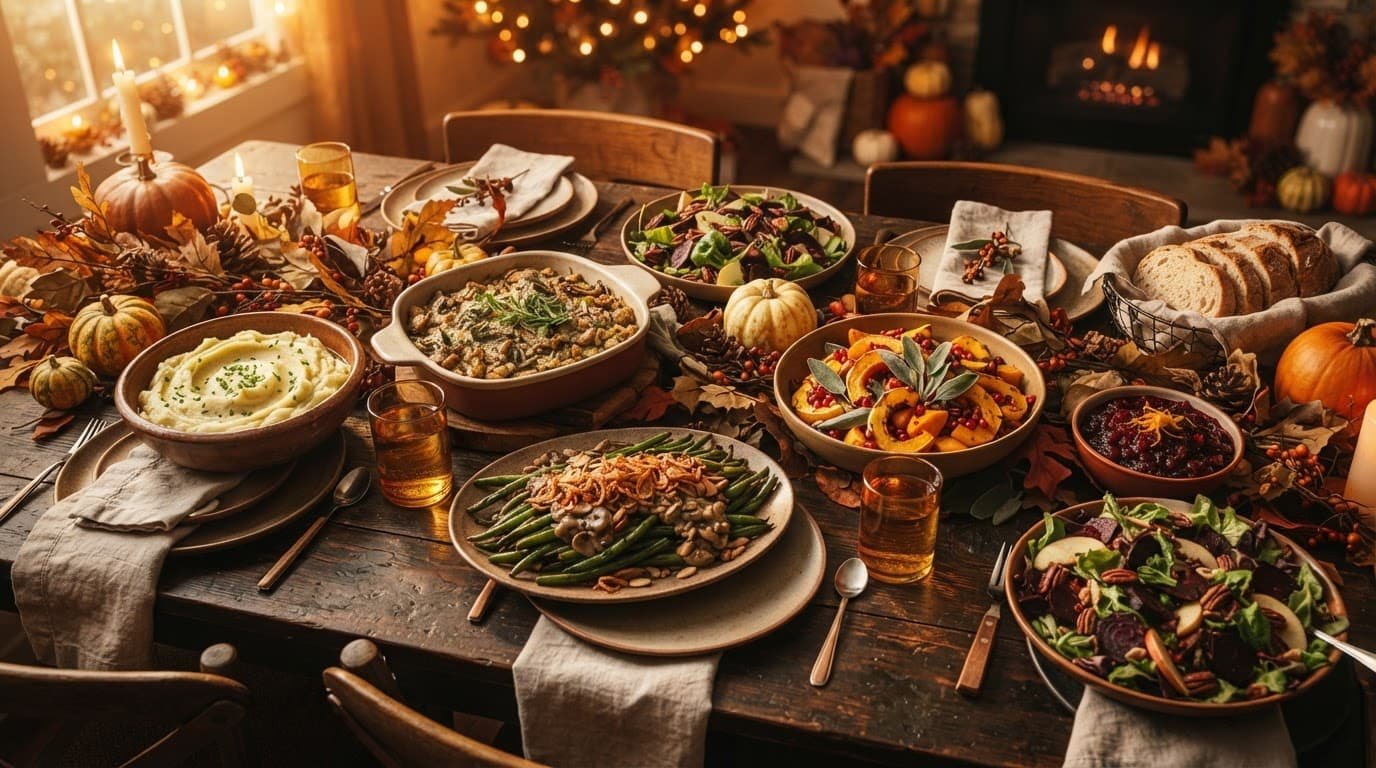
Gluten-Free and Nut-Free Substitutions to Know
Gluten often hides in Thanksgiving dishes that seem vegetable-based. Check bread, flour-thickened sauces, fried onions, crackers, breadcrumbs, stuffing mixes, gravy, casseroles, and packaged stock before adding them to a recipe. Use gluten-free cornbread or bread for dressing, cornstarch for sauces, and certified gluten-free breadcrumbs for crisp toppings.
For nut-free guests, replace pecans and walnuts with pumpkin seeds, sunflower seeds, toasted oats, fresh herbs, or gluten-free breadcrumbs. These options still add crunch to sweet potato casserole, salads, and roasted vegetables.
Read every package, including vegetable stock, plant-based butter, dairy-free cheese, crispy onions, and non-dairy milk. The FDA’s gluten-free labeling guidance explains how manufacturers use the voluntary “gluten-free” claim, while the Celiac Disease Foundation offers practical FDA label-reading guidance.
If a restriction is medically necessary, labels are only one part of the process. Use clean utensils, freshly washed pans, and separate cutting boards when possible. Keep gluten-free dressing and toppings away from regular bread, and don’t serve every dish with the same spoon. Ask guests about their needs before cooking, then protect their portion from shared surfaces and serving utensils.
Modern Thanksgiving Side Dish Twists That Still Feel Traditional
Modern Thanksgiving side dishes work best when they add a fresh note without making the table feel unfamiliar. Keep several recognizable favorites, then introduce one or two thoughtful changes through seasonal herbs, toasted spices, bright citrus, or a crisp topping.
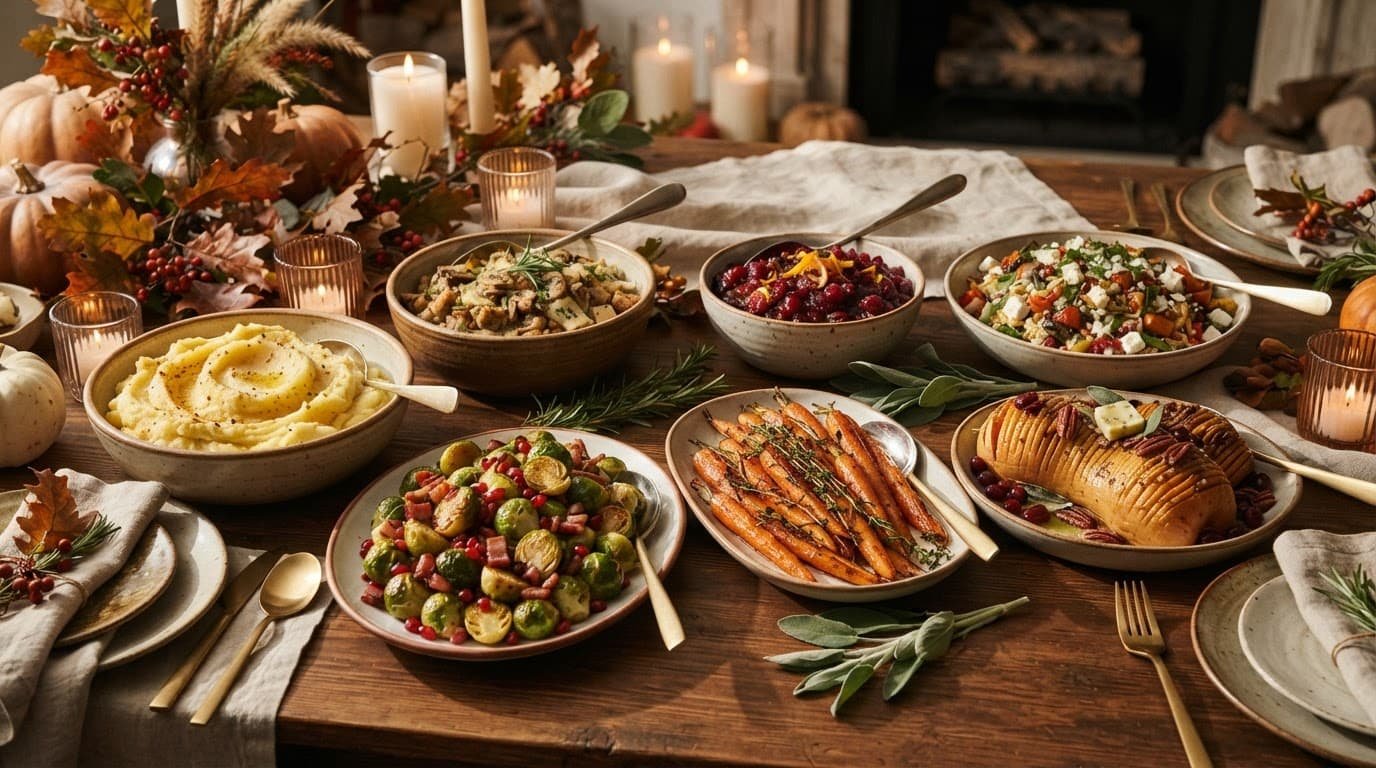
Upgrade Familiar Classics Without Losing Their Comfort
Small adjustments can make traditional recipes taste more complete. Stir roasted garlic into mashed potatoes for mellow sweetness, or finish them with browned butter and chopped sage. Fresh green beans bring better color and texture to a casserole, especially when paired with a homemade mushroom sauce instead of canned soup.
Stuffing needs only a few well-chosen additions. Sage and browned butter deepen the bread’s savory flavor, while caramelized onions create sweetness without competing with the herbs. A mushroom and Gruyere dressing gives the casserole an earthy, nutty finish that still feels right beside turkey and gravy.
Cranberry sauce also welcomes a simple update. Add orange zest, diced apple, or a splash of citrus juice to create a brighter cranberry relish. The fruit remains tart and familiar, but each bite feels fresher. For vegetables, a Parmesan breadcrumb topping adds saltiness and crunch to roasted broccoli, green beans, or squash.
The best Thanksgiving upgrades support the main ingredients. If you add garlic, cheese, herbs, or spice, make sure the original flavor still leads.
Homemade versions of canned or boxed classics often provide the biggest improvement. Fresh green beans, sautéed mushrooms, toasted breadcrumbs, and fried onions can transform green bean casserole without changing its basic identity. A boxed stuffing mix can also taste more personal with celery, sage, stock, browned butter, and caramelized onions.
Add Global Flavors With Care
A globally inspired side can bring excitement while the rest of the menu stays classic. Harissa-roasted carrots add gentle heat and smoky pepper flavor, while maple-Dijon carrots offer a milder sweet-and-tangy option. Honey-balsamic Brussels sprouts balance caramelized edges with acidity, and chili-lime Brussels sprouts bring a sharper finish.
For squash, try a miso glaze or Hasselback butternut squash with sage butter. Thin slices allow the edges to brown while the center stays tender. Za’atar green beans add herbal, toasted flavor, and coconut creamed corn gives a familiar holiday dish a smooth tropical accent. Pimento cheese spread can also become a warm side with roasted potatoes, biscuits, or baked vegetables.
Orzo salad with herbs, citrus, cranberries, and toasted seeds offers a lighter option beside creamy casseroles. Meanwhile, cranberry relish with orange and apple ties modern flavors back to the classic holiday table.
Describe spice levels clearly when serving mixed-age groups. Label a dish as mild, medium, or spicy, and offer a plain portion before adding harissa or chili. A little Dijon, bacon, Parmesan, toasted cumin, rosemary, thyme, or citrus can provide plenty of character without overwhelming younger guests or cautious eaters.
Choose one or two modern dishes, then let mashed potatoes, stuffing, rolls, and cranberry sauce anchor the meal. Presentation can change, too. Serve vegetables on a wide platter, sprinkle fresh herbs over casseroles, and place sauces in small bowls so the table looks inviting without losing its cozy spirit.
Conclusion
The best Thanksgiving side dishes bring balance to the plate and ease to the kitchen. Mashed potatoes and stuffing provide classic comfort, while roasted Brussels sprouts or squash add color and a satisfying vegetable upgrade. Cranberry sauce and crisp salad bring the bright, tangy flavors that keep rich dishes from feeling too heavy.
Casseroles are dependable choices when you’re feeding a crowd, and make-ahead sides give you more time to welcome guests instead of managing every burner and oven rack. Choose a manageable mix based on your menu, space, and guest list rather than preparing every recipe that sounds good.
A thoughtful spread doesn’t need to fill every inch of the table. It needs to offer something familiar, something fresh, and enough variety for everyone to build a plate they enjoy. When good food leaves room for conversation, shared laughter, and lasting memories, your Thanksgiving meal has done its job.
Save the pin for later

- 25 Gothic Tattoo Ideas for a Bold, Dark Look - 21/09/2026
- 34 Black Fine Line Tattoo Ideas for a Delicate Look - 21/09/2026
- 23 Micro Tattoo Ideas for Women With Meaning - 21/09/2026

