The sternum is a natural canvas for centered body art, with its clean lines and gentle curves giving every design a balanced, eye-catching shape. A sternum tattoo can feel delicate or bold, intimate or expressive, and you can easily keep it hidden beneath clothing when you want privacy. If you’re drawn to meaningful body art, these symbolic tattoo designs for women may help you find a concept that feels personal.
Still, this placement needs thoughtful planning. The skin over the breastbone and ribs can make tattooing more painful, while bras, underwire, seams, and tight tops may cause friction during healing, so loose clothing and careful aftercare matter. Choose a skilled artist who understands chest anatomy, follows strict hygiene practices, and provides written aftercare advice; then explore these nine beautiful sternum tattoo ideas to find a style that feels right for you.
Key Takeaways
- Sternum tattoos suit many styles, including delicate florals, celestial symbols, ornamental patterns, and bold geometric designs.
- Choose artwork that follows your natural chest shape, with enough spacing for clean lines and lasting detail.
- The sternum can be a sensitive placement, so select an experienced artist and review their hygiene practices beforehand.
- During healing, wear loose clothing, avoid swimming and direct sun, and follow your artist’s aftercare instructions.
- For safer tattooing, review the FDA’s tattoo safety guidance and browse more meaningful tattoo designs for women.
Why Sternum Tattoos Make Such a Striking Choice
Sternum tattoos draw attention because they follow the body’s natural centerline. The sternum, or breastbone, runs vertically through the middle of the chest, giving artists a clear foundation for balanced artwork. That placement makes symmetrical florals, mandalas, celestial symbols, and ornamental patterns look especially polished.
Unlike a broad chest tattoo, a sternum tattoo usually focuses on this narrow central area. A rib tattoo follows the side of the torso, while an underbust tattoo sits beneath the breasts and often follows the curve of the bra line. Sternum designs can overlap those areas, but their visual anchor remains the breastbone.
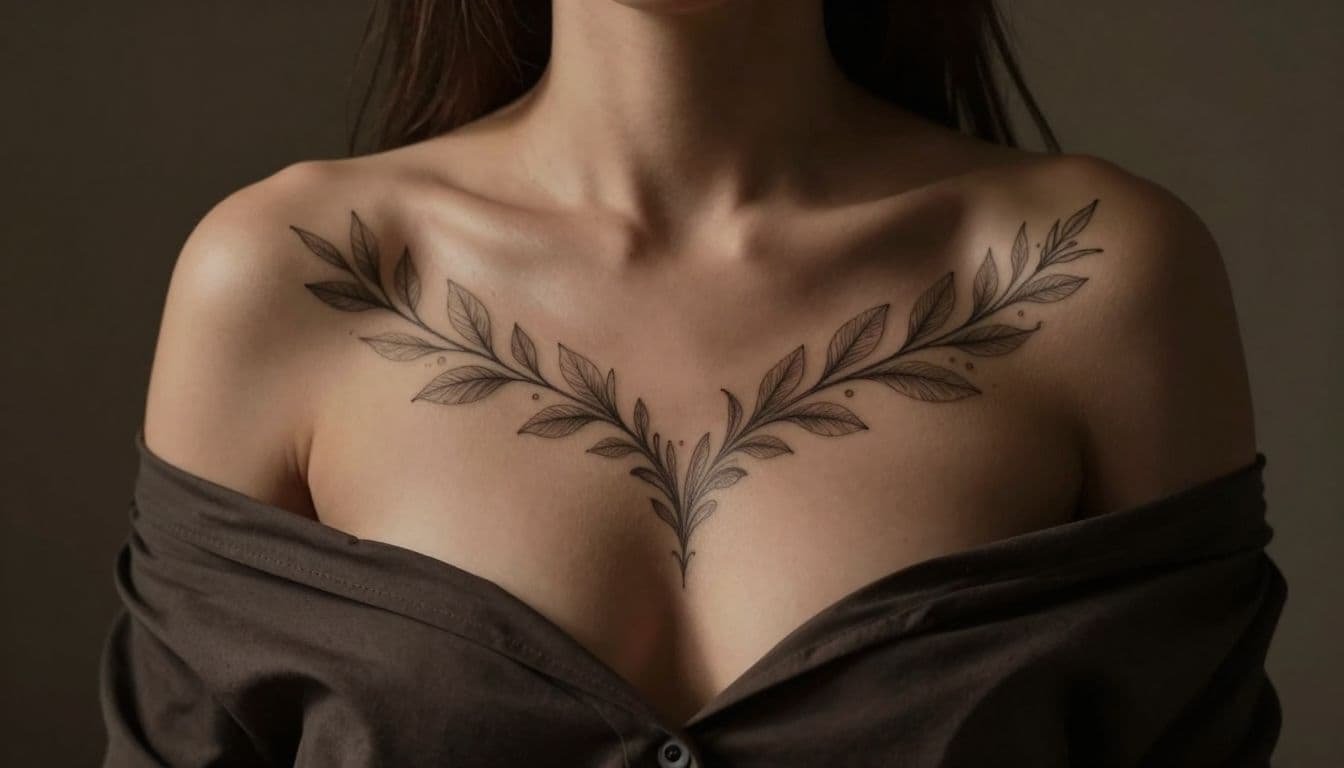
The placement naturally suits symmetry
The design may sit high on the chest, directly along the centerline, or lower near the underbust area. Some tattoos stay small and vertical, while others widen across the chest or taper toward the solar plexus. Your preferred position will affect how visible the piece looks and how much space the artist has to work with.
Body shape and natural movement also affect the final result. Breathing, posture, breast placement, and changes in skin tension can shift how lines appear when you stand, sit, or raise your arms. A skilled artist should mark the design on your body and adjust it to your anatomy instead of copying a stencil blindly. If you like vertical body art, these elegant spinal tattoo designs offer a similar sense of balance and flow.
You control how much people see
A higher sternum tattoo can stay hidden beneath a crewneck shirt or high-neck dress. Lower designs may peek out from a scoop-neck top, swimsuit, or bralette, giving you more control over when the artwork becomes part of your outfit. That flexibility makes the placement feel personal without limiting your style.
Still, the area has thin skin and little padding over bone, so many people find sternum tattoos painful. Rib or underbust extensions may feel equally intense or more uncomfortable, while bra-line friction can make healing harder. Read what to expect from sternum tattoo pain and choose an experienced artist who can work carefully around your anatomy.
Beautiful Sternum Tattoo Ideas for Every Personal Style
Your ideal sternum tattoo can be delicate, symbolic, ornamental, or bold. Start with the design’s placement, then choose details that suit your personality, comfort level, and preferred amount of visibility.
Ornamental Mandala With Jewelry-Like Detail
An ornamental mandala creates a centered, decorative piece that can look like a pendant resting on the chest. Lace-inspired edges, teardrop shapes, dots, petals, and balanced blackwork give the design a polished, jewelry-like finish.
Place it higher for a bold, armor-like effect, or lower for a more intimate look near the underbust. Dense shading may take longer to heal and can cause more irritation, so discuss the size, ink coverage, and skin recovery with your tattoo artist. Follow professional tattoo aftercare guidance throughout the healing period.
Moon and Stars for a Celestial Feel
A crescent moon, sunburst, small eclipse, or constellation can turn the center chest into a personal night sky. Radiating lines frame the sternum, while delicate dotwork keeps the composition light and breathable.
You might connect the design with change, hope, guidance, or a love of astronomy. Keep it minimalist with one moon and a few stars, or add bolder rays and scattered constellations for a dramatic look. Leave open skin around each element so the sternum doesn’t feel overcrowded.
A Clean Geometric Sternum Design
Geometric tattoos suit the sternum because its centerline gives precise artwork a natural anchor. Mirrored lines, diamonds, triangles, circles, and mandala-like patterns can create an architectural design with a calm, ordered appearance.
Choose an artist with strong line control because small shifts become noticeable in symmetrical tattoos. Before the needle begins, test the stencil while standing naturally, then check it from several angles and postures. A design that looks centered while lying down may appear different when your shoulders relax.
Minimalist Symbol With Personal Meaning
A tiny heart, arrow, star, wave, sun, initial, or meaningful symbol can sit directly over or just below the sternum. This approach feels private and elegant, especially if you’re getting your first chest tattoo.
Fine lines create a soft look, but they may soften over time. Ask your artist to choose a practical scale and spacing instead of shrinking the design as much as possible. A slightly larger symbol often stays clearer and ages better.
A Bold Blackwork Sun or Sacred Heart
Readers who want high contrast can choose a blackwork sun, sacred heart, protective emblem, or radiating symbol. Strong outlines and intentional negative space help bold tattoos remain readable from a distance.
The symbol’s meaning belongs to you, whether it expresses faith, protection, love, strength, or personal history. Larger filled areas may feel more intense during the session and healing period, so plan for loose clothing and less friction while the skin recovers.
Snake, Dragon, or Other Vertical Creature
A snake, butterfly, moth, dragon, or bird can curve along the sternum and add movement to the chest. One vertical subject feels less rigid than a perfectly mirrored design while still following the body’s center.
Give scales, wings, feathers, or fine linework enough room to breathe. Skin shifts with posture, breathing, and movement, so a cramped creature may lose clarity. Your artist can adjust the length and width to preserve its shape.
Floral Frame With a Hidden Center Symbol
Roses, vines, blossoms, or leafy branches can frame a small moon, word, charm, or geometric symbol. The flowers soften the chest, while the hidden center detail adds a private layer of meaning.
The two sides don’t need to match perfectly to look balanced. Choose a tattooer who can draw a custom frame for your anatomy rather than forcing a stock design into the space. For more floral inspiration, browse these meaningful botanical tattoo ideas.
Fine-Line Lace or Filigree Underbust Design
Lace, filigree, and underbust-inspired patterns can extend from the sternum toward the ribs. A small center piece feels discreet, while a wider design follows the lower curve of the chest and creates a decorative bra-like shape.
Delicate repeating forms look elegant, but extreme detail and very thin lines require careful sizing. An experienced artist can preserve the pattern without packing too many elements into a small area.
Fine-Line Botanical Vine
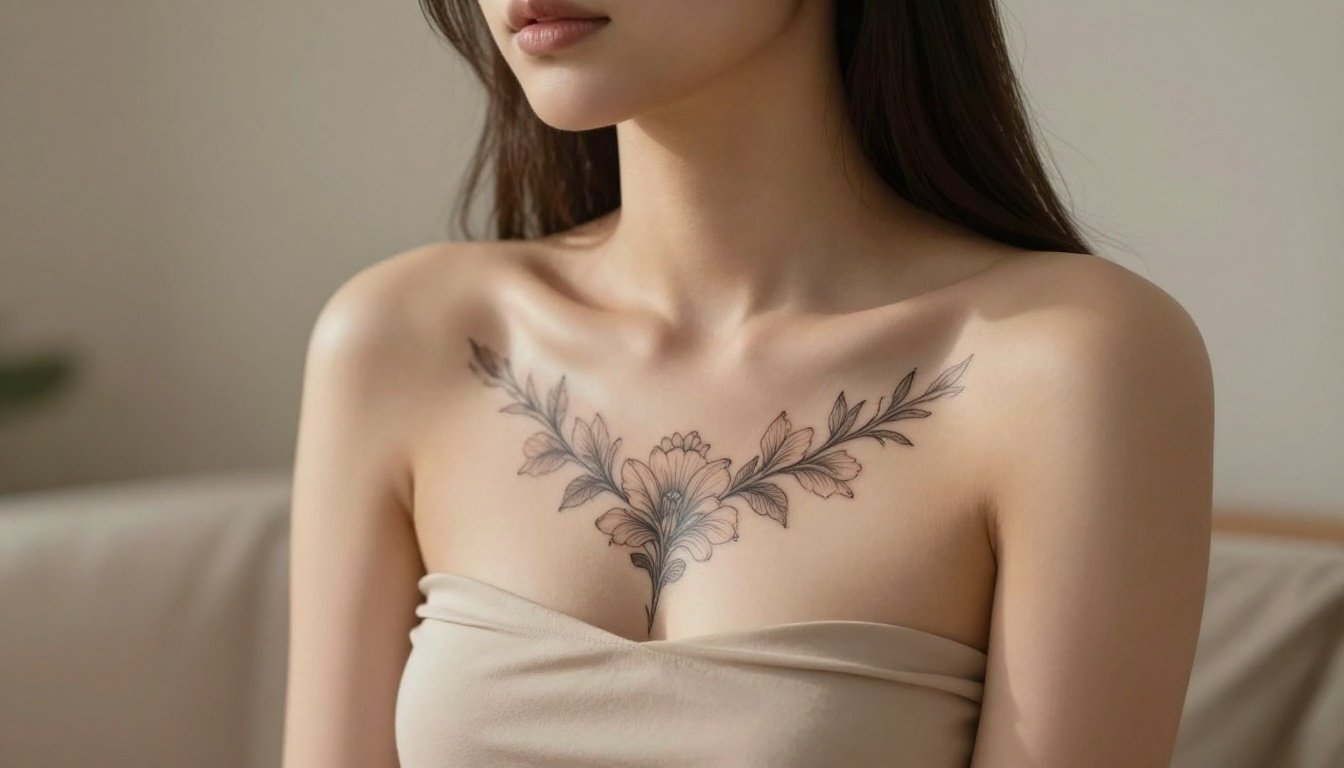
A vertical vine with leaves, stems, and small blossoms can follow the breastbone like a pressed flower stem. Wildflowers, olive branches, lavender, or a favorite meaningful plant can give the tattoo a personal story.
Sparse linework creates a soft, airy look, while thicker lines and light shading help the design stay visible over time. Mirrored branches add balance, but avoid squeezing too many tiny leaves and petals into a very small tattoo.
How to Choose the Right Sternum Tattoo Design
The best sternum tattoo starts with the feeling you want to carry, not the image that happens to be popular online. Do you want something soft and feminine, protective and bold, mystical, orderly, or connected to a personal memory? Once you name that feeling, compare styles that support it.
Match the style to your personality
Delicate fine-line florals and botanical vines create a light, graceful appearance. Celestial designs feel dreamy and symbolic, while ornamental tattoos resemble jewelry placed against the skin. Geometric artwork brings order through clean angles and repeated shapes. If you prefer strong contrast, bold blackwork gives the sternum a confident, graphic presence.
Personal meaning can narrow the choice. A wildflower may recall a loved one or a particular season of life. A moon might speak to change, intuition, or renewal. If you’re still collecting ideas, these meaningful thigh tattoo designs can also help you compare symbols, line styles, and levels of detail.
Decide between symmetry and organic movement
Symmetry follows the sternum’s centerline and works well for mandalas, sacred hearts, ornamental pendants, and mirrored wings. The result feels polished and intentional, especially when the design widens evenly toward the ribs.
Organic designs take a more natural path. A snake, vine, bird, or single floral stem can curve with your body instead of matching on both sides. Ask yourself whether you prefer visual order or the gentle movement of a design that feels hand-drawn. Both choices can look balanced when the artist adjusts the stencil to your chest rather than relying on a flat reference image.
Plan size, visibility, and daily comfort
Size changes the tattoo’s entire mood. A small symbol feels private and subtle, while a larger piece creates a centerpiece that may extend toward the underbust or ribs. More space also gives fine details room to remain readable as the tattoo ages.
Your clothing and work environment matter, too. Check where the design sits beneath crewneck shirts, low-cut tops, uniforms, bras, and swimwear. If you need discretion at work, place the tattoo high enough to stay covered. Also consider healing, since tight clothing and underwire can rub against fresh skin.
Bring clear questions to your consultation
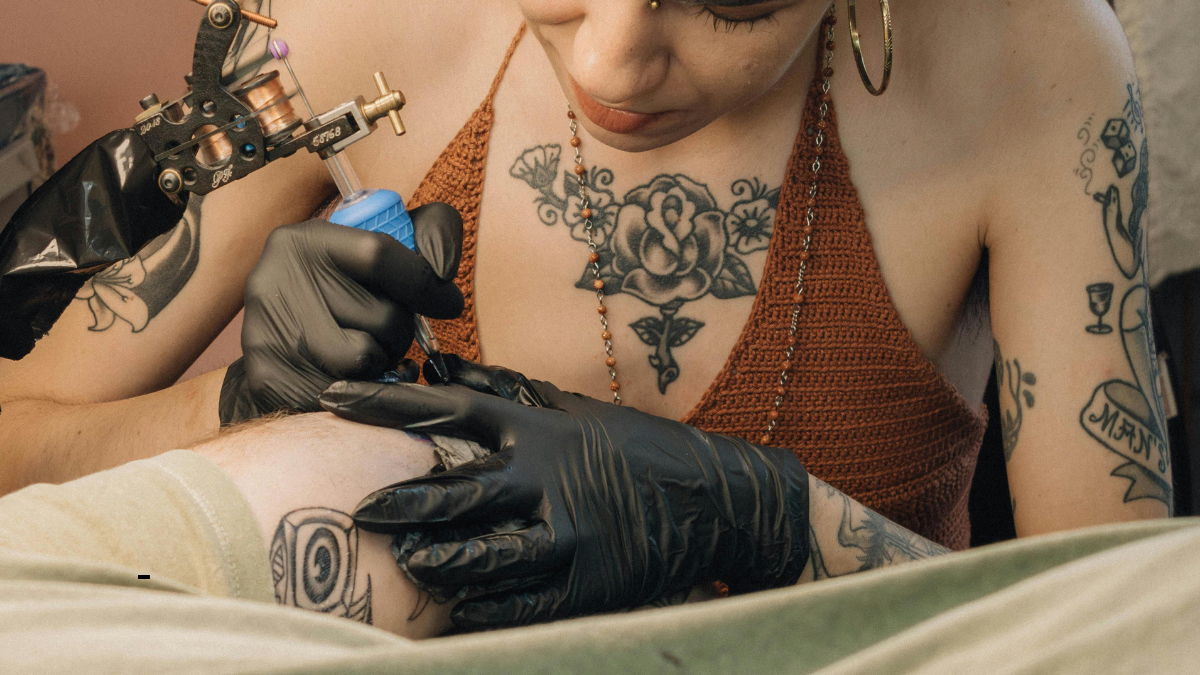
Review the artist’s healed sternum and underbust work, not only fresh photographs. Look for steady lines, even shading, clean spacing, and details that remain clear after the skin settles. Ask about their experience with sensitive chest placements, local licensing, sterile practices, ink records, and expected touch-up needs.
Use this short checklist during your appointment:
- Bring your preferred size and decide whether you want color or black ink.
- Discuss the placement height and whether the design should extend toward the ribs.
- Ask for a custom stencil, then view it while standing, sitting, and relaxing your shoulders.
- Confirm the full budget, deposit, payment schedule, and possible touch-up costs.
- Plan loose clothing, reduced friction, and enough recovery time for healing.
A thoughtful consultation turns a saved picture into artwork that fits your body, lifestyle, and story.
Pain, Placement, and Healing: What to Expect
Sternum tattoos often rank around 6 to 8 out of 10 for pain, although your experience may differ. Thin skin, nearby bone, and the sensitive area between the breasts can make this placement feel intense, especially when the artist works close to the centerline.
Pain also depends on the tattoo’s size, shading, session length, and your personal tolerance. A small fine-line symbol may feel manageable, while a large ornamental design with heavy blackwork can create more irritation and fatigue.
What the first few days may feel like
Right after your appointment, the skin may feel tender, warm, swollen, or slightly bruised. Some people notice a deep bruised sensation when they breathe, stretch, laugh, or move their chest. Mild redness, itching, flaking, and small amounts of clear or blood-tinged fluid can also occur during early healing.
These reactions should gradually improve rather than become stronger. Research on tattoo aftercare identifies irritation, itching, stinging, infection, and delayed healing among the most common short-term skin reactions, so gentle care matters from the first day.
The sternum moves with every breath, which means even normal chest movement can make a fresh tattoo feel more noticeable.
How long does a sternum tattoo take to heal?
The surface usually looks much better within 10 to 14 days, but deeper layers of skin commonly need 6 to 8 weeks to settle. Large tattoos with heavy shading may take longer, and a tattoo can appear healed on the surface while deeper skin continues recovering.
Follow your artist’s written instructions because bandage type, ink coverage, and your skin’s response all affect the timeline. Wash the area gently with clean hands and mild, fragrance-free soap, pat it dry, and apply only the product your artist recommends. Avoid picking flakes or scabs, even when the skin becomes itchy.
Bras, underwire, tight tops, rough seams, sweat, and repeated chest movement can rub against the tattoo. Choose loose, breathable clothing during recovery, and avoid swimming, hot tubs, saunas, intense workouts, and direct sun until the skin has closed and settled. The tattoo aftercare research explains why irritation and delayed healing deserve careful attention.
Contact a healthcare professional if redness spreads, pain worsens after the first few days, swelling increases, or the tattoo produces pus, foul-smelling drainage, red streaks, fever, or chills. These signs need medical attention rather than stronger creams or aggressive cleaning.
Sternum Tattoo Aftercare That Protects the Design
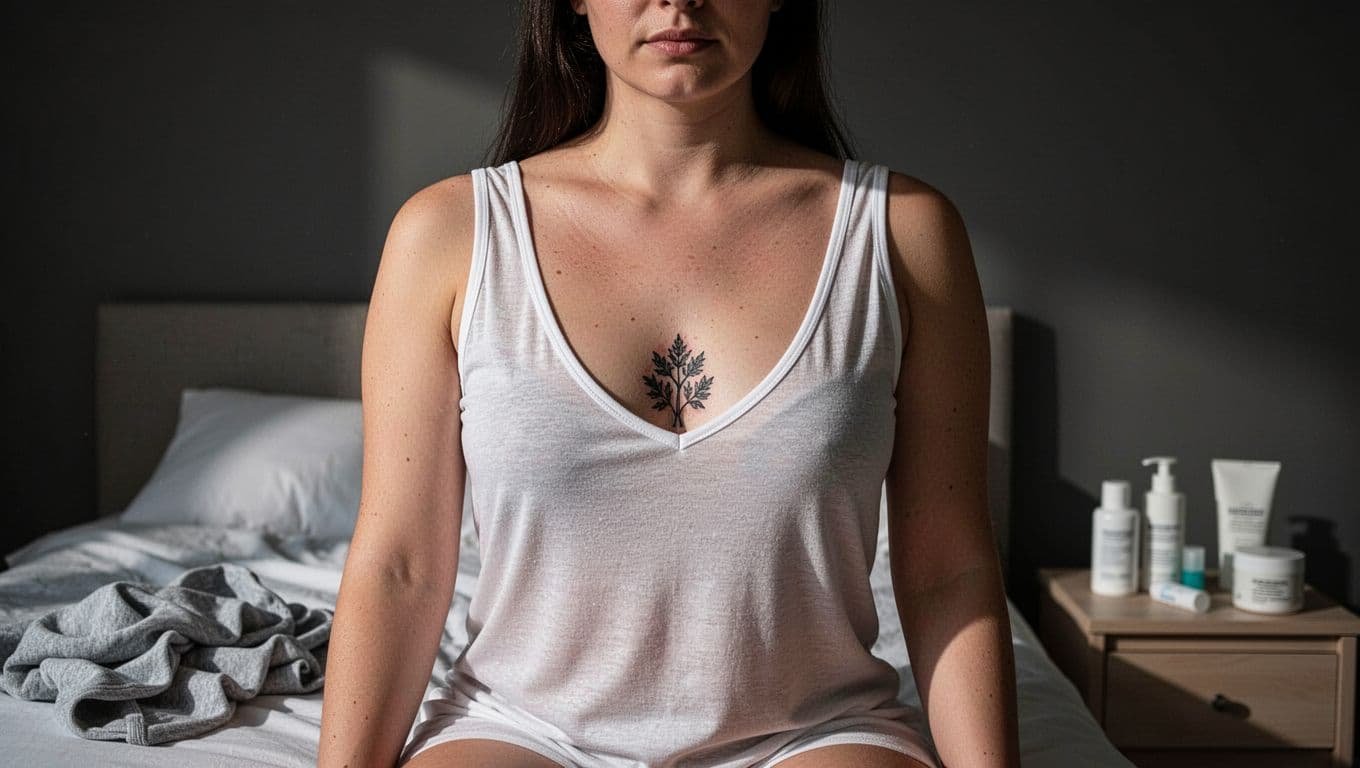
Good sternum tattoo aftercare protects more than your skin. It also helps preserve crisp lines, even color, and the shape your artist planned for your body. Since bras, sweat, and chest movement can irritate this placement, keep your routine gentle and consistent while the tattoo heals.
Follow a gentle cleaning routine
Before touching your tattoo, wash your hands thoroughly with soap and water. Then follow your artist’s instructions for removing the traditional wrap or second-skin film. Some coverings stay on for several hours, while others remain in place for a day or longer. Never pull off adhesive film quickly. If your artist permits it, lukewarm water can soften the film and make removal gentler.
Once the covering is off, wash the tattoo with lukewarm water and a mild, fragrance-free soap. Use clean fingertips and avoid washcloths, loofahs, exfoliants, and scrubbing. Rinse away all soap, then pat the area dry with a clean paper towel or soft towel. Don’t rub across the fresh ink.
Apply a very thin layer of fragrance-free moisturizer or artist-approved balm after cleaning. Heavy ointments can trap moisture and clog the skin, while over-moisturizing may leave the tattoo soggy and irritated. Your skin should feel comfortable, not greasy. Cleveland Clinic also recommends avoiding petroleum jelly and fragranced products during healing. For related safety reminders, see these tattoo safety tips for moms.
Reduce friction, sweat, and pressure
Loose, breathable shirts allow air to reach the tattoo and reduce rubbing across the breastbone. Tight bras, underwire, compression tops, and elastic bands can press against the design, especially when swelling or tenderness is present. Choose soft clothing that doesn’t stick to the skin, and change out of damp fabric promptly.
Sleeping on your back can keep bedding and clothing from pressing into the tattoo. If that position isn’t comfortable, use clean, loose sleepwear and avoid placing direct pressure on the healing area. Also, pause sweat-heavy workouts during the early healing period. Sweat, repeated chest movement, and friction from sports bras can all increase irritation.
Don’t pick scabs, scratch flakes, or peel loose skin. These actions can remove ink and create small openings in the skin. Swimming, baths, hot tubs, saunas, lakes, and ocean water should wait until the surface is fully healed. Confirm the timing with your artist, since healing varies by tattoo size and ink coverage.
After the tattoo heals completely, protect it from direct sun with broad-spectrum sunscreen. UV exposure can fade ink and irritate the skin. Contact a medical professional if redness, warmth, swelling, drainage, or pain worsens instead of improving. Fever, spreading redness, foul-smelling discharge, or red streaks also need prompt medical attention.
Smart Questions to Ask Before Booking Your Tattoo
A good consultation should feel like a two-way conversation, not a quick look at a reference photo. Before booking your sternum tattoo, ask questions that reveal the artist’s skill, the studio’s standards, and the plan for keeping you comfortable.
Does the artist understand sternum placement?
Ask how many sternum or chest tattoos the artist has completed recently. This area moves with breathing and varies in width, symmetry, skin tension, and breast placement, so experience matters.
Ask whether the artist adapts designs for different body shapes, asymmetry, stretch marks, scars, or changes in skin tension. A strong tattooer should explain how they adjust size, spacing, line weight, and shading for your anatomy instead of forcing a flat design onto your chest.
Request photographs of healed sternum tattoos, not only fresh work. Healed examples show whether fine lines remain clear, shading looks even, and symmetrical details still sit correctly after the skin settles.
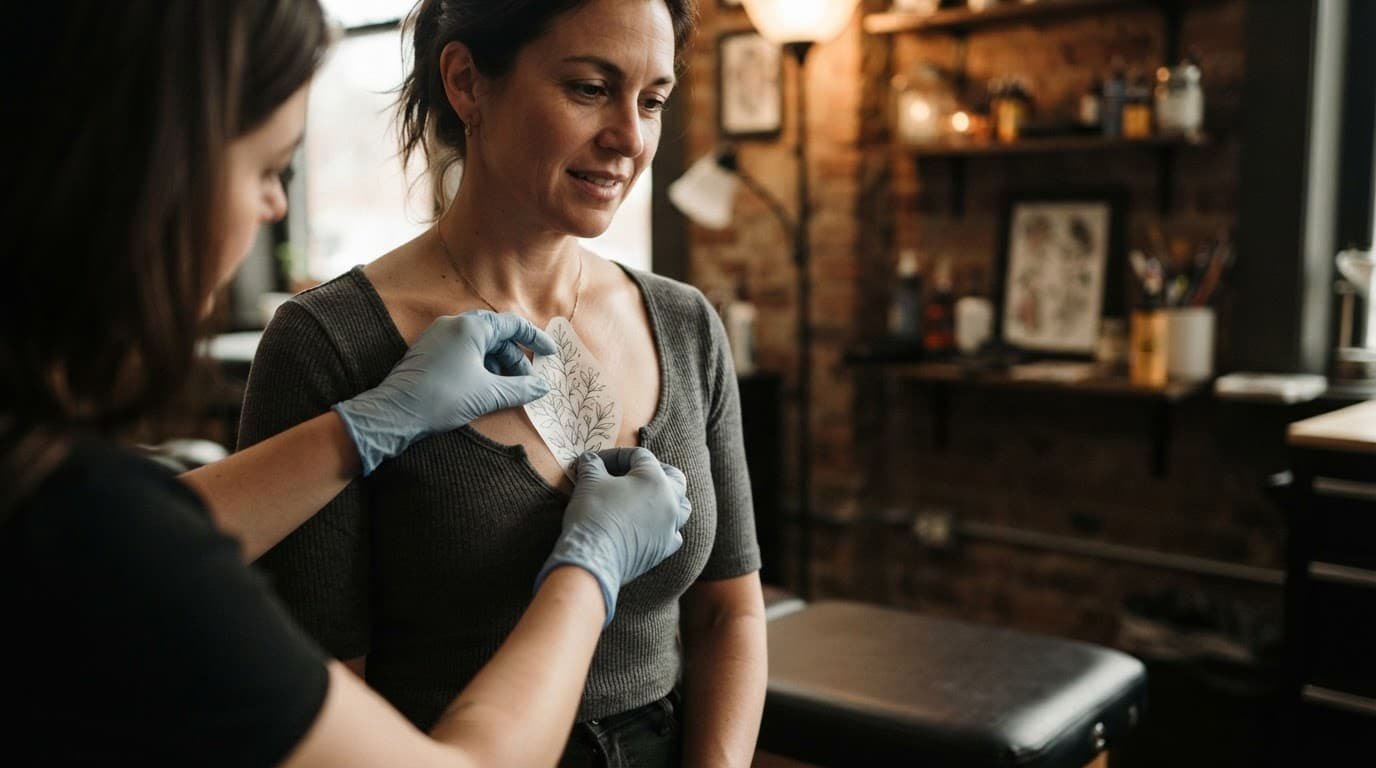
How will you plan the stencil and tattoo details?
Ask the artist to apply the stencil while you’re standing naturally, then check it while sitting and relaxing your shoulders. Breathing and posture can change the way the design appears, so placement should feel right in more than one position.
Discuss which needle grouping and line style suit your idea. Fine-line work may need more space between details, while bold blackwork requires enough skin area for solid coverage. Ask how long the appointment may take, including stencil adjustments, setup, breaks, and cleanup. A larger ornamental sternum tattoo may need more than one session.
Your consultation should also cover:
- The recommended size, placement height, color choice, and design changes.
- Whether the tattoo can heal comfortably beneath your usual bras or clothing.
- The artist’s break policy and how they respond if you need to pause.
Are the studio’s policies clear and safe?
Ask whether the studio and artist meet your state, county, or city’s licensing and inspection requirements. The studio should explain how it handles handwashing, gloves, surface disinfection, single-use needles, ink caps, sharps, and reusable equipment. The FDA’s tattoo safety guidance also discusses contaminated ink and allergic reactions.
Before paying a deposit, confirm whether it applies to the final price, when it becomes nonrefundable, and how much notice you need to reschedule. Get the total pricing in writing, including possible touch-ups. Ask whether one touch-up is included, the deadline for requesting it, and whether poor aftercare or sun exposure affects eligibility.
Finally, request written aftercare instructions and ask which cleanser, moisturizer, or bandage your artist recommends. Never use numbing cream without approval. Products, timing, application methods, and skin reactions vary, and some artists won’t tattoo skin treated with an unapproved cream.
You can pause, ask for a break, request a stencil change, or change your mind at any point. Consent and comfort still matter after the appointment begins.
Conclusion
The best sternum tattoo is one that fits both your personal style and your real life. A tiny minimalist symbol or fine-line floral can feel intimate and graceful, while an ornate mandala, celestial motif, geometric design, or bold blackwork piece can create a stronger centerpiece.
Your favorite idea still needs thoughtful planning. Choose an artist with proven sternum experience, review healed work, and check the stencil while standing and sitting. Plan for the area’s sensitivity, give your skin room to heal without tight clothing or bra friction, and follow careful aftercare until the tattoo settles.
A sternum tattoo can be delicate, dramatic, meaningful, or completely personal. Choose a design because it feels right for your body and your story, not because it happens to be trending. The most lasting piece of art is the one you can enjoy long after the trend has passed.
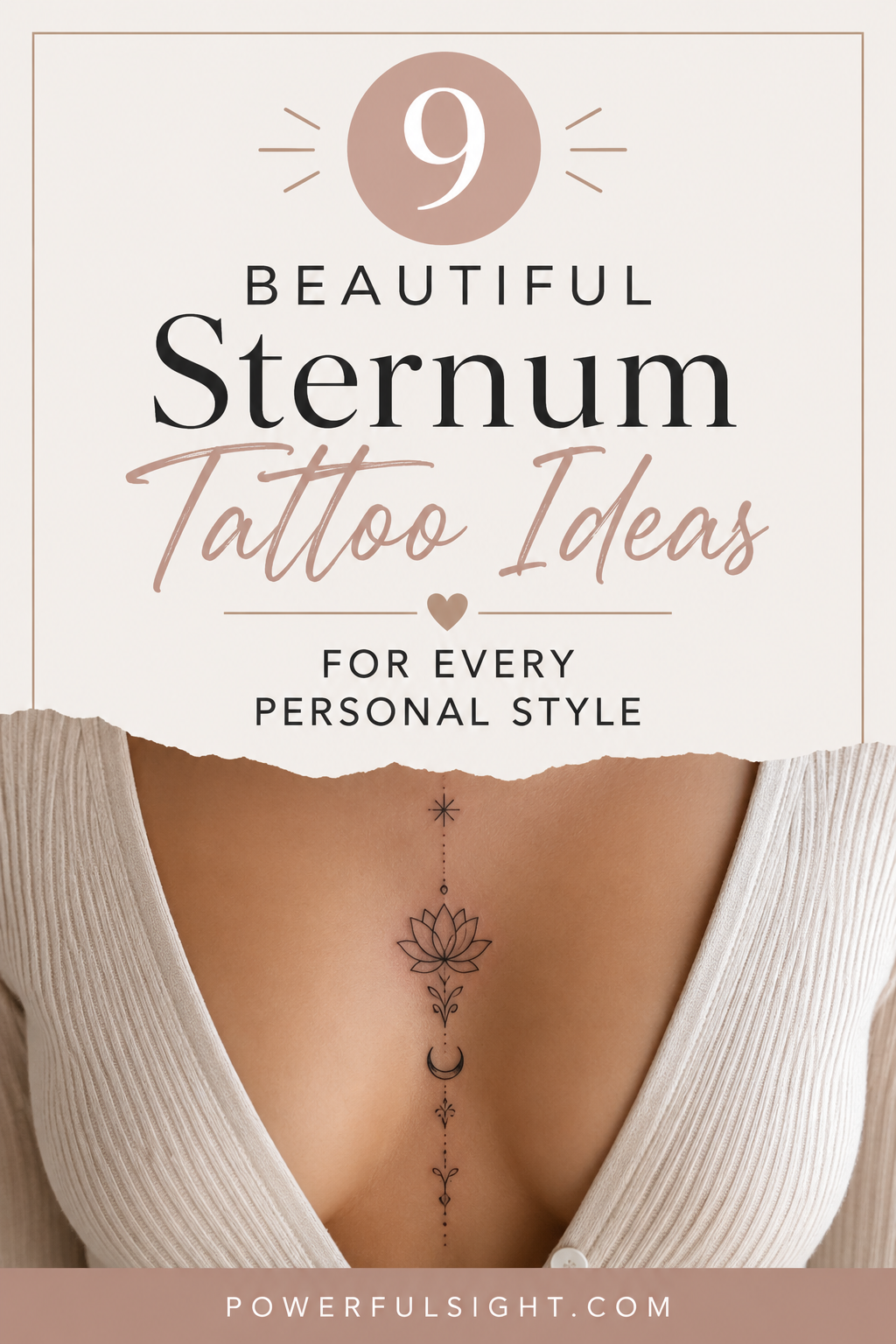
Save the pin for later

- 25 Gothic Tattoo Ideas for a Bold, Dark Look - 21/09/2026
- 34 Black Fine Line Tattoo Ideas for a Delicate Look - 21/09/2026
- 23 Micro Tattoo Ideas for Women With Meaning - 21/09/2026

