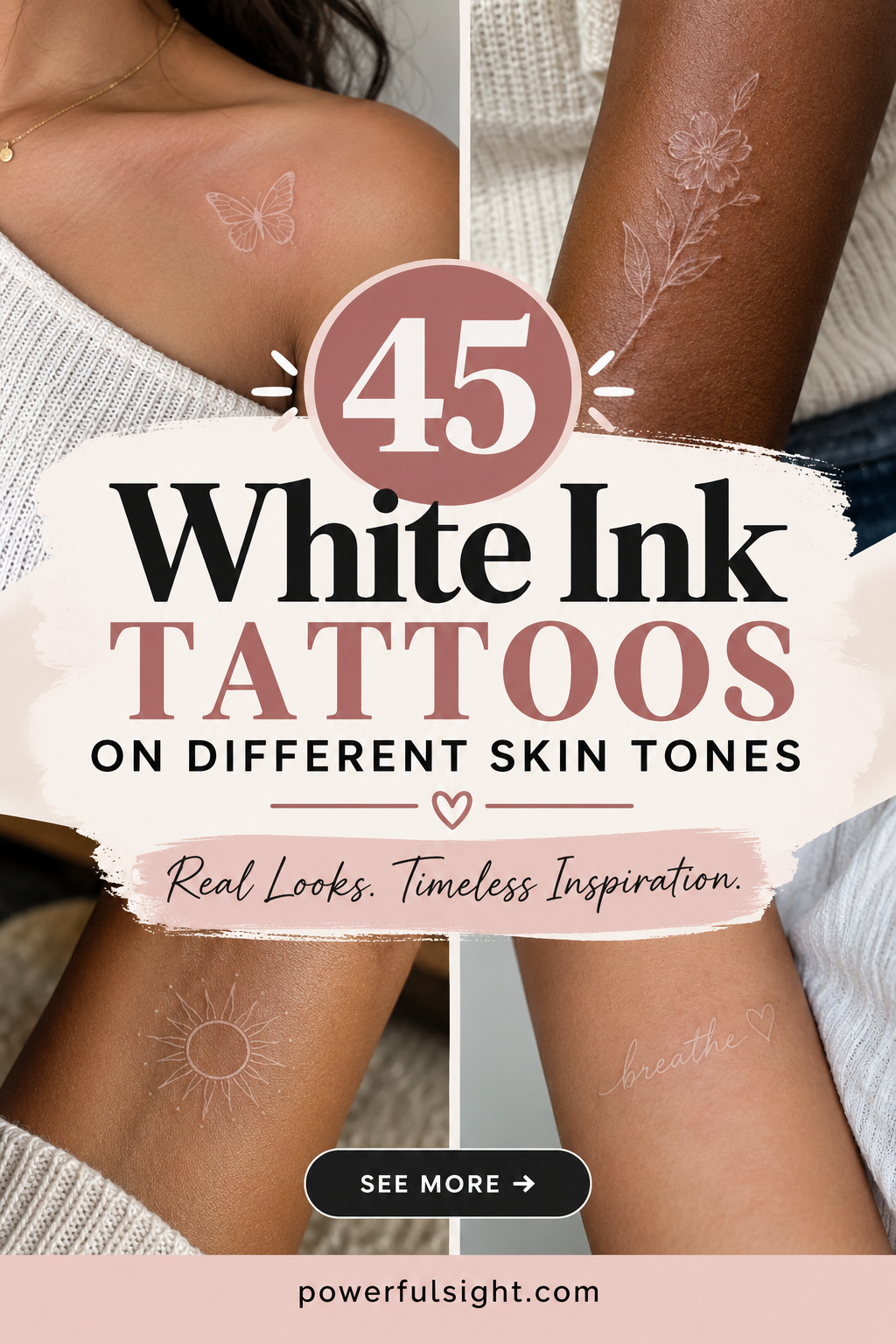
White ink tattoos are the quiet rebels of body art. At a glance, your skin looks bare, but in the right light the design reveals itself with a subtle, almost ghostly glow. That low-key appeal is exactly why they’ve grown popular, and exactly why so many people get surprised by the results.
Here’s the honest part: white ink doesn’t behave like black ink. It heals differently, fades faster, and shows up dramatically different depending on whether your skin is light, tan, medium, deep, or very dark. Skin tone changes everything about how a white tattoo looks, both fresh and years later.
That’s why this post compares 45 white ink tattoo designs across five skin tones, with real talk about what holds up and what doesn’t. Scroll on to see which designs actually work on your skin.
What Are White Ink Tattoos and How Do They Work?
A white ink tattoo uses white pigment on its own, rather than relying on white for highlights inside a full-color piece. The ink itself is thicker and denser than black pigment, so artists apply it slowly and often go over the same line more than once. That density gives white tattoos their signature look: when healed, many sit slightly raised on the skin, with a faint embossed or scar-like texture that some people love and others find unexpected.
Fresh from the needle, white ink looks bright, almost luminous. Once it heals, it softens into something far more subtle, closer to a pale watermark than a bold statement. How subtle depends largely on the skin covering it, which brings us to the science.
Why White Ink Looks Different on Every Skin Tone
Your skin acts like a filter over any tattoo. Pigment is deposited in the dermis, but melanin lives in the layers above it, so everything you see is white ink viewed through your natural skin color. On pale skin, the filter is thin and white reads as a soft off-white. On medium and deeper tones, more melanin mutes the pigment, and the same design can look creamy, faintly beige, or nearly invisible.
Undertones matter too. Warm and olive skin can pull healed white toward ivory or even a light yellow, while cooler undertones tend to keep it closer to gray. This is why two people with similar depth of color can get identical tattoos and end up with noticeably different results. If you’re comparing designs across skin tones, it helps to see real healed examples, like this white ink tattoo comparison across skin tones.
Fresh vs. Healed White Ink: What to Expect
Healing follows a predictable arc, and knowing it in advance saves a lot of disappointment. Here’s the typical timeline:
- Days 1 to 7: The tattoo looks bright and slightly raised. Some redness around the lines is normal.
- Weeks 2 to 4: The surface flakes and new skin grows over the pigment, dimming the brightness.
- Weeks 4 to 8: The final tone settles in, usually one to two shades softer than day one.
- Long term: Gradual fading continues, especially with sun exposure.
Even fully healed, most white tattoos keep a slightly raised, shiny texture when viewed at an angle. That sheen is permanent and normal. If your design looks subtler than you pictured, it hasn’t failed; it’s just behaving the way white ink always does.
45 White Ink Tattoos on Different Skin Tones Compared
Here’s where the rubber meets the road. The same 45 designs behave differently on every skin tone, so instead of listing them one by one, we’ve grouped them into five categories and compared how the most popular styles actually heal. Think of this as your cheat sheet before you book that appointment.
A quick reference table shows the overall pattern, then each tone gets its own breakdown below.
| Skin Tone | How Healed White Reads | Best Styles | Weakest Styles |
|---|---|---|---|
| Fair | Soft off-white, high contrast | Fine-line script, florals | Thick blocks (can look stark) |
| Medium/Tan | Creamy, subtle sheen | Bold lines, large motifs | Fine-line script |
| Olive/Warm | Ivory to pale yellow | High-contrast double lines | Flat matte shapes |
| Deep/Dark | Faint shimmer, raised texture | Large geometric, embossed-style | Small delicate symbols |
| Dark Brown | Scar-like, textural | Raised textured designs | Anything depending on color alone |
Fair and Light Skin Tones
Fair skin is the friendliest canvas for white ink. Designs like moon phases along the spine, fine-line hearts, zodiac signs, small script words, and delicate florals all read clearly here, often looking like pale ivory rather than pure white after healing. A minimalist crescent or the word “breathe” in thin script can look genuinely striking.
Sun exposure is your biggest enemy. Fair skin burns faster, and burned skin sheds pigment along with the top layers, so a white tattoo on a shoulder that sees summer sun will fade noticeably quicker than one on an inner forearm. Diligent SPF matters more here than on any other tone.
One caveat: on very fair, cool-toned skin, large solid white shapes can look slightly stark or grayish. Small to medium designs wear better.
Medium and Tan Skin Tones
On medium and tan skin, white ink settles into a soft cream or a faint sheen rather than a visible line. That means bold, thicker lines and larger designs hold up far better than fine-line work. A thin script word that looks crisp on fair skin can almost disappear here.
What works well: bold geometric shapes, larger florals, chunky zodiac symbols, moon phase strips with thick lines, double-outlined hearts, and bolder mandala patterns. Size is your friend; think designs at least two inches across.
If you love delicate script, ask your artist to go a needle size heavier or add a subtle outline. That extra structure keeps the design readable once it settles into your skin tone.
Olive and Warm-Toned Skin
Olive and warm tones carry a yellowish cast, and healed white ink picks it up. What starts as bright white often fades toward pale ivory or light beige, which can make flat, matte designs blend right into the skin. A solid white triangle or plain leaf outline risks vanishing entirely.
The fix is contrast built into the design itself. Double-line work, shapes with internal detail, layered florals where petals overlap, and geometric patterns with negative space all survive better because they give the eye structure, not just color. An outlined crescent with interior linework, for example, stays visible even when the fill softens.
Ask to see healed photos from the artist’s clients with similar undertones before committing.
Deep and Very Dark Skin Tones
Honesty first: white ink is at its most subtle on deep skin tones. On many people it reads less as a white line and more as a gentle, scar-like raised design or a faint shimmer that catches light at certain angles. Some of that is ink behavior; some is simply melanin filtering the pigment above it.
Here’s the part worth hearing, though: many people with deep skin tones love exactly this effect. The result feels understated and personal, like an embossed secret on the skin rather than a loud announcement. Healed white on deep skin can look elegant precisely because it whispers.
Placement and size matter most here. Larger designs on smoother, thicker skin areas (outer forearm, upper back, thigh) hold texture better than tiny symbols on thin, mobile skin like wrists. Choose bold shapes, wide-spaced moon phases, large florals, and geometric linework with breathing room.
Dark Brown Skin Tones
Dark brown skin sits at the far end of the subtlety scale, and the embossed, raised feel of healed white ink often shows more than the color itself. Lean into that. Designs with texture built in, such as raised linework florals, geometric patterns, and thicker script, tend to read better than designs that depend on brightness alone.
Three steps make the biggest difference:
- Find an artist with documented healed work on dark skin, not just fresh photos.
- Request a test patch, a small dot or line in a hidden spot, healed for several weeks before committing.
- Pick designs where shape and texture carry the idea, so even a faint result still looks intentional.
A test patch sounds slow, but it answers in six weeks what no consultation can: how your skin specifically handles white pigment. On this tone especially, that single appointment is the difference between a design you treasure and one you regret.
How to Choose a White Ink Tattoo for Your Skin Tone
By now you know how white ink behaves on every tone, so the next step is turning that knowledge into an actual decision. A white tattoo rewards planning more than almost any other style. Get the placement, line weight, and artist right, and you’ll love it for years. Rush the process, and you may end up with a design that fades into a faint memory within two summers.
Here’s a quick checklist to run through before you book anything:
- Do a patch test, especially on medium to deep skin tones, so you can see healed results on your own body.
- Pick a placement with low sun exposure, since UV light is the fastest way to kill white pigment.
- Choose slightly thicker lines than you would with black ink, because fine lines vanish first.
- Bring photos of healed white tattoos, not fresh ones, to your consultation so your artist knows what you actually expect.
Each of those steps matters, but placement and artist communication deserve a closer look.
Best Placement Ideas for Better Visibility
Where you put a white tattoo changes how long it stays readable. Friction, moisture, and sunlight all wear the pigment down, so low-wear, low-sun spots heal best.
The inner arm is a favorite for a reason. It sees almost no sun, experiences little friction, and the skin there stays smooth for decades. The back of the neck works well too, since hair often shades it, though collars and straps can rub it. The collarbone shows beautifully on fair and medium skin but gets real sun exposure, so it needs disciplined SPF. The wrist and ankle look delicate and appealing, but both rub against watches, socks, and shoes constantly, which speeds up fading.
As a rule, protect any white tattoo the way you’d protect a favorite leather jacket: keep it out of the sun, keep it moisturized, and don’t let anything grind against it daily.
Questions to Ask Your Tattoo Artist First
A consultation is your chance to filter out artists who don’t have real white ink experience. Ask these questions and pay attention to how confidently they answer:
- How much white-ink-only work have you done on my skin tone specifically?
- Can I see healed photos of your white tattoos, at least a year old?
- Which pigment brand do you use, and why?
- Do you offer a test patch before committing to the full design?
- What should healing realistically look like at four and eight weeks?
- Will this design need to be larger or bolder to stay visible on me?
An experienced artist welcomes these questions. If someone guarantees bright white results forever on deep skin, walk away; honesty about limitations is the mark of someone worth trusting with your skin.
White Ink Tattoo Aftercare and Longevity Tips
Getting the tattoo is half the battle. White ink asks for more care than black, both in the first few weeks and for years afterward. Because the pigment is lighter and denser, it shows damage sooner and fades faster when neglected. Follow the routine below and your design will stay readable far longer.
Healing Routine for White Ink Tattoos
The first two weeks decide a lot. Keep the bandage on for as long as your artist recommends, usually a few hours to a day, then wash gently with fragrance-free soap and lukewarm water. Pat dry with a clean paper towel; never rub. Apply a thin layer of unscented moisturizer two to three times daily, and resist picking at any flaking skin, since pulling flakes off can lift pigment right out of the lines.
White tattoos also tend to stay slightly raised and itchy longer than black ones. That’s normal. What isn’t normal is spreading redness, oozing after day three, or heat around the design, which points to irritation or infection and deserves a call to your artist or doctor.
- Wash twice daily during week one, then once daily after that
- Skip pools, hot tubs, saunas, and direct sun for a full month
- Wear loose clothing over the area so fabric doesn’t rub the pigment
- Avoid exfoliants, retinols, and acids on the tattooed skin for at least six weeks
Sun Protection Is Non-Negotiable
UV light is the fastest killer of white ink, and fair skin burns quicker, so SPF matters doubly here. Once the tattoo is fully healed, usually around week four, apply SPF 50+ every time the area sees daylight, even on cloudy days and even through a car window. UVA rays pass through glass, and a white tattoo on your forearm will fade from your commute alone.
Reapply every two hours during outdoor exposure. If you tan easily or spend summers outside, make it a habit like brushing your teeth. Many people watch a white tattoo survive healing beautifully and then lose half its brightness in one beach vacation without sunscreen.
Touch-Ups and Realistic Longevity
Honesty time: white ink almost always needs more touch-ups than black. Most artists recommend a refresh one to two years after healing, and some white tattoos need touch-ups every two to three years to stay visible, especially on medium to deep skin tones where the design starts subtle in the first place.
Plan for this financially and practically. A small touch-up usually costs less than the original session, but some artists charge a full minimum. Book your refresh before the design fades to invisibility; correcting a faint tattoo is easier than rebuilding one that’s nearly gone.
Treat your white tattoo like a houseplant rather than a set-it-and-forget-it purchase. With consistent SPF, gentle skin care, and a touch-up every couple of years, your design can stay quietly beautiful for a decade or more.
Pros and Cons of White Ink Tattoos
Every tattoo style is a trade-off, and white ink asks you to give up more than most. Knowing both sides before you book keeps disappointment out of the picture. Here’s the honest breakdown.
The Advantages
The biggest draw is subtlety. A healed white tattoo looks like a faint watermark on the skin, so you get the meaning of a tattoo without the visual weight. For teachers, nurses, corporate employees, or anyone facing strict dress codes, that discretion is a genuine benefit; most people will never notice the design in an office setting.
There’s also the uniqueness factor. White tattoos stay rare compared to blackwork, and the slightly raised, embossed texture gives them a look no other ink can copy. On fair and medium skin, they read as elegant and understated, almost like scarification done deliberately and beautifully.
The Disadvantages
Now for the costs, and they’re real:
- Faster fading: White pigment breaks down sooner than black, often needing touch-ups every one to three years.
- Yellowing or graying: On olive and warm undertones, healed white can drift toward ivory or beige, dulling the design.
- Raised texture forever: Some people love the embossed feel; others find it looks scar-like, especially on deep skin tones.
- Harder laser removal: Light colors reflect across multiple laser wavelengths, so removal usually takes more sessions and rarely clears completely.
- Fewer willing artists: Many tattooers avoid white-only work because results are unpredictable and heal weaker than black.
Sun exposure makes every one of these problems worse. One unprotected summer can flatten a design that took hours under the needle.
Verdict: White ink suits people who want a private, low-key tattoo and accept touch-ups, sun discipline, and subtlety as the price of admission.
Conclusion
White ink tattoos can work on every skin tone, but the result you get depends on the expectations you bring. On fair skin, expect a soft ivory line; on medium and olive tones, a creamy sheen; on deep and dark brown skin, a raised, textural design more than a bright white one. None of these outcomes is a failure. Each is just how white pigment behaves once your melanin gets a say.
The three habits that separate happy results from regrets are simple: get a patch test before committing, review healed portfolios from artists who work with your skin tone, and pick a design whose size and line weight suit your tone. Do those things, and even a faded tattoo will still look intentional.
Which skin tone comparison surprised you the most? Share it in the comments, especially if you have a healed white tattoo of your own to show for it.
Save the pin for later

- 60 Color Tattoos That Healed Beautifully - 25/09/2026
- 40 Most Painful Tattoo Spots - 24/09/2026
- 20 Tattoo Aftercare Mistakes That Ruin Fresh Ink - 23/09/2026

