You check your phone, glance at an email, or hear a coworker chat, and poof—your focus vanishes. Studies show the average worker faces 15 interruptions an hour, or one every 4 minutes, and it takes 23 minutes to refocus after each one. That adds up to over 6 hours lost each week, turning your workday into a scattered mess.
I’ve been there. Last year, I stared at my screen for hours, got little done, and felt stressed by unfinished tasks piling up. Poor focus wrecked my productivity, spiked my stress, and kept goals just out of reach. Sound familiar?
Good news: you can fix it with 10 simple, science-backed habits that keep you sharp all day. These aren’t gimmicks; they draw from real research, like tips from neuroscientist Andrew Huberman in this video. You’ll boost output, cut burnout, and reclaim time for what matters, like family or hobbies.
We’ll cover habits like starting your day right, dodging distractions, and building routines that stick—check out how to make new habits stick for more on that. Pick one today, try it tomorrow, and watch your focus transform. Ready to dive in?
Kickstart Your Focus with a Quick Morning Ritual
Start your day with a 5-10 minute ritual before you touch your phone. Pick meditation, deep breaths, or journaling. This simple step clears mental fog and sets a calm tone that lasts.
Why does it work? Your brain wakes in a haze from sleep inertia. Notifications hit fast otherwise, spiking stress. But this ritual trains you to pause, reflect, then act. It cuts cortisol and boosts clarity, as research shows in morning routines’ effects on cognition. No screens means no distractions; you own your thoughts first.

Here are easy steps to try:
- Wake up and sit quietly. Breathe deep for 2-3 minutes; focus on your breath.
- Stretch your arms or neck next. Feel your body wake.
- Journal three gratitudes or top tasks. Keep it quick.
Customize it: Love movement? Add stretches. Prefer words? Journal wins. Common mistake? Rushing through. Take the full time.
Sarah, a busy parent, added this. She gained clarity amid kid chaos and nailed her workday tasks. Check productive morning routines for more ideas. Your focus starts here.
Narrow Your Day to Just 3 Must-Do Tasks
You wake up with a mental list of 20 tasks. By noon, nothing feels done. Limit yourself to three must-do tasks each day instead. This rule prevents overload and lets you rest without guilt. Your brain handles three priorities well; more leads to drain from constant switching.
Research backs it. Task switching taxes working memory and cuts flow, that deep focus state where work flies. Workers with fewer tasks report better performance and less stress. Pick three, finish them, and own your day.
Start each morning with a quick list. Color-code for clarity:
- Red for urgent: Deadlines or fires, like client emails.
- Green for creative: Big wins, such as project outlines.
- One flexible spot if needed.
Align tasks with weekly goals. Review at night: What worked? Adjust tomorrow.
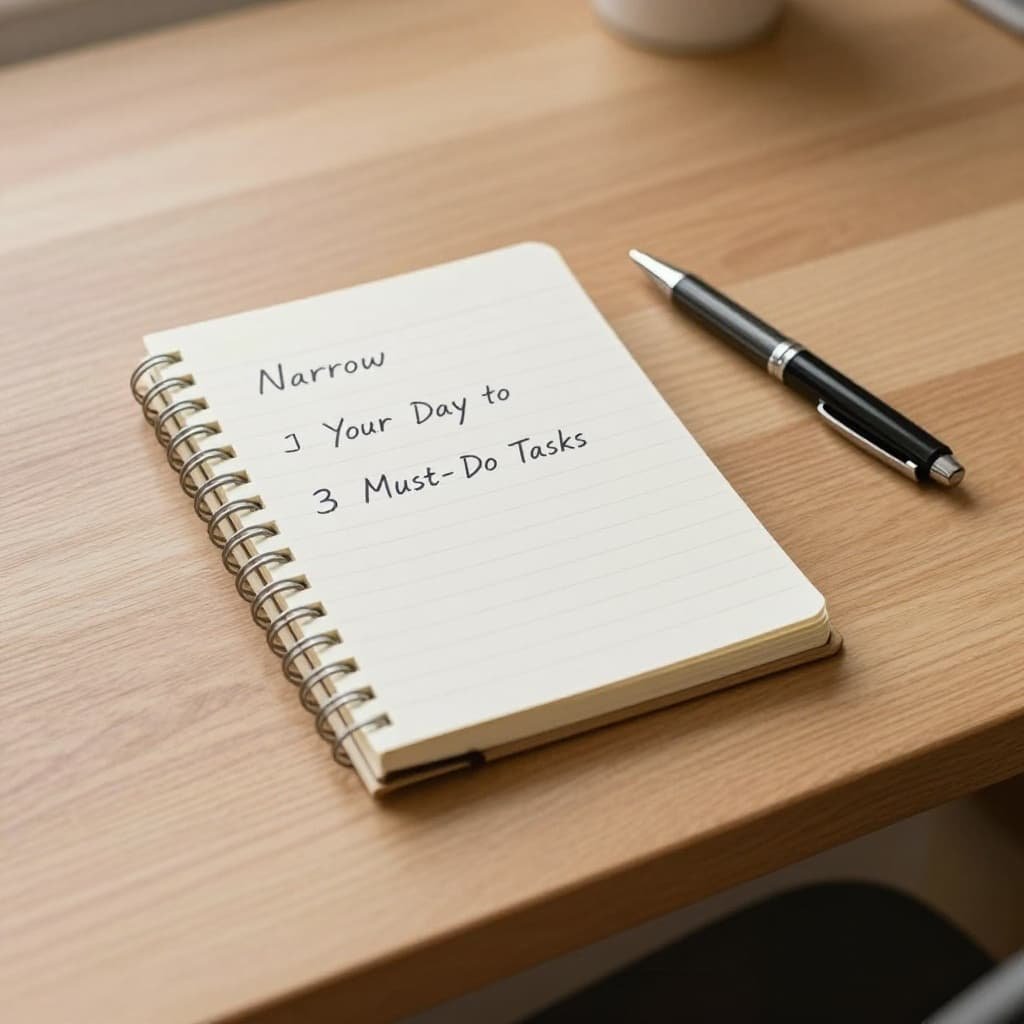
A freelancer tried this. She ditched her endless to-do app, focused on one client pitch, one content piece, and one admin task. She wrapped early, felt accomplished. For more on prioritizing tasks effectively, check that out. See how the Rule of 3 keeps you on track. Simpler days mean sharper focus.
Work in Short Bursts to Build Unbreakable Flow
Long work sessions drain you. Your mind wanders after 20 minutes, and refocusing takes another 23 minutes. Short bursts fix that. Use the Pomodoro Technique: work 25 minutes straight, then break for 5. Or try 45 minutes work with a 10-minute break for deeper tasks. Both build flow, that zone where time vanishes and output soars. Breaks fight fatigue, as your brain needs them to recharge.
Here’s how to start:
- Pick one task. Set a timer.
- Work hard. Note distractions on paper.
- Break time hits. Stand, walk, or stretch.
- Repeat four times, then take 20-30 minutes off.
After every 60-90 minutes, move more. Science shows this matches your natural rhythms and boosts focus. See the neuroscience behind Pomodoro sessions.
Compare options:
| Classic 25/5 | Flexible 45/10 |
|---|---|
| Best for beginners, quick tasks | Best for deep work, flow states |
| Quick wins, easy start | More progress per burst |
| May cut creative groove | Tougher if energy dips |
A student switched to this. She aced exams by studying in bursts, no more all-nighters. Test it today. Your focus will stick longer.
Use Everyday Cues to Signal Your Brain Its Focus Time
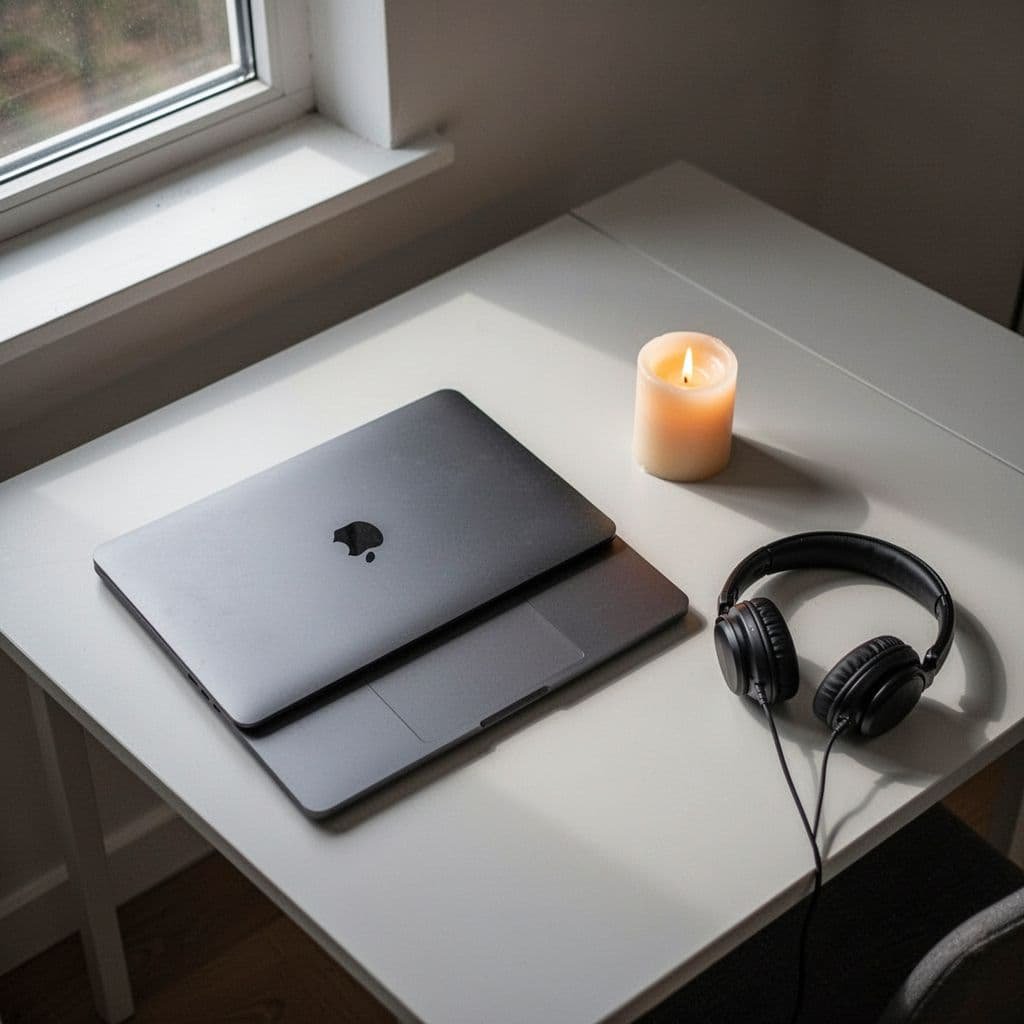
Your brain craves patterns. It spots the same cues each day and shifts into focus mode fast. Light a candle, queue up calm music, or sit at your dedicated workspace. These simple signals tell your mind it’s time to concentrate. Science shows environmental cues hit the thalamus first, then spark dopamine and attention networks for steady work.
Start small. Clean your desk to remove clutter. Pick one spot just for deep tasks. Wear the same comfy clothes or headphones. Play the same playlist. Do this daily, and your brain links them to flow states. Consistency builds the habit; one study found people trained on cues boosted flexibility after four days.
A remote worker I know tried it. She lit a candle and played lo-fi beats before coding. Distractions faded. She finished projects quicker. For more ways to improve focus, see that guide.
Common Pitfalls and How to Avoid Them
New cues work best when you stick with them. Switch too often, and your brain stays confused. Pick two or three, then use them every session.
Clutter kills the signal. Papers and gadgets scream distraction. Clear your space before each cue; keep only essentials.
Fixes keep focus strong:
- Repeat daily: Same candle flame or tune cues deep work.
- Prep ahead: Tidy desk the night before so you dive right in.
- Test one change: Add music first. See gains, then layer more.
These steps tie cues to real results. Your brain learns fast, so avoid pitfalls for lasting sharpness.
Shut Down Distractions to Protect Your Attention
Notifications ping constantly. Emails flood in. Each one pulls you away from your work. You lose 23 minutes each time to refocus, based on University of California research. That adds up fast. Multitasking from these interruptions cuts productivity by 40%, as American Psychological Association studies show. Your brain switches tasks, tires out, and makes more errors.
Turn them off. Batch email checks to three times a day: morning, lunch, and end of day. This reclaims hours. Silence alerts on phone and computer. Use app blockers like Freedom or Focus@Will during work blocks.
When urges hit, breathe deep for 10 seconds. Tell yourself, “I handle this later.” Positive self-talk keeps you steady.
Try these quick steps:
- Go to settings. Disable all push notifications for email and apps.
- Schedule checks: 9 AM, 1 PM, 4 PM. Reply in batches.
- Install a blocker. Set it for focus hours.
- Note distractions on paper. Review at day’s end.
An office worker did this. She blocked alerts and batched emails. Afternoons became clear for big tasks. She finished early, stress dropped. See science-backed email habits for more proof. Protect your attention; it pays off all day.
Feed Your Brain Steady Energy with Smart Fuel Choices
Your brain burns 20-25% of your body’s energy, mostly as glucose. Sugary snacks spike it fast, then crash you into fog. Smart choices keep fuel steady so focus lasts.
Start with protein at breakfast. Eggs, Greek yogurt, or nuts pair with veggies. Add complex carbs like oats. This combo stabilizes blood sugar. Protein builds neurotransmitters for alert moods. Studies show it cuts cravings and sharpens attention, as a review on macronutrients and brain function explains.
Drink water first thing. Dehydration drops focus 10-20%. Follow with green tea; its caffeine and L-theanine boost calm energy without jitters.
Snack on nuts mid-morning. Almonds or walnuts give healthy fats and protein. They prevent hunger distractions.
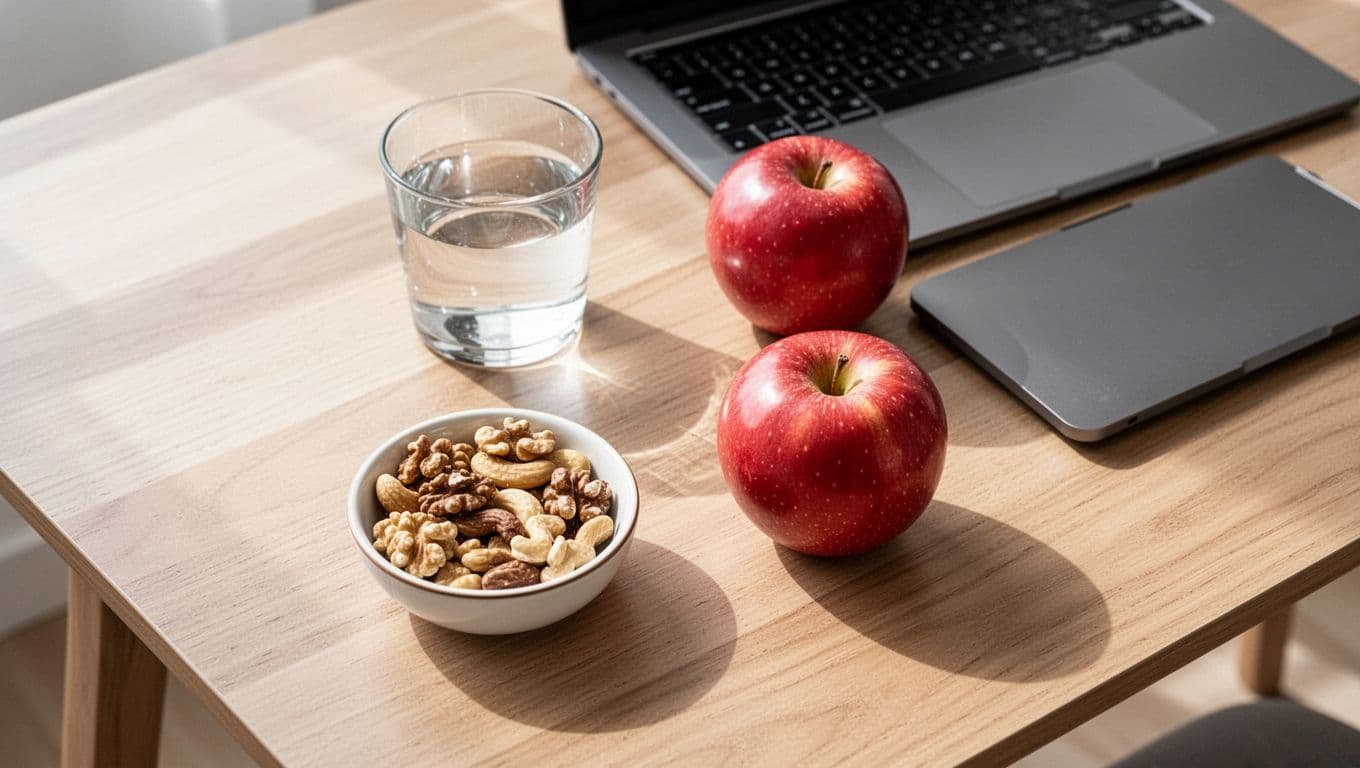
Here is a simple plan:
- Breakfast: Scrambled eggs with spinach and whole-grain toast.
- Hydrate: 16 ounces water, then green tea.
- Snack: Handful of almonds around 10 AM.
Skip donuts; they tank energy. A coder I know switched to this. He coded bug-free for hours, no afternoon slump. For tips for starting healthy eating habits, check that guide. Fuel right, stay sharp.
Move Regularly to Refresh and Recharge Midday
Your brain fogs up after hours at your desk. Sitting drains focus and spikes fatigue. Stand and move every hour for 1-2 minutes. This resets your mind, boosts blood flow, and fights sedentary haze. Unlike Pomodoro bursts, these breaks happen on a clock, no matter the task.
Science proves it. Short walks increase oxygen to your brain, sharpen memory, and lift mood. A study found 2-minute breaks every 30 minutes cut fatigue and raised vigor. Workers felt more alert and productive, per research in the International Journal of Behavioral Nutrition. Even hourly strolls lower health risks and sustain energy all day.
Set it up simple:
- Use phone alarms every 60 minutes.
- Walk the hall, stairs, or outside.
- Add desk stretches: neck rolls, shoulder shrugs, or leg lifts.

A writer I know beat her 2 PM slump this way. She walked laps, returned clear-headed, and hit word goals. Try daily walking benefits for focus. Small moves keep you charged.
Breathe Deep with Mindfulness to Stay Present
Your mind drifts to worries or that next task. Focus slips away. Deep breaths pull you back to now. This habit pauses knee-jerk reactions and slices stress. You stay present, so work flows smoother.
Box breathing works fast. Inhale for four counts, hold four, exhale four, hold four. Do it for one minute when you notice drift. It flips your body from stress mode to calm. Heart rate drops, cortisol falls, and oxygen hits your brain for clear thinking. Studies show it boosts concentration and cuts anxiety better than some mindfulness alone.
Regular practice thickens brain areas for attention, per research. One Harvard Business Review study notes it helps at work by sharpening focus without overload.

Try these steps anytime:
- Sit straight. Close your eyes if you can.
- Inhale through your nose for four seconds.
- Hold your breath steady for four.
- Exhale slowly for four.
- Hold empty for four. Repeat four times.
No app needed, but Calm or Insight Timer guide beginners. A manager I know used it during team crises. Deadlines loomed, chaos hit. She breathed deep mid-meeting, stayed calm, and led clear decisions. Chaos faded; productivity rose. For effective ways to practice mindfulness, see that guide. Breathe now. Feel the shift.
Tackle One Task at a Time for Maximum Concentration
Multitasking feels busy. You juggle emails, chats, and reports. But it backfires. Your brain switches tasks, loses time, and makes errors. Single-tasking changes that. You pick one thing, give it your all, and finish faster with better results.
Research proves it. Multitasking drops your IQ by 10 points, like skipping sleep or worse, according to a study from the American Academy of Family Physicians. It cuts productivity by 40% because refocusing takes effort. Single-tasking builds flow, that deep zone where work clicks. You avoid overload, stress drops, and output rises.

Bring full presence to your task. Close extra tabs and apps first. Silence notifications. Set a timer for 25 minutes. Dive in without peeking elsewhere. Note any stray thoughts on paper for later.
After the timer, review what you finished. Then pick the next one. An artist I know tried this. She shut her phone, focused on one canvas section. Distractions vanished. She completed her masterpiece in days, not weeks.
Stick to it. You’ll notice sharper concentration all day.
Wrap Up Strong by Reviewing Wins and Unwinding
Your day ends scattered if you skip a proper close. Instead, spend two minutes noting wins, then unplug with gratitude. This habit builds momentum for tomorrow and primes sleep. You process the day, celebrate progress, and shut down mental chatter. As a result, you wake refreshed and focused.
Science supports it. Gratitude before bed releases dopamine and serotonin. These chemicals calm your nervous system and boost melatonin for faster sleep onset. One study showed 15 minutes of journaling cut sleep time and raised quality. Evening reviews clear worries, lower cortisol, and sharpen next-day productivity. Better rest means more energy and fewer distractions.
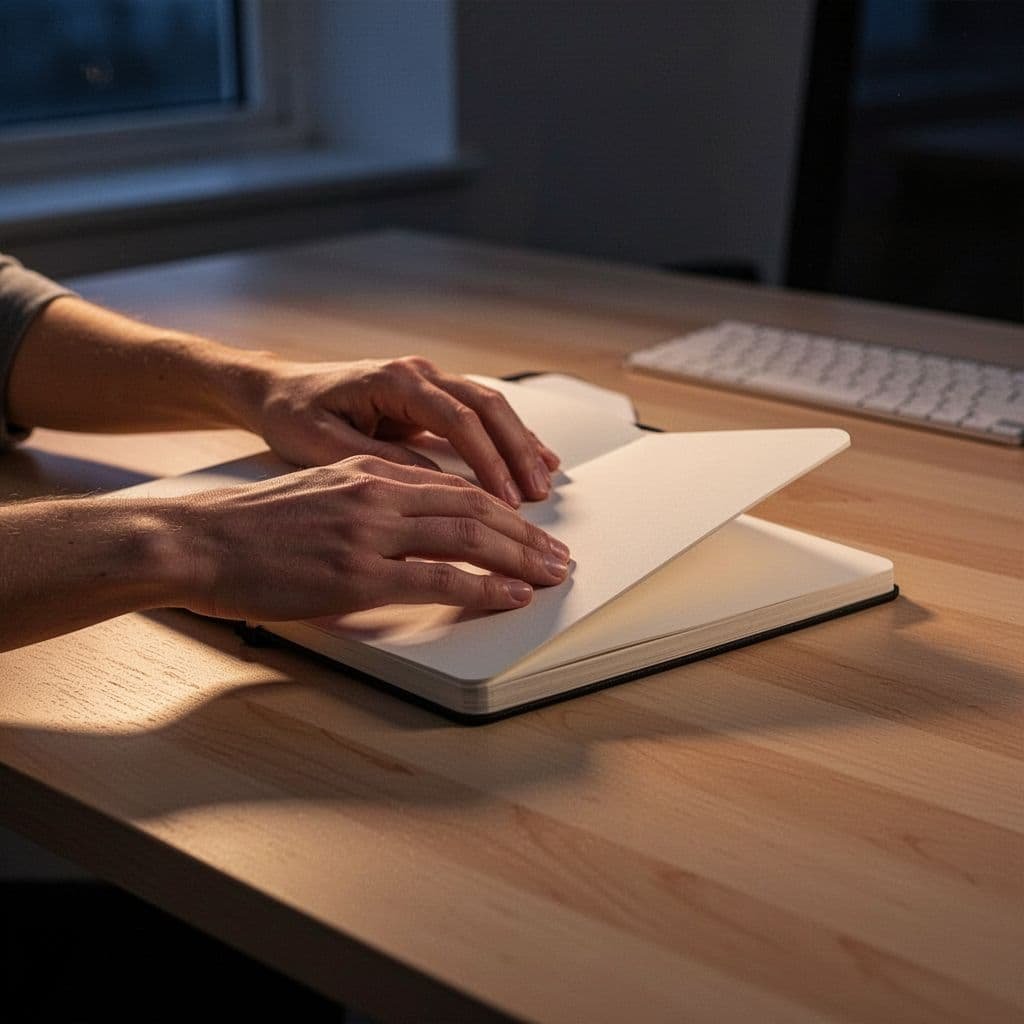
Keep it simple with these steps:
- Set a timer for two minutes around 8 PM. Grab a notebook.
- List three wins: a finished task, a kind moment, or steady focus.
- Jot one gratitude: family time, a good meal, or quiet progress.
- Unplug screens one hour before bed. Charge your phone across the room.
- Dim lights and relax with a book or stretch.
Make recharge fun. Sip herbal tea, listen to soft music, or call a friend. Avoid work emails; they restart your brain.
An entrepreneur I know added this. He reviewed sales calls and team wins nightly. Sleep improved, stress dropped, and mornings brought clear ideas. He hit goals faster. Try productive night routine ideas to customize yours. End strong, start sharper tomorrow.
Conclusion
These 10 habits turn scattered days into steady wins. You reclaim hours lost to interruptions and build flow that lasts.
Here’s a quick recap:
- Morning ritual to clear fog.
- Three must-do tasks only.
- Short bursts with breaks.
- Cues to signal focus.
- Block all distractions.
- Steady fuel for energy.
- Hourly moves to recharge.
- Deep breaths for presence.
- One task at a time.
- Evening review to unwind.
Start small. Pick two habits today. Consistency beats perfection every time; track them for a week and see your focus sharpen.
Which two will you try first? Comment below and share what helped most. Focused days stack up to hit those big goals.
Save pin for later

- 60 Color Tattoos That Healed Beautifully - 25/09/2026
- 40 Most Painful Tattoo Spots - 24/09/2026
- 20 Tattoo Aftercare Mistakes That Ruin Fresh Ink - 23/09/2026

