A protein-rich breakfast can do a lot more than fill the gap between waking up and lunch. It can calm mid-morning hunger, support steadier energy, and make it easier to skip the random snack run before noon.
If your mornings feel rushed, you don’t need a complicated menu to stay full. A few smart choices, like eggs, Greek yogurt, cottage cheese, oats, nuts, and seeds, can turn breakfast into something that actually lasts, and you can find more practical ideas for busy mornings in this guide to healthy breakfast ideas for busy mornings.
The real trick is pairing protein with fiber, so your meal digests more slowly and keeps you satisfied longer. Next, you’ll find 12 easy breakfast ideas that fit real-life mornings and work without a lot of prep.
Why a protein-packed breakfast helps you stay full
A filling breakfast does more than stop morning hunger for an hour or two. It helps you feel satisfied, keeps energy steadier, and makes it easier to avoid reaching for snacks before lunch.
Satiety is the feeling that you have eaten enough. Protein helps with that because it takes longer to break down than fast carbs, so it stays with you longer. Most people do well with at least 15 to 20 grams of protein at breakfast, plus some fiber and, when possible, healthy fat.
A recent breakfast protein study found that a higher-protein breakfast reduced hunger compared with a carb-based one. That matches what many people notice in real life, a protein-rich meal tends to feel more solid and lasting.
A breakfast built on protein, fiber, and healthy fat usually keeps hunger in check longer than one built on sugar alone.
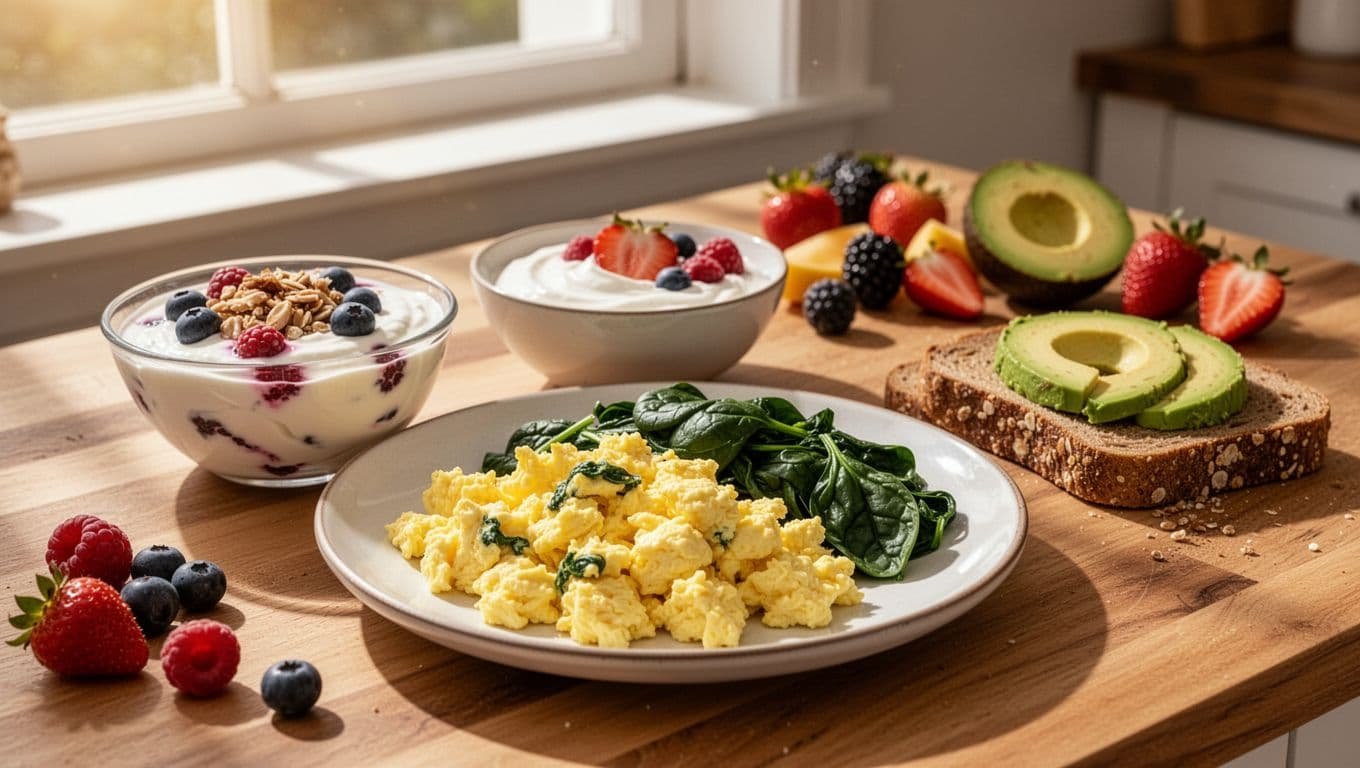
Protein slows digestion and supports fullness
Protein is slower to digest than many refined carbs, so it gives your body more staying power. That slower pace helps you feel comfortable after eating instead of hungry again an hour later.
It also works well because it supports the hormones that tell your brain you have had enough. In simple terms, protein helps your breakfast send a stronger “I am full” signal. If you want a meal that holds up through a busy morning, protein is the base you want.
Fiber and healthy fats make breakfast more filling
Protein works best when it has backup. Fiber and healthy fats slow digestion too, so they help a meal last longer and feel more balanced. That is why oats, fruit, whole grains, nuts, seeds, and avocado make such a strong breakfast mix.
A bowl of oatmeal with berries and chia seeds, eggs with avocado on whole-grain toast, or Greek yogurt with nuts and fruit all do the same job in different ways. For more ideas built around those ingredients, see these high-fiber breakfast ideas.
When you combine these parts, breakfast feels less like a quick bite and more like a real meal. The result is simple, fewer hunger swings and a better chance of making it to lunch without snacking.
Why sugary breakfasts leave you hungry again fast
Cereal, pastries, and sweet drinks can taste great, but they usually do not keep you full for long. They digest quickly, so you get a fast rise in blood sugar, then a drop soon after. That drop often feels like sudden hunger, low energy, or the urge to eat again.
A protein-packed breakfast works in the opposite way. It gives you a steadier start, so you are less likely to ride that spike-and-crash pattern. If you have ever felt hungry again shortly after a donut or a sweet coffee, that is your body asking for something more balanced.
The fix does not have to be complicated. Keep the protein, add fiber when you can, and include a little healthy fat for extra staying power.
The easiest way to build a breakfast that lasts until lunch
You do not need a huge breakfast to stay full. You need a balanced one. The simplest formula is protein plus fiber plus a little healthy fat, because that mix slows digestion and keeps hunger in check.
That means you can build almost any breakfast around one strong protein source, one fiber source, and one flavor or fat boost. Once you know that pattern, breakfast gets a lot easier on busy mornings.
Use this simple breakfast formula
Start with a protein anchor, then add something with fiber, and finish with a small amount of fat or flavor. That keeps the meal satisfying without making it heavy.
A few easy examples work every time:
- Eggs + whole grain toast + avocado
- Greek yogurt + berries + nuts
- Oats + nut butter + banana or chia seeds
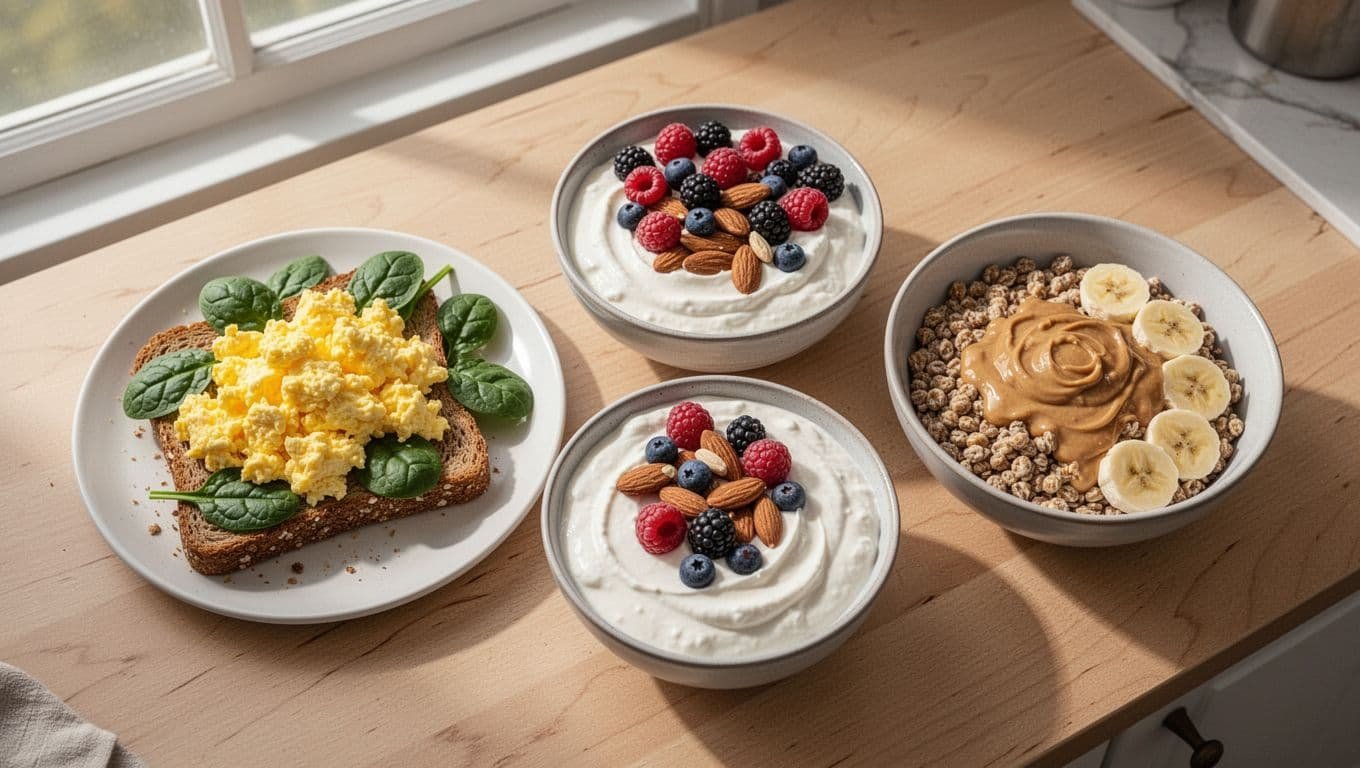
The goal is balance, not perfection. If your breakfast has protein and fiber, you’re already ahead. Add a little fat for staying power, and you have a meal that can carry you to lunch.
For an easy way to keep this pattern steady during the week, pair it with a realistic morning routine checklist. When breakfast has a repeatable structure, you spend less time deciding and more time eating.
Best protein sources for busy mornings
Some protein foods are better for rushed mornings than others. Eggs are fast, Greek yogurt and cottage cheese need almost no prep, and protein powder mixes into smoothies or oats in seconds.
Other good options include tofu, turkey, salmon, beans, and nut butters. Tofu works well in a quick scramble, while turkey and salmon are great if you have leftovers. Beans add protein and fiber at the same time, and nut butters are easy to spread or stir into oats.
For weekday speed, the quickest choices are usually Greek yogurt, cottage cheese, protein powder, eggs, and nut butters. They need little or no cooking, which makes them easy to use even when the morning feels cramped.
Small prep habits that save time all week
A little prep goes a long way. If you batch-cook once or twice a week, breakfast becomes almost automatic.
These habits help the most:
- Batch cook eggs or oats so you have a ready base.
- Make overnight oats the night before for grab-and-go mornings.
- Boil eggs ahead of time for fast protein.
- Pre-cut fruit so berries, melon, or apples are ready to add.
- Buy single-serve yogurt or cottage cheese for days when you need zero prep.
If you want breakfast to feel easy, keep a few parts ready in the fridge. Then you can mix and match without starting from scratch every morning.
High protein sweet breakfasts that feel like a treat
Sweet breakfasts can still be filling. The trick is to keep the dessert feel, then build in enough protein, fiber, and healthy fat to slow hunger down. That way, you get something that tastes like a treat but works like a real breakfast.
These ideas are easy to make at home, and they fit busy mornings without much fuss. If you want even more prep-friendly options, these quick breakfast ideas before work can help you keep mornings simple.
Greek yogurt bowls with fruit, nuts, and seeds
Thick Greek yogurt gives you a strong protein base right away. Add berries, chia seeds, and nuts, and you get fiber, crunch, and a little natural sweetness in every bite.
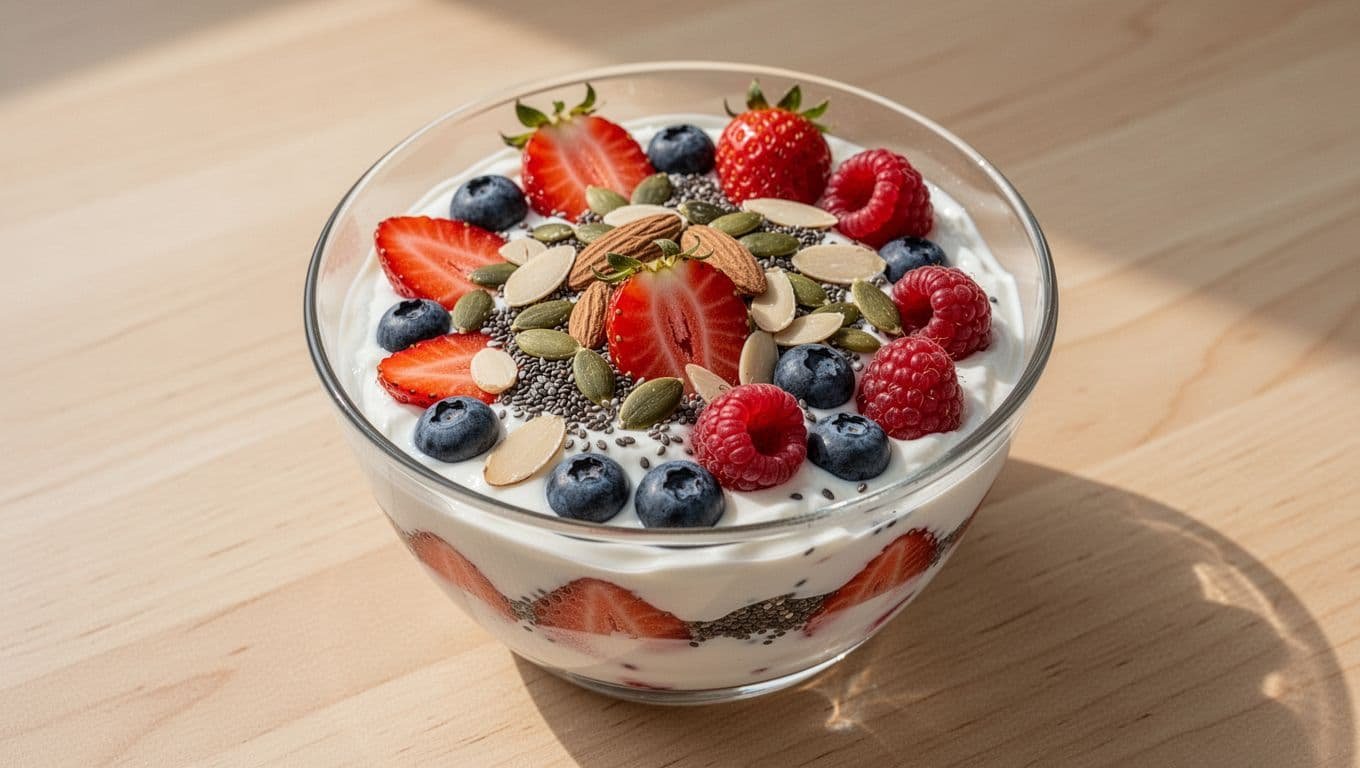
This is one of the easiest no-cook breakfasts you can make. A bowl like this works well because the yogurt keeps you full, while the fruit and seeds slow things down even more. For a simple upgrade, use plain Greek yogurt and add cinnamon or vanilla instead of leaning on sweet toppings.
For a little more staying power, top it with sliced almonds, walnuts, or hemp seeds. If you want a breakfast that feels like dessert but still holds you until lunch, this is one of the best places to start.
Overnight oats with peanut butter and chia seeds
Oats are a smart base because they bring fiber and steady energy. When you mix them with peanut butter or protein powder, the protein count climbs fast, and the bowl feels a lot more satisfying.
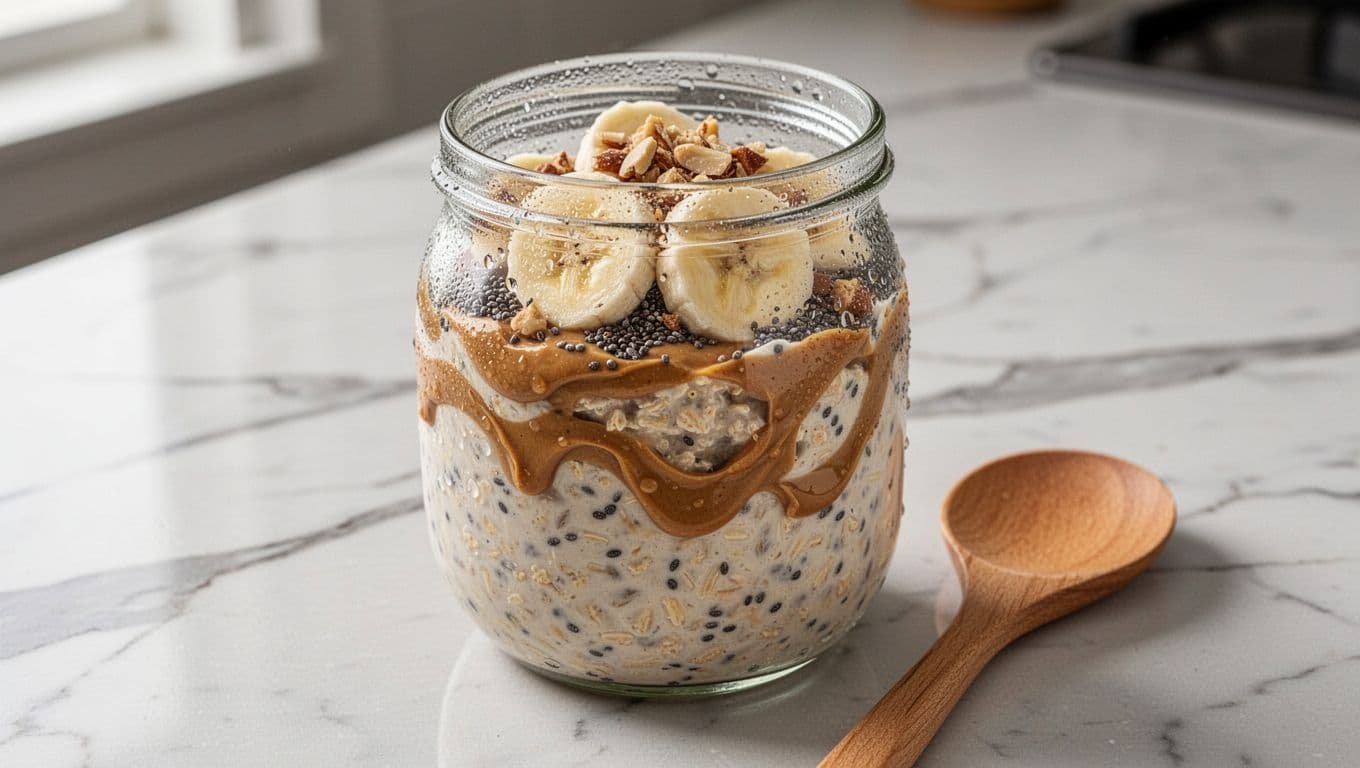
This is also a great make-ahead option. You can prep several jars at once, which saves time on busy mornings and keeps breakfast ready in the fridge, and a high-protein overnight oats recipe can give you a good starting point.
If you want a healthier swap, use natural peanut butter and add chia seeds for extra thickness. A few berries on top keep it sweet without turning the jar into a sugar bomb.
Protein pancakes or waffles that do not taste bland
Protein pancakes work best when you build them with ingredients that still taste good, like cottage cheese, oats, eggs, or protein powder. Those ingredients make the stack more filling, and they add a softer, richer texture than plain mix.
Instead of pouring on sugary syrup, top them with fruit, yogurt, or nut butter. That keeps the meal sweet, but it also adds protein and a little fat, which helps you stay full longer. If you want a lighter swap, use berries and Greek yogurt instead of heavy toppings.
The key is to keep the pancakes tender and flavorful. A banana in the batter, a little cinnamon, or vanilla protein powder can make a big difference. When done well, these taste like weekend food, even on a weekday.
Smoothies that actually keep you full
A filling smoothie needs more than fruit and ice. Build it with protein powder, Greek yogurt, milk, nut butter, oats, or frozen fruit, and make it thick enough to sip slowly instead of drinking it like juice.
The balance matters here. Protein gives the smoothie staying power, oats add body, and nut butter or yogurt makes it feel richer and more complete. If you want a better swap, skip juice and use milk or unsweetened soy milk for more protein and less sugar.
Frozen fruit helps with texture, but it should not do all the work. A good smoothie should feel almost spoonable, not watery. When you get the thickness right, it becomes a real breakfast, not just a sweet drink that fades fast.
Savory high protein breakfasts for people who want real food
Sweet breakfasts are not the only way to start the day. If you want something hearty, savory, and more satisfying, these meals hit harder because they bring protein, fiber, and real texture to the table.
That matters on busy mornings. Eggs, beans, cottage cheese, tofu, chicken, and whole grains give you the kind of breakfast that feels like a meal, not a snack with a spoon.
Egg scramble with vegetables and whole grain toast
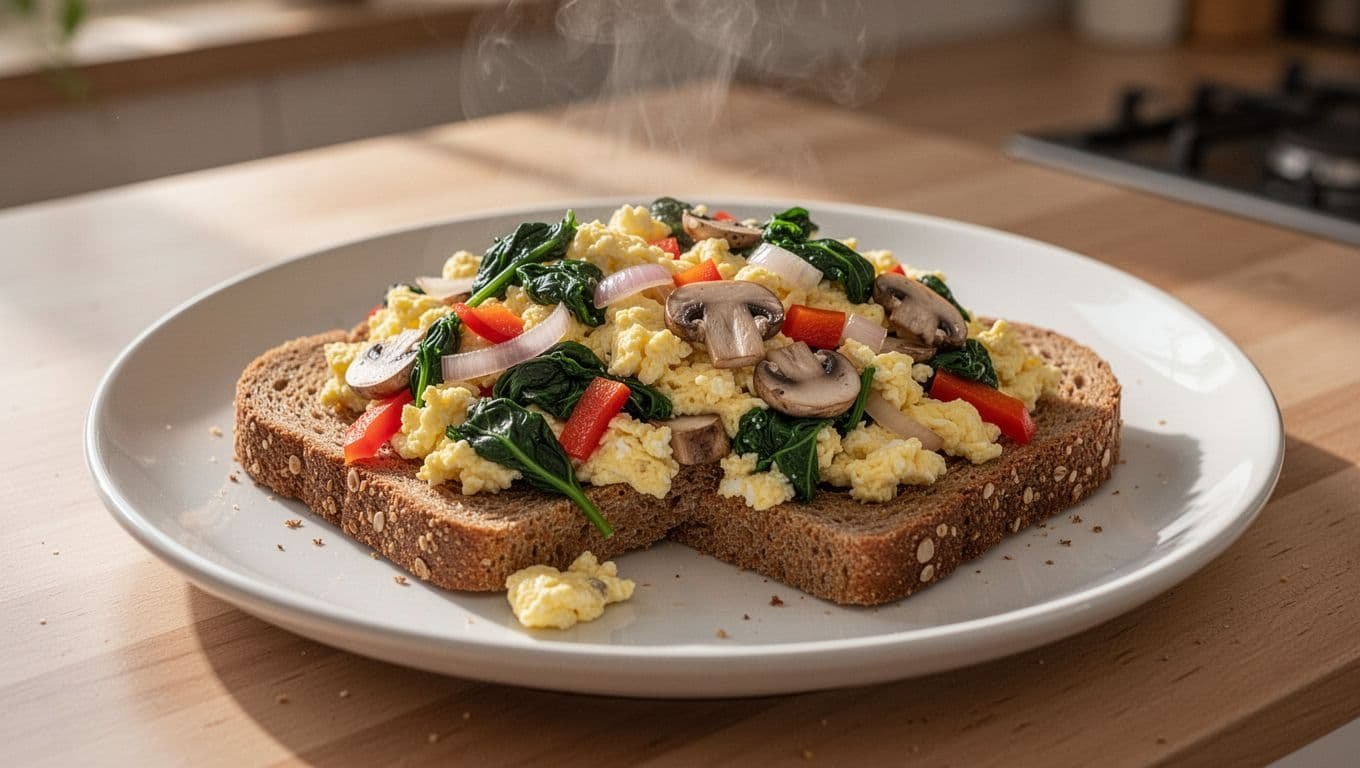
Eggs give you a strong protein base, and that makes this breakfast hold up well through the morning. When you add vegetables, you get more volume, more fiber, and a meal that feels bigger without becoming heavy.
Spinach, peppers, and mushrooms are easy wins because they cook fast and add a lot of flavor. Whole grain toast finishes the plate with extra fiber, so the meal lasts longer and feels more complete. A little cheese, salsa, or fresh herbs can make it even better without much extra work.
This is one of the easiest breakfasts to keep in rotation. You can cook everything in one pan, serve it in minutes, and still feel like you ate something real.
Breakfast burritos with eggs, beans, and turkey or tofu
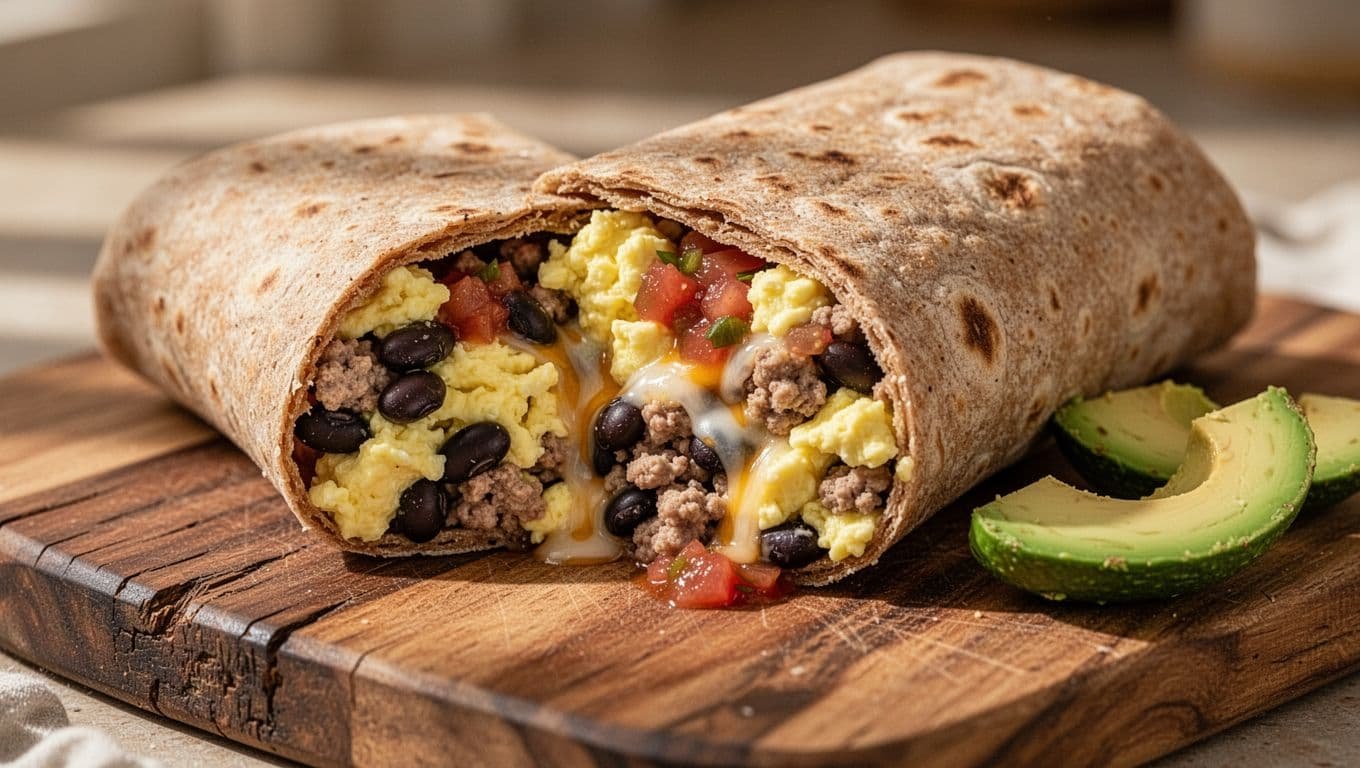
Breakfast burritos are ideal when you want something you can hold in one hand and eat on the go. They also work well for simple protein breakfast preps, because you can make a batch ahead and reheat them all week.
Beans pull a lot of weight here. They add protein, fiber, and a soft, hearty texture that makes the burrito more filling, while eggs bring the protein base. Add turkey for a meat-forward version, or tofu if you want a plant-based option that still feels substantial.
Wrap them in whole wheat tortillas, then keep the fillings simple. Scrambled eggs, black beans, turkey or tofu, and a little salsa are enough to make a breakfast that travels well and keeps hunger in check.
Cottage cheese toast with savory toppings
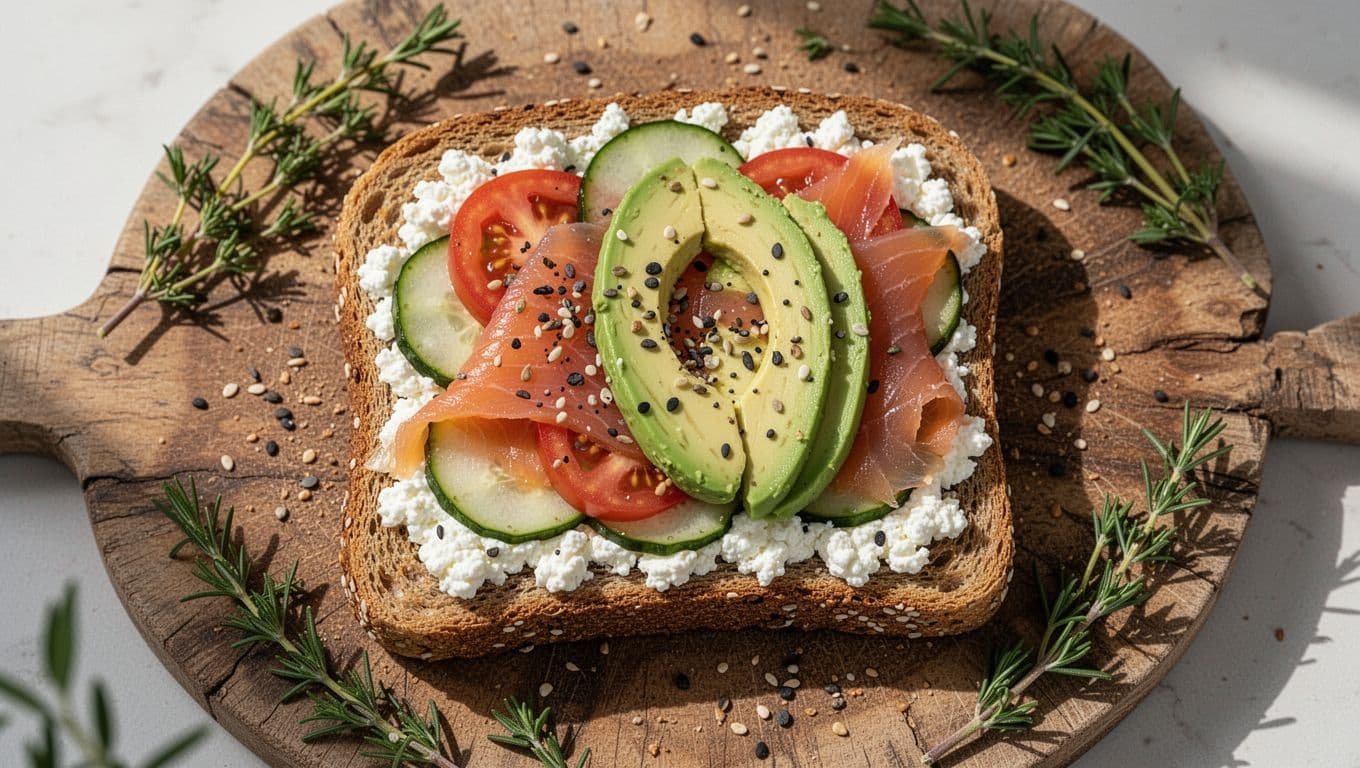
Cottage cheese is making a real comeback because it’s high in protein and fast to use. For a deeper look at the trend, this cottage cheese overview explains why it keeps showing up in so many breakfast ideas.
Toast gives it a sturdy base, and savory toppings keep the flavor fresh. Try tomato and cucumber for a crisp, clean bite, or add smoked salmon and avocado for a richer plate. Everything seasoning works especially well because it adds salt, crunch, and a little extra punch.
This kind of breakfast is great when you want almost no cooking. Spread, top, and eat. It’s simple, but it still feels balanced and filling.
Breakfast soups or brothy bowls for cold mornings
Warm, savory breakfasts are having a bigger moment, and brothy bowls fit that shift well. They feel calming, satisfying, and a little different from the usual egg-and-toast routine.
Broth gives the bowl a light base, while eggs, tofu, chicken, or vegetables turn it into something more filling. You can keep it simple with spinach and mushrooms, or add shredded chicken for more protein. A soft-boiled egg, scallions, and a little soy sauce or chili oil can give it a lot of flavor fast.
These bowls are especially good on cold mornings when you want comfort without a heavy meal. They warm you up, hydrate you a little, and still deliver the protein you need to stay full longer.
A few smart swaps that raise protein without much effort
You do not need a full breakfast overhaul to eat more protein. Small swaps often do the heavy lifting, especially when you use foods you already keep in the fridge or pantry.
The easiest wins are usually the ones that keep your routine intact. Change the ingredient, keep the meal, and breakfast feels the same, only more filling.
Choose higher protein dairy when you can
Plain Greek yogurt is an easy upgrade over regular yogurt because it packs much more protein in the same bowl. Recent nutrition data shows Greek yogurt usually gives you about double the protein of regular yogurt, while cottage cheese goes even higher per cup. If you want a quick comparison, Greek yogurt vs. regular yogurt breaks down the difference well.
Cottage cheese is another smart swap because it works in both sweet and savory meals. Spoon it into a fruit bowl with cinnamon and berries, or use it on toast with tomato, cucumber, or everything seasoning. That flexibility makes it one of the easiest protein boosters to use often.
Add nuts, seeds, or nut butter for more staying power
Nuts, seeds, and nut butter add a little protein, healthy fat, and better texture. They make yogurt creamier, oatmeal richer, and toast more satisfying, so breakfast feels fuller with very little effort.
A small spoonful is usually enough. These foods are calorie dense, so a modest portion keeps the meal balanced without going overboard. A tablespoon of peanut butter, a sprinkle of chia seeds, or a handful of almonds can make a simple breakfast last much longer.
Small add-ons matter when you use them often. A few extra bites of protein and fat can change how long breakfast holds you.
Swap refined carbs for whole grains
Whole grains bring more fiber than refined carbs, and that fiber helps breakfast last longer. Whole grain toast, oats, and wraps all slow down digestion a bit, so you stay satisfied instead of getting hungry again too soon. Harvard’s whole grains guide explains why that matters for fullness and steadier energy.
This swap works best when you keep the rest of the meal the same. Use whole grain bread instead of white toast, choose oats instead of sugary cereal, or wrap eggs and beans in a whole wheat tortilla. If you want a breakfast that feels more stable through the morning, this is one of the simplest places to start, and it fits well with blood sugar-friendly breakfast choices.
How to choose the best breakfast for your routine
The best high-protein breakfast is the one that fits your morning, your appetite, and your real-life habits. If you only have five minutes, a smoothie or yogurt bowl makes more sense than a full cook-and-clean setup. If you like sitting down to eat, a burrito or egg plate may keep you fuller and feel more satisfying.
The goal is simple: pick a breakfast you can repeat often, then adjust it based on how much time you have. Some mornings call for speed, others are better for prep, and your body will tell you whether the meal is doing enough work.
Best options for rushed mornings
When time is tight, keep breakfast simple and low-effort. You want something that comes together fast, travels well, and still gives you protein plus a little fiber.
These are the easiest wins for rushed mornings:
- Greek yogurt bowls with berries, nuts, or seeds, because they take minutes and need no cooking.
- Smoothies with protein powder, milk, Greek yogurt, or nut butter, since you can drink them on the way out.
- Whole grain toast with peanut butter, eggs, or avocado, which gives you a quick mix of protein and staying power.
- Make-ahead oats that wait in the fridge and only need a spoon.
A good rushed breakfast does not need to look fancy. It just needs to keep you from hitting that mid-morning wall. If you want more quick options that fit busy days, high-protein breakfast meal prep ideas can help you build a few fast favorites.
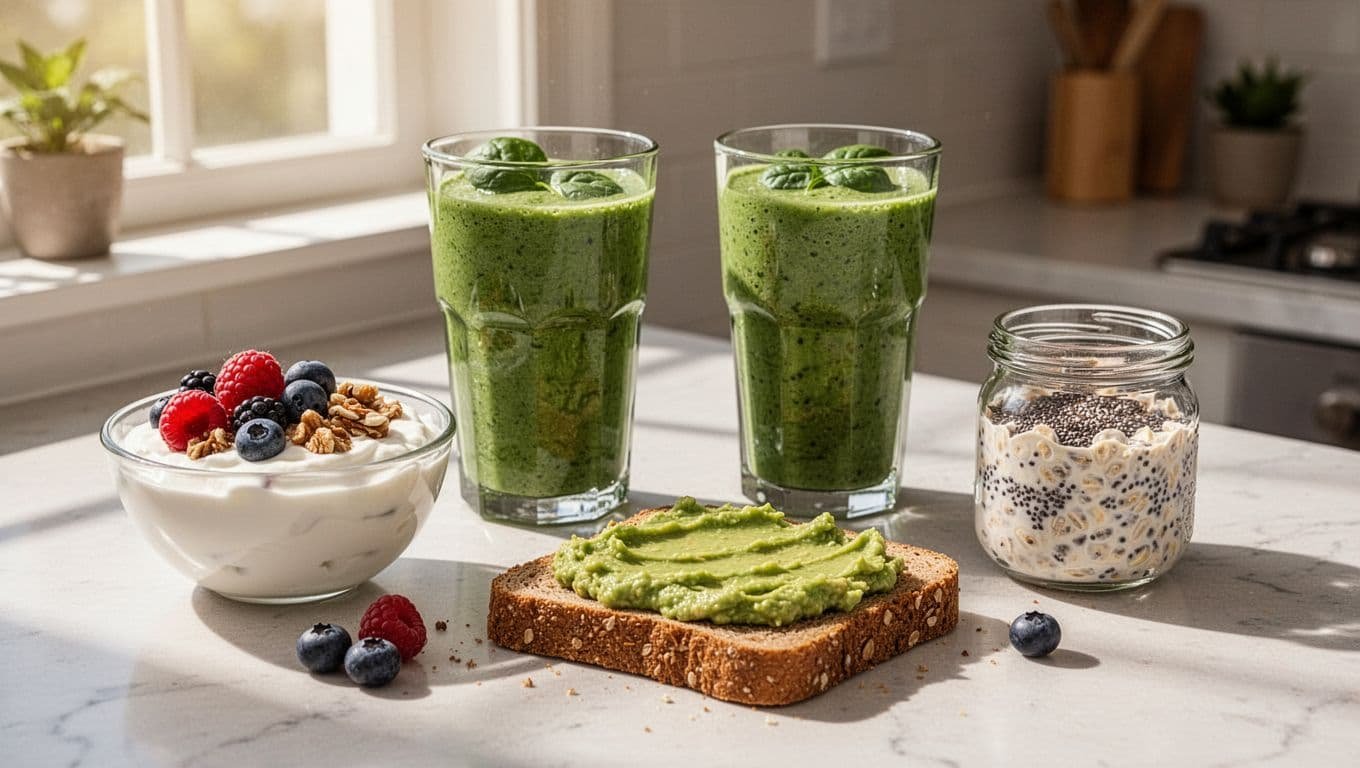
The best choice here is the one you can make without thinking. If you are half-awake and headed out the door, keep the recipe short and the ingredients familiar.
Best options for meal prep days
Meal prep days are when breakfast gets easier for the rest of the week. A little effort on Sunday can save you from making food decisions every morning.
These are the strongest options for prepping ahead:
- Breakfast burritos with eggs, beans, turkey, or tofu, which reheat well and feel filling.
- Overnight oats made in jars, since you can prep several at once and grab them later.
- Protein pancakes made in a batch, then stored for quick reheating.
- Boiled eggs kept in the fridge, ready to pair with toast, fruit, or yogurt.
Prep once, then let breakfast work for you all week. That matters when mornings are busy, because it removes the guesswork and cuts down on skipped meals. For more ideas built around this same habit, prep-ahead protein breakfast routines can make your week feel a lot smoother.
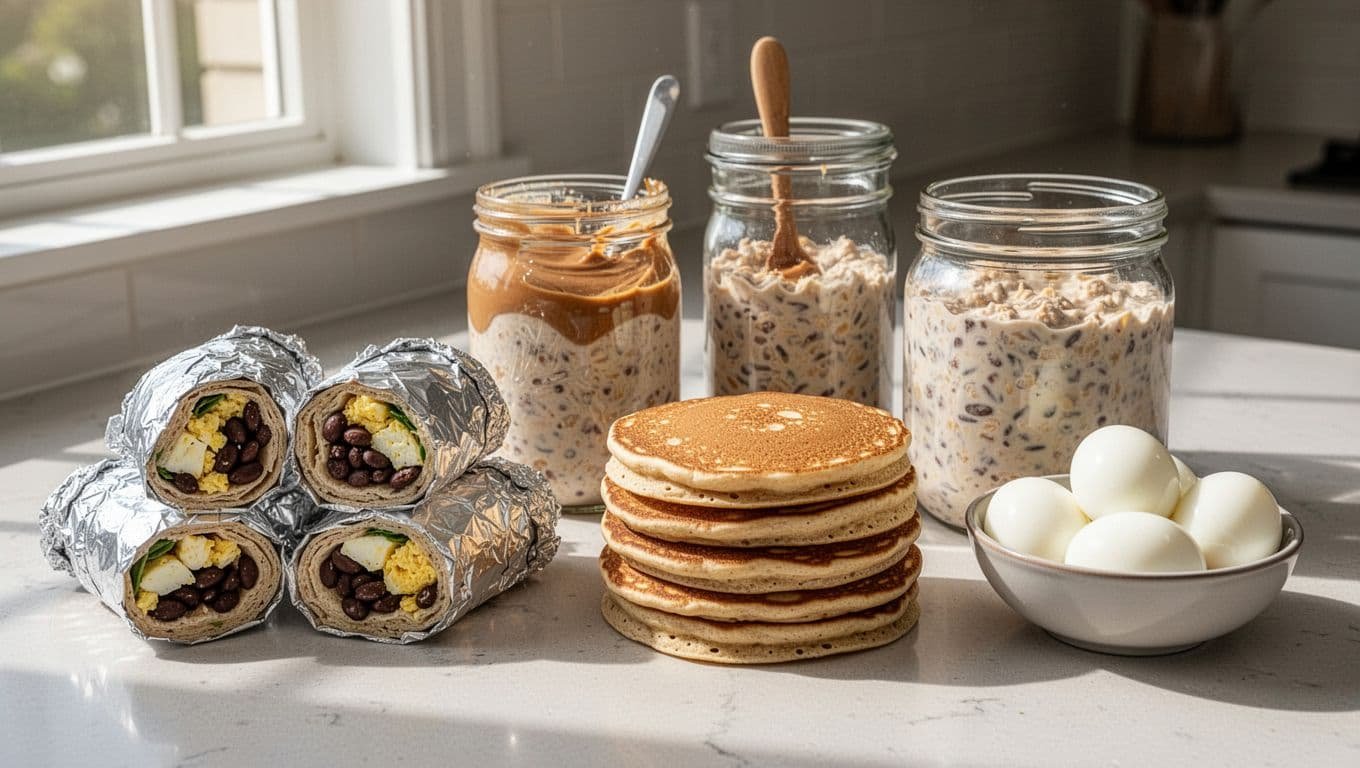
If breakfast keeps slipping through the cracks, prep is usually the fix that sticks.
The trick is to choose foods you still want to eat after a few days. A great meal prep breakfast should taste good, reheat well, and fit into your morning without a fuss.
How to tell if breakfast is filling enough
Your body usually gives clear feedback. If you are hungry before noon, your breakfast may need more protein, fiber, or both. The same goes for a mid-morning energy crash, which often means the meal was too light or too carb-heavy.
Pay attention to a few simple signs:
- Hunger returns early, usually within two or three hours.
- Energy drops hard before lunch.
- You start reaching for snacks long before your usual lunch time.
- You feel satisfied for a while, then get hungry at a normal time.
If breakfast does not hold you, adjust one piece at a time. Add another egg, use Greek yogurt instead of regular yogurt, stir chia seeds into oats, or swap white toast for whole grain. Small changes often solve the problem fast.
The best test is consistency. When a breakfast keeps you comfortable, focused, and not hunting for snacks, it is doing its job. If it only works sometimes, simplify it until it becomes a breakfast you will actually eat often.
Conclusion
A high-protein breakfast does more than fill space in the morning. It helps you feel steadier, stay satisfied longer, and cut down on random snacking before lunch.
Try one sweet option, like Greek yogurt with fruit, and one savory one, like an egg scramble or breakfast burrito. Then notice which one keeps you full in a way that fits your day better.
Small breakfast choices can change how the whole morning feels. If you want to build that into a larger routine, start with healthy eating habits and keep breakfast simple enough to repeat.
Save pin for later

- 60 Color Tattoos That Healed Beautifully - 25/09/2026
- 40 Most Painful Tattoo Spots - 24/09/2026
- 20 Tattoo Aftercare Mistakes That Ruin Fresh Ink - 23/09/2026

