When stress settles into your shoulders, steals your sleep, or leaves your mind racing at night, food may be one practical place to start. Cortisol is a normal hormone that helps your body respond to pressure, but ongoing stress can keep that response switched on and leave you feeling tense, tired, and unsettled.
No single food can erase stress or instantly lower cortisol. However, fatty fish, magnesium-rich foods, fermented foods, dark chocolate, and vitamin C and polyphenol-rich fruits and vegetables may support your nervous system, gut health, inflammation control, and steadier energy. These choices work best alongside regular meals, quality sleep, movement, and other natural ways to regulate your nervous system.
Next, you’ll see how to add these five foods to a balanced eating pattern that supports your body during stressful periods.
How Food May Support a Healthier Stress Response
Food can’t switch off stress on command, but it can give your body steadier materials for handling pressure. Cortisol is part of your body’s normal alarm system. It usually rises in the morning, helps you feel alert, and falls as the day moves toward sleep.
The goal isn’t to eliminate cortisol. You need this hormone for energy, blood pressure, immune activity, and a healthy response to challenges. The better goal is to support a balanced daily rhythm, so your body can respond when needed and settle afterward.
Nutrients That Support Stress Regulation
Several nutrients may help through pathways connected to inflammation, blood sugar, brain signaling, and the gut-brain connection.
- Omega-3 fats from salmon, sardines, walnuts, chia seeds, and flaxseeds may support a healthier inflammatory response and influence stress reactivity.
- Magnesium from pumpkin seeds, beans, spinach, almonds, and whole grains helps with nerve and muscle function. Low intake may make it harder for the body to manage tension, although magnesium supplements aren’t a universal cortisol treatment.
- Antioxidants, including vitamin C and plant polyphenols, help protect cells from oxidative stress. Fruits, vegetables, berries, citrus, and cocoa provide these compounds in food.
- Fiber slows digestion and carbohydrate absorption. As a result, meals with beans, oats, vegetables, fruit, and whole grains may help reduce sharp blood sugar swings that can add strain to the stress system.
- Fermented foods such as plain yogurt, kefir, kimchi, and sauerkraut contain beneficial bacteria. Fiber also feeds gut bacteria, which produce short-chain fatty acids involved in communication between the gut, immune system, and brain.
Research on these connections is promising but still developing. A recent review found supportive evidence for omega-3 fats, magnesium, probiotics, fiber-rich diets, and Mediterranean-style eating, but the effects were modest and varied between studies. Some research also examines supplements or complete dietary patterns rather than one specific food. You can read the findings in this review of food and daily cortisol secretion.
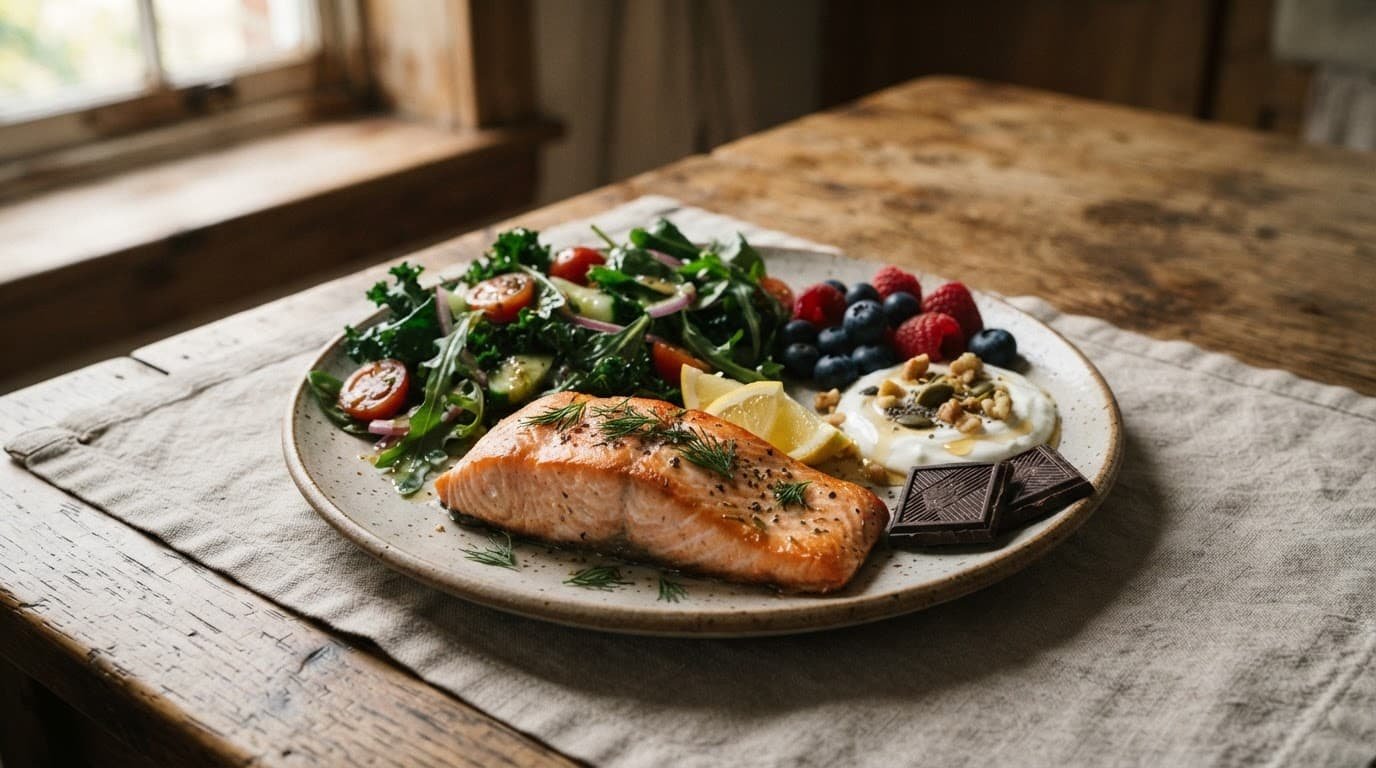
Build a Steady Eating Pattern
A single square of dark chocolate or a serving of salmon won’t erase a difficult day. Your overall routine matters more than chasing a so-called superfood.
Try building meals around a source of protein, a high-fiber carbohydrate, colorful produce, and a healthy fat. For example, oatmeal with berries and walnuts can provide fiber, plant compounds, and satisfying fat. A lunch of beans, greens, brown rice, and avocado offers a similar mix without requiring complicated preparation.
Regular meals may also help when stress makes you forget to eat. Long gaps can leave you shaky, irritable, or overly hungry, while balanced meals provide steadier energy. Drink enough water, limit excess alcohol, and notice whether caffeine worsens your racing thoughts or poor sleep.
Sleep and movement belong in the same picture. Regular walks, strength training, calming routines, and healthy habits for better mental health can support the same stress system that nutritious food helps nourish. When these habits work together, your body has more chances to return to a calmer baseline.
5 Foods That Reduce Stress Hormones, According to the Evidence
These foods may give your body nutrients that support brain health, inflammation control, gut function, and a steadier stress response. They aren’t guaranteed cortisol cures, and their benefits matter most within a balanced eating pattern.

Fatty Fish Provides Omega-3 Fats for the Stress Response
Salmon, sardines, trout, herring, and anchovies provide EPA and DHA, two omega-3 fats linked with brain health and a healthier inflammatory response. Omega-3 intake may also soften the body’s reaction to stress, although much of the strongest research examines overall intake or supplements rather than one specific meal.
Aim for one or two servings of low-mercury fatty fish each week. Try salmon with brown rice and greens, sardines on whole-grain toast, or a tuna and bean salad. Chia seeds, ground flaxseed, and walnuts provide ALA, a different omega-3 form that the body converts less efficiently to EPA and DHA. The American Heart Association’s fish guidance offers a useful general target.
Choose lower-mercury fish, especially during pregnancy. Ask a doctor or pharmacist before taking high-dose omega-3 supplements, particularly if you use warfarin or another blood thinner.
Magnesium-Rich Foods May Help Calm the Nervous System
Spinach, pumpkin seeds, almonds, cashews, avocado, beans, oats, whole grains, and bananas supply magnesium. This mineral supports nerve function, muscle relaxation, energy production, and communication between brain chemicals.
Low magnesium intake may be linked with stress and anxiety. Still, eating magnesium-rich foods doesn’t prove that one food lowers cortisol. Build it into familiar meals instead. Oatmeal with banana, walnuts, and chia seeds makes an easy breakfast, while spinach with avocado and pumpkin seeds works well as a salad.
Magnesium from food is generally safe for most people. Supplements can cause diarrhea and may interact with some medicines, so focus on food first unless a health professional recommends otherwise. For more ideas, explore these foods that naturally support stress regulation.
Yogurt, Kefir, and Other Fermented Foods Support the Gut-Brain Connection
The gut and brain communicate through nerves, immune signals, and chemical messengers. Healthy gut bacteria may influence mood and the body’s stress response. Plain Greek yogurt, kefir, live-culture yogurt, sauerkraut, kimchi, and kombucha can fit into this pattern.
A review of 46 randomized controlled trials involving 3,516 people found a possible cortisol benefit from probiotic supplements. However, the evidence had low certainty, and results varied widely. Researchers studied supplements more directly than every fermented food sold in stores, so strains, amounts, and treatment length matter.
Try plain yogurt with berries and nuts, kefir in a smoothie, or a small serving of sauerkraut with lunch. Check labels for added sugar, excess sodium, and alcohol in some kombucha products. If your immune system is severely weakened, ask a clinician before using probiotic products.
Dark Chocolate Offers Cocoa Polyphenols and a Little Magnesium
Dark chocolate with a higher cocoa percentage usually contains more cocoa polyphenols and less added sugar than heavily sweetened candy. Cocoa also provides some magnesium, and early research connects cocoa compounds with mood and stress pathways.
The evidence remains limited, so keep portions modest. One or two squares can satisfy a craving, while unsweetened cocoa powder works in oatmeal, yogurt, or a smoothie. No cocoa percentage guarantees a cortisol change.
Chocolate contains caffeine and theobromine. In sensitive people, these compounds may worsen nervousness, heartburn, headaches, or sleep problems. Choose less-sweetened products and eat them earlier in the day if caffeine affects your sleep.
Vitamin C and Polyphenol-Rich Produce Helps the Body Handle Stress
Bell peppers, oranges, kiwi, strawberries, blueberries, broccoli, tomatoes, and leafy greens provide vitamin C, polyphenols, fiber, and other compounds that support antioxidant defenses and general health. Early research suggests vegetable intake may relate to healthier cortisol regulation, but this is the broadest and least hormone-specific category here.
Focus on variety instead of one miracle fruit. Eat sliced peppers with hummus, berries at breakfast, broccoli in a stir-fry, tomatoes in a salad, or an orange with nuts. Fresh, frozen, and low-sodium canned produce all count.
Grapefruit can interact with some medicines, while acidic foods may bother people with reflux or sensitive teeth. Choose the colorful options your body tolerates well and include them regularly.
How to Build Stress-Supportive Meals Without Overthinking Them
Stress-supportive eating doesn’t require a perfect meal plan or expensive ingredients. Start with a simple structure: protein, fiber-rich carbohydrates, healthy fats, and colorful produce. Together, these foods digest more steadily and may help prevent the energy crashes that make a stressful day feel even harder.
The USDA’s MyPlate healthy eating guidance also encourages variety across fruits, vegetables, grains, protein foods, and dairy. You can use that idea without measuring every portion or turning meals into a project.
A Simple Sample Day
Use familiar foods and repeat easy combinations when your schedule feels full. One sample day might look like this:
- Breakfast is oatmeal with banana, chia seeds, and walnuts. The oats and banana provide carbohydrates and fiber, while the seeds and walnuts add healthy fats.
- For a snack, choose plain Greek yogurt with berries. You get protein from the yogurt, plus colorful produce and fiber from the berries.
- Lunch or dinner can be a salmon, spinach, and whole-grain bowl. Add brown rice, quinoa, or another whole grain, then finish with avocado, olive oil, or pumpkin seeds.
- After a meal, enjoy a small piece of dark chocolate if you like it. Eating it with food may feel more satisfying than grazing on sweets when you’re already hungry.
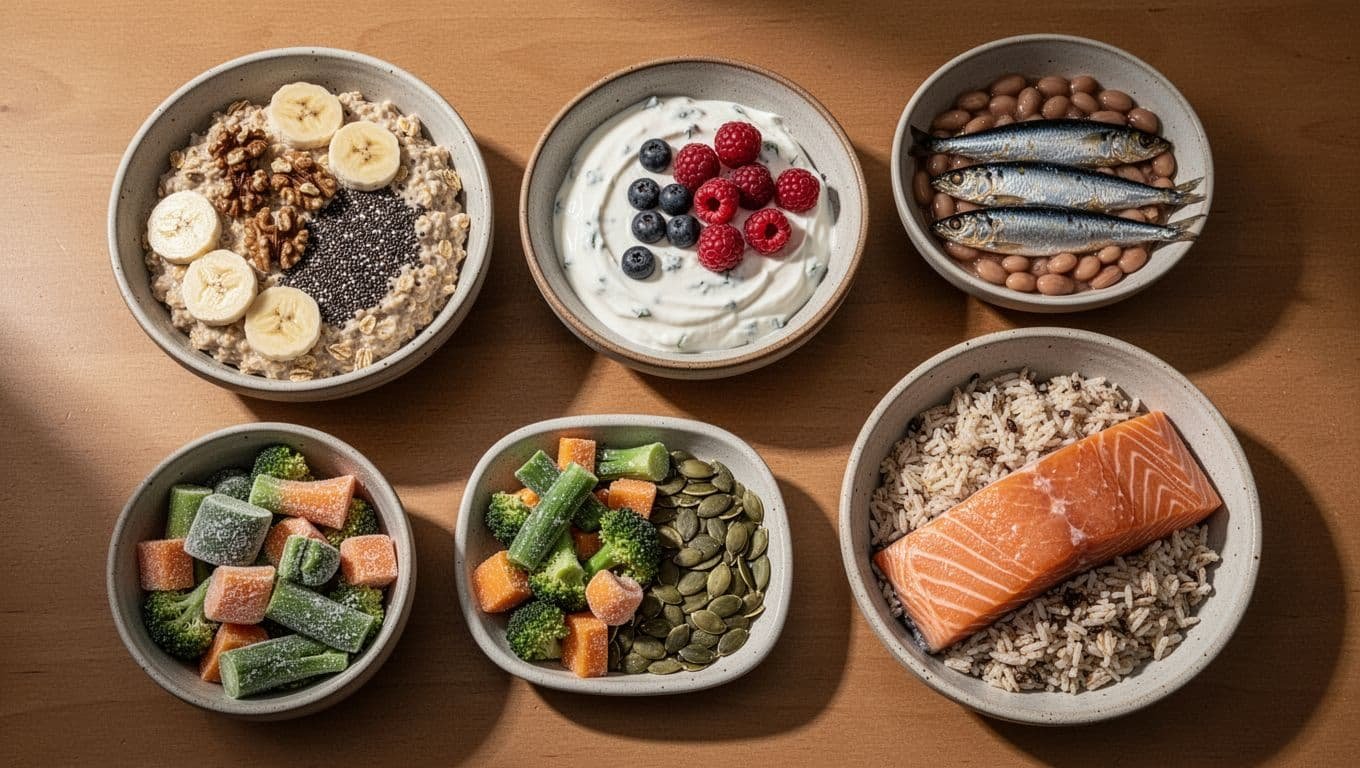
This menu is an example, not medical treatment or a required diet. You can swap ingredients based on your budget, preferences, allergies, and access to fresh food.
Make It Affordable and Easy to Repeat
A stress-supportive meal can come from the pantry. Canned sardines provide omega-3 fats and protein, while beans add fiber and plant protein. Frozen vegetables last longer than fresh produce and work well in grain bowls, soups, omelets, and pasta.
Keep a few low-cost staples available:
- Oats can become breakfast with fruit, seeds, or plain yogurt.
- Pumpkin seeds add magnesium and crunch to salads, oatmeal, and rice bowls.
- Plain yogurt works as a snack, smoothie base, or simple sauce.
- Beans pair with brown rice, frozen vegetables, salsa, or canned fish.
- Canned sardines can replace fresh salmon when seafood needs to cost less.
Consistency matters more than perfection. Add one food to a meal you already eat, such as berries to yogurt or pumpkin seeds to oatmeal. Once that feels easy, make another small change. These daily habits for balancing cortisol work best when they reduce pressure instead of creating another standard to meet.
Slow down when you can. Put your fork down between bites, notice the food’s flavor and texture, and eat without rushing through every mouthful. Even one calm meal gives you a chance to recognize hunger, satisfaction, and the foods that help you feel steady.
Foods and Habits That Can Make Stress Feel Worse
Food can support a steadier stress response, but some everyday habits may push in the opposite direction. Frequent sugar-heavy snacks, excess caffeine, alcohol, skipped meals, and highly processed foods may affect energy, sleep, digestion, or anxiety. The concern is the overall pattern, not one cookie, coffee, or takeout meal.
Watch for Patterns That Disrupt Energy and Sleep
Sugary snacks and drinks can provide quick energy, followed by a crash that leaves you tired, irritable, or reaching for another snack. Highly processed foods may also contain large amounts of added sugar, sodium, or saturated fat while offering less fiber and protein. When these foods replace balanced meals, your energy may feel less stable throughout the day.
Skipping meals can create a similar effect. After several hours without food, you may feel shaky, distracted, or intensely hungry. That discomfort can make normal stress feel louder. Try eating regular meals and snacks that combine carbohydrates with protein or healthy fat. For example, pair an apple with peanut butter, whole-grain crackers with cheese, or yogurt with berries and nuts.
Caffeine deserves attention, especially when stress already makes your heart race or your thoughts spin. Coffee, tea, soda, chocolate, and energy drinks can all contain caffeine. Research has found that caffeine can increase cortisol secretion, particularly during mental stress, as shown in this study of caffeine and cortisol responses.
You don’t need to give up coffee automatically. Instead, notice how much you drink and when you drink it. Caffeine can remain in the body for hours, so an afternoon or evening serving may interfere with sleep even when you feel tired. Limiting caffeine to the morning, drinking water alongside it, and avoiding energy drinks can help protect your sleep routine.

Alcohol Can Feel Relaxing but Disturb Sleep
Alcohol may help you fall asleep faster, but its effects often wear off during the night. You may then sleep more lightly or wake up several times. Poor sleep can leave you more sensitive to stress the following day, creating a cycle that feels difficult to break.
Heavy alcohol use can also affect appetite, hydration, mood, and blood pressure. If you drink, keep track of whether it worsens your sleep or anxious feelings. Choosing water between drinks, avoiding alcohol as a sleep aid, and discussing frequent drinking with a health professional can support better choices. These evening habits for better mental health may also help you create a calmer nighttime routine.
An occasional dessert or cup of coffee isn’t automatically harmful. Your regular habits matter more than a single food.
Know When to Seek Medical Support
Food changes can support well-being, but they can’t diagnose or correct abnormal cortisol levels. Speak with a doctor if you have severe anxiety, unexplained weight loss or gain, high blood pressure, major sleep disruption, or symptoms that persist and interfere with daily life. A clinician can check for medical causes and recommend appropriate testing.
If stress feels overwhelming, a mental health professional can help with anxiety, burnout, sleep problems, or alcohol use. Nutrition is one part of care, and it can’t replace support from a doctor or qualified therapist.
Conclusion
Omega-3-rich fish, magnesium-rich foods, fermented foods, dark chocolate, and colorful produce rich in vitamin C and polyphenols can all fit into a diet that supports stress regulation. The evidence is modest and varies by food, serving, and person, so none of these choices is a fast cortisol fix. A balanced eating pattern matters more than any single ingredient.
Choose one small change that feels easy to repeat. Add berries to breakfast, eat fish once this week, or swap a sugary afternoon snack for plain yogurt with nuts. You can also find more ideas in this guide to foods that may help balance cortisol.
Food works best beside the habits that help your body settle, including regular sleep, movement, breathing exercises, and support from people you trust. If stress or related symptoms continue to interfere with daily life, professional help can provide care that nutrition alone can’t offer.
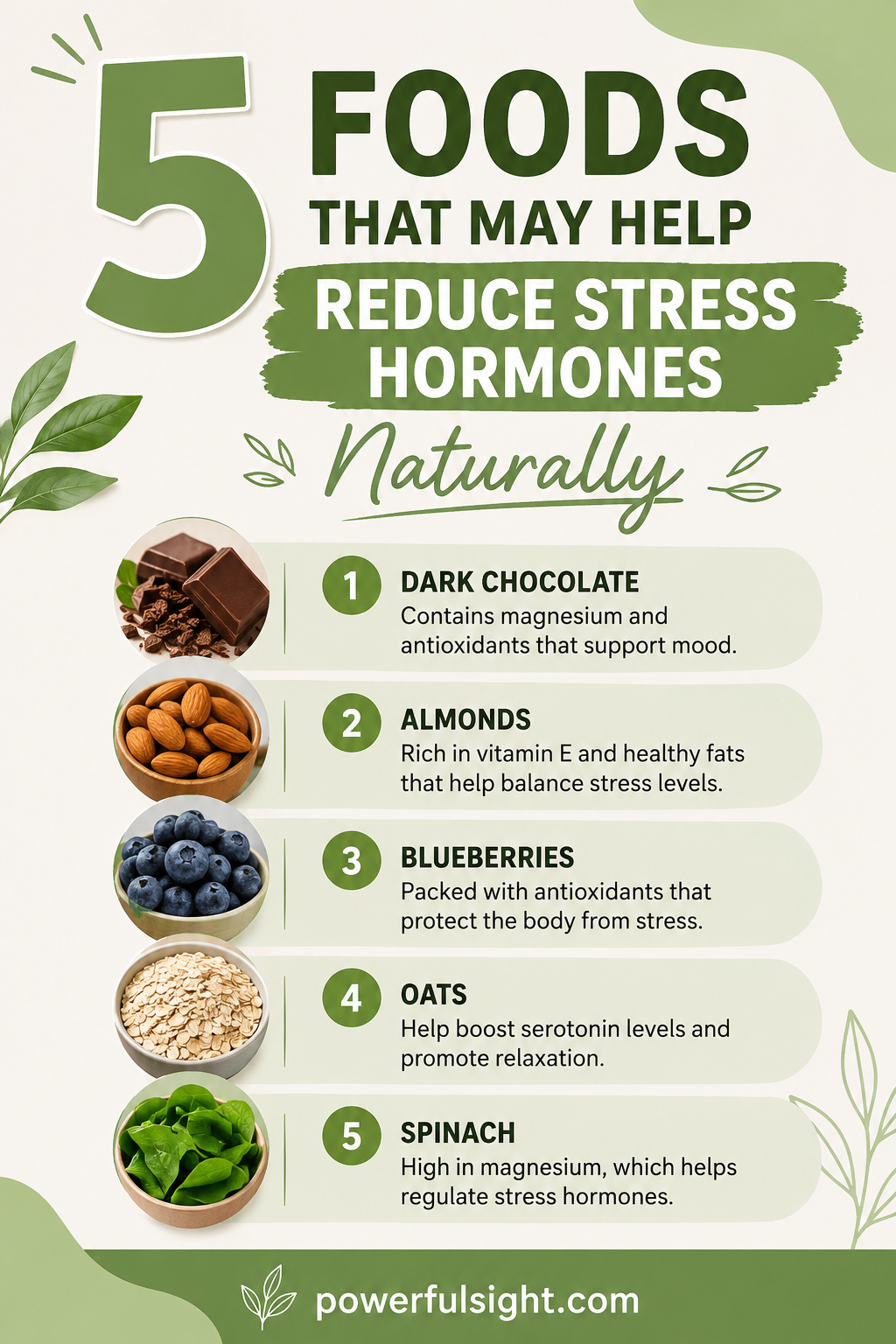
Save the pin for later

- Healthy Air Fryer Recipes for Beginners - 21/09/2026
- Healthy Snacks for Late Night Cravings - 21/09/2026
- High Protein Meal Prep Ideas for Easy Weekly Meals - 21/09/2026

