Lower-back tattoos are getting a fresh look. With cleaner linework, thoughtful symbolism, and designs shaped to follow the body, this placement feels stylish and personal rather than dated. It also offers a private option that you can reveal on your own terms, whether you prefer a small centered symbol or artwork that extends toward the hips.
The 30 ideas ahead include everything from delicate fine-line florals and meaningful script to bold symmetrical wings, ornamental patterns, and striking celestial designs. If you’re drawn to personal symbolism, you may also find inspiration in these meaningful tattoo ideas for women, then adapt the concept to suit your style, shape, and comfort level.
Along with design inspiration, you’ll find practical guidance on placement, sizing, pain, waistband friction, artist selection, and aftercare. These details can help you move from saving ideas to making a safe, informed booking decision, so let’s start with the lower-back tattoo designs worth considering.
30 Lower Back Tattoo Ideas for Women, From Delicate to Bold
The lower back is a flexible canvas for centered pieces, mirrored artwork, side sweeps, and designs that sit just above the waistband. Curved stems and horizontal details can follow your natural shape without making the tattoo feel crowded.
Delicate Floral and Nature Tattoos That Follow the Waistline
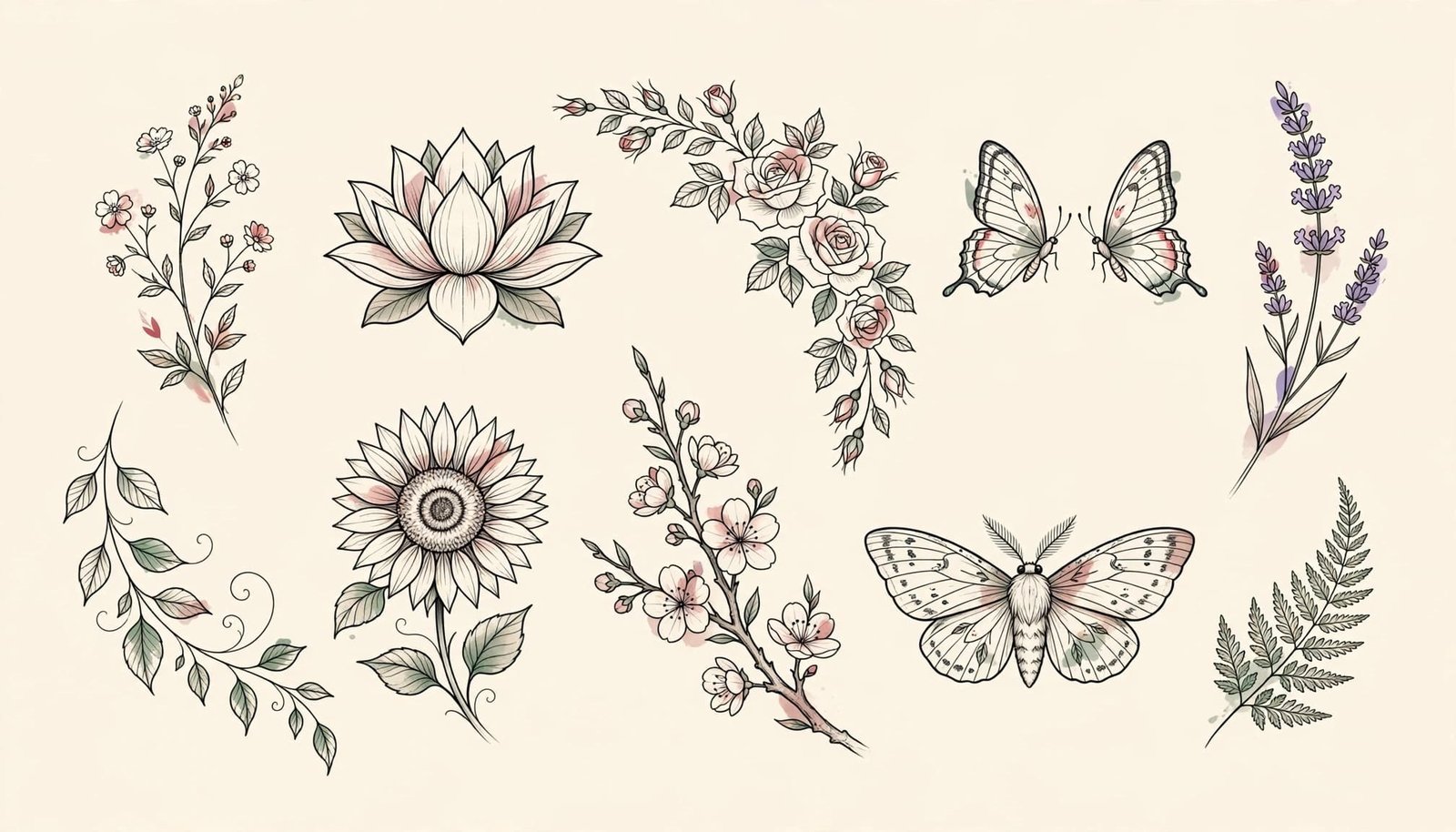
Soft botanical tattoos suit anyone who wants feminine detail with a lighter visual weight. These ideas work especially well in fine-line black ink, muted color, or a gentle side-sweeping layout.
- A fine-line wildflower sprig fits a small or medium tattoo, with curved stems angled toward one hip. Add a birth flower for a personal touch.
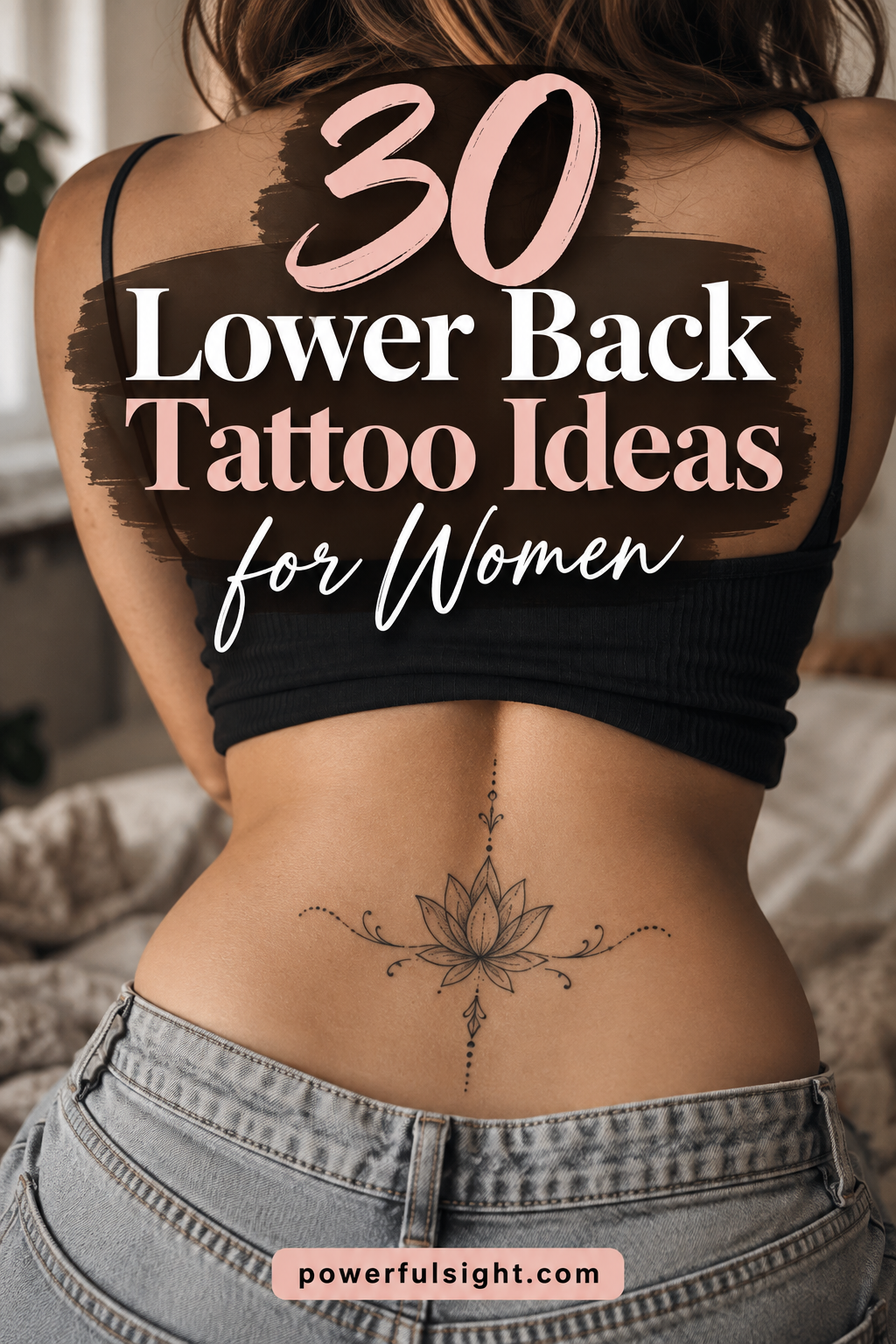
- A centered lotus creates a balanced small or medium design. Black outlines keep it clean, while muted pink or blue adds softness.
- A rose garden sweep works best as a larger piece that travels across the waistline. Use fine shading for a romantic look or stronger outlines for definition.
- A butterfly pair can sit symmetrically above the waistband. Small black butterflies feel delicate, while muted color creates a livelier finish.
- A lavender stem suits a small side tattoo. Its narrow shape follows the curve of the lower back without taking up much space.
- A vine with tiny leaves can arc from the spine toward one hip. Leave space between leaves so the fine details remain readable over time.
- A sunflower above the waistband makes a cheerful medium tattoo. A blackwork center adds contrast, while limited yellow creates a subtle color accent.
- A cherry blossom branch brings movement to a medium or large side sweep. Keep the branch open rather than densely packed with petals.
- A botanical moth combines natural imagery with a slightly mysterious mood. It works well in medium-sized black ink, with flowers placed inside or around the wings.
- A small fern or ivy design suits a discreet tattoo near one side of the spine. Fine-line leaves feel airy, while darker outlines make the pattern more visible.
For more placement inspiration, compare these botanical tattoos for the lower back before choosing your final scale.
Celestial and Meaningful Designs With a Personal Story
Symbols become more personal when you connect them to a date, place, person, or belief. Birth flowers, initials, meaningful coordinates, and a real constellation can keep celestial tattoo ideas from feeling generic.
- A crescent moon with stars creates a small centered design or a medium side sweep.
- A constellation works well in fine-line black ink, especially when its stars match your birth sign or a meaningful night.
- A sun and moon pairing offers natural symmetry. Use blackwork for contrast or muted gold and blue for a softer mood.
- A rising phoenix needs a larger canvas so its feathers remain clear. Curving the wings outward follows the horizontal shape of the back.
- A meaningful date in subtle lettering suits a small centered tattoo. Choose careful sizing because lettering that is too tiny can blur as the tattoo ages.
- A guardian angel wing design can sit across one side or mirror itself across the spine. Fine-line feathers look soft, while black shading feels bolder.
- A compass with small stars makes a medium tattoo with a travel or direction theme. Add coordinates around it for a personal detail.
- A sacred heart fits a centered layout and can include initials, a tiny flame, or a birth flower.
- A zodiac symbol works as a small minimalist tattoo. Pair it with a constellation instead of relying on a generic icon alone.
- A minimalist goddess or feminine face suits medium black linework. Add a moon, flower, or meaningful initials to make the portrait unique.
Ornamental, Geometric, and Statement Lower Back Pieces
Bolder lower-back tattoos benefit from symmetry and negative space. These approaches help a larger design stay readable, whether you prefer fine-line work, dotwork, blackwork, or limited color.
- An ornamental mandala creates a centered medium or large statement piece. Open spaces between petals prevent visual heaviness.
- A geometric side sweep uses triangles, arcs, or fine grids to travel toward one hip without covering the entire waist.
- A lace-inspired pattern gives the lower back a delicate jewelry effect. Fine-line or dotwork details keep it feminine.
- Mirrored snakes can curve outward from the spine. Use fine outlines for elegance or blackwork for a stronger look.
- A butterfly with ornamental details combines a familiar shape with symmetrical filigree and dotwork.
- A blackwork sunburst creates a dramatic centered tattoo. Leave skin gaps between rays so the design does not become a solid block.
- A delicate chain or jewelry effect can follow the waistband area without sitting directly on it. Small charms add meaning.
- A decorative bow works as a medium centered piece, with long ribbons sweeping slightly toward the hips.
- A symmetrical art deco design suits crisp black lines, fan shapes, and limited gold or red accents.
- A bold tribal-inspired pattern can create strong movement across the lower back, but research its cultural source and meaning before choosing the style. Avoid copying sacred or community-specific motifs without understanding them.
Leave a narrow band of skin between the tattoo and low-rise clothing. That negative space helps the artwork peek above the waistband while reducing visual crowding and friction.
How to Choose the Right Lower Back Tattoo Design
The best lower-back tattoo should suit more than your favorite aesthetic. Consider your personality, daily clothing, comfort with visibility, and how the design may look as your style changes. A tattoo that feels right on paper may need a different size, angle, or placement once it meets the curves of your body.
Small, Medium, or Large: What Size Works Best?
Small tattoos work well when you want one clear symbol, a tiny floral motif, a crescent moon, or a meaningful initial. They suit a private placement and usually create a subtle accent rather than a focal point. However, very fine details can become crowded when reduced too far, and tiny lettering may lose clarity as the tattoo ages.
Medium tattoos offer more room for detail and often create the best balance for lower-back designs. A butterfly, ornamental flower, constellation, or short phrase can remain readable without covering the entire waistline. Medium artwork also gives your artist enough space to shape the composition around your spine and hips.
Large pieces create stronger symmetry and more sweeping movement. They work well for wings, mandalas, phoenixes, floral branches, and designs that extend toward both hips. If you want a tattoo with visual weight, a larger canvas lets the artist use negative space instead of packing every area with ink.
Ask your artist to measure the stencil directly on your body before deciding. A phone mockup can show the general idea, but it can’t accurately predict how the design will follow your spine, waist, hip bones, or natural posture.
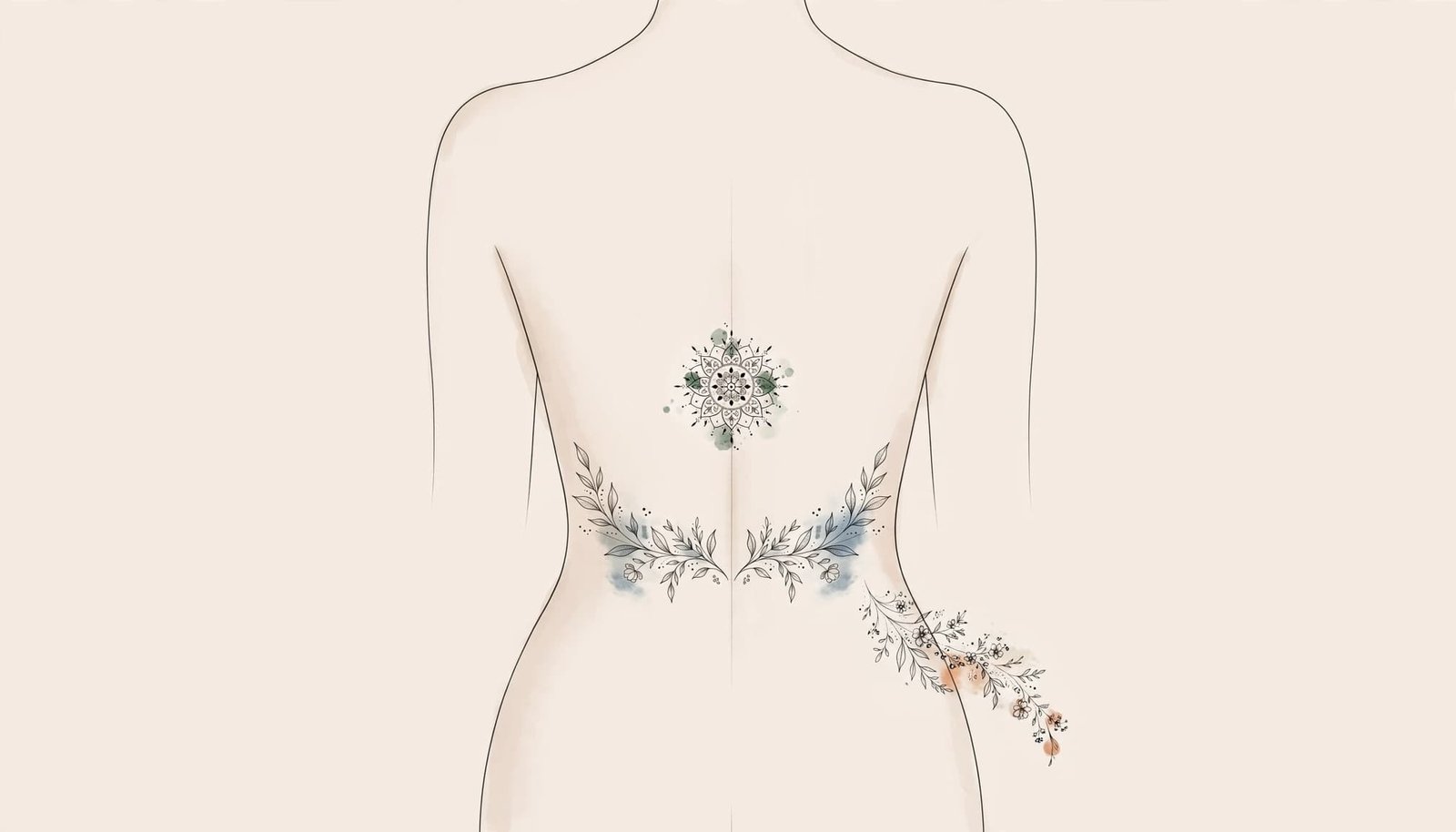
The area near the spine and hip bones may feel more intense because there is less padding over the bone. Broader sections of the lower back usually provide more room for larger work, although sensitivity varies from person to person.
Choosing Ink Style, Color, and Placement
Black ink often gives the clearest contrast, which helps small shapes and fine details stay easy to read. Fine-line tattoos feel delicate, while dotwork adds texture without creating heavy solid shading. Blackwork produces a stronger, more graphic effect, so it suits bold ornaments, sunbursts, wings, and geometric designs.
Soft color can make flowers, butterflies, celestial motifs, and botanical tattoos stand out. Limit the palette if you want the design to remain refined. Ultra-fine lines can look beautiful, but they need enough space around them. When too many thin details sit inside a small tattoo, the design may look crowded from the beginning.
Placement changes both the appearance and the experience of wearing the tattoo. A design above the waistband can stay mostly private while appearing with a crop top or low-rise pants. A tattoo closer to the hips may feel more playful and visible with swimwear, but clothing can place more pressure on that area.
A private tattoo stays covered under your usual clothing and appears only when you choose to reveal it. A peek-a-boo tattoo may show above a bikini bottom, beneath a cropped shirt, or at the edge of low-rise jeans. Decide which experience you want before choosing the final height.
You can also choose between three main layouts:
- A centered tattoo follows the spine and creates a clean focal point.
- A symmetrical design spreads evenly toward both hips, which suits wings, mandalas, and mirrored ornaments.
- An off-center side sweep creates movement and feels less formal, especially with vines, flowers, or a curved celestial motif.
Leave enough negative space so the design can breathe. If you may add a larger back piece later, discuss that plan now and review full-back tattoo ideas for women before finalizing a standalone design. Also, ask about hygiene and ink safety, since the FDA’s tattoo safety guidance highlights contamination and allergic-reaction risks.
Before booking, check these points:
- Meaning: Does the symbol still matter beyond a current trend?
- Size: Can every line and detail remain clear at the chosen scale?
- Visibility: Do you want a private tattoo or a peek-a-boo effect?
- Ink style: Will black ink, dotwork, blackwork, fine-line work, or soft color suit the design?
- Long-term appeal: Can you see yourself enjoying the shape years from now?
- Clothing friction: Will waistbands, swimwear, or tight clothing press against the area?
A thoughtful choice gives the tattoo room to look intentional, comfortable, and personal.
Lower Back Tattoo Pain, Placement, and Healing Expectations
Lower-back tattoos usually involve moderate discomfort, but the experience varies widely. Many people describe the sensation as roughly 5 to 7 out of 10, although pain ratings are personal rather than medical measurements. Placement, design size, session length, and your condition that day all affect how the appointment feels.
What Makes the Lower Back More or Less Comfortable?
Broader, fleshier areas of the lower back often feel easier than spots close to the spine, the top of the pelvis, or the waistband line. Those bony areas may create sharper sensations, while outlining can feel like repeated scratching and shading may feel warmer or more abrasive.
A small fine-line design may take less time and cause less irritation than a large tattoo with dense blackwork or heavy shading. Longer sessions give the skin more exposure to the needle, so soreness can build even when the first hour feels manageable. Your artist may suggest breaks, and taking them is normal. A short pause can help you relax, stretch, drink water, and return with steadier breathing.
Your own pain tolerance matters, but so do sleep, anxiety, hydration, and food. Arriving exhausted, dehydrated, or tense can make discomfort feel harder to manage. Eat a normal meal before your appointment, drink water throughout the day, and avoid arriving hungover. Alcohol can leave you dehydrated and may make the session less comfortable.
Wear loose clothing that gives your artist access to the lower back without pressing against the stencil. Avoid booking over a sunburn, since irritated or peeling skin is already damaged and may not respond well to tattooing. If you are unsure how tattooing feels in different areas, review this guide to tattoo pain and healing expectations before your appointment.
Numbing products need a conversation with your tattoo artist before you apply anything. Some products can change the skin’s texture, affect how the artist works, or cause a reaction that complicates the session. Use only a product and method your artist has approved.
How Clothing and Sleeping Affect the First Few Weeks
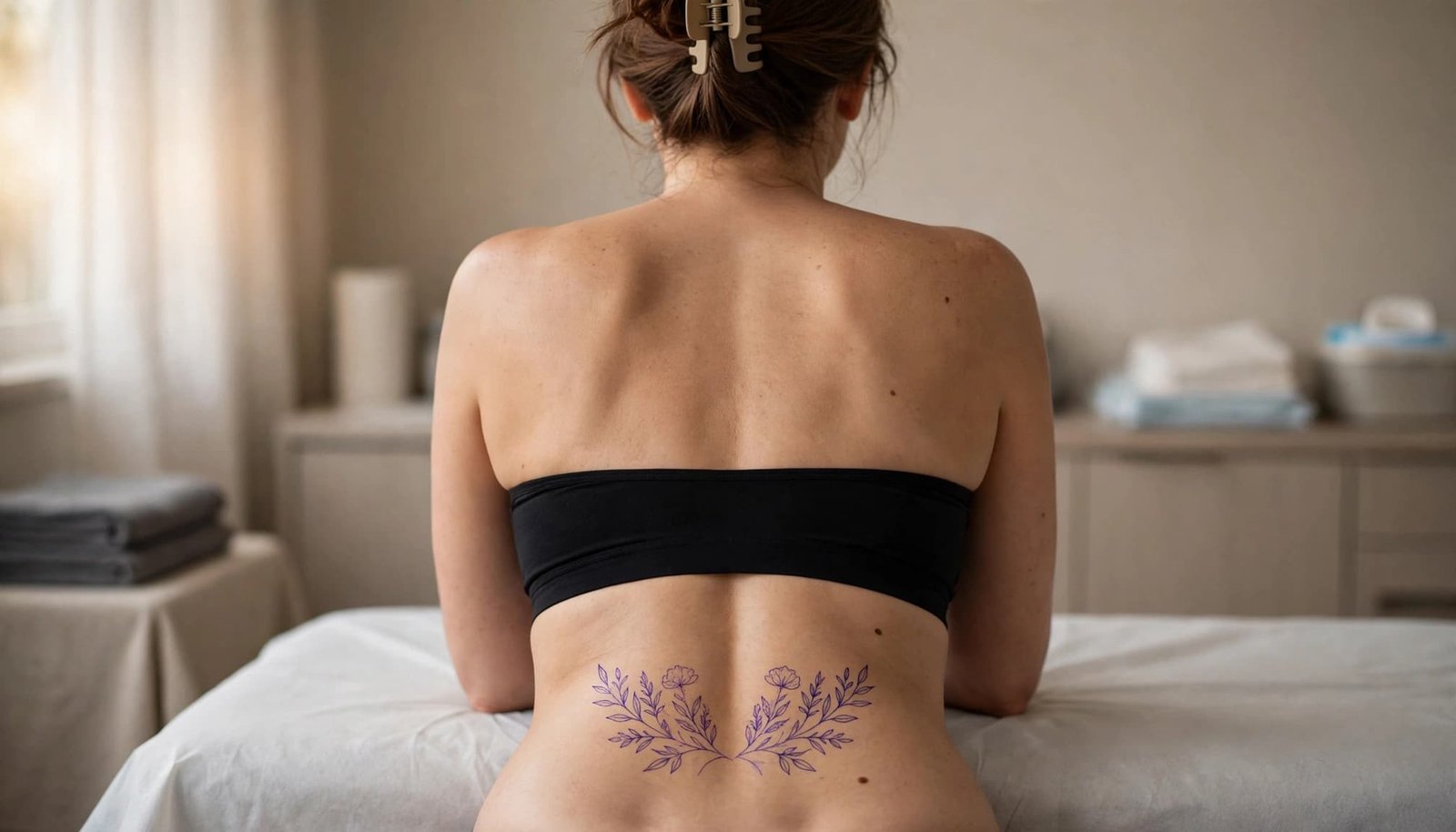
A fresh lower-back tattoo can feel tender, warm, tight, or itchy as it heals. Waistbands, tight bras, shapewear, rough seams, chair backs, and backpack straps may rub against it. Choose clean, loose clothing with soft fabric, and keep pressure away from the tattoo whenever possible.
For roughly 10 to 14 days, sleep on your side or stomach if that feels comfortable, or follow the exact instructions from your artist. Avoid pressing the new tattoo against rough bedding or allowing sweat to collect beneath you. Larger or heavily shaded pieces may remain irritated longer, so normal pressure might feel uncomfortable beyond the first two weeks.
Surface healing often takes about 2 to 4 weeks, when peeling and tenderness usually settle. However, deeper layers of skin continue stabilizing for longer, so the tattoo may keep changing in texture and appearance after it looks healed. Keep following aftercare instructions, avoid picking at flakes or scabs, and wait for your artist’s approval before swimming, soaking, exfoliating, or applying sunscreen directly to the tattoo.
Plan the appointment around your schedule. A work uniform, gym routine, long flight, beach trip, or formal event can create friction and sweat at the wrong time. Giving the skin a calm recovery window makes healing easier and protects the clean lines you chose.
Lower Back Tattoo Aftercare for Clean, Lasting Results
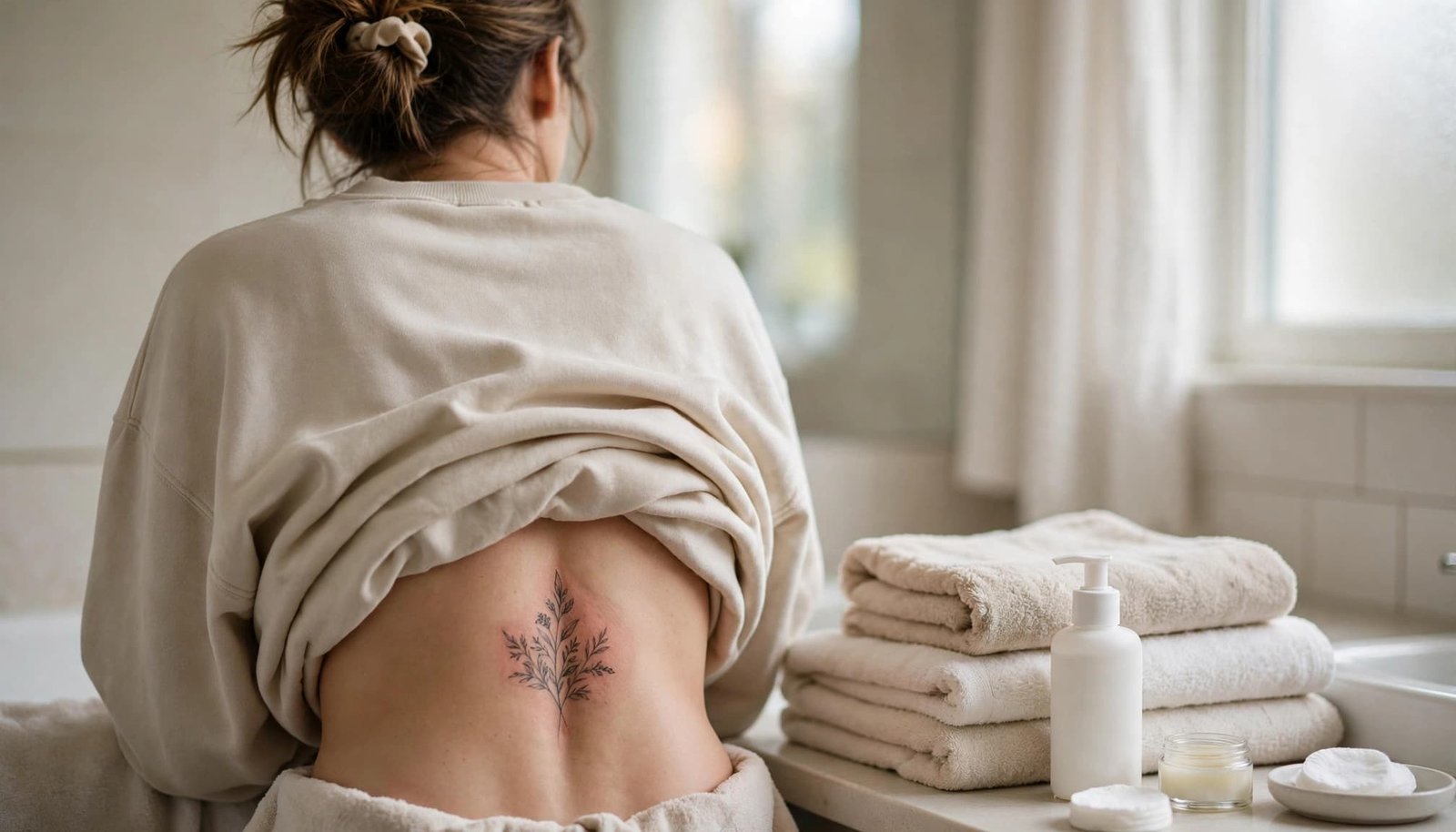
Your tattoo artist’s aftercare instructions should come first because bandage types, ink saturation, and skin reactions vary. In general, keep the area clean, lightly moisturized, and protected from friction while the surface skin closes.
Friction, Sun, Sweat, and Other Healing Mistakes to Avoid
Leave the first bandage on for the time your artist recommends. Some coverings come off after a few hours, while adhesive protective films may stay in place longer. If the bandage sticks, soften it with lukewarm water instead of pulling it away quickly.
Once your artist says it’s time to remove the covering, wash your hands first. Then gently clean the tattoo with lukewarm water and a small amount of fragrance-free soap. Don’t scrub, use a washcloth, or hold the tattoo under a strong shower stream. Rinse carefully, then pat the skin dry with a clean paper towel. Guidance from tattoo aftercare professionals also supports gentle washing and avoiding unnecessary irritation.
When advised, apply a very thin layer of unscented moisturizer. Too much product can leave the tattoo greasy and trap moisture against the skin. Clean the area as directed, usually once or twice daily, and apply only enough moisturizer to prevent uncomfortable dryness.
Lower-back tattoos face extra pressure because waistbands, underwear elastic, shapewear, chair backs, and bedding can rub across the design. Choose loose, clean clothing during the early healing period. Avoid tight jeans, compression garments, rough seams, and anything that repeatedly presses on the tattoo. These clothing choices matter just as much as the placement itself, especially when comparing popular tattoo spots for women.
Normal healing can include warmth, mild tenderness, peeling, and itching. Let flakes fall away naturally. Picking scabs, scratching, or pulling loose skin can remove ink and increase the chance of irritation or scarring.
A lower-back tattoo may be difficult to reach, so arrange help before the appointment. A trusted person can check whether the area looks clean and apply a thin layer of moisturizer with freshly washed hands.
Avoid swimming, hot tubs, baths, and open water until the skin has closed and peeling has stopped. Water exposure can introduce bacteria, while soaking softens healing skin. Skip intense workouts, yoga, Pilates, and heavy lifting for about 2 to 4 weeks, or until the tattoo no longer feels tender and your artist approves. Stretching, sweat, and repeated waistband movement can irritate the area even when the workout itself feels manageable.
Keep fresh ink covered with loose clothing and away from direct sun. Don’t apply sunscreen while the tattoo is open, peeling, or scabbed. After it fully heals, use a broad-spectrum, water-resistant SPF 30 or higher, especially during prolonged outdoor exposure.
Contact a healthcare professional if redness spreads or worsens, swelling increases, pain becomes severe, pus appears, or the area feels increasingly hot. Fever, red streaks moving away from the tattoo, foul-smelling drainage, or flu-like symptoms also need prompt medical attention.
How to Find a Tattoo Artist for Symmetry and Fine Detail
Lower-back tattoos require more than general tattooing skill. The artist must understand how the spine, waist, and hips affect proportion, then place every curve so the design looks balanced on a moving body. Fine lines also need enough space to heal clearly, especially when a symmetrical piece spreads across the lower back.
Start by reviewing the artist’s healed portfolio, not only fresh tattoos. Look for real examples with smooth linework, clean curves, readable fine details, and balanced placement on different bodies. Pay attention to whether mirrored elements remain even after healing. A polished social media post can hide swelling, redness, or heavy editing, so healed photos give you a more useful picture of the artist’s work.
Choose someone whose style matches your idea. An artist known for delicate botanical work may not be the right fit for dense blackwork, while a geometric specialist may approach a soft floral design differently. You can compare unique fine-line tattoo ideas for women before the consultation, but use those references to explain your taste rather than to demand an exact copy.
Ask how the artist creates and adjusts the stencil. A professional should be willing to place it on your body, assess the center line, and make changes before any tattooing begins. Also confirm the artist’s license or registration and check whether the studio holds the required local body art permit. The studio should use clean barriers, single-use needles and gloves, proper sterilization procedures, and safe sharps disposal. Your state’s health department may publish its own requirements, such as the sanitation standards described in Washington’s tattoo safety guidance.
What to Discuss During the Consultation
Bring reference images that show the mood, structure, line weight, or color palette you like. They should guide the design, not be copied without the original artist’s permission. Then use this checklist to keep the conversation practical:
- Confirm the exact placement, such as centered over the spine, slightly above the waistband, or sweeping toward one hip.
- Decide the finished size in inches and ask whether the design needs more room for its smallest details.
- Discuss orientation, including which way flowers, wings, lettering, or other focal elements should face.
- Explain whether you want strict symmetry or a balanced design with small differences on each side.
- Describe how much of the tattoo you want visible with typical jeans, underwear, swimwear, work clothing, or crop tops.
- Share the personal meaning behind the design, even if you prefer the symbolism to remain private.
- Review black ink, gray shading, muted color, or a limited palette, and ask how the chosen colors may age.
- Ask for an estimated session time, including breaks, stencil adjustments, and whether a large piece will need multiple appointments.
- Get the total price or hourly rate in writing, along with the shop minimum, deposit amount, cancellation terms, and payment schedule.
- Ask which aftercare supplies you should have ready, including fragrance-free soap, moisturizer, and any recommended protective covering.
Before approving the stencil, check it while standing, sitting, and wearing typical clothing. A design can look centered while you stand still but shift visually when your posture changes. Ask the artist to photograph the placement if the studio permits it, then take a few minutes to view the stencil from different angles.
A skilled artist may simplify an overly detailed idea. Removing tiny marks, widening narrow gaps, or increasing the size of delicate elements can help the tattoo heal cleanly and remain readable. That advice protects the finished design, so don’t choose an artist based only on the lowest price. A clear process, strong healed work, safe studio, and realistic touch-up policy are worth more than a cheap appointment.
Conclusion
Lower-back tattoos give you room to explore floral, celestial, ornamental, geometric, and meaningful designs in a placement that can stay private or show above the waistband. The strongest choice is one that fits your natural shape, preferred visibility, and personal style. Size, spacing, and negative space matter because they help each detail remain clear without making the composition feel crowded. For more inspiration, compare these ornamental lower-back tattoo designs before settling on a layout.
Pain is usually moderate, but it varies with your sensitivity, the tattoo’s size, and its distance from the spine or hip bones. Healing also requires patience. Loose clothing, gentle aftercare, and protection from friction help the skin recover and protect the finished result.
Save a few favorite ideas, then bring them to an artist who has strong healed work in your preferred style. Review the stencil while standing and sitting, refine the placement, and book only when the design feels personal, balanced, and right for your body.
Save the pin for later

- 25 Gothic Tattoo Ideas for a Bold, Dark Look - 21/09/2026
- 34 Black Fine Line Tattoo Ideas for a Delicate Look - 21/09/2026
- 23 Micro Tattoo Ideas for Women With Meaning - 21/09/2026

