By the time the bell rings for the next class, a hungry child may want the first sweet thing they see. However, a school snack needs to be easy to eat between lessons, filling enough to last, safe for the classroom, and allowed under school allergy rules.
The best snacks for school pair simple nutrition with practical packing. Combining foods such as fruit, whole grains, protein, or yogurt can help create a more satisfying option, while age-appropriate portions keep the snack manageable. For perishable foods, pack an insulated container with cold sources, and always check your school’s allergy policy before choosing ingredients.
This guide shares five kid-friendly ideas, along with tips for portions, food safety, allergy concerns, and making snacks more appealing. You may also enjoy these gut-friendly snack ideas for more inspiration. First, let’s start with a simple fruit-and-protein combination.
Key Takeaways
- Choose snacks for school that combine at least two food groups, such as fruit with yogurt or whole-grain crackers with cheese.
- Protein, fiber, and healthy fats help children stay satisfied until their next meal.
- Keep portions age-appropriate, and use high-fiber snacks for kids to add variety without oversized servings.
- Pack yogurt, cheese, eggs, or meat with an insulated lunch bag and two cold sources.
- Check classroom allergy rules and school snack nutrition standards before packing.
What Makes Snacks for School Healthy and Filling?
Healthy snacks for school do more than quiet a rumbling stomach. They give kids steady energy, help them focus in class, and make it easier to reach the next meal without feeling ravenous. The simplest formula is to pair a fruit or vegetable with protein, dairy, or a whole grain.
Use a Simple Food Pairing Formula
A snack with only carbohydrates may satisfy hunger briefly. Adding protein or fiber helps children feel full for longer because these nutrients digest more slowly.
Try these easy combinations:
- Apple slices with cheese cubes provide fiber, protein, and calcium.
- Carrot sticks with hummus add crunch, fiber, and plant-based protein.
- Plain or low-sugar yogurt with berries combines protein, dairy, and naturally sweet fruit.
- Whole-grain crackers with turkey or sunflower seed butter create a more substantial bite.
- A small banana with pumpkin seed butter offers carbohydrates paired with protein and healthy fat.
You can find more ideas in these kid-friendly fiber and protein snacks. Keep portions sensible, especially for younger children, and choose foods your child already enjoys. A nutritious snack will not help much if it comes home untouched.
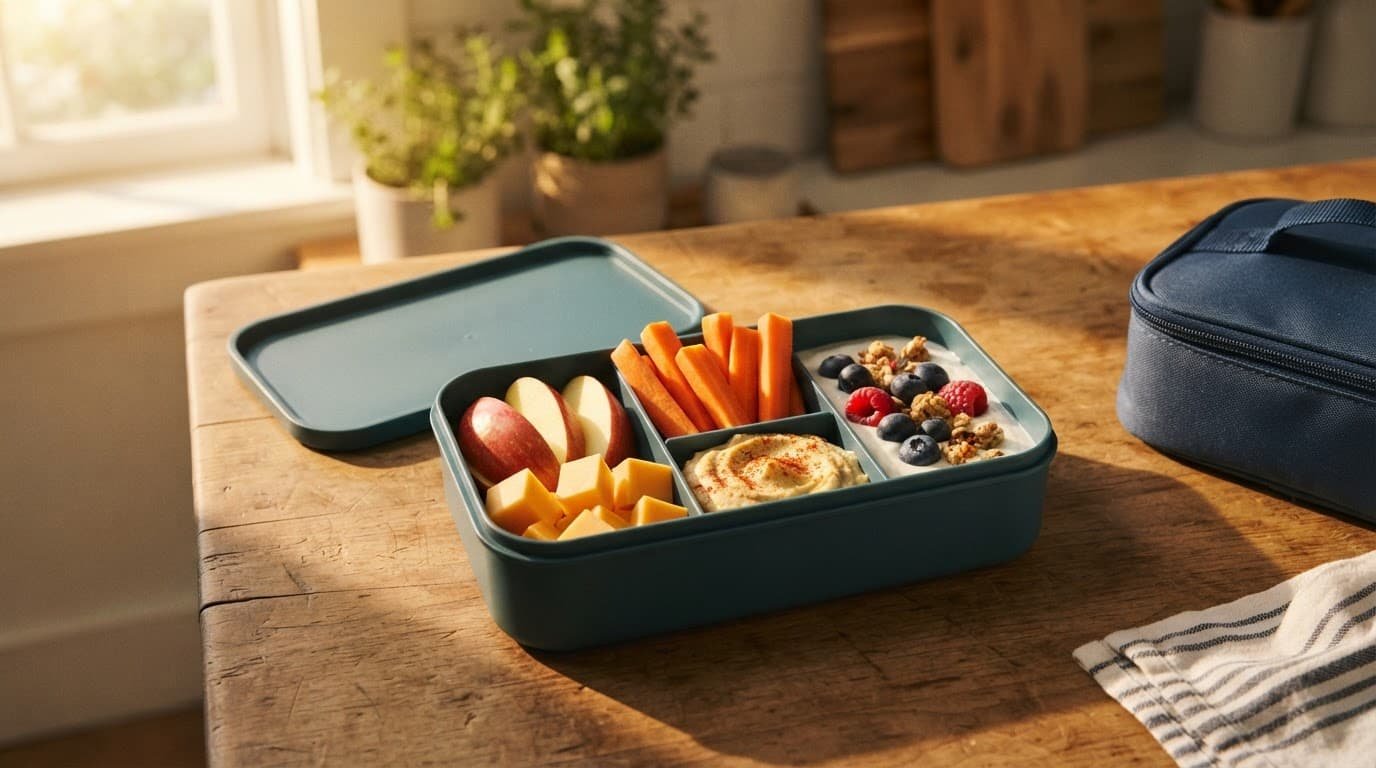
Water is usually the smartest drink choice. It hydrates without adding sugar, while sweet drinks can take up room without offering much staying power. A reusable water bottle also makes drinking throughout the school day easier.
Check School Rules Before Packing
Nutrition is only one part of choosing snacks for school. Some campuses limit calories, sodium, added sugar, or specific allergens. Classroom rules may also prohibit peanuts, tree nuts, sesame, dairy, or homemade foods.
USDA Smart Snacks guidance commonly uses a limit of 200 calories and 200 milligrams of sodium for a qualifying snack item. These standards apply to many foods sold at school, but a district may set stricter rules for classroom snacks and celebrations. The USDA’s Power Up nutrition curriculum explains these common limits.
Before shopping, read your school’s written policy and ingredient requirements. When allergies are involved, prevent food sharing and cross-contact, and ask whether the school requires sealed packages or approved brands. A balanced snack must be healthy, filling, and safe for the whole classroom.
5 Healthy Snacks for School That Kids Will Actually Eat
The best snacks for school are colorful, portable, and easy to adjust for preferences or allergies. Each idea below pairs at least two food groups, so your child gets satisfying energy without carrying a complicated recipe.
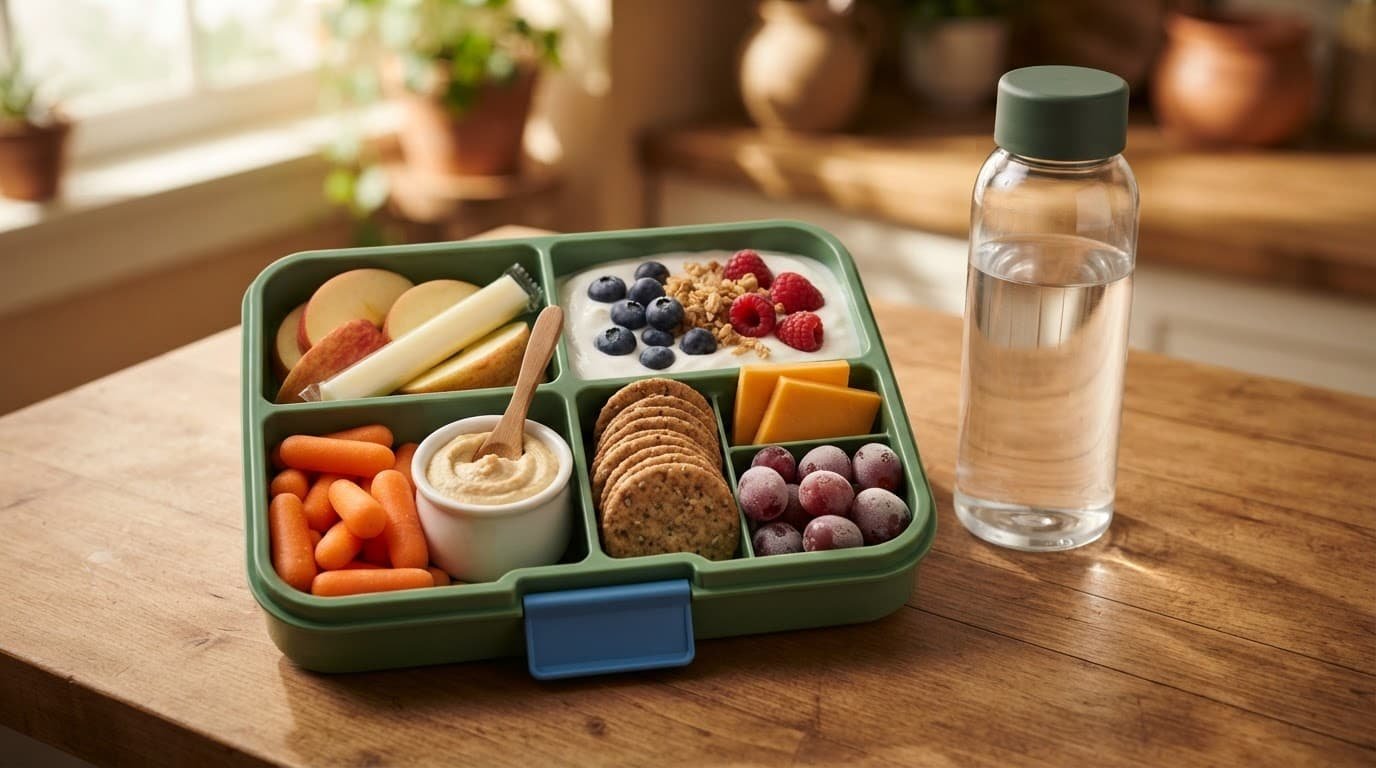
Apple Slices With String Cheese
Apple slices provide fruit, carbohydrates, and fiber, while string cheese adds protein and calcium. Pack half an apple with one cheese stick, depending on your child’s age and appetite.
Slice the apple shortly before packing, or dip the pieces briefly in lemon water to slow browning. Keep the cheese chilled in an insulated lunch bag with a cold source. Pear slices or grapes work well too. For dairy-free or nut-free classrooms, try dairy-free cheese or sunflower seed butter if school policy permits. Check labels for added sugar, milk ingredients, and other allergens.
Baby Carrots With Hummus
Crunchy baby carrots bring fiber and a naturally sweet flavor. Hummus adds plant protein and makes vegetables more appealing, especially for kids who enjoy dipping. Pack a small portion of carrots with a few tablespoons of hummus.
Use a leak-resistant container to prevent spills inside the backpack. Since hummus is perishable, keep it cold until snack time. Cucumber rounds, snap peas, bell pepper strips, and broccoli make easy swaps. Tahini is a common hummus ingredient, so check labels carefully if your child has a sesame allergy. The FDA’s food allergy guidance explains how allergens appear on packaged-food labels.
Plain Greek Yogurt With Berries
Plain Greek yogurt offers protein with natural sweetness from fresh or frozen berries. A small yogurt container with a handful of berries makes a soft, filling snack that many children can eat quickly.
Choose plain yogurt or one with little added sugar. Add whole-grain cereal or oats separately if your child likes extra crunch. Pack the yogurt in an insulated lunch bag with a cold pack, and keep it chilled until snack time. A dairy-free yogurt made from soy or another permitted base can work for children avoiding dairy. Always check the school allergy rules before packing shared classroom foods.
Whole-Grain Crackers With Cheese
Whole-grain crackers and cheese create a convenient mix of fiber, carbohydrates, protein, and calcium. Pack a small serving of crackers with cheese cubes, slices, or a cheese stick.
Look for a whole grain as the first ingredient, then choose cheese with moderate sodium. A reusable container keeps the crackers from becoming crushed in a crowded backpack. Roasted chickpeas, seed-based crackers, or dairy-free cheese offer useful substitutions for picky eaters or children with allergies. Check the ingredient list for hidden milk, wheat, sesame, or other restricted ingredients.
Frozen Grapes or Apple Wedges With Water
Frozen fruit feels refreshing and sweet without candy or sugary drinks. Grapes may soften by snack time, which makes them easier to eat, but cut them lengthwise or into quarters for young children according to age-appropriate choking guidance. The CDC’s choking-prevention advice can help you prepare fruit safely.
Apple wedges, berries, and orange sections are simple alternatives. Add a refillable water bottle instead of juice or soda, giving your child hydration without extra sugar.
How to Pack Snacks for School Safely
Safe packing keeps healthy snacks for school fresh until the lunch bell. Perishable foods, including yogurt, cheese, hummus, eggs, cut fruit, and leftovers, need careful temperature control and clean handling.
Keep Perishable Snacks Cold
Pack yogurt, cheese, hummus, eggs, and other perishable foods in an insulated lunch bag with at least two cold sources. Use two ice packs, or pair an ice pack with a frozen water bottle. USDA guidance recommends keeping cold foods at 40°F or below, so place the cold sources around the food instead of leaving them beside it.
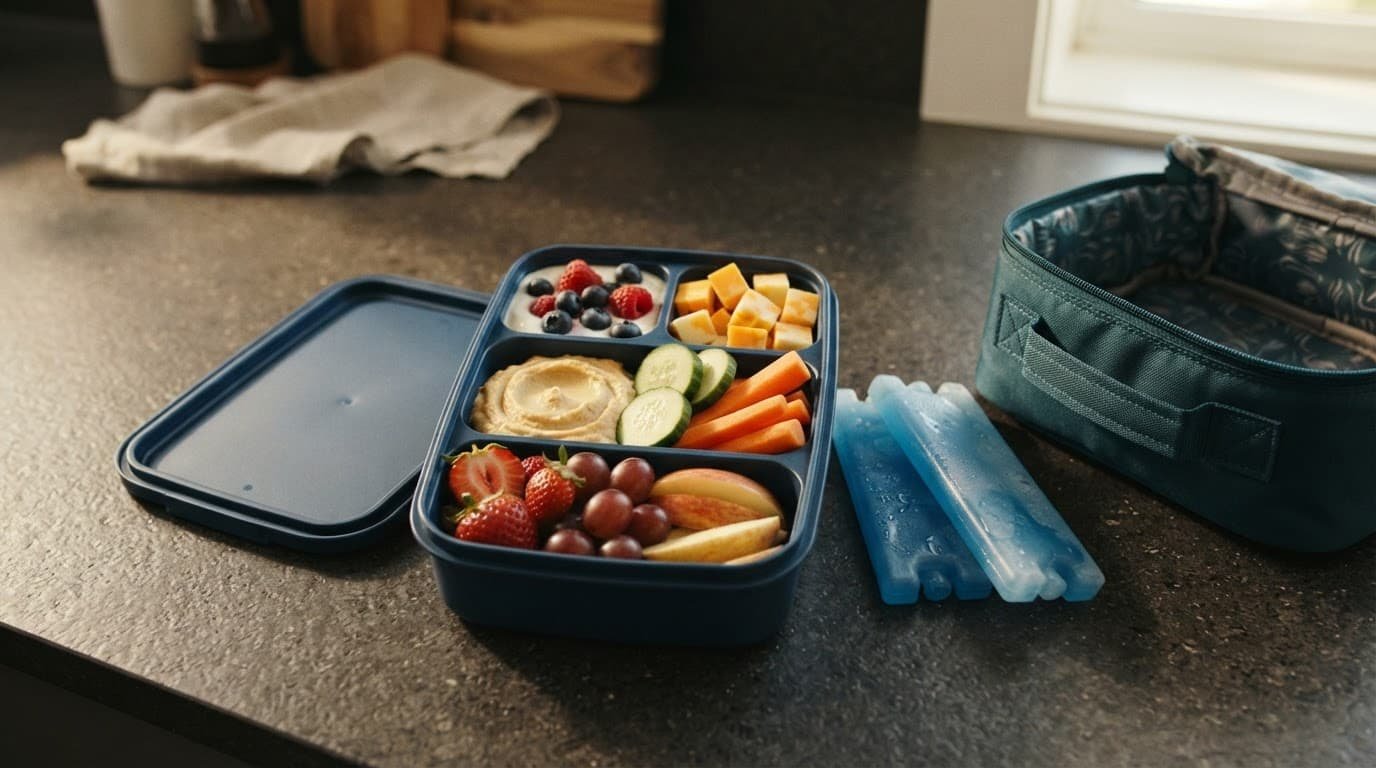
Refrigerate the packed snack overnight when practical, especially if you prepare it ahead. At minimum, chill every perishable ingredient before placing it in the bag. The USDA’s bag lunch safety guidance also recommends using an insulated lunch bag and multiple cold sources.
Wash produce under running water before cutting it, then dry it with a clean towel. Use clean containers and utensils, and keep foods separated to reduce cross-contact. For example, place hummus in a sealed dip cup instead of letting it touch fruit or crackers.
Make the Snack Easy and Safe to Eat
Children may rush through snack time, so choose containers they can open without help. Test the lids at home, use leak-resistant cups for yogurt or hummus, and pack disposable wipes for sticky fingers. Small portions also reduce spills and make it easier for your child to finish the snack before returning to class.
School allergy policies matter as much as food temperature. Read ingredient labels, avoid restricted foods, and remind your child not to share snacks. If you prepare food for several days, meal prep foods that stay fresh can help, but store each portion properly in the refrigerator.
For hot snacks such as soup, use a preheated insulated container. Keep it closed until lunchtime, and make sure the food stays at 140°F or above. After eating, discard leftovers and used packaging instead of returning them to the refrigerator or reusing the container without washing it.
Make Each Snack Safe for Allergies and School Rules
A healthy snack only works when your child can eat it safely and comfortably at school. Before packing, check the school’s allergy policy, classroom rules, and any limits on foods sold or shared on campus.
Adjust Portions for Age, Appetite, and Activity
Children don’t need to count every calorie. Instead, start with a modest serving and adjust it to your child’s age, appetite, and activity level. Younger children may need half an apple with a small piece of cheese, while older or highly active children may need the other half of the apple or an additional protein serving.
A small container of yogurt with berries can suit a younger child. An older child might also need a few whole-grain crackers or another piece of fruit. For a simple crunchy snack, pack a modest handful of crackers with cheese instead of filling the entire container.
Home-packed snack needs can vary because some children eat soon after breakfast, while others have a long stretch before lunch. However, if a snack is sold at school, the USDA Smart Snacks standard uses 200 calories or less and 200 milligrams of sodium or less for a snack item. Check the USDA Smart Snacks standards when your school applies those rules.
Read Allergy Policies Before Packing
Schools may restrict peanuts, tree nuts, peanut butter, sesame, dairy, eggs, or other common allergens. Read the written policy before choosing an ingredient, because an allergy-safe substitute only helps when it follows that school’s exact rules.
Check every label, even when you’ve purchased the same product before. Look at the ingredient list and the nearby “Contains” statement. Also watch for warnings about shared equipment or possible cross-contact. A product without a major allergen in its ingredients may still be unsuitable if the school bans shared-facility warnings.
If your child has an allergy, speak with the teacher and school nurse about the child’s allergy action plan. Keep approved emergency instructions and medications current according to the school’s requirements. Ask whether the classroom needs sealed packages, specific brands, or completely nut-free foods.
Teach your child to never trade or share food. They should wash their hands before and after eating, keep their snack separate, and tell an adult immediately if they feel unwell. For more nutritious school snack ideas, choose options your child’s school has already approved.
Simple Ways to Make Healthy School Snacks More Appealing
Even nutritious snacks for school may come home untouched if they look unfamiliar or feel repetitive. Small changes in presentation, choice, and preparation can help your child feel more interested without turning snack time into a battle.
Give Kids Choices They Can Handle
Offer two healthy combinations and let your child choose one. For example, they might pick apple slices with cheese or whole-grain crackers with yogurt. Limited choices give picky eaters some control while keeping both options nutritious.
Familiar foods can also make new ones less intimidating. Add a few berries beside crackers your child already likes, or serve a new vegetable with a trusted dip. Children may need to see a food several times before they decide to try it, so keep the tone relaxed and avoid pressure. Cornell Cooperative Extension’s food guidance also recommends offering choices and involving children in food preparation.
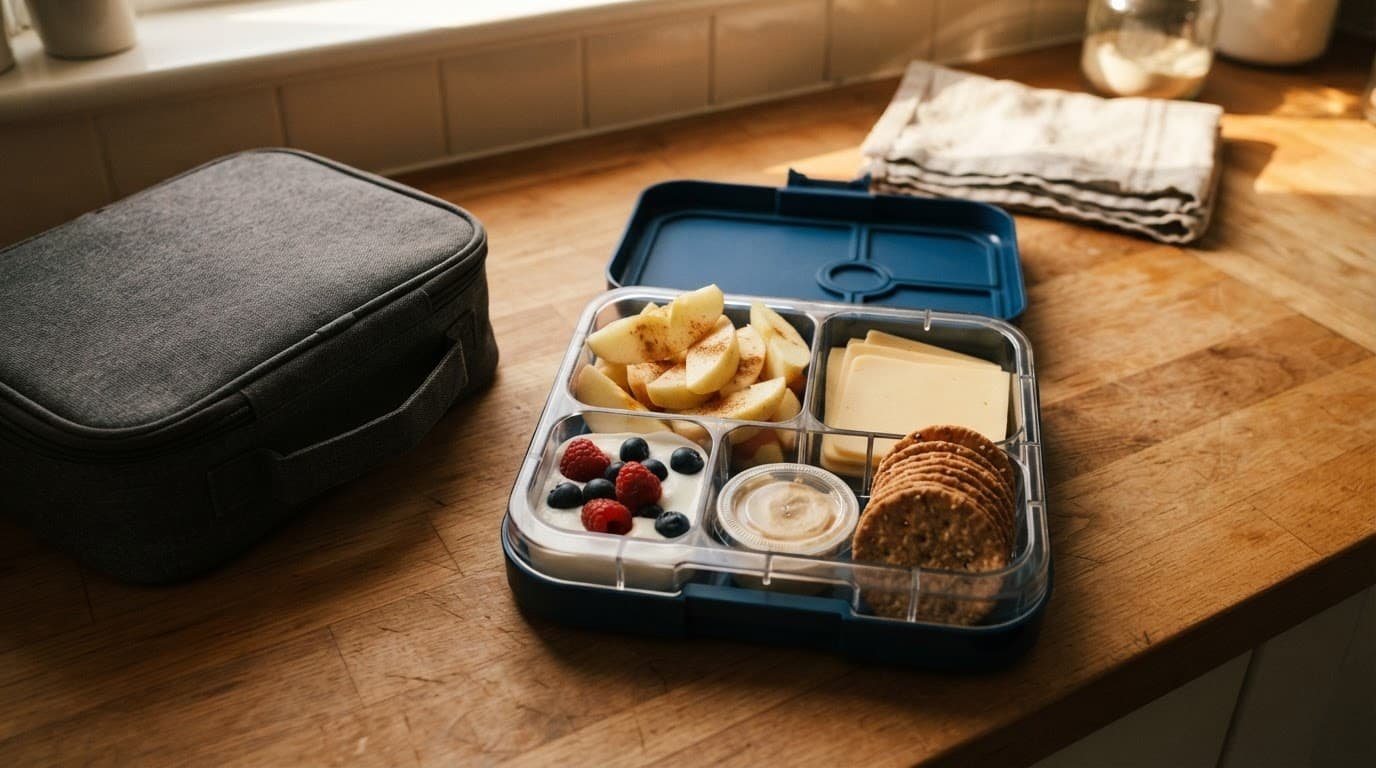
Presentation matters, too. Cut fruit into stars, hearts, or thin sticks with an appropriate kitchen tool. Use a colorful container, silicone cups, or separate compartments to make the snack look inviting. These details won’t make every child love every food, but they can make an unfamiliar option easier to approach.
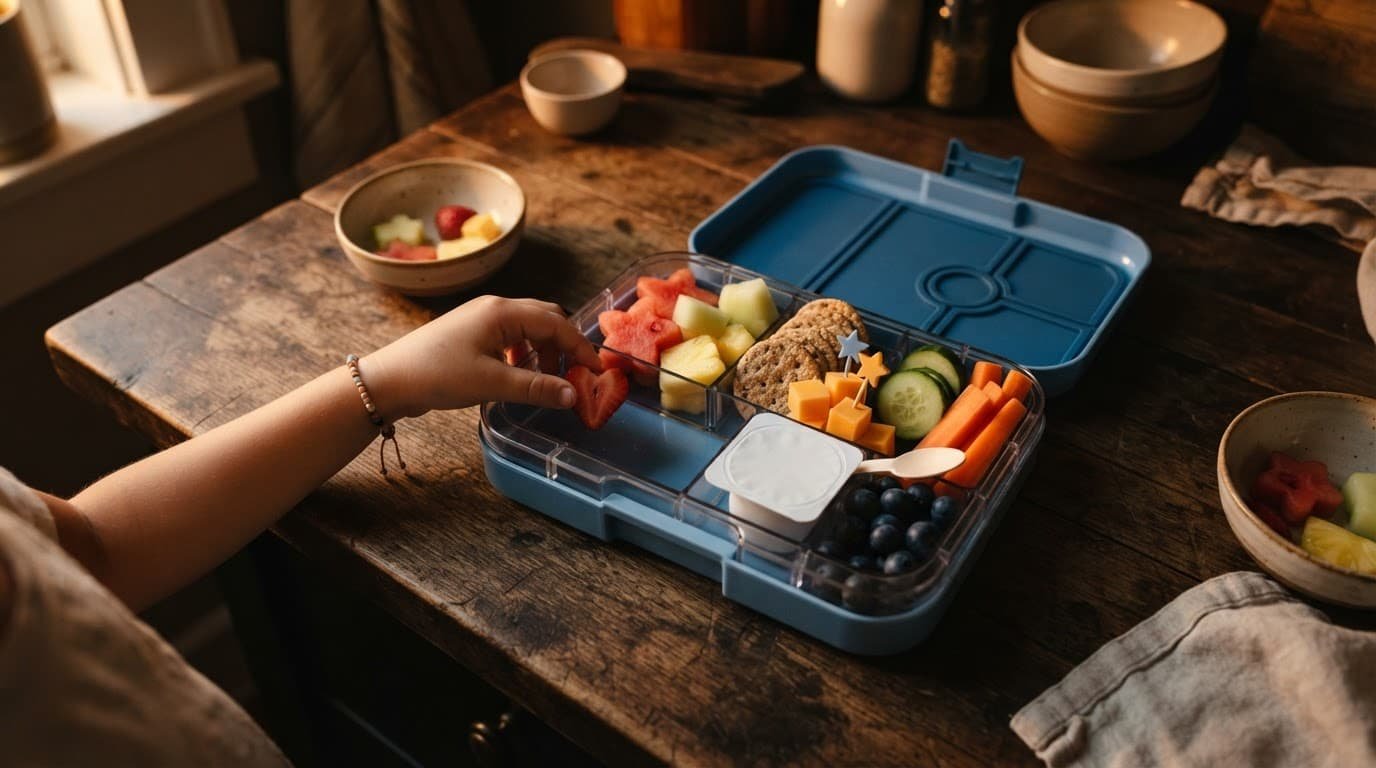
Prepare Snacks Together and Rotate Options
Children are more likely to feel comfortable with food when they help choose or prepare it. Ask your child to wash grapes, portion crackers, place carrot sticks in a container, or choose between two fruits. Give clear jobs that match their age, then let them pack one part of the snack.
Busy families can prepare a few ingredients on the weekend. Wash and dry produce, portion dry foods, and store ingredients properly so weekday packing takes only a few minutes. Pack the snack the night before, then use healthy morning routines for kids to make rushed mornings calmer.
Rotate several combinations instead of serving the same snack daily. A simple schedule might include fruit and cheese one day, vegetables with hummus the next, and yogurt with berries later in the week. Familiar ingredients can appear in different pairings, giving your child variety without filling the lunchbox with foods they may refuse.
Conclusion
Healthy snacks for school can be simple, familiar, and satisfying. Apple slices with string cheese, carrots with hummus, Greek yogurt with berries, whole-grain crackers with cheese, and frozen grapes or apple wedges with water each offer an easy way to support steady energy between meals.
The main planning rule is to pair produce with protein, dairy, or whole grains. Then pack perishable foods with proper cooling, use safe containers, and follow your school’s allergy policies. Check ingredients carefully, especially when your child shares a classroom with students who have food allergies.
A healthy snack doesn’t need to be fancy to work well. Choose one idea to try this week, then adjust it to match your child’s taste, age, allergies, and school rules. Simple snacks often become the ones children are happiest to find in their lunch bags.
Save the pin for later

- 60 Color Tattoos That Healed Beautifully - 25/09/2026
- 40 Most Painful Tattoo Spots - 24/09/2026
- 20 Tattoo Aftercare Mistakes That Ruin Fresh Ink - 23/09/2026

