A neck tattoo is a bold, highly visible way to express your personality, whether you prefer a tiny symbol tucked beneath the hairline or a striking design that frames the throat. Stylish options range from delicate fine-line stars and botanical sprigs to detailed blackwork, ornamental patterns, and meaningful script.
However, the neck needs more planning than many other tattoo placements. Thin skin, constant movement, sun exposure, collar friction, and the healing process can affect your comfort and the final appearance.
Visibility also matters, since a front or side-neck tattoo may be difficult to conceal in some workplaces, while the nape offers more flexibility. Before choosing a design, consider choosing the right tattoo spot based on your pain tolerance, daily routine, and preferred level of visibility.
The 25 neck tattoo ideas below include minimalist, floral, symbolic, and bold styles, along with practical advice on placement, customization, healing, aftercare, and protecting your finished tattoo from the sun.
25 Stylish Neck Tattoo Ideas to Inspire Your Next Design
The best neck tattoo balances personal meaning with the shape, movement, and visibility of the neck. Use these ideas as starting points, then ask your artist to adjust the final size, line weight, and detail level for your anatomy.
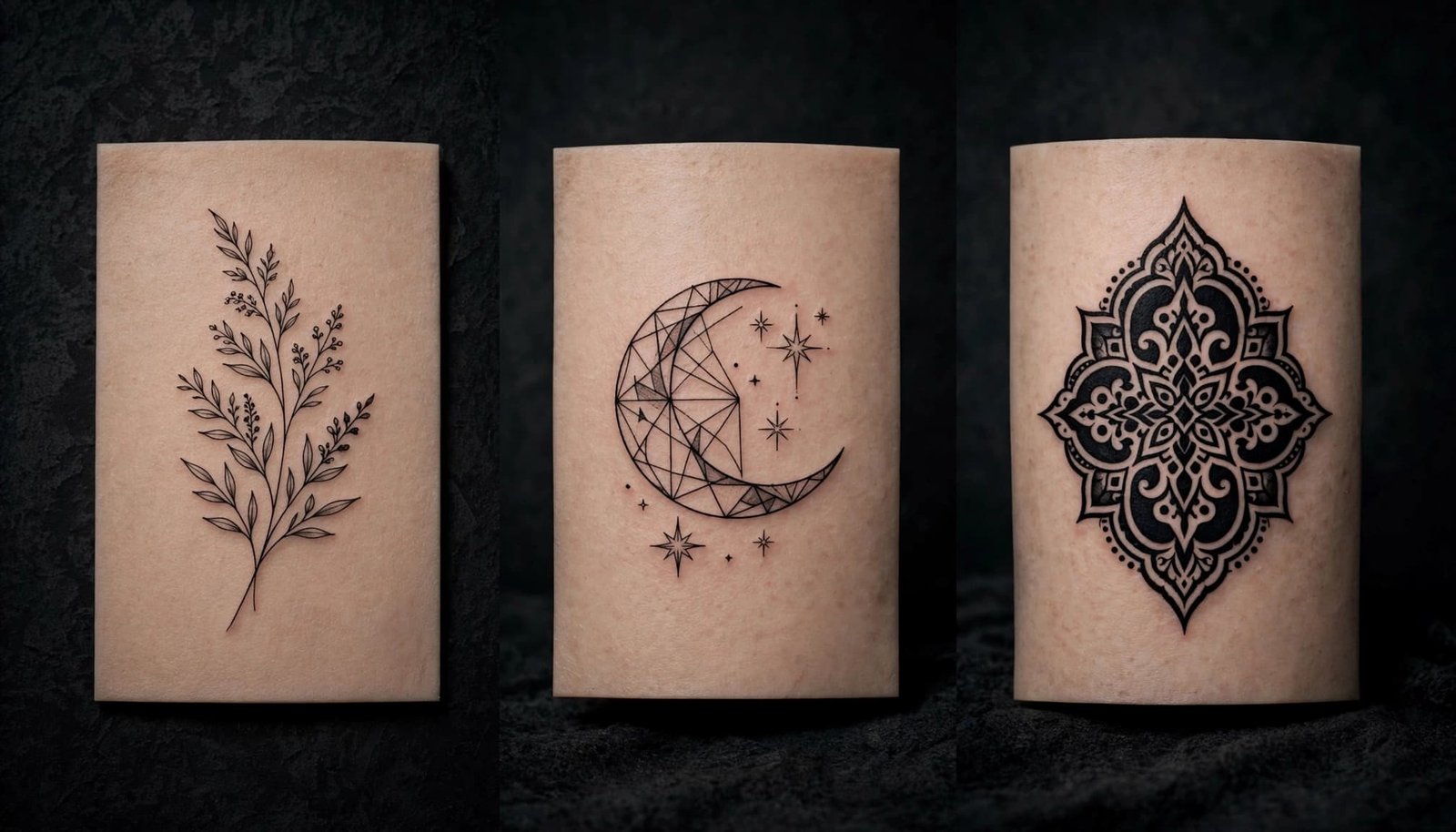
Minimalist and Fine-Line Neck Tattoos
- Tiny star cluster: Fine-line stars feel delicate and optimistic. Place them behind the ear or beneath the hairline. This suits anyone who prefers subtle celestial symbolism.
- Single crescent moon: A slim crescent creates a calm, mysterious mood. The side of the neck gives it visibility without making it dominant. It works well for moon lovers and night owls.
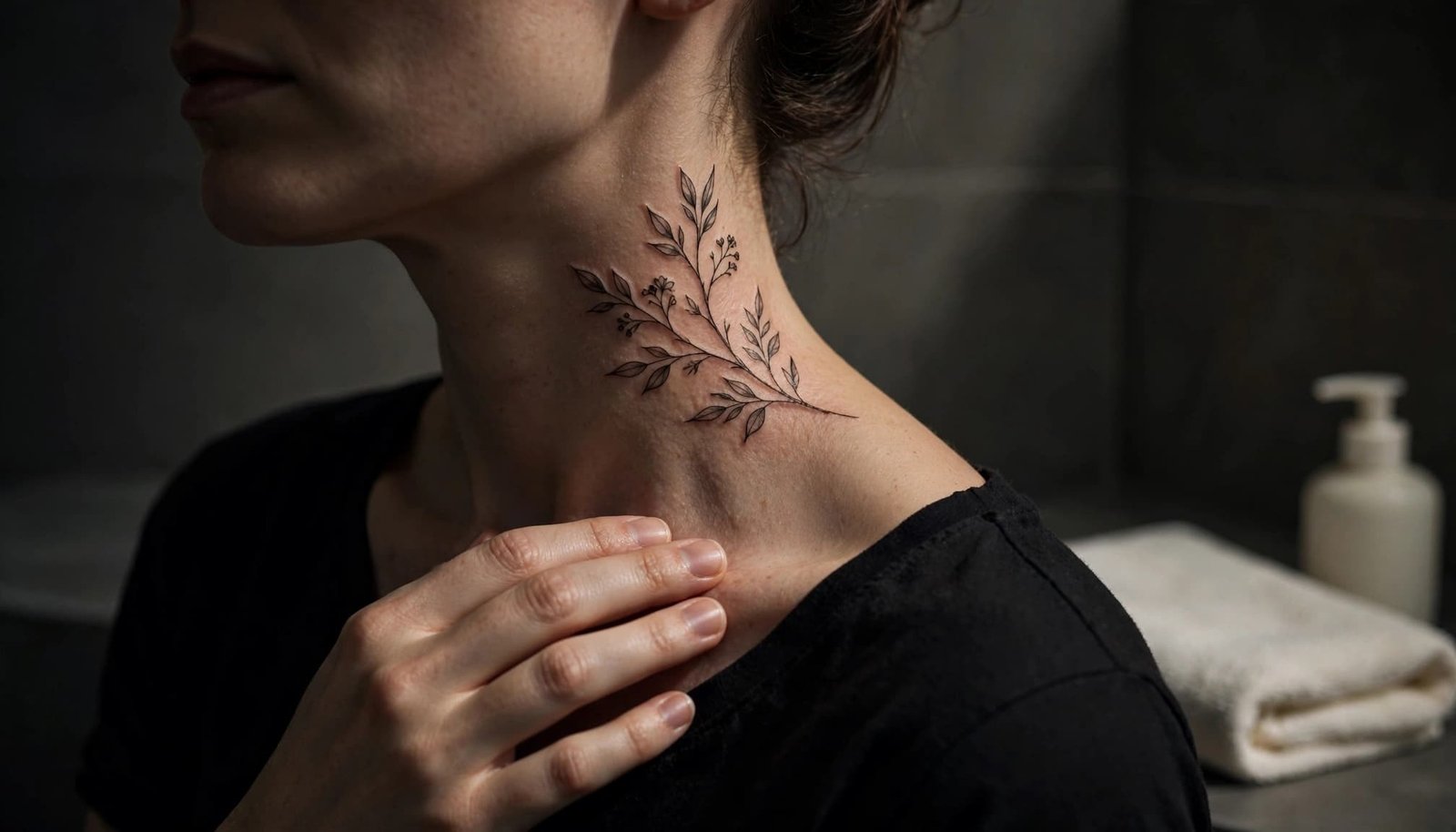
- Fine-line botanical sprig: A small olive, eucalyptus, or fern sprig looks elegant along the nape. Its natural mood suits someone who wants a soft, understated design.
- Minimal sun symbol: A simple circle with short rays suggests warmth, growth, and confidence. Place it at the center of the nape for balanced symmetry.
- Tiny lightning bolt: A clean bolt adds energy without requiring much space. The side neck or area below the ear works well for someone with a bold, fast-moving style.
- Small paper airplane: This design can suggest freedom, travel, or a fresh start. Place it behind the ear or along the side of the neck for a playful personal detail.
- Single fine-line wave: One curved wave gives the neck a fluid, graceful look. It fits the side neck best and appeals to beach lovers or people drawn to calm imagery.
- Tiny heart outline: A simple heart feels personal without looking overly ornate. The nape offers a more private placement, while the side neck makes it easier to show.
Feminine, Floral, and Ornamental Designs
- Rose outline: A fine-line rose can suggest love, strength, or remembrance. Place it on the side of the neck, where the vertical shape follows the natural contour.
- Lavender sprig: Lavender creates a soft, refined mood with very little visual weight. The nape or behind-ear area suits anyone who likes botanical tattoos with a peaceful feel.
- Lotus flower: A lotus can symbolize renewal and personal growth. Center it below the hairline or place it at the base of the throat for a more noticeable statement.
- Butterfly: A small butterfly adds movement and often represents change. Behind the ear keeps it discreet, while the side neck gives the wings more room to show.
- Ornamental pendant: Use delicate curves, dots, and jewel-like shapes to create a necklace-inspired design. The front of the neck suits someone who wants an elegant, highly visible tattoo.
- Floral collar: A curved arrangement of leaves and flowers can follow the base of the neck. It creates a graceful frame and suits people who enjoy decorative, jewelry-like ink.
- Fine-line vine: A winding vine can travel from behind the ear toward the nape. This option feels organic and works well for someone who wants a design that follows the body’s movement.
Symbolic and Meaningful Neck Tattoos
- Roman numerals: A meaningful date in Roman numerals feels private and timeless. The side neck or nape keeps the message personal while allowing a clean horizontal layout.
- Initial or monogram: One letter can honor a loved one, family name, or personal milestone. Keep the lettering simple, especially on the front or side of the neck.
- Eye symbol: An eye tattoo can suggest awareness, intuition, or protection. Place it vertically on the side neck for a striking design with strong visual focus.
- Compass: A small compass can represent direction, travel, or staying true to yourself. The nape provides enough room for clear points without overwhelming the neck.
- Roman-inspired laurel: A compact laurel branch suggests achievement and self-respect. It looks especially polished along the side of the neck or beneath the jawline.
- Tiny key: A key can symbolize access, independence, or a private memory. The side neck suits its narrow shape and gives the design a slightly secretive mood.
- Zodiac constellation: Connect a few stars with fine lines to create a personal celestial design. The nape works well for a discreet birth-sign tattoo, while the side neck gives it more presence.
Bold Blackwork and Artistic Styles
- Blackwork moth: A dark moth creates a dramatic mood and can symbolize transformation. The center nape gives its wings room to spread and suits someone who enjoys strong contrast.
- Geometric mandala: A compact mandala brings symmetry and detail to the neck. Place it at the nape or throat, depending on how visible and bold you want the design to feel.
- Snake design: A slender snake can curve around the side or back of the neck. It suggests confidence, transformation, and edge, making it a strong choice for someone who prefers statement ink.
The neck changes shape as you turn, speak, and swallow, so a design that looks perfect on paper may need adjustment on the body.
Before booking, review what getting a neck tattoo feels like and discuss placement with an experienced artist. Thin skin, movement, collar friction, and sun exposure can affect both comfort and long-term clarity. A new tattoo should stay protected from direct sun while it heals. After it fully heals, the American Academy of Dermatology recommends broad-spectrum SPF 30 sunscreen to help reduce fading.
For lasting results, let your artist decide whether a design needs thicker lines, wider spacing, fewer tiny details, or a slightly larger scale. The strongest neck tattoo is one that fits your style and remains readable on your natural contours.
How to Choose the Right Neck Tattoo Style and Placement
Choosing a neck tattoo involves more than picking a design you like. The placement controls how visible the tattoo feels, how much space your artist has, and how the design moves with your body. Start by deciding whether you want a discreet accent or a statement piece, then match the artwork to the shape of the area.
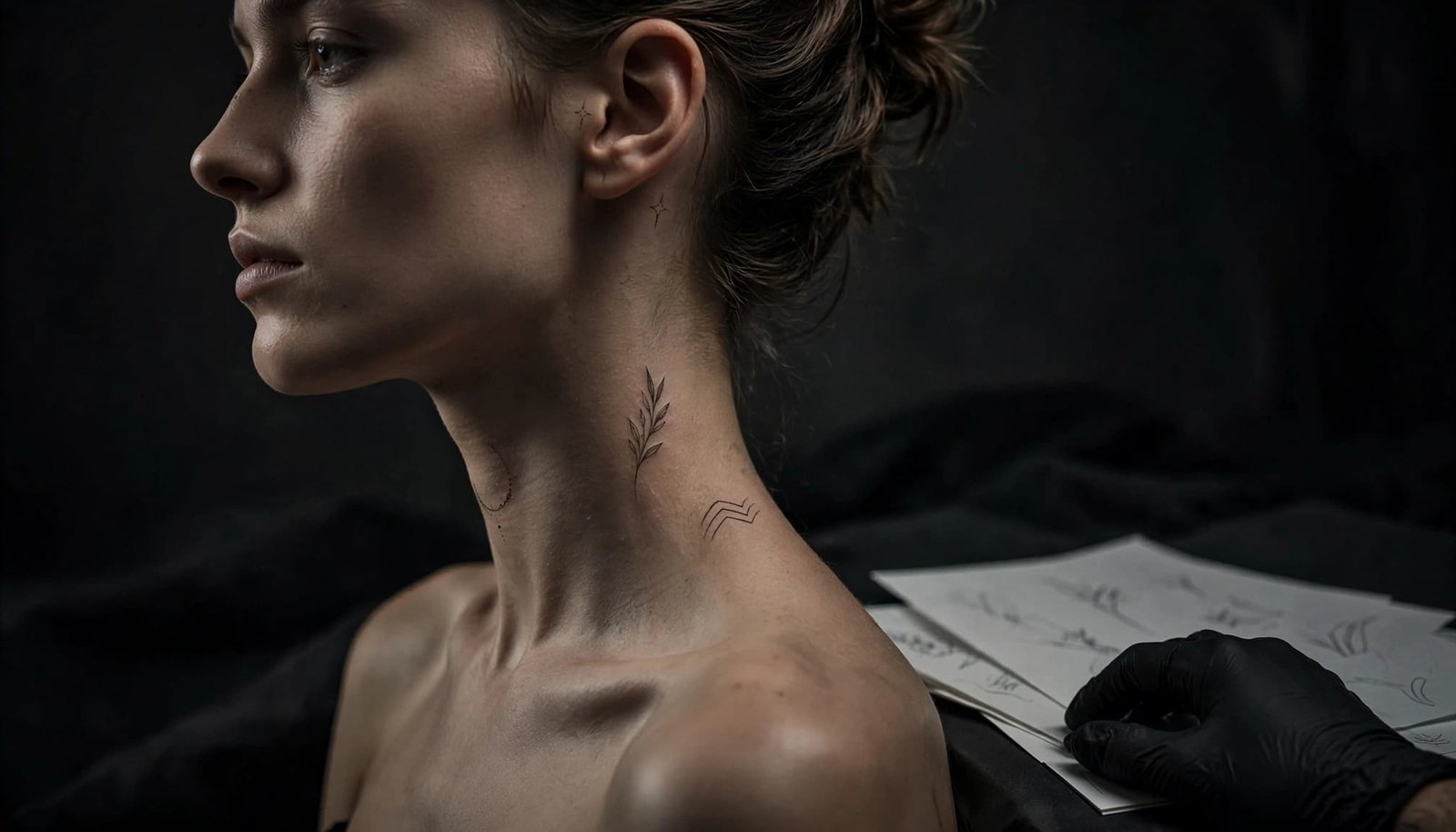
Compare the Main Neck Tattoo Placements
Each neck area creates a different balance between privacy, visibility, and design space.
- Front or throat: This is the most visible placement and usually the hardest to conceal. It suits bold symbols, symmetrical ornaments, lettering, and designs that need a central position. Since the skin moves when you speak, swallow, and turn your head, simple shapes often stay clearer than tiny, crowded details.
- Side of the neck: The side offers strong visibility while giving narrow designs room to follow the neck’s vertical line. Snakes, vines, botanical sprigs, initials, and small celestial designs work well here. However, hair, collars, necklaces, and jacket edges may rub against the area during healing.
- Back of the neck or nape: The nape is easier to hide with longer hair or a collared shirt, so it gives you more flexibility at work. It also provides a balanced canvas for moths, mandalas, flowers, constellations, and other centered designs. Tall artwork can extend toward the spine, creating a natural connection to neck-to-back tattoo designs.
- Behind the ear: This area is one of the most discreet choices, especially when your hair is down. Small stars, hearts, butterflies, symbols, and fine-line script fit the limited space. Because the skin and surface area are small, ask your artist to avoid excessive detail that may blur over time.
The more visible the placement, the more carefully you should consider your daily clothing, workplace expectations, and comfort with showing the tattoo every day.
Match the Design Shape to the Location
A tattoo should follow the body’s natural lines instead of fighting them. Vertical designs suit the side of the neck, while rounded or symmetrical artwork often looks strongest at the nape or throat. Curved vines and snakes can follow the neck’s movement, whereas a compact symbol may look cleaner behind the ear.
Scale matters as well. A design that looks delicate on a phone screen may become unreadable when reduced to fit behind the ear. On the other hand, a tiny detail-heavy mandala may look cramped at the throat. Ask your artist whether the design needs wider spacing, thicker lines, or fewer elements before settling on a final size.
Subtle and bold styles also create different practical demands. Fine-line work can feel understated, but it needs enough spacing to remain legible. Heavy blackwork creates stronger contrast and usually reads from a distance, though it may attract more attention and offer fewer concealment options.
Prepare for a More Productive Consultation
Bring two or three reference images that show the style, line weight, and overall mood you prefer. Then show examples of designs you dislike. This gives your artist a clearer direction than presenting one image and asking for an exact copy.
During the consultation, ask the artist to place a stencil or temporary version on your neck. Look at it while your head faces forward, turns sideways, and tilts down. Check how the design sits beneath your hair, collar, or usual neckline. You should also discuss healing, since loose clothing and reduced friction help protect fresh ink.
For long-term care, follow your artist’s instructions and use the American Academy of Dermatology’s tattoo skin guidance if you notice an unusual reaction. Once the tattoo heals, protect exposed ink with broad-spectrum SPF 30 or higher sunscreen.
What to Know About Neck Tattoo Pain, Healing, and Safety
Neck tattoos can be more uncomfortable than tattoos on fleshier areas because the skin is thinner and the body has less cushioning over bone, muscle, and cartilage. The neck also moves constantly when you speak, swallow, turn your head, or adjust your posture. That movement can make the session feel more intense and may add irritation during healing.
Pain varies from person to person, so online pain ratings should be treated as personal impressions rather than medical facts. Your design size, line weight, session length, tattooing technique, and previous experience all affect how it feels.
Which Neck Areas Usually Hurt Most?
The front of the neck and throat are often described as some of the more painful tattoo placements. The skin is sensitive, the area moves frequently, and vibration near the throat can feel strange even when the actual pain remains manageable. The side of the neck may also feel sharp or tender because it has less padding than areas such as the upper arm or thigh.
The nape may feel easier for some people because the skin and muscle structure differ from the throat. However, that doesn’t make it painless. Individual anatomy, stress, sleep, hydration, and sensitivity can change the experience from one person to another.
Ask your artist about session length before booking. A small fine-line symbol may be over quickly, while a detailed mandala, floral collar, or blackwork design can require breaks. Reviewing what getting a tattoo feels like can also help you know what sensations to expect.
How Long Does a Neck Tattoo Take to Heal?
The surface of a new tattoo commonly heals in about two to four weeks, although the timeline depends on the design, your skin, and how well you follow aftercare instructions. During the first few days, mild redness, tenderness, warmth, swelling, and clear fluid can occur. The tattoo may then become dry or flaky as the outer layer repairs itself.
Surface healing doesn’t mean the tattoo has fully settled. Deeper layers of skin can continue recovering for longer, and the ink may look slightly dull or uneven before its final appearance becomes clear. Don’t pick peeling skin or remove scabs, since doing so can irritate the area and affect the result.
Because the neck rubs against collars, hair, jewelry, and bedding, choose soft clothing with a loose neckline while the tattoo heals. Wash the area gently according to your artist’s instructions, avoid soaking it in pools or hot tubs, and keep direct sunlight away from fresh ink. For broader aftercare guidance, see these tattoo safety and aftercare tips.
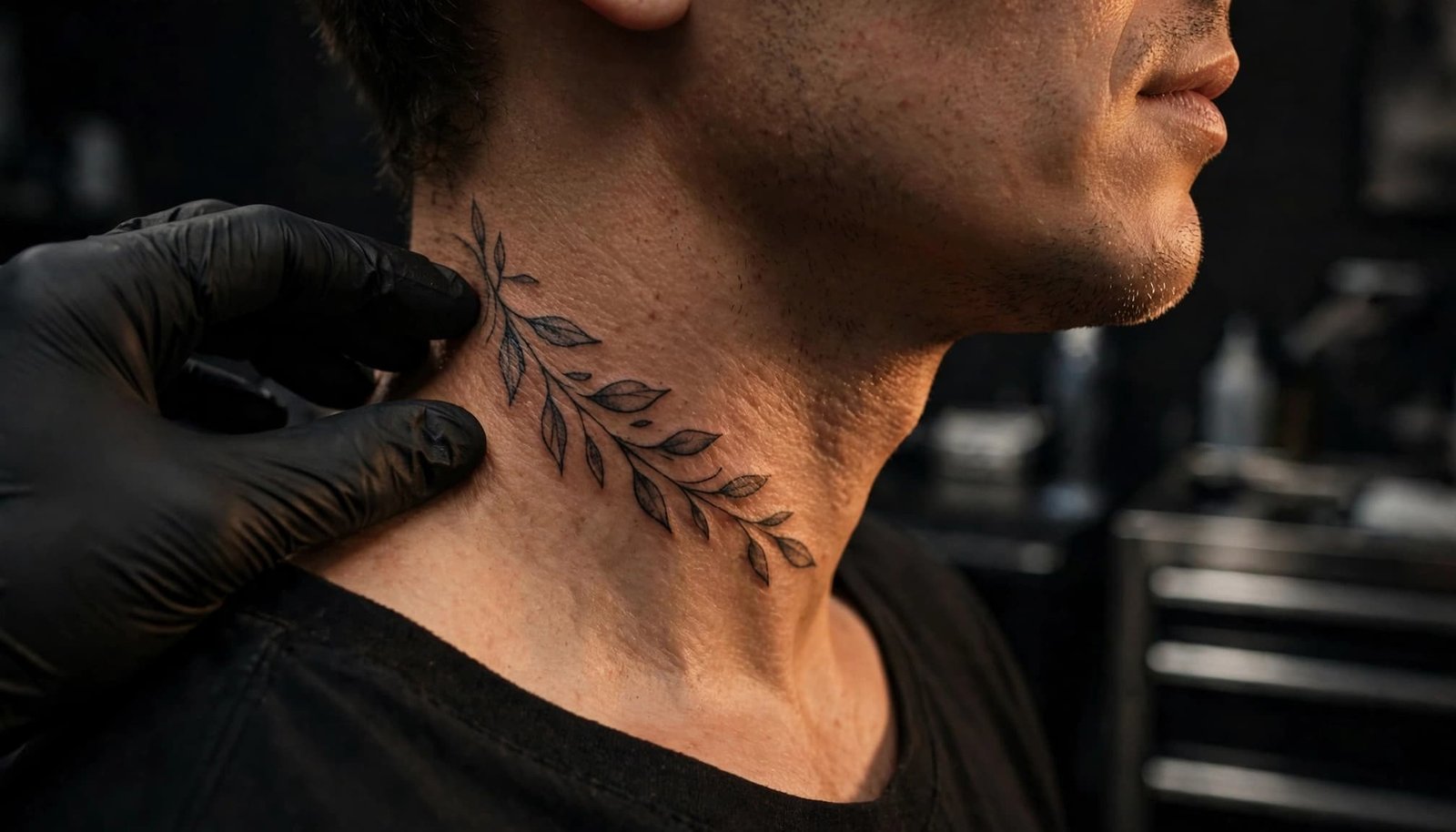
How to Choose a Safer Tattoo Studio
Before your appointment, verify that the studio follows local licensing and health requirements. A clean waiting room is helpful, but watch the artist’s preparation area too. The workspace should look organized, and the artist should explain aftercare without rushing you.
Confirm that the artist uses a new, sterile, single-use needle and cartridge for your tattoo. Needles should be opened in front of you, then discarded in an approved sharps container. The FDA warns that contaminated ink or equipment can cause infections and allergic reactions, so review its tattoo safety guidance before choosing a studio.
Tell the artist about known allergies, sensitive skin, medications, or conditions such as eczema and psoriasis. Delay the appointment if the planned area has a rash, open sore, sunburn, or active irritation. Contact a health care professional if redness spreads, pain worsens, swelling increases, pus appears, or you develop fever, chills, or a persistent rash. A normal tattoo should gradually improve, not become more painful each day.
How to Keep a Stylish Neck Tattoo Professional and Wearable
A neck tattoo can look polished and personal, but its visibility affects more than your everyday style. School rules, workplace dress codes, family expectations, and future career changes may all influence how comfortable you feel showing it.
Before choosing a design, decide how much flexibility you need. A smaller tattoo with clean lines, limited color, and one clear focal point is easier to style, cover, and live with than a large piece filled with dense detail.
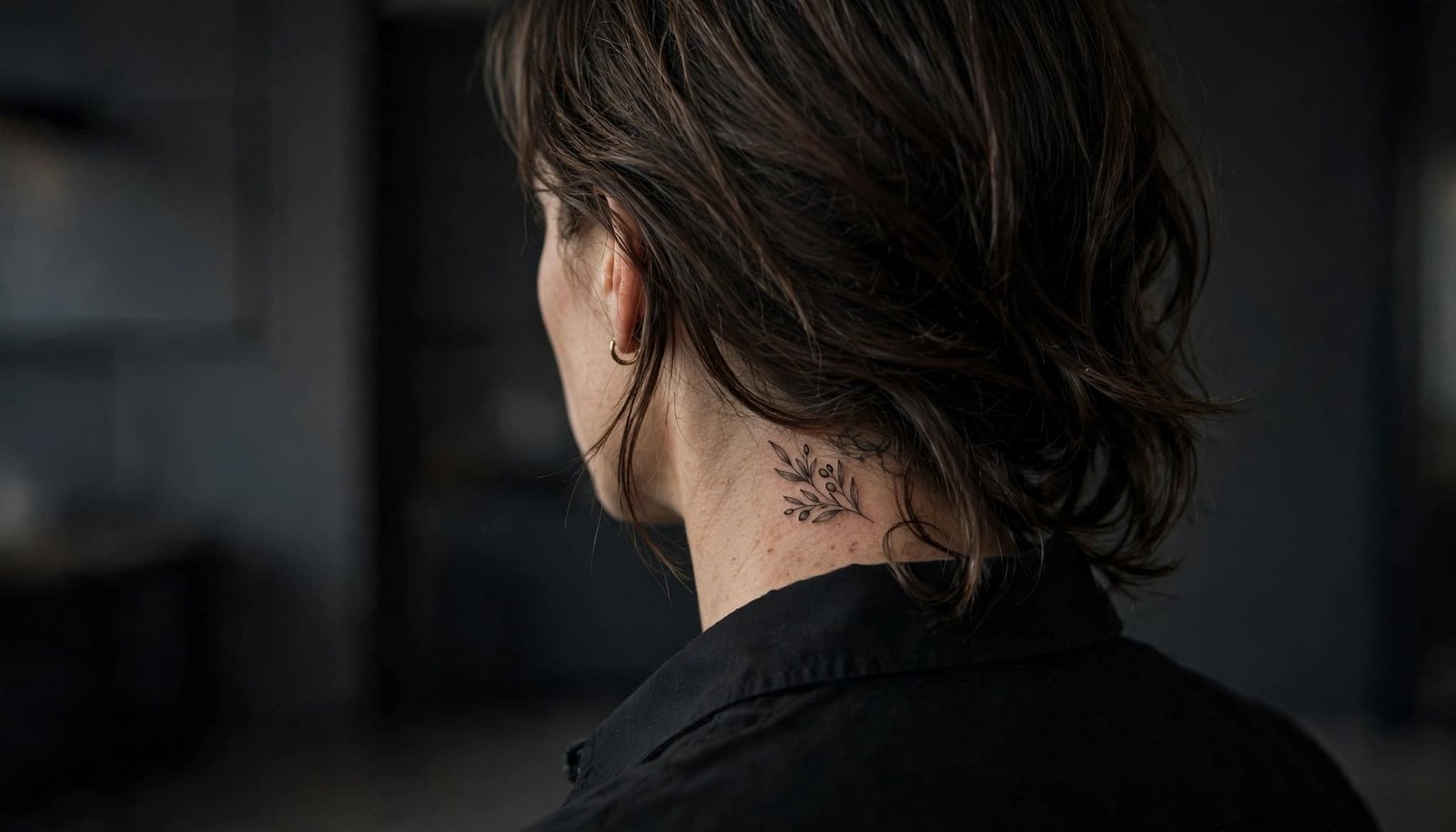
Choose Placement With Your Future in Mind
A front-neck tattoo makes a strong statement because it remains visible with most hairstyles, collars, and necklines. It can look striking with a simple outfit, but it may attract attention during interviews, presentations, formal events, or customer-facing work. Some employers also restrict visible throat or neck tattoos, so check current policies before booking.
Employment rules vary by company and location. In the United States, decorative tattoos generally aren’t a federally protected category, which means employers may set appearance standards when they apply them consistently. You can review this workplace tattoo discrimination overview for additional context.
The nape and area behind the ear offer more control, especially if you have medium or long hair. A collar, scarf, or higher neckline may cover part or all of the design. However, concealment is never guaranteed. Hair can move, clothing can shift, and some workplaces require tattoos to remain covered throughout the day.
If flexibility matters, consider:
- A small nape symbol that sits beneath your usual hairline.
- A narrow behind-the-ear design with enough spacing to remain readable.
- Black or muted ink instead of several bright colors.
- One central image rather than multiple competing elements.
You can find more ideas for tattoos that are easy to conceal before settling on a visible neck placement.
Match the Tattoo to Your Appearance and Wardrobe
Your skin tone affects how much contrast the tattoo creates. Black ink usually offers the clearest definition, while soft colors may appear more subtle depending on your undertone and how the ink heals. Ask your artist to show healed examples on skin tones similar to yours, since fresh tattoos often look sharper than they will later.
Hair length also changes the balance. A short haircut may frame a nape tattoo and make it part of your everyday look, while longer hair can soften or hide it. Behind-the-ear ink may disappear under thick hair but become highly visible when you wear a ponytail or bun.
Your wardrobe matters just as much. A fine-line design may pair well with open collars and delicate jewelry, while a bold blackwork tattoo can compete with statement necklaces, patterned shirts, or ornate necklines. Try the stencil with your usual work clothes, casual outfits, and formal tops before approving the final placement.
A professional-looking neck tattoo doesn’t need to be plain. Consistent line weight, balanced spacing, and a clear silhouette help even expressive designs look intentional. Keep the composition simple enough to remain attractive when your style, job, hairstyle, or daily routine changes.
Neck Tattoo Aftercare That Protects the Final Result
A fresh neck tattoo needs gentle care because the skin moves constantly and often rubs against hair, collars, jewelry, and bedding. Follow your artist’s instructions first, especially if they recommend a specific bandage, cleanser, or healing product.
Follow a Gentle Cleaning Routine
Wash your hands before touching the tattoo. Once your artist says it’s time to remove the covering, rinse the area with lukewarm water and gently clean it with mild, fragrance-free soap. Use your fingertips rather than a washcloth, loofah, or rough towel.
Rinse away all soap, then pat the tattoo dry with a clean paper towel or freshly washed towel. Rubbing can irritate the skin and pull at peeling areas. After drying, apply only a thin layer of the recommended aftercare product. A heavy coating can trap moisture and clog the skin, so more product isn’t better.
Repeat the routine according to your artist’s instructions. Keep the tattoo clean, but avoid over-washing or handling it throughout the day. Never pick scabs, peel flaking skin, or scratch an itch. These actions can remove healing pigment, create small wounds, and increase the chance of irritation or uneven texture.
Limit Sun, Water, Sweat, and Friction
Keep a fresh tattoo out of direct sunlight while it heals. Sun exposure can irritate damaged skin and may contribute to fading before the tattoo has settled. Don’t apply sunscreen to an open or peeling tattoo unless your artist or a health professional tells you to do so.
Avoid swimming pools, oceans, lakes, hot tubs, and baths until the skin has fully healed. Showering is usually fine, but soaking can expose the tattoo to bacteria and soften scabs too early. Sweat can also irritate the area, so postpone strenuous workouts when possible, especially during the first few days.
Tight collars, scarves, necklaces, and rough fabrics can scrape the tattoo or trap heat against it. Choose soft, loose clothing and keep hair away from the area when practical. Once the tattoo fully heals, apply broad-spectrum SPF 50 or higher to exposed skin and reapply as directed. Consistent sun protection helps slow fading and keeps fine lines sharper.
Sleep and Dress for the Placement
Your sleeping position matters during early healing. For a front-neck tattoo, sleep on your back with a clean pillowcase and avoid high collars that press against the throat. A side-neck tattoo may rub against the pillow, so sleep on the opposite side when possible.
For a back-of-neck tattoo, avoid sleeping flat against the design if it feels tender. Use clean bedding, keep long hair loosely secured away from the tattoo, and change pillowcases regularly. No matter the placement, avoid scarves, necklaces, and clothing that catches on peeling skin.
Watch the tattoo as it heals. Mild tenderness, dryness, and flaking can be normal, but spreading redness, worsening pain, increasing swelling, pus, fever, or red streaks need medical attention. A healthy tattoo should gradually feel better each day.
Conclusion
The strongest neck tattoo ideas balance personal style with the realities of the placement. Florals and botanical designs offer a softer look, while symbols, script, and Roman numerals can carry personal meaning in a compact format. Animals such as snakes, moths, butterflies, and birds add movement, while geometry and ornamental blackwork create sharper contrast and a more dramatic finish. For more inspiration, compare these symbolic neck tattoo designs before narrowing down your favorite direction.
Your final choice should have a clear shape, readable details, suitable placement, and a visibility level you can live with every day. Consider how the tattoo will look beneath your hair, beside a collar, or at the front of the throat. Comfort during the session and realistic aftercare also matter, especially because neck skin moves often and experiences friction from clothing, hair, and bedding.
Save a few reference ideas, then review healed neck tattoos from an experienced artist rather than judging fresh work alone. Bring your references to a consultation and discuss scale, line weight, body flow, healing, and concealment before making a final choice. The best neck tattoo feels personal, stays clear, and fits your life as well as your style.
Save the pin for later


- 25 Gothic Tattoo Ideas for a Bold, Dark Look - 21/09/2026
- 34 Black Fine Line Tattoo Ideas for a Delicate Look - 21/09/2026
- 23 Micro Tattoo Ideas for Women With Meaning - 21/09/2026

