Cat tattoos are a sweet way to show your love for feline companions, whether you want a tiny, playful design or a meaningful tribute to a beloved pet. From a simple whiskered face to a detailed portrait, the right idea can capture your cat’s personality in a design that feels personal.
This collection features 30 cute cat tattoo ideas to help you compare minimalist, colorful, whimsical, and memorial styles. You’ll also find practical guidance on size, placement, personalization, choosing an artist, and basic aftercare, including inspiration for tiny cat and paw print tattoos and other meaningful options.
Start by exploring these designs, then narrow down the details that best fit your style, story, and everyday life.
Key Takeaways
- Choose a cat tattoo style that matches your personality, from minimalist line art and tiny paw prints to colorful portraits.
- Personalize the design with your cat’s markings, name initial, favorite toy, or a meaningful date.
- Match the tattoo’s size and placement to the detail level, since fine features need enough space to remain clear.
- Review full-back cat tattoo ideas if you want a larger, more detailed design.
- Select a reputable artist, follow their aftercare instructions, and watch for unusual redness, bumps, fever, or poor healing.
30 Cute Cat Tattoo Ideas for Animal Lovers
Cute cat tattoos can be tiny and discreet, playful and colorful, or detailed enough to honor a beloved companion. These 30 ideas cover a range of styles, personalities, and meaningful details.
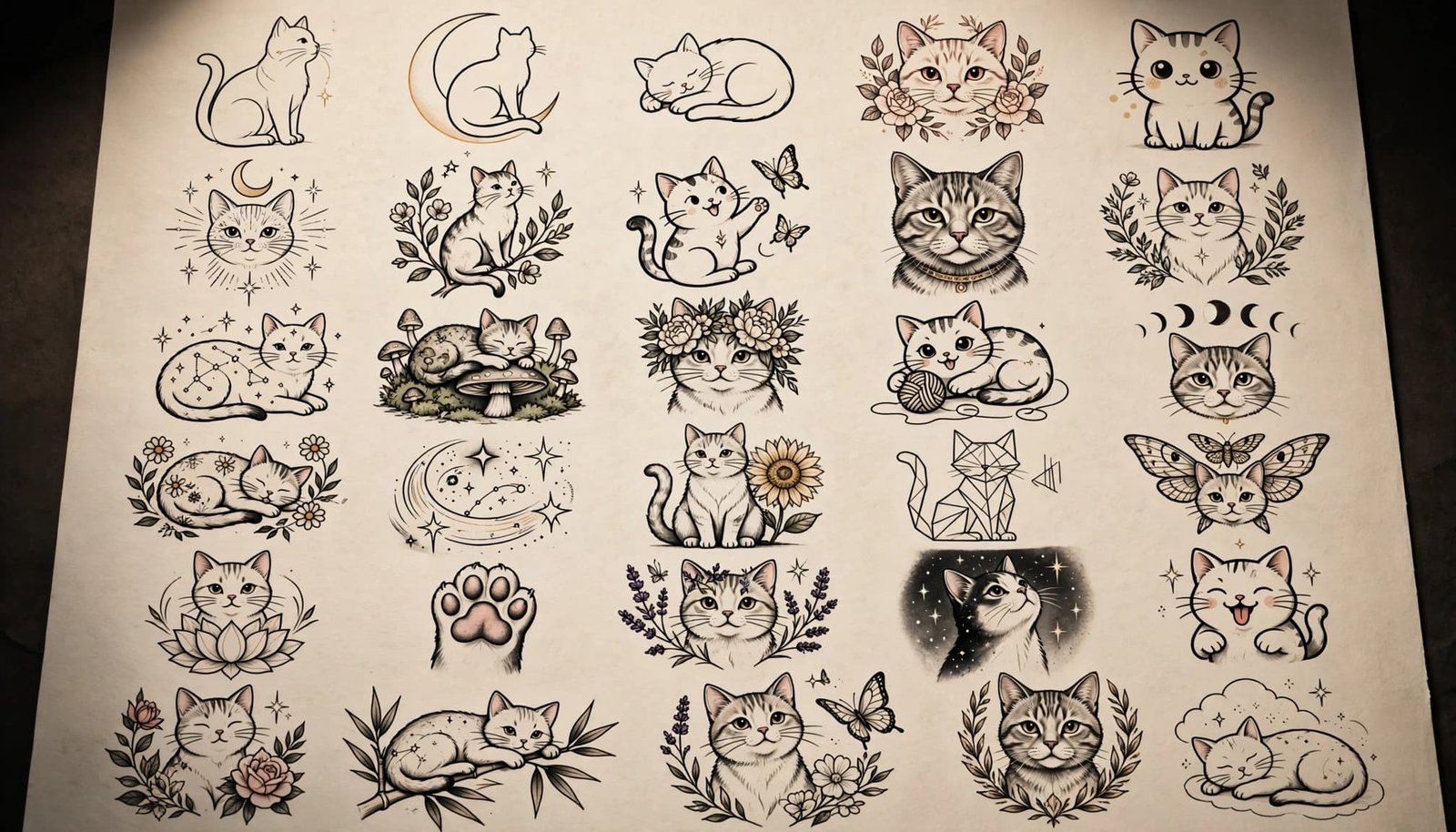
Tiny and Minimalist Cat Designs
Small tattoos work especially well for first-timers. Keep the shapes clean, leave space between details, and choose placements such as the wrist, ankle, finger, or behind the ear.
- Single-Line Cat Outline: One continuous line forms a seated cat. It suits anyone who prefers elegant, understated ink.
- Tiny Sleeping Cat: A curled sleeping kitten creates a peaceful design. It works well for a subtle ankle or wrist tattoo.
- Minimal Cat Face: Two eyes, pointed ears, and simple whiskers capture a cat’s charm. This idea suits first tattoos and fine-line fans.
- Curled Tail Symbol: A simple cat tail curls into a heart or spiral. It fits animal lovers who want an abstract design.
- Tiny Paw Print: A small paw makes a recognizable tribute without much detail. It suits fingers, ankles, and discreet everyday tattoos.
- Cat Silhouette: A solid black silhouette shows a sitting or stretching cat. It works for people who prefer bold shapes over delicate lines.
- Collar or Initial Detail: Add a tiny collar charm, bell, or initial to a simple cat outline. This personal touch can reference a specific pet.
Very small designs need enough breathing room. Crowded lines may blur as the tattoo ages, so ask your artist to simplify the artwork when necessary.
Playful Cartoon and Whimsical Cat Tattoos
Cartoon cat tattoos show personality through posture, facial expression, and small props. Choose clean outlines and one or two details to keep the design fun without making it childish.
- Stretching Kitten: A kitten arches its back with raised paws. This design suits energetic people and can follow the curve of an arm.
- Cat With a Heart: A seated cat holds a heart between its paws. It makes a sweet choice for devoted pet owners.
- Waving Paw: A cheerful cat raises one paw in greeting. This playful idea suits someone with a friendly, outgoing personality.
- Cat in a Box: Only the cat’s head and paws peek from a cardboard box. It fits anyone who enjoys classic feline behavior.
- Mischievous Cartoon Cat: A tilted grin, raised eyebrow, or curved tail gives the cat a cheeky expression. This suits playful animal lovers.
- Cat Chasing a Fish: A leaping cat follows a tiny fish or fish-shaped toy. It works well as a compact forearm or calf design.
- Sleeping Cat With Stars: A curled cat rests beneath tiny stars or a small speech bubble. It suits dreamers and anyone who loves cozy imagery.
Nature, Celestial, and Colorful Cat Concepts
Flowers, moons, geometric shapes, and color can turn a simple cat into a more personal composition. These designs
How to Choose the Right Cat Tattoo Style
The best cat tattoo style should match more than your favorite image. Consider the level of detail, line weight, contrast, color, placement, and the artist’s strongest specialty. A design that looks beautiful in a reference photo may need changes to stay clear on real skin.
Fine-Line and Minimalist Designs for a Subtle Look
Fine-line cat tattoos feel clean, delicate, and personal because they use restrained detail. A small portrait, simple outline, curved silhouette, or tiny sleeping cat can capture your pet without taking over the surrounding skin. That makes this style appealing for a first tattoo or a discreet design on the wrist, ankle, finger, or behind the ear.
However, fine-line tattoos aren’t maintenance-free. Friction, sunlight, and frequent movement can affect how thin strokes age, especially on fingers and other exposed areas. Ask the artist to simplify the design instead of forcing every whisker and facial marking into a space that’s too small.
For better results, review the artist’s healed work, not only fresh tattoos. You can also compare fine-line ankle tattoo designs if you’re considering a small placement with regular movement and friction.
Realistic Cat Portraits for a Personal Tribute
A realistic cat portrait is the strongest choice when likeness matters. It can honor a current pet, remember a cat that has passed away, or preserve a familiar expression that a simple outline can’t show.
Bring several sharp reference photos to your consultation. Choose images that clearly show the eyes, fur markings, nose shape, and expression you want. Front-facing and three-quarter photos usually give the artist more useful information than blurry selfies, heavy filters, or distant pictures.
Realistic work usually needs more space than a tiny tattoo. Fine facial details and fur texture can lose clarity when compressed into a miniature design, so let the artist recommend a practical size. Before booking, review healed portfolio examples, preferably portraits that are several months old. Fresh ink can look sharper and darker than the healed result.
Bold, Colorful, and Artistic Cat Styles
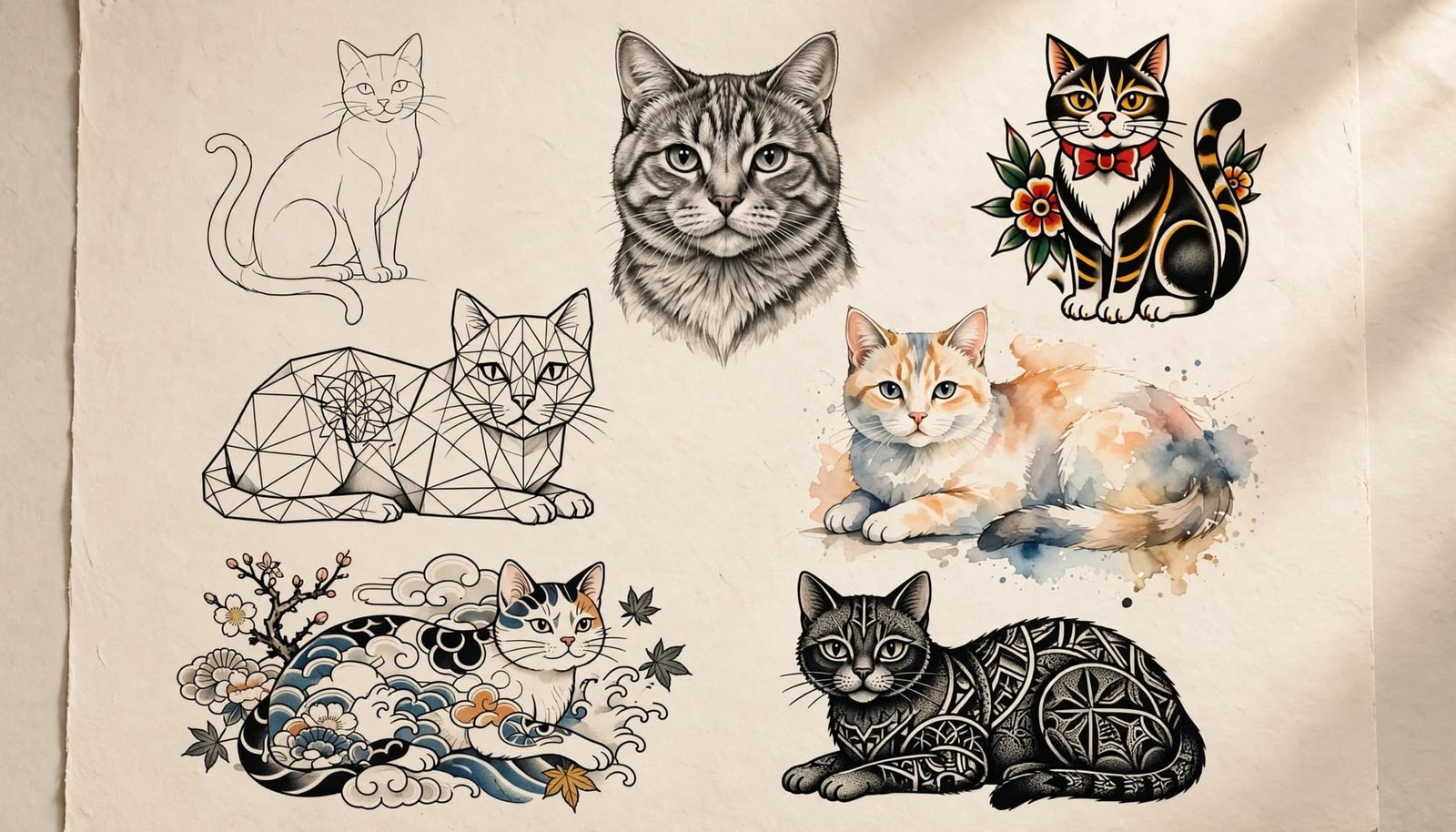
Bold outlines and strong contrast help a cat tattoo remain readable as it ages. Traditional designs use sturdy linework, solid color, and simple shapes, while cartoon cats can show personality through an exaggerated pose or expression. Geometric cats add symmetry and structure, and lucky cat designs bring a recognizable cultural motif with a decorative finish.
Watercolor tattoos create softer edges and layered color, but pale pigment can change as the tattoo heals. Ask to see healed color work before choosing this style. Japanese-inspired designs often suit larger compositions with strong movement, while dark or edgy blackwork cats rely on heavy shadows, sharp shapes, and high contrast.
Your choice should fit both your taste and the artist’s specialty. An artist who mainly creates traditional tattoos may not be the right choice for a realistic portrait, even if they produce excellent work. Review a tattoo placement guide for women before finalizing the size, since detail and contrast need enough room to remain clear.
Best Placements, Sizes, and Colors for Cat Tattoos
The best cat tattoo placement depends on the design’s detail, your clothing habits, and how much visibility you want. A tiny paw print needs little space, while a realistic portrait requires room for facial features, shading, and clean negative space.
Small Cat Tattoos for Wrists, Ankles, and Behind the Ear
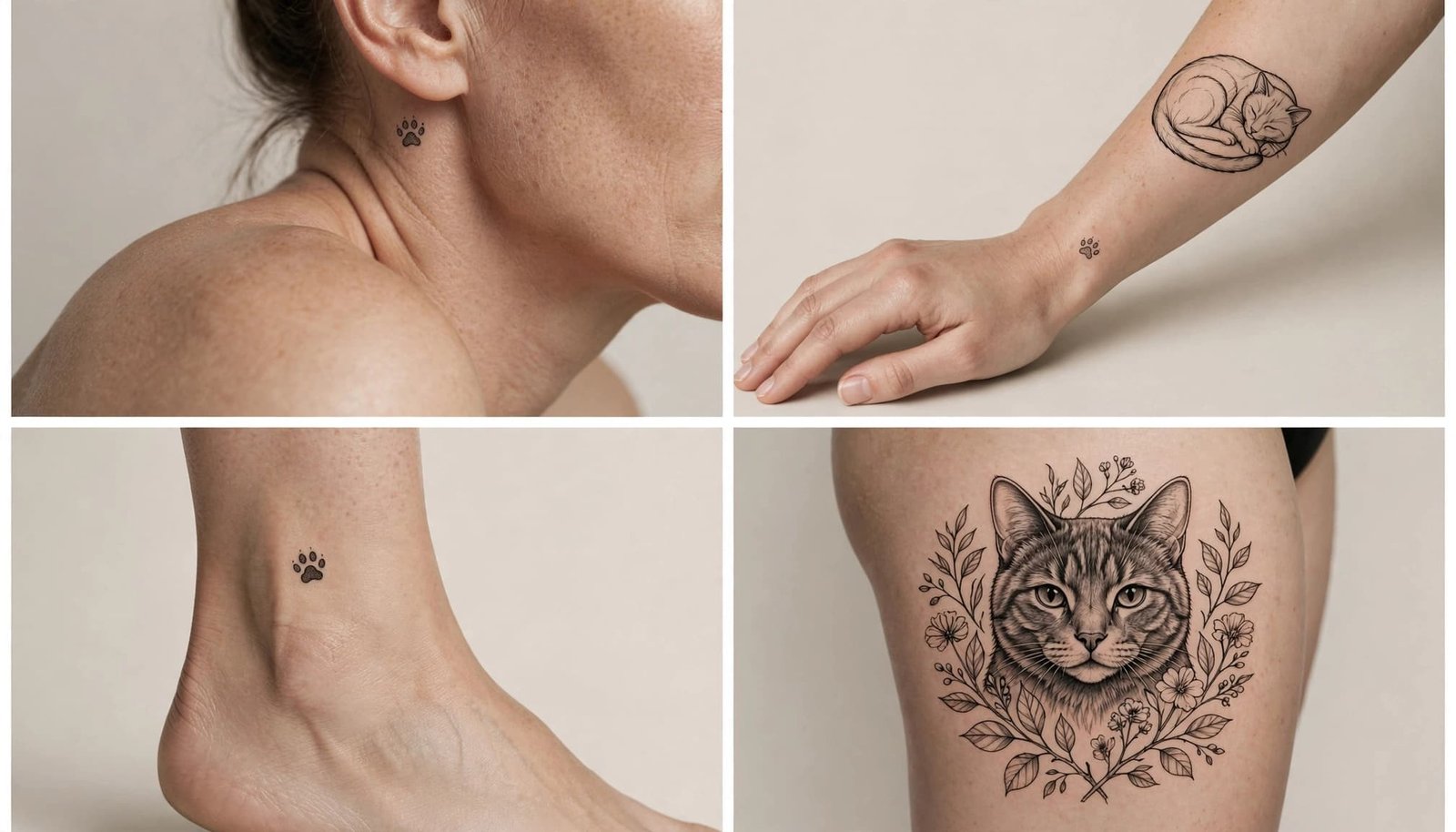
Tiny cat faces, paw prints, silhouettes, and single-line designs suit compact placements because they stay recognizable without crowding the skin. A minimalist cat face can fit the wrist, while a paw print or sleeping cat may work well on the ankle. Behind the ear, a small silhouette or single whisker detail creates a discreet tribute.
These areas also need practical planning. Wrists and ankles experience regular movement, friction from clothing, and sun exposure, so thin details may need extra protection after healing. Behind-the-ear tattoos can feel sensitive because the skin is delicate and close to bone. Follow your artist’s cleaning and moisturizing instructions carefully.
Avoid squeezing an overly detailed portrait into a tiny space. Fine facial features can blur together over time, especially when there isn’t enough negative space between lines. A simplified design often ages better than a miniature copy of a photograph.
Medium Designs for the Forearm, Inner Arm, and Calf
Medium placements give you more flexibility without requiring a full large-scale composition. A curled cat, vertical silhouette, small portrait, flowers, stars, or short lettering can fit the forearm, inner arm, or calf. An 8 to 15 cm design can work well between the wrist and elbow for a realistic portrait or story-style piece.
The outer forearm stays visible, which makes it practical for viewing your tattoo and following aftercare instructions. It also receives more sunlight than the inner arm, so clothing and sunscreen can help protect healed ink. By contrast, the inner arm feels more private and is easier to conceal with sleeves.
The calf offers a relatively broad surface for a vertical cat, especially when the design follows the leg’s natural length. For more placement ideas, compare these feminine thigh tattoo ideas before choosing between a calf and upper-leg design.
Large Cat Tattoos for the Thigh, Ribs, Back, and Shoulder
Large placements support realistic portraits, full-body cats, botanical scenes, memorial compositions, and designs featuring multiple cats. The thigh, shoulder blade, and back provide generous space and allow easy concealment under most clothing. The chest can also hold a centered cat portrait or a symmetrical design, although it may show more with low-cut clothing.
Rib tattoos can be striking, but many people find the area more painful. The skin moves with breathing, and reaching the area for cleaning can be difficult during healing. The thigh and upper back are often easier to protect from friction, while the shoulder works well for artwork that curves toward the arm.
Ask your artist to shape the design around your body rather than placing a flat image on top. A cat’s tail can follow the curve of a shoulder, while flowers or stars can extend naturally across the back or ribs.
Choosing Between Black Ink, Color, and Watercolor
Black linework gives small cat tattoos strong contrast and clear edges. Limited color can highlight the eyes, coat markings, flowers, or a favorite collar without overwhelming the design. Traditional color blocking creates bold, readable shapes, while watercolor effects offer softer blends and lighter edges.
Color choices should match the tattoo’s size, your skin tone, the placement, and the artist’s experience. Watercolor work needs careful planning, especially in small designs with little room for color separation. Every tattoo can fade with sun exposure, so protect healed ink with clothing or broad-spectrum SPF 30 sunscreen. During healing, keep the area out of direct sun and follow professional aftercare guidance, including the recommendations summarized in this tattoo aftercare review.
Make Your Cat Tattoo Meaningful and Personal
A cute cat tattoo becomes more memorable when it reflects your actual companion, a treasured memory, or a value such as kindness toward rescued animals. Start with one meaningful feature, then build the design around it. A personal detail often says more than a crowded collection of decorative elements.
Use Your Cat’s Personality, Pose, and Markings
Match the tattoo to your cat’s real behavior. A curled-up nap can suggest comfort, while a playful pounce captures energy and mischief. You might choose a full-body stretch, an alert sitting pose, or one raised paw if your cat often greets you that way.
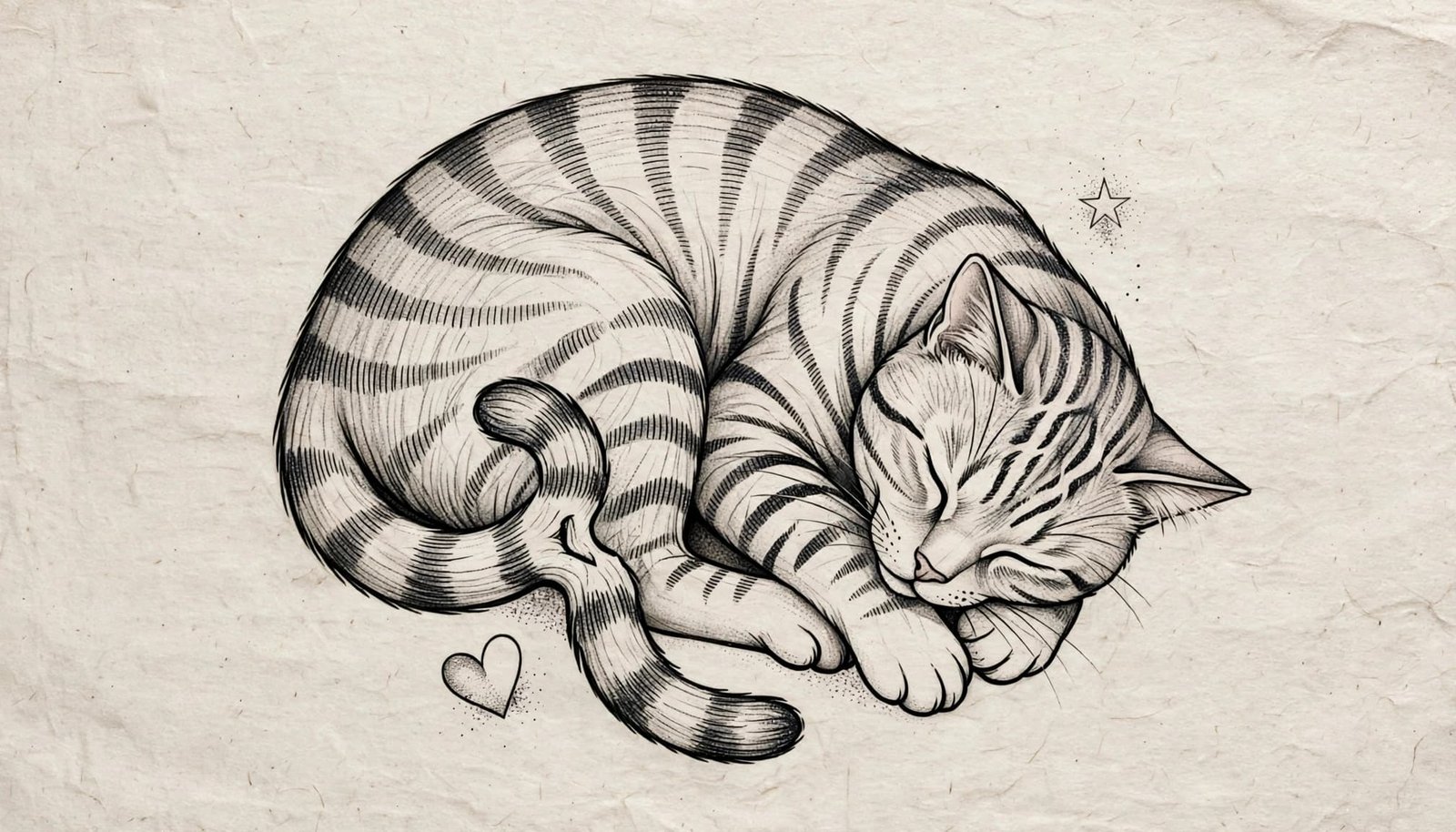
Recognizable markings can create a stronger likeness than adding many unrelated decorations. Include a tuxedo chest, tabby stripes, calico patches, a crooked tail, or unusual eyes. Even the shape of the ears or a favorite lounging position may help the tattoo feel unmistakably yours.
Before your appointment, collect clear photos that show your cat’s face, coat pattern, and natural posture. Then ask the artist to simplify those traits for the chosen size and style. A small tattoo may need only one stripe pattern and a distinctive tail to suggest the whole cat.
Create a Thoughtful Memorial or Rescue Cat Tattoo
A memorial tattoo can be simple and still carry considerable meaning. A paw print, custom portrait, adoption date, shelter-inspired symbol, or favorite toy can honor a cat without requiring a highly realistic face. You could also include a small collar charm, a fish toy, a bell, or the shape of a blanket your cat loved.
For a rescue cat, consider a design that acknowledges the beginning of your relationship. A shelter number, adoption date, tiny house symbol, or heart-shaped paw can reference the moment your cat came home. Keep the tribute personal rather than copying a popular design online. The best symbol is the one that brings back a specific memory.
A short name, initial, or date can accompany the image, but it doesn’t need to dominate the composition. For more ideas about meaningful memorial tattoo ideas, consider how placement and visibility affect the way you experience the tribute each day.
Add Symbols, Lettering, and Meaning Without Clutter
Small symbols can support the main cat image without competing with it. A moon may suggest peaceful nights, stars can honor a cat who has passed away, and flowers can connect the design to a season, place, or favorite memory. Hearts, fish, yarn, collars, initials, and short names also work well when the composition stays focused.
Keep lettering brief, and test the font at the tattoo’s actual size before approving the stencil. Ultra-fine script may lose clarity as it heals, especially on fingers, wrists, and other high-friction areas. Each letter needs enough space around it, so remove extra words before shrinking the design.
Ask yourself whether every detail adds meaning. If a decorative element doesn’t connect to your cat, memory, or values, leave it out. A clear silhouette with one personal marking often feels more intimate than a busy design filled with text and ornaments.
Choose a Skilled Tattoo Artist and Prepare for the Appointment
The artist you choose affects how clearly your cat tattoo ages, especially when the design includes fine lines, facial features, or several colors. Compare portfolios carefully, ask direct questions, and choose someone whose regular work matches your idea.
A clean studio and clear communication matter just as much as artistic ability. Before booking, confirm local licensing requirements and look for visible hygiene practices, including fresh gloves, single-use needles, proper sharps disposal, and sterilization equipment. Regulations vary by location, so you can review tattoo licensing and safety requirements for an example of what public health rules may cover.

Review Healed Work and Ask the Right Questions
Fresh tattoos often look darker and sharper than they will after healing. Therefore, ask to see healed examples, particularly fine-line cat tattoos, realistic portraits, and color pieces similar in size and placement to your planned design. Look for clean edges, readable facial features, balanced shading, and color that remains distinct after healing.
During the consultation, ask:
- How will small details such as whiskers, eyes, stripes, or fur markings age?
- Will the design need to be simplified for its size?
- How much fading or softening should you expect?
- Does the artist offer touch-ups, and are they included in the price?
- Can the design change after the stencil is placed?
- What deposit is required, and when is it refundable?
- What is the estimated price, session length, and number of appointments?
Check that the artist regularly creates your chosen style rather than accepting one impressive example outside their usual work. A portrait specialist may not be the best choice for watercolor work, and a fine-line artist may not produce the bold contrast you want.
You should also feel comfortable asking about gloves, needle packaging, reusable-tool sterilization, ink handling, and the studio’s license or inspection status. Leave if the artist pressures you, dismisses safety concerns, or agrees to copy another person’s tattoo exactly. Use the reference for direction, then allow the artist to create an original design for your body.
Prepare Reference Photos and a Flexible Design Brief
Bring several clear photos of your cat from different angles. Include a front-facing image, a side or three-quarter view, and a natural photo that shows the pose or expression you want to remember. Add details about distinctive markings, eye color, coat pattern, favorite toy, collar, or symbols you want included.
Describe the feeling you want the tattoo to convey, such as playful, elegant, bold, cozy, or sentimental. Then explain your preferred placement, approximate size, color limits, and how visible you want the piece to be. The artist can adapt the design to your body’s curves and available space.
A short, focused reference brief is more useful than a crowded collage of unrelated tattoos. Choose one or two style references, your cat photos, and a simple list of priorities. Before leaving home, eat a proper meal, drink water, wear loose clothing that exposes the tattoo area, and bring identification if the studio requires it. Avoid arriving sick, dehydrated, or on an empty stomach, and follow the studio’s instructions about medications and preparation.
Cat Tattoo Aftercare and Long-Term Care
A cute cat tattoo needs careful aftercare while the skin repairs itself. Your tattoo artist’s instructions should always come first because bandage types, products, and healing timelines vary. Follow the studio’s guidance even when it differs from general advice.
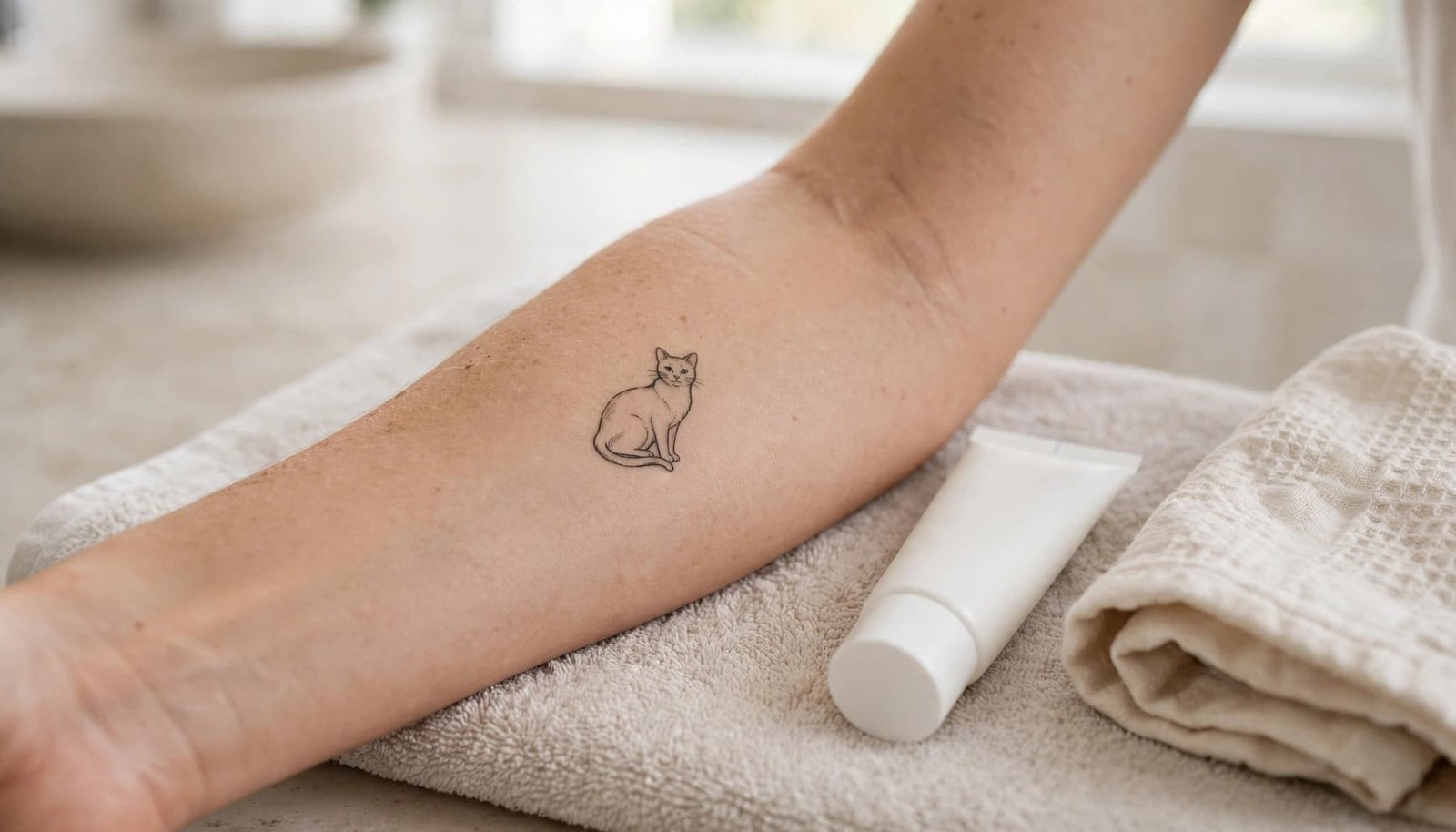
The First Days of Healing
Leave the first bandage on for the period your artist recommends. Depending on the covering, that may be a few hours, with 2 to 4 hours often given as a general example. Some medical-grade adhesive films stay on longer, so don’t remove yours based on a standard time range alone.
Once your artist says it’s time, wash your hands and remove the covering gently. Clean the tattoo with lukewarm water and fragrance-free soap, using a light touch. Avoid scrubbing, washcloths, and direct, forceful shower spray. Then pat the area dry with a clean paper towel or fresh, soft towel. Guidance from Healthline’s tattoo aftercare advice also supports using mild, fragrance-free products during this stage.
Apply only a thin layer of the healing product recommended by your artist. A heavy coating can trap moisture and irritate the skin, so more product won’t make the tattoo heal faster. Wash and moisturize only as often as instructed, rather than repeatedly handling the area throughout the day.
Mild redness, tenderness, warmth, peeling, or itching can occur during normal healing. Still, resist the urge to scratch, pick flakes, rub scabs, or pull at peeling skin. Wear loose clothing that won’t stick to the tattoo or create constant friction. For more placement-specific considerations, review what getting a tattoo feels like, especially if your cat design sits near a high-friction area.
What to Avoid While the Tattoo Heals
Keep the tattoo out of pools, hot tubs, baths, saunas, lakes, oceans, and other soaking environments until the skin has fully healed. A quick shower is usually easier to manage than prolonged water exposure. Sweat and repeated rubbing can also irritate fresh ink, so follow your artist’s advice about exercise.
Avoid direct sunlight while the tattoo heals. Don’t cover it with tight sleeves, restrictive shoes, rough fabrics, or anything that repeatedly scrapes the skin. Healing time varies according to the tattoo’s size, detail, placement, your skin, and your general health. Your artist’s timeline should guide you, even if the tattoo looks healed on the surface.
Protect the Design After It Heals
Once the tattoo has fully healed, apply broad-spectrum, water-resistant SPF 30 or higher whenever exposed to sunlight. Regular UV exposure can fade fine lines and colors, particularly on wrists, ankles, forearms, hands, shoulders, and calves. Reapply sunscreen during extended outdoor activity, and use clothing or shade when practical.
Moisturize normally, but avoid picking at dry skin or using harsh products. High-motion placements and delicate fine-line cat tattoos may soften or fade sooner, so a later touch-up can restore clarity. Ask your artist when the design is ready for evaluation instead of scheduling repairs during the initial healing period.
Seek medical care if redness spreads, pain worsens, swelling becomes severe, pus or foul-smelling drainage appears, or you develop a fever. These symptoms need attention rather than additional moisturizer or home treatment.
Conclusion
The best cute cat tattoo begins with a concept that feels personal, whether it captures your cat’s playful personality, honors a lasting memory, or uses a simple symbol with special meaning. These ideas can also lead you toward meaningful tattoo ideas for positive energy if you want the design to carry a broader message.
Next, match the tattoo’s detail to the available space. A tiny paw print or simple outline can stay clear in a small placement, while a portrait, botanical scene, or memorial design needs more room. Choose an experienced artist whose portfolio fits your preferred style, review the stencil before the session, and follow their aftercare instructions while the tattoo heals.
Use these 30 cute cat tattoo ideas as a starting point, not a design to copy exactly. The most lasting choice combines a meaningful concept with a practical size, placement, and style that can remain clear over time.
Save the pin for later

- 60 Color Tattoos That Healed Beautifully - 25/09/2026
- 40 Most Painful Tattoo Spots - 24/09/2026
- 20 Tattoo Aftercare Mistakes That Ruin Fresh Ink - 23/09/2026

