American traditional tattoos remain popular because their strong silhouettes, bright colors, and clear symbolism still read well at a glance. Thick black outlines, solid color fills, limited detail, and high contrast give the style its unmistakable look, whether you choose an anchor, rose, eagle, snake, or heart.
Choosing the right design takes more than picking a favorite flash image. The best tattoo should match your personality, carry meaning that feels personal, and suit the body area where it will be placed. A large chest or back piece can support broader shapes, while the forearm, calf, or neck may call for a simpler composition; this tattoo placement and visibility guide can help you compare your options.
Below, you’ll find 30 classic American traditional tattoo ideas, with guidance on meaning, placement, color choices, and selecting an artist whose portfolio shows strong traditional work. Begin with these timeless designs to find one that fits both your story and your skin.
30 American Traditional Tattoo Ideas With Meaning and Personality
American traditional tattoos use familiar symbols, but their meaning can change with the wearer. A swallow may honor travel for one person and a safe return home for another. The strongest design combines a recognizable old-school image with a story that belongs to you. For historical context, the Naval History and Heritage Command’s overview of sailors’ tattoos explains why many classic motifs connect to travel, service, loyalty, and protection.
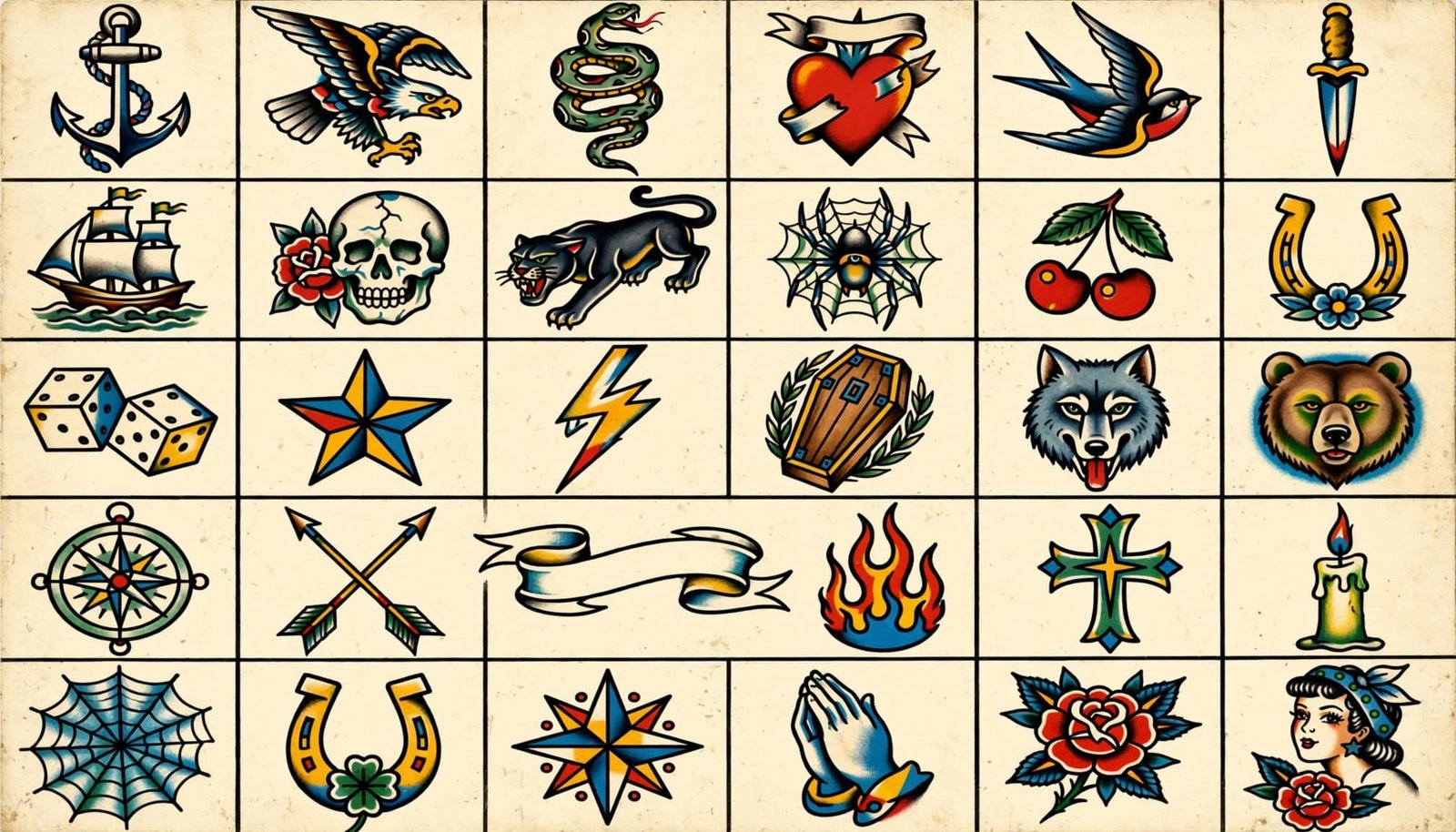
Nautical American Traditional Tattoo Ideas
- Anchor: Bold black lines, a navy-blue shank, and a red rope create a classic design. It commonly symbolizes stability, grounding, loyalty, or finding safe harbor. A forearm placement keeps the message visible.
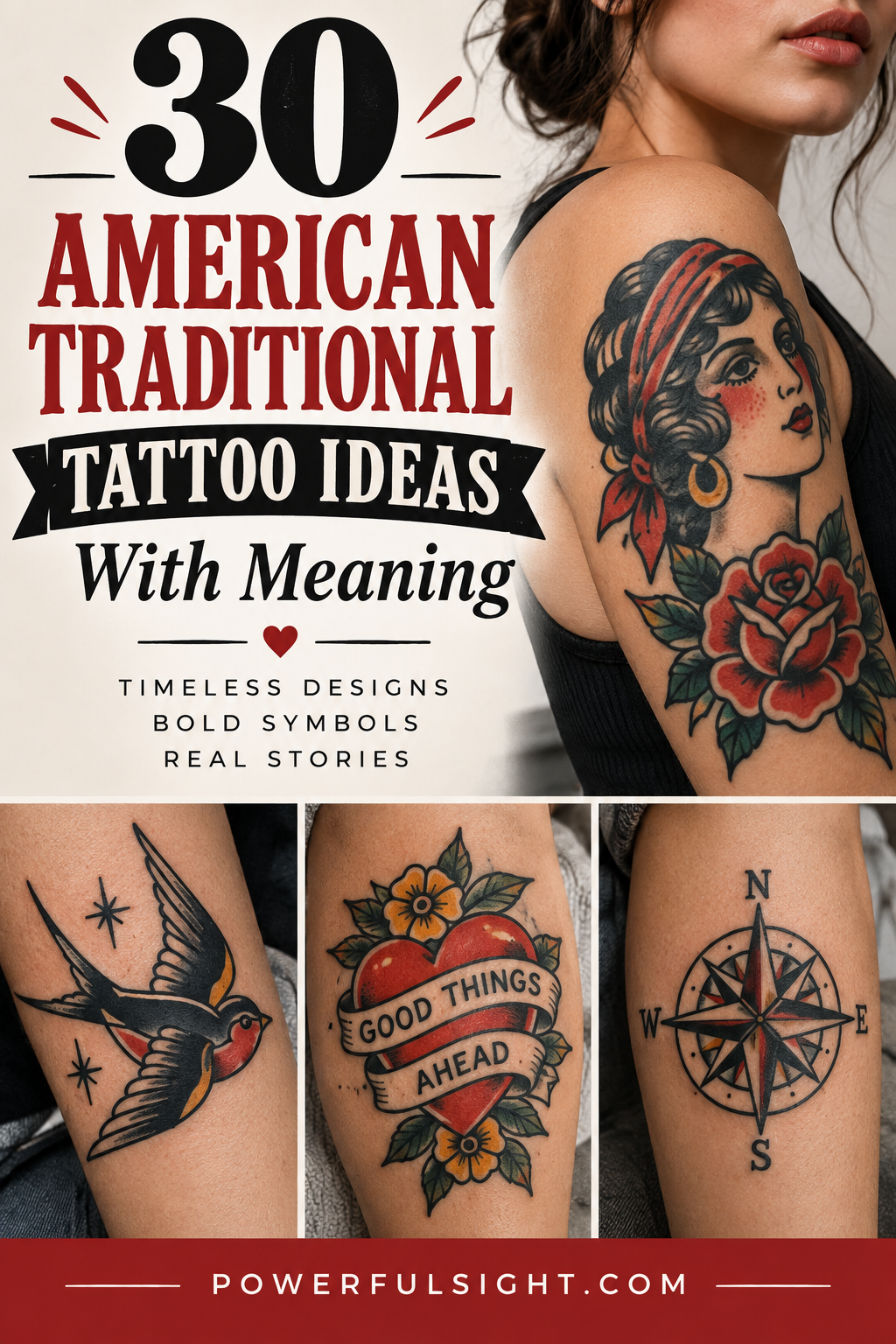
- Swallow: A small swallow with spread wings and a red breast suits traditional flash. It can mean safe travel, loyalty, good luck, or returning home. Place it on the upper chest or shoulder.
- Sailing Ship: Show a tall ship with full sails, curling waves, and a warm yellow sun. The design often represents adventure, independence, and surviving difficult waters. The outer calf provides a natural vertical canvas.
- Compass: A four-point compass with red and yellow accents makes a crisp old-school tattoo. It can symbolize direction, purpose, or staying true to yourself. Try it on the upper arm.
- Lighthouse: Use a striped lighthouse above blue waves with a small golden beam. This image commonly means guidance, hope, and safe passage through uncertainty. The outer forearm suits its upright shape.
- Nautical Star: A compact five-point star with alternating colors offers a simple flash-style design. It may represent direction, protection, or a personal journey. Place it behind the upper arm or on the wrist.
Love, Loss, and Personal Bonds
- Red Rose: Thick outlines, layered red petals, and two green leaves give the rose its traditional look. It often symbolizes love, passion, devotion, or beauty with an edge of pain. The shoulder works well for a rounded shape.
- Heart: A bright red heart with black shading can remain simple or include a small banner. It may honor love, family, compassion, or emotional courage. Place it over the chest for a personal connection.
- Dagger Through a Heart: A silver dagger piercing a red heart creates a dramatic, instantly readable image. Common meanings include heartbreak, betrayal, sacrifice, and surviving emotional pain. The upper arm gives the design room to breathe.
- Sacred Heart: Flames, a crown of thorns, and a red heart create a richly symbolic traditional tattoo. It can express faith, compassion, devotion, or endurance. Consider the center of the chest.
- Cherries: Two glossy red cherries with green stems make a playful, compact design. They can suggest sweetness, confidence, romance, or enjoying life’s pleasures. The hip or ankle offers a smaller placement.
- Lock and Key: Pair a gold lock with a simple silver key and heavy black outlines. This design may represent trust, a guarded heart, commitment, or access earned over time. Place it on the inner forearm.
For more ways to connect imagery with a personal story, compare these tattoos with strong personal meanings before settling on a final symbol.
Animals With Bold Character
- Eagle: A spread-wing eagle with a white head and red, white, and blue details creates a commanding piece. It commonly represents freedom, strength, patriotism, or military pride. The chest offers enough width for its wings.
- Snake: A coiled green snake with a red tongue and pointed head fits the style perfectly. It may symbolize transformation, wisdom, danger, healing, or personal power. Wrap it around the upper arm.
- Panther: A black panther with bright eyes, exposed claws, and red accents looks dramatic in old-school form. It often suggests courage, independence, protection, and controlled strength. The thigh gives the silhouette room.
- Wolf: Use a gray wolf head with pointed ears, red tongue, and strong facial contrast. It can represent loyalty, instinct, family, or surviving on your own terms. Place it on the outer bicep.
- Bear: A brown bear head with an open mouth and red tongue creates a rugged flash image. It may symbolize protection, strength, patience, and family devotion. The upper back is a strong location.
- Swallow Pair: Two matching swallows facing each other can represent partnership, home, or a journey shared with someone important. Keep both birds symmetrical with red breasts and blue wings. Place them across the collarbones.
Protective and Rebellious Symbols
- Dagger: A straight dagger with a decorated handle and red jewel makes a sharp, compact design. It commonly means protection, courage, sacrifice, or facing betrayal. The inner forearm keeps its vertical shape clear.
- Skull: A smiling skull with red roses or yellow flames adds personality without needing fine detail. It can symbolize mortality, fearlessness, remembrance, or acceptance of change. Place it on the upper arm.
- Cross: A black-outlined cross with red roses or blue shading can express faith, family, memory, or spiritual strength. Its meaning depends strongly on your personal beliefs. The sternum or forearm works well.
- Praying Hands: Two carefully outlined hands beneath a small cross create a clear devotional design. It may honor faith, gratitude, grief, or someone remembered in prayer. Choose the inner forearm for a visible reminder.
- Candle: A red candle with a yellow flame and wax drips makes a compact traditional image. It can represent remembrance, hope, guidance, or keeping someone’s memory alive. The wrist or ankle suits a smaller version.
- Flaming Coffin: A black coffin surrounded by red and yellow flames gives the design a rebellious edge. It may symbolize mortality, a finished chapter, or refusing to fear death. Place it on the outer thigh.
Luck, Strength, and Personality
- Horseshoe: A yellow horseshoe with red nails and green leaves is a classic good-luck symbol. It can represent protection, fortune, opportunity, or a fresh start. The inner bicep provides a clean placement.
- Lucky Dice: Two red and black dice with small stars or sparks create a playful flash design. They may symbolize risk, chance, gambling, or accepting life’s uncertainty. Place them on the calf.
- Lightning Bolt: A red and yellow lightning bolt uses simple geometry and high contrast. It commonly suggests energy, speed, sudden change, or an electric personality. The side of the forearm suits its narrow shape.
- Arrow: A straight arrow with a red feather and gold tip offers a clean, directional design. It can symbolize focus, progress, protection, or moving forward after hardship. Place it along the rib or forearm.
- Lady Head: A classic lady head with curled hair, red lips, and bold flowers brings a vintage flash feel. She may represent beauty, confidence, romance, or an admired person. The upper arm gives the portrait space.
- Banner With Initials: A curled banner around a rose, heart, or eagle can carry meaningful initials or a short name. The surrounding symbol gives the lettering personal context. Place it across the chest or shoulder, and ask your artist to size the text for long-term clarity.
What Makes These Tattoos Truly American Traditional?
American traditional tattoos follow a clear visual language. Their bold shapes, limited colors, and familiar symbols make them easy to recognize, even from across a room. The style grew from sailor and military tattooing, but modern wearers use the same visual rules to tell personal stories about love, survival, family, faith, travel, and independence.
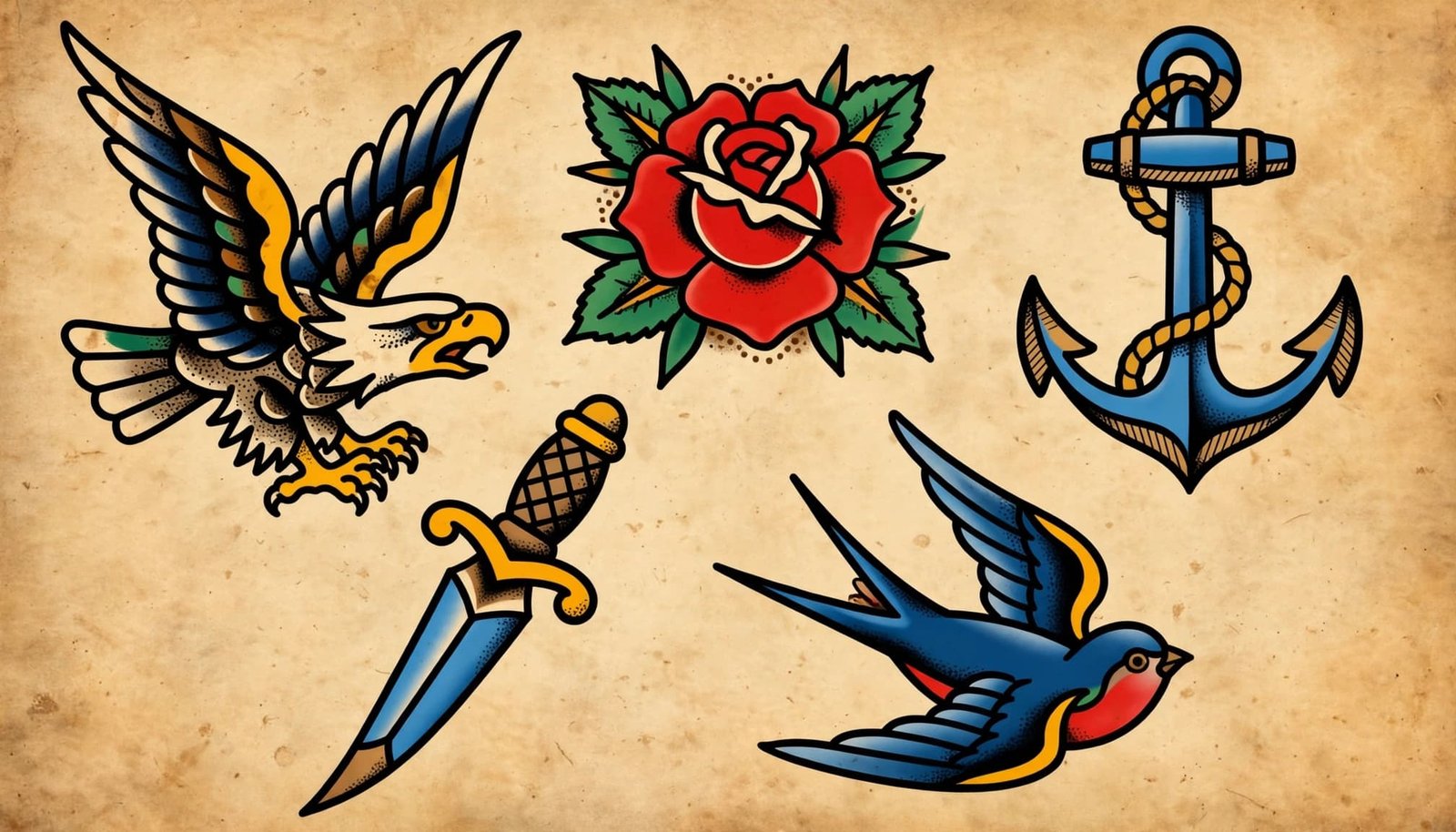
Bold outlines and simple, readable forms
The most recognizable feature is the thick black outline. It gives each image a firm border and keeps the design readable as the tattoo ages. Instead of building a subject with dozens of tiny details, traditional artists reduce it to a strong silhouette and a few important features.
Flat, saturated color fills complete the look. The classic palette includes black, red, yellow, green, and blue. An artist may add small amounts of brown or purple, but the design should still feel bright, contained, and graphic rather than soft or painterly.
Shading stays limited. You may see black shadows, small highlights, or simple color separation, but you won’t usually find the smooth gradients used in realism. The composition also stays direct, with purposeful negative space between shapes so the image doesn’t become crowded.
That simplicity has a practical benefit. As skin changes over time, fine details can soften or merge. A bold outline and clear color block give the tattoo a better chance of remaining recognizable years later.
American traditional work is designed to read quickly. If the silhouette disappears without its tiny details, the design probably needs stronger structure.
How it differs from other tattoo styles
Realism focuses on lifelike texture, accurate anatomy, and gradual light-to-dark shading. Fine-line tattoos use delicate contours and subtle details, while watercolor designs imitate loose washes, color bleeds, and brushstrokes. American traditional tattoos take the opposite approach, using contained color, heavy outlines, and high contrast.
Neo-traditional work shares the old-school outline but expands the style with richer shading, broader color choices, decorative backgrounds, and more dimensional forms. Traditional designs stay closer to classic flash imagery and simpler compositions. For example, compare these American traditional snake tattoos with a realistic snake covered in detailed scales. The traditional version relies on shape, contrast, and a few defining marks.
Many classic motifs came from sailor and military culture, including anchors, ships, swallows, eagles, hearts, daggers, and banners. Historical context helps explain those subjects, as shown in this history of American traditional tattoos, but you don’t need a maritime connection to choose one today.
Traditional tattooing is a style language, not a rulebook. Every design doesn’t need to look identical. An artist can adjust the subject, palette, placement, and symbolism while preserving the features that make the work unmistakably American traditional.
How to Choose the Right Motif, Size, and Placement
The right American traditional tattoo starts with meaning, then moves into practical planning. Ask yourself what the design should express: love, freedom, loyalty, protection, travel, faith, strength, or survival. A rose may honor devotion, while an eagle may reflect independence. A dagger can symbolize courage after betrayal, and a lighthouse can represent guidance through a difficult period.
Choose a symbol that still feels relevant beyond the appointment day. You may also combine two ideas, such as a swallow with a banner for a loved one or a heart with a dagger to show emotional survival. Once the meaning feels right, consider how the design will fit your body.
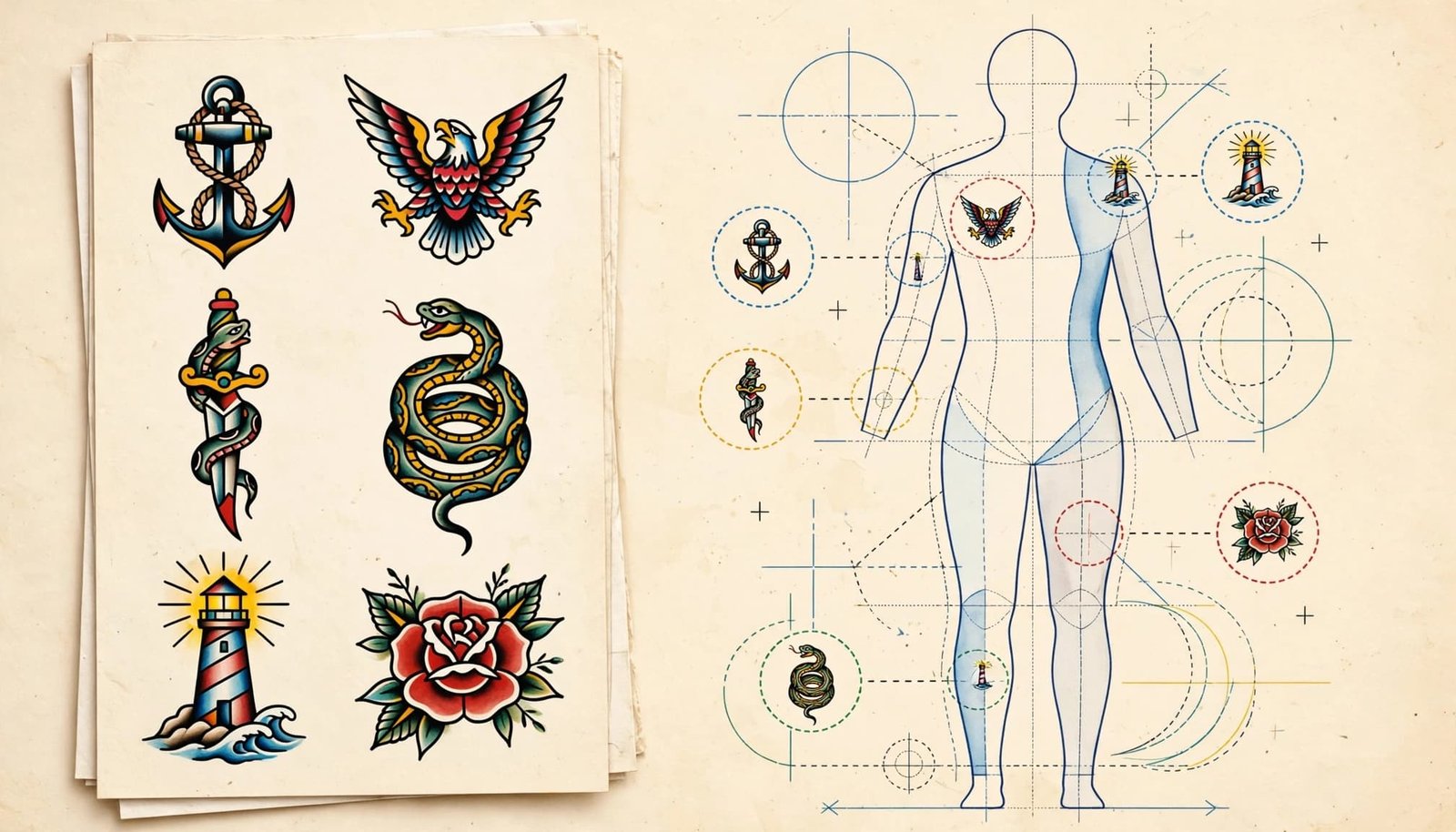
Match the tattoo size to its detail
Size affects how clearly an American traditional tattoo reads. Bold outlines help the style age well, but cramped details can blur when the design is too small. Interior linework, lettering, facial features, and layered objects need enough room around them.
A tiny eagle may lose its wing shape, while a small ship may become a dark block. If your idea includes a banner, ask whether the lettering can remain clear at the proposed size. Short words and initials need spacing, not just thicker ink.
Large motifs usually need broad, stable areas:
- Eagles and sailing ships suit the chest, back, shoulder, upper arm, or thigh.
- Panthers and lady heads need enough room for strong silhouettes and recognizable features.
- Sacred hearts, large roses, and layered memorial designs often work best on the chest, upper arm, or thigh.
Vertical motifs need a different kind of space. Daggers, snakes, swallows, arrows, and lighthouses often fit the forearm or calf because their shapes can follow the length of the limb. A curved snake may also wrap naturally around the upper arm.
Your artist should approve the final scale after seeing the reference image. A design that looks balanced on a screen may need wider spacing, fewer details, or a larger footprint on skin.
Choose a placement that fits your life
The upper arm remains a strong first-tattoo placement because it offers usable space, moderate visibility, and a natural curve. You can cover it with a sleeve or show it with short sleeves. The forearm offers easier visibility, which makes it useful when you want the tattoo to act as a daily reminder.
Meanwhile, the shoulder, outer thigh, calf, chest, and upper back provide relatively stable surfaces for bold designs. If you’re considering a hip piece, review these hip tattoo placement ideas to compare scale, privacy, and body contours.
Hands and fingers require more commitment. Frequent washing, friction, sun exposure, movement, and gripping can cause faster fading, so these areas may need touch-ups. Ribs also demand careful thought because the skin moves with breathing, the area has limited room, and the pain can be intense.
Before booking, print or trace the design at its intended size and place it on your body for a day. Check how it follows your natural curve, looks when you move, and fits beside future tattoos. The best placement feels intentional now and still leaves your larger tattoo plan open.
Color, Artist Selection, and Mistakes to Avoid
Color and artist choice shape how well an American traditional tattoo keeps its identity over time. Saturated red, yellow, green, blue, and black create the bold contrast associated with classic flash. They make each symbol easy to recognize and give the design a strong visual rhythm.
Too many gradients, pale washes, or muted tones can soften that effect. A traditional tattoo can use modern adjustments, but excessive shading may make it look closer to illustrative, realism, or neo-traditional work. Ask your artist to keep the palette limited unless a broader color plan supports the concept.
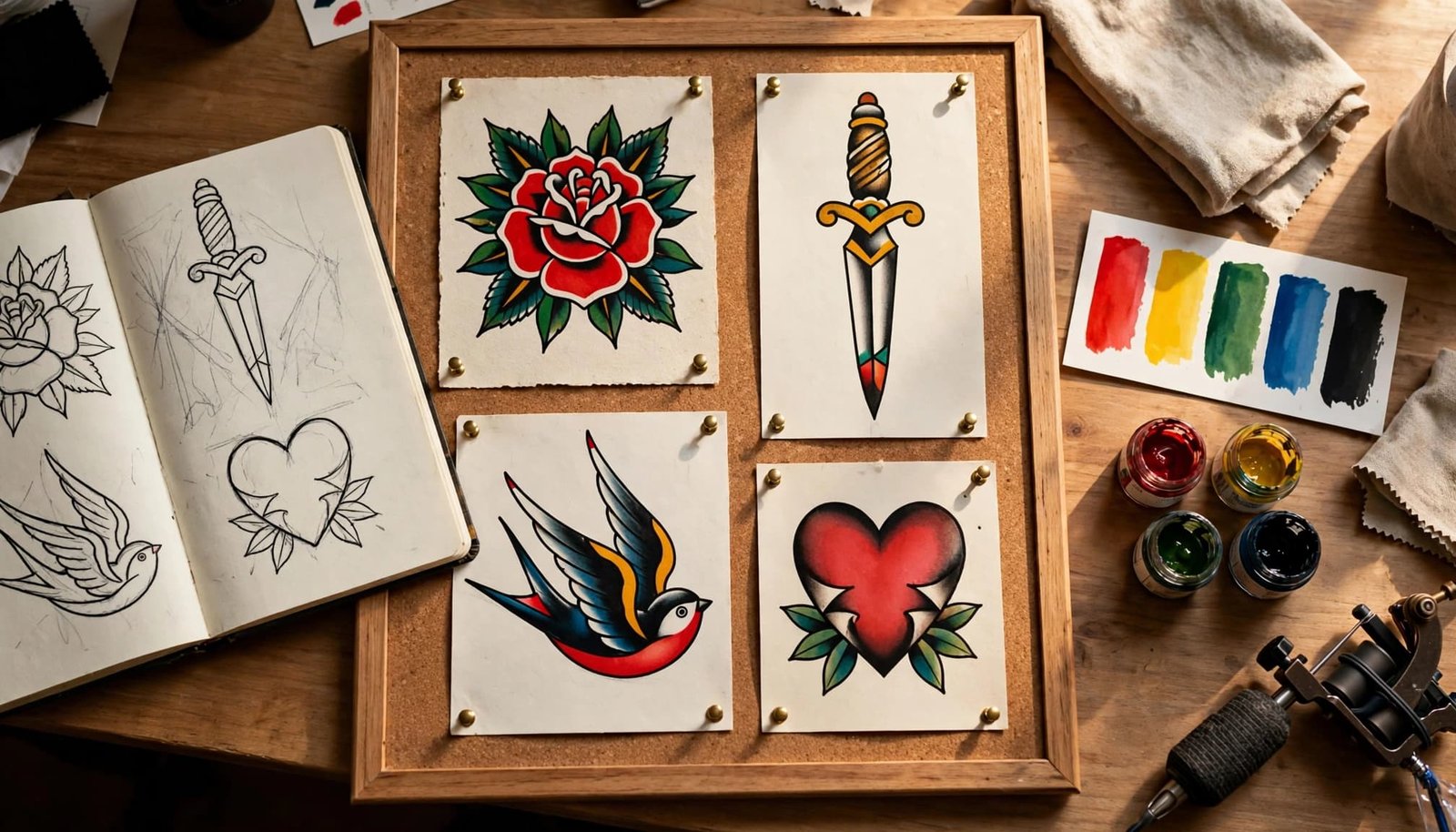
How to choose an American traditional tattoo artist
Start with an artist whose portfolio shows consistent traditional work, not one isolated flash-style tattoo. Look for clean line weights, solid color packing, balanced compositions, and readable designs. The outline should look deliberate, and the color should fill the shape without patchy gaps.
Fresh tattoos often appear darker and sharper than they will after healing. Therefore, ask to see healed tattoos, ideally several months after the appointment. These healed tattoo portfolio examples can help you judge whether lines stay clear, colors settle evenly, and small details remain legible.
Bring two or three references that show the subject, mood, and color direction you prefer. However, don’t expect the artist to copy one image exactly. A skilled professional should redraw the concept so it follows your body’s curve, suits the intended size, and leaves enough negative space.
Mistakes that weaken the final design
Several planning errors can make a good idea difficult to tattoo:
- Copying a popular design without adding personal meaning can leave you with an image that feels disconnected from your story.
- Packing too much detail into a small tattoo can blur facial features, lettering, feathers, or interior shading.
- Adding a long quote or crowded banner can make text difficult to read as the tattoo ages.
- Choosing a placement that bends, stretches, or compresses the image can distort its main silhouette.
- Combining traditional outlines with realism, watercolor effects, or fine-line details without a clear plan can make the style feel accidental.
Size and placement should support the image, rather than force it into an unsuitable space. For example, review healed sternum work before placing a large heart or sacred design across the chest. These sternum tattoo placement ideas show why anatomy and spacing matter.
Check safety before your appointment
Use a licensed professional working in a studio that follows local health rules. Licensing requirements vary by state and city, so verify both the artist and studio when required. Needles and disposable tubes should come from sealed packages, while reusable equipment should be sterilized in an autoclave.
The studio should use fresh gloves, new ink caps, clean surfaces, and clear written aftercare instructions. Tell the artist about allergies, eczema, psoriasis, keloid scarring, diabetes, immune conditions, bleeding disorders, or medications that affect clotting. The FDA’s tattoo safety guidance also advises contacting a health professional if unusual redness, rash, bumps, fever, or delayed healing develops.
Conclusion
The strongest American traditional tattoo brings together a clear symbol, bold outlines, limited color, and a placement that supports the design. This collection includes options for many stories, from eagles and anchors to roses, daggers, hearts, lucky symbols, and darker imagery such as skulls and coffins. Their traditional meanings offer a starting point, but your personal connection gives the tattoo its lasting value.
Narrow your choices to two or three ideas, then decide how large each design should be and where it will fit best. You can also review these clever tattoos with personal meaning for ways to make a familiar symbol feel more personal. After that, work with an experienced traditional tattoo artist who can redraw the concept for your body and keep the lines, colors, and spacing readable.
Choose a tattoo for its long-term meaning and clarity, not only because it looks striking in a saved image.
Save the pin for later

- 25 Gothic Tattoo Ideas for a Bold, Dark Look - 21/09/2026
- 34 Black Fine Line Tattoo Ideas for a Delicate Look - 21/09/2026
- 23 Micro Tattoo Ideas for Women With Meaning - 21/09/2026

