An evil eye tattoo has lasting appeal because it can carry a personal wish for protection while also working as striking body art. Across ancient Mediterranean, Middle Eastern, and Eurasian traditions, the eye has been associated with warding off envy or harmful attention, although its meaning differs across cultures and communities. For some people, it connects to heritage or spiritual belief; for others, it expresses awareness, strength, or a meaningful intention rather than guaranteed protection.
The right design can be subtle and refined, bold and ornamental, or rich with color and symbolism. This collection features 25 evil eye tattoo ideas in minimalist, colorful, floral, geometric, realistic, and decorative styles, with options for discreet placements and larger statement pieces. You can also compare these hamsa and evil eye tattoo meanings before combining related symbols.
Start with these design ideas to find an evil eye tattoo that fits your style, placement, and personal meaning.
What an Evil Eye Tattoo Means and Where the Symbol Comes From
An evil eye tattoo can symbolize protection, awareness, cultural heritage, or a wish to keep envy and harmful intentions away. Its meaning depends on the design and the person wearing it, so the symbol isn’t limited to one fixed interpretation.
The harmful gaze and the protective symbol
The phrase “evil eye” originally describes a harmful gaze, rather than the charm itself. In many traditions, envy, jealousy, or hostile attention was believed to bring illness, misfortune, or bad luck to another person.
The eye amulet developed as a protective response to that belief. Its purpose was to ward off harm, deflect negative intent, or watch over the person carrying it. An evil eye tattoo follows that protective use, although a tattoo is a personal symbol and cannot guarantee physical or spiritual protection.
Some people choose the design to express:
- A wish for protection from envy or ill will.
- Awareness of hidden motives and emotional boundaries.
- A connection to family heritage or spiritual practice.
- Personal strength after overcoming a difficult period.
Ancient roots across several cultures
Eye amulets can be traced back thousands of years. Early examples and related protective symbols appear in ancient Mesopotamia, Egypt, Greece, and Rome. Mesopotamian artifacts associated with Tell Brak, dating to around 3300 BCE, include abstract figures with prominent eyes. Ancient Egyptians also used the Eye of Horus, or wedjat, as a symbol connected with healing, safety, and restoration.
Greek traditions referred to the harmful gaze as the mati, while Roman culture described related beliefs with terms such as fascinatio. Romans used several types of protective charms, proving that anti-evil-eye symbolism has never depended on one single shape.
The Turkish nazar bead connection
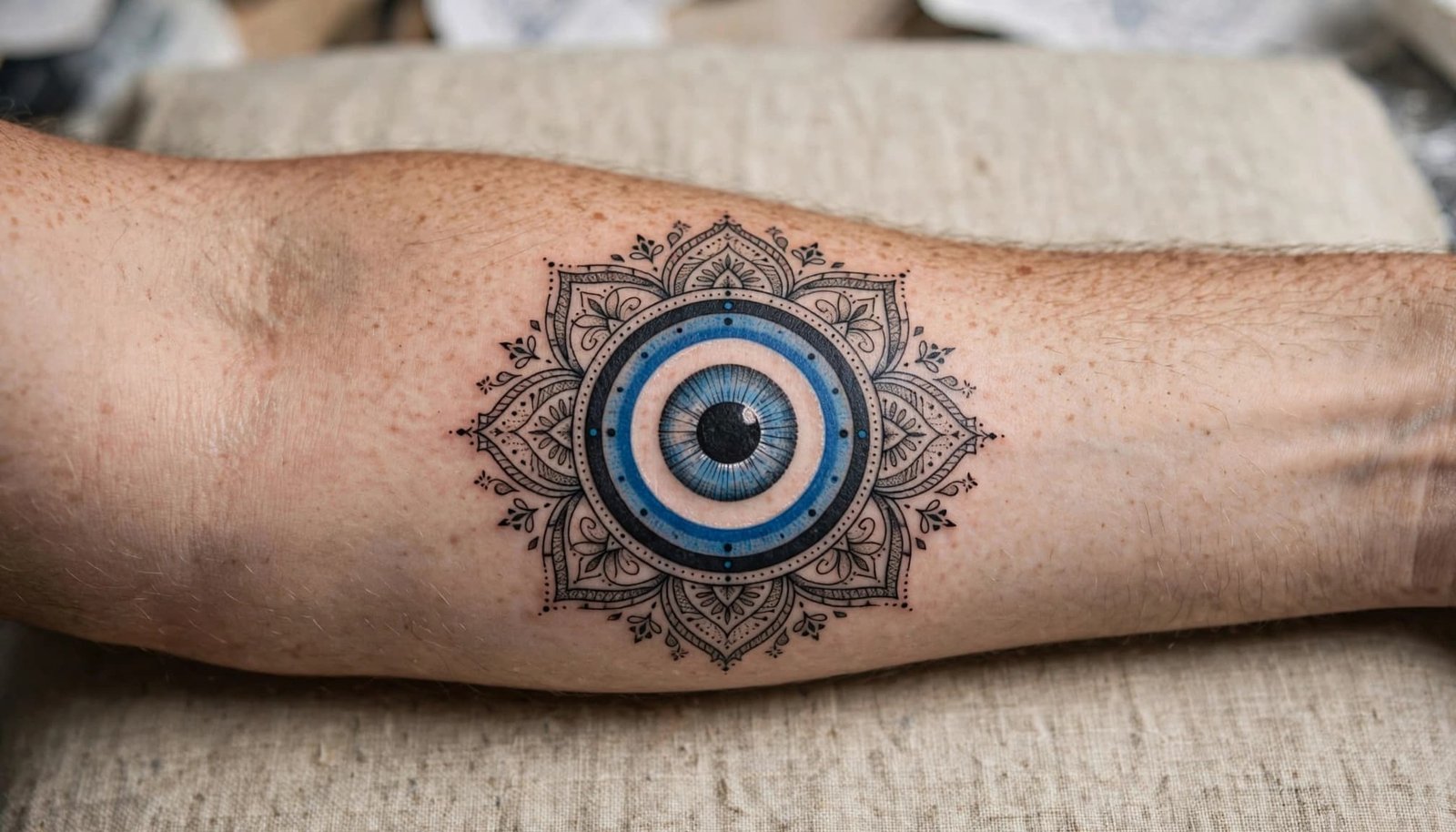
The familiar blue, white, and black circular eye is closely connected to the Turkish nazar boncuğu, also called a nazar bead. Its concentric rings usually resemble a black pupil, pale blue iris, white eye, and deep blue outer edge. Many people display these beads in homes, vehicles, and businesses or wear them as jewelry.
A modern evil eye tattoo may copy that recognizable bead or reinterpret it with lashes, flowers, geometric lines, or ornamental details. For placement ideas, compare these evil eye finger tattoo ideas when you want a small, visible design.
The symbol is shared across living Mediterranean, Middle Eastern, Jewish, Arab, Turkish, Greek, and other communities. Therefore, it deserves thoughtful treatment rather than being presented as the invention of one culture. A design inspired by a specific tradition should acknowledge that background and avoid treating a meaningful protective symbol as a trend without context.
25 Evil Eye Tattoo Ideas for Protection and Style
These evil eye tattoo ideas range from discreet blue symbols to detailed protective artwork. Choose your design based on its visual style, personal meaning, and how much space your preferred placement allows.
Small and Minimalist Evil Eye Designs
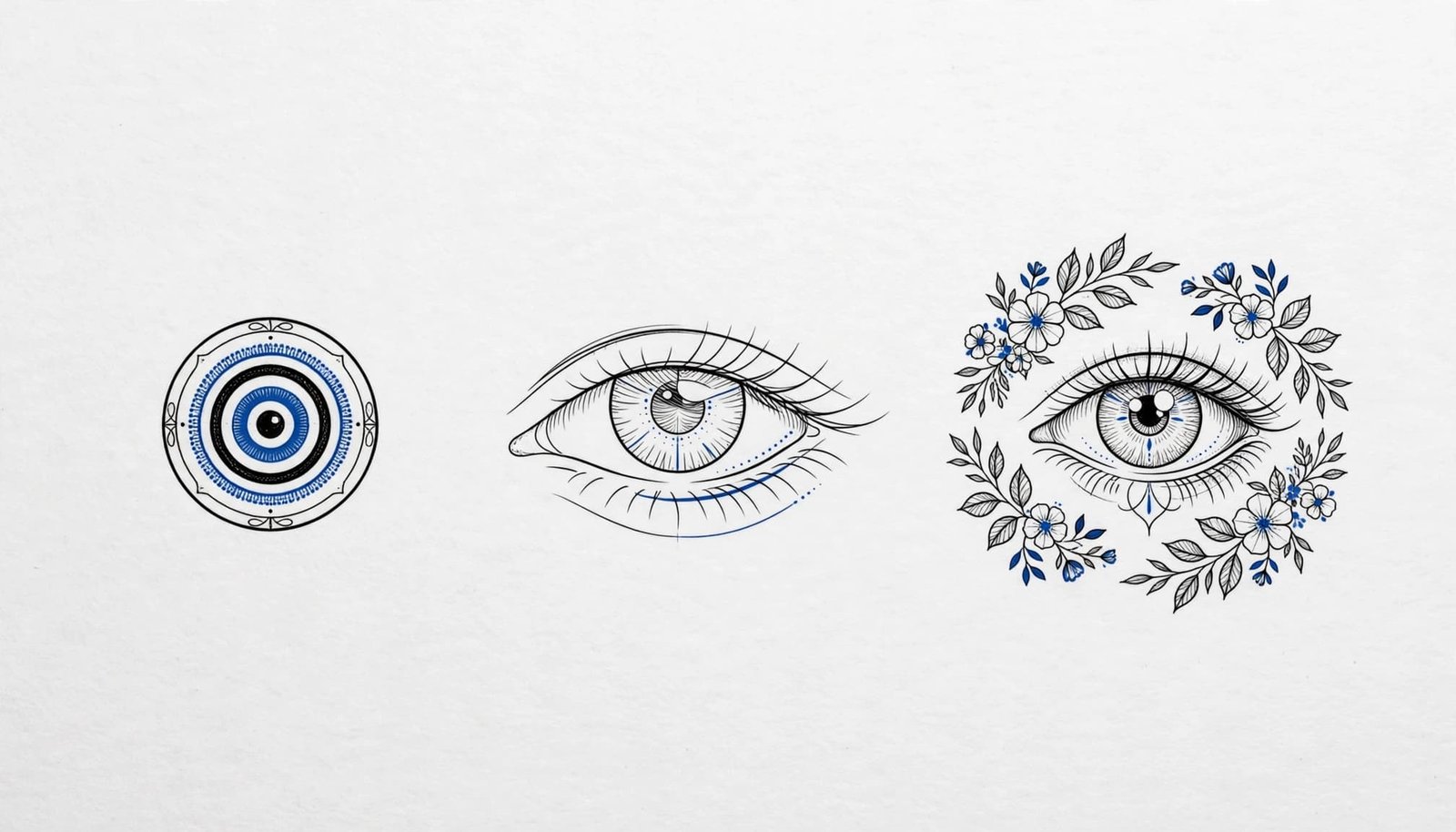
- Tiny blue nazar bead: A miniature blue, white, and black circle creates a traditional protective tattoo for the finger, wrist, or ankle.
- Fine-line eye: Thin lashes and a simple pupil suit someone who wants a delicate minimalist evil eye tattoo.
- Single-line closed eye: One continuous curved line creates a calm, artistic look for the wrist or inner arm.
- Black ink outline: A clean, unfilled eye offers subtle black-and-gray style for anyone who prefers understated body art.
- Micro eye behind the ear: This discreet design fits people who want a personal symbol that remains easy to conceal.
- Small wrist eye: A compact open eye stays visible during daily life and works well as a simple protective tattoo.
- Geometric eye: Triangles, circles, and straight lines give the symbol a modern appearance suited to the forearm or hand.
- Discreet collarbone eye: A small horizontal eye follows the collarbone and creates an elegant choice for someone wanting a private, feminine placement.
Limited detail helps small tattoos remain clear. However, extremely fine lines and tiny details may soften over time, so ask your artist for practical line weight. Blue accents create the familiar nazar appearance, while black-and-gray ink gives a quieter result.
Colorful and Decorative Eye Tattoo Concepts
- Classic blue and white nazar: Concentric blue, white, and black rings create the most recognizable evil eye tattoo for the forearm or shoulder.
- Eye surrounded by flowers: Petals soften the protective symbol, making this a graceful choice for the upper arm or thigh. See these floral evil eye tattoo ideas for additional placement inspiration.
- Eye with a crescent moon: A curved moon beside the eye adds a mystical mood that suits the ankle, rib, or upper back.
- Constellation eye: Tiny stars around the iris create a celestial design for someone who connects protection with astrology or a memorable night.
- Jeweled ornamental eye: Gem-like dots, lashes, and symmetrical borders produce a luxurious statement tattoo for the shoulder or thigh.
- Heart-shaped eye: A heart forms the iris or surrounds the eye, giving the design a romantic tone for the forearm or chest.
- Vine-framed eye: Curving leaves and stems create an organic border that works especially well on the ankle, hip, or shoulder blade.
- Watercolor eye: Blue, violet, and turquoise washes create an expressive artistic style, although this effect needs an experienced tattoo artist.
- Sun-inspired eye: Radiating lines around the iris turn the protective symbol into a warm, confident design for the upper back or thigh.
Color changes the message without changing the central symbol. Bright blue feels traditional and bold, while petals, moons, and watercolor shading create softer, romantic, or mystical styles.
Bold, Personal, and Symbolic Evil Eye Tattoos
- Realistic eye: Detailed shading, lifelike lashes, and a glossy iris create a dramatic design for the forearm or upper arm.
- Geometric dotwork eye: Carefully placed dots and symmetrical shapes suit someone who wants a unique evil eye tattoo with a modern, meditative mood.
- Eye inside a hand motif: An eye set in an open palm creates a recognizable protective tattoo for the back, shoulder, or thigh.
- Eye with a snake: A coiled snake around the eye adds transformation, vigilance, and a darker style for the calf or upper arm.
- Eye paired with a protective symbol: Combine the eye with a hamsa or another meaningful symbol only after researching the tradition behind both designs.
- Matching friendship or couple eyes: Two coordinated eyes can share the same shape while using different accents, initials, or placements.
- Mandala eye: Layered petals and radial geometry create a balanced spiritual design for the chest, shoulder, or upper back.
- Large ornamental back or thigh tattoo: An eye with scrollwork, flowers, jewels, and bold borders creates a statement piece with room for personal detail.
You can add initials, dates, birth flowers, or meaningful colors without covering the central eye shape. For religious or culturally specific additions, research their meaning and consult someone familiar with that tradition before combining symbols. A thoughtful design feels personal while still treating the protective imagery with respect.
Choosing the Best Evil Eye Tattoo Placement and Size
The best evil eye tattoo placement depends on how visible you want the design, how much detail it contains, and how well the skin can support it over time. A tiny nazar bead may suit your wrist or ankle, while an ornamental eye with flowers, lashes, or geometric borders needs more room.
Match the tattoo size to its detail
Use this simple guide when planning your design:
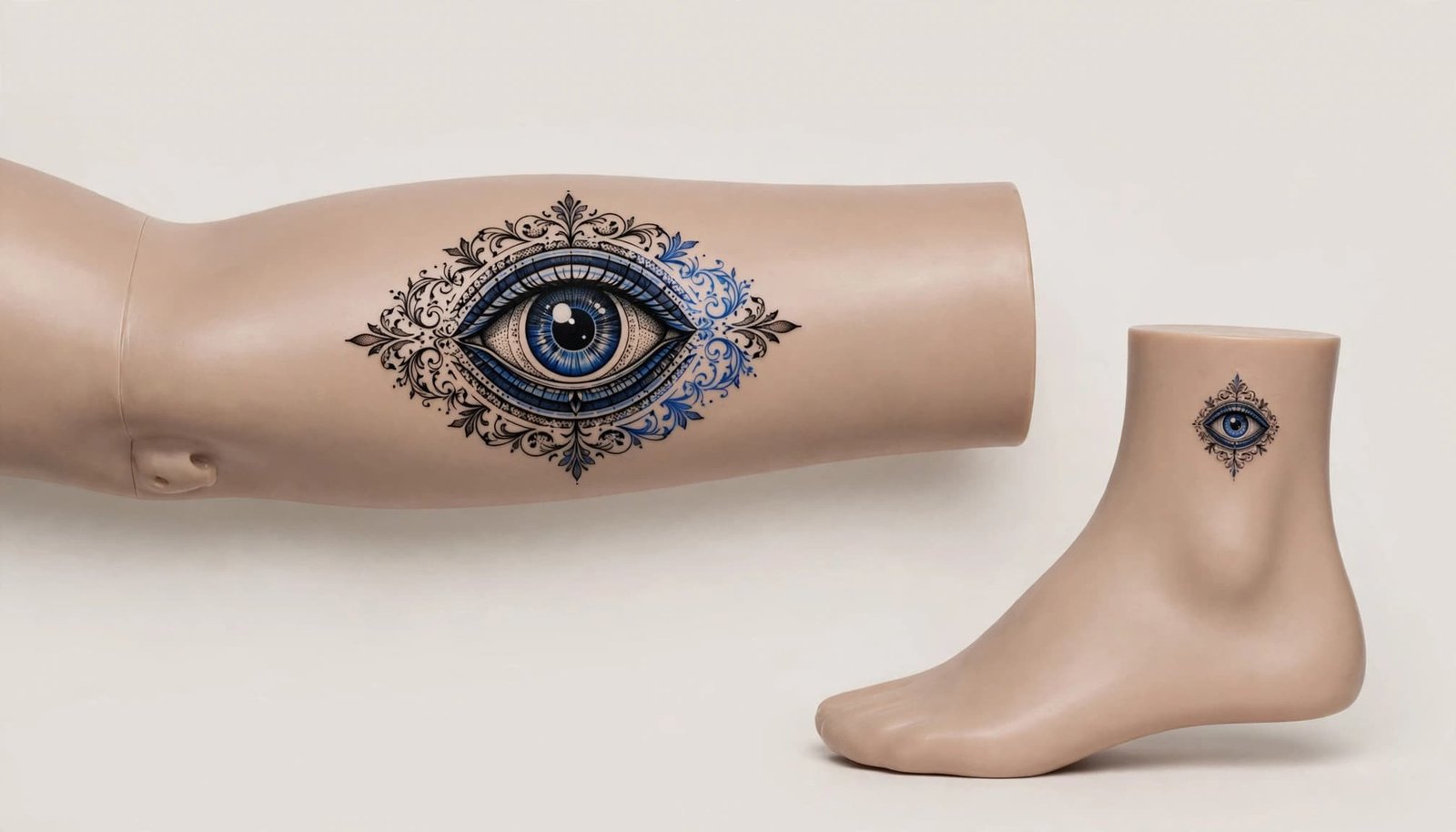
- Micro: Under 1 inch, with only the eye outline, pupil, or basic nazar rings. It works behind the ear, on a finger, or above the ankle, but tiny details may blur sooner.
- Small: About 1 to 2 inches, allowing a clear pupil, iris, and outer outline. The wrist, ankle, neck, and inner forearm can all suit this scale.
- Medium: About 2 to 4 inches, giving the artist enough room to preserve the pupil, iris, rings, and spacing. This is often the safest size for a detailed evil eye tattoo.
- Large: Over 4 inches, with enough space for flowers, shading, halos, lashes, or geometric borders. Consider the upper thigh, shoulder blade, back, or outer upper arm.
Medium placements usually preserve the eye’s defining details better than micro tattoos. If your design includes several concentric rings, ask the artist to check that each gap will remain readable after the ink settles.
Compare visible and private placements
The wrist, hand, forearm, and ankle keep the tattoo easy to see. An outer forearm offers a relatively flat surface for a medium design, while the wrist suits a simpler eye that you want as a daily reminder. The ankle feels more discreet, although socks and shoes can create friction. These ankle tattoo placement ideas can help you compare inner, outer, and above-the-bone positions.
For more privacy, choose the ribs, hip, upper thigh, shoulder blade, or back of the neck. The ribs and hip can feel personal but may hurt more or change with skin movement. A shoulder blade or upper thigh provides a broader canvas and often ages better than exposed areas.
Fingers, hands, feet, and other high-friction locations may fade or blur sooner because of washing, movement, shoes, and sun exposure. After healing, protect exposed ink with broad-spectrum SPF 30 or higher, as recommended in this NIH review of tattoo aftercare.
Visibility also matters at work. A wrist or forearm tattoo may need sleeves, while a rib, thigh, or back design stays covered more easily. Before booking, ask an experienced artist how skin movement, sun exposure, and aging may affect your chosen size. Questions such as, “How will these lines look in 10 years?” and “Should this design be larger here?” can prevent regrets.
How to Personalize an Evil Eye Tattoo While Showing Cultural Respect
A personalized evil eye tattoo should add your story without burying the symbol’s cultural meaning. Start with the message you want to carry, then choose colors, linework, companion imagery, and placement that support it.
Build the design around your story
Color can change the mood without changing the eye’s central meaning. Traditional blue, white, and black may connect your design to the familiar nazar boncuğu, while muted earth tones can create a softer, less literal look. Black-and-gray shading suits a discreet tattoo, and carefully chosen accents can highlight a birth flower, favorite color, or meaningful place.
Line style matters too. Fine lines create an understated design, bold outlines improve readability, and dotwork adds texture without requiring extra symbols. Companion imagery should have a clear reason for being there. A flower might honor a family member, a crescent could connect to a personal memory, and geometric borders may reflect your interest in balance or order.
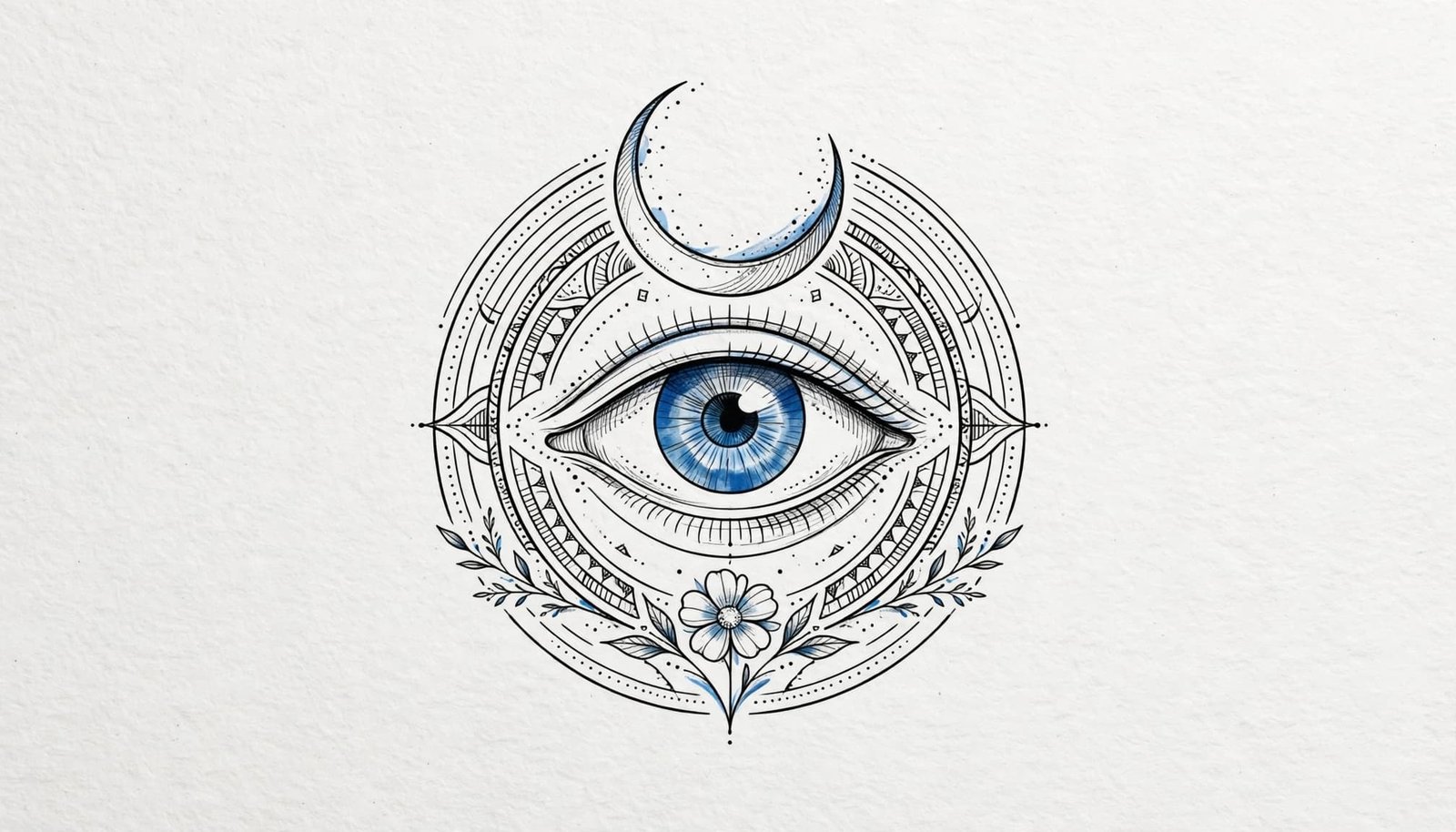
Placement can reinforce that meaning. A visible wrist or forearm keeps the symbol in your daily view, while a shoulder blade, rib, or thigh makes it more private. If you prefer an ankle design, compare these evil eye tattoo placement ideas before settling on size and orientation.
Learn the tradition before adding symbols
The evil eye is a widespread belief associated with envy, harmful attention, or a hostile gaze. The nazar is the protective amulet used to deflect that harm. These ideas appear across Mediterranean, Middle Eastern, North African, Anatolian, Balkan, and other communities, so the symbol shouldn’t be presented as belonging exclusively to one country or religion.
Before adding a hamsa, religious emblem, script, or regional motif, research the specific tradition behind it. Local meanings can differ, and combining symbols without understanding them may turn living cultural practices into decoration. A respectful tattoo acknowledges that history while allowing you to explain your personal connection honestly.
A professional tattoo artist can help you discuss symbolism, adjust details for your skin and placement, and draw an original design. Bring references for mood and structure, but don’t ask an artist to copy another tattooer’s work. Original artwork gives your tattoo a clearer identity and respects the creative labor behind existing designs.
Use this short checklist before booking:
- Decide whether the tattoo means protection, heritage, awareness, remembrance, or something personal.
- Choose a color palette and line style that match your taste.
- Select companion imagery only after researching its meaning.
- Consider visibility, fading, touch-ups, and long-term maintenance.
- Identify the cultural tradition you are referencing and describe it accurately.
A thoughtful evil eye tattoo can feel personal while still recognizing the symbol’s living cultural context.
Tattoo Safety and Aftercare for a Clean, Long-Lasting Design
A beautiful evil eye tattoo starts with safe preparation and continues with consistent aftercare. Choose a reputable, licensed studio that follows local health rules, uses sterile equipment, and opens a new, single-use needle in front of you. The artist should also wear fresh gloves, clean the work area, and explain how to care for your tattoo before you leave.
Prepare for a safe tattoo appointment
Ask about the studio’s hygiene practices if anything feels unclear. Avoid booking with an artist who reuses needles, works in an visibly unclean space, or dismisses questions about sterilization. You should also tell the artist about allergies, skin conditions, medications, or a history of difficult healing.
Eat beforehand, drink water, and wear loose clothing that gives the artist easy access to the chosen placement. Before leaving, listen carefully to the artist’s bandage instructions. Healing methods differ, especially when comparing traditional coverings with adhesive tattoo film, so don’t remove or replace the bandage based on advice meant for another product.
Clean and protect the fresh tattoo
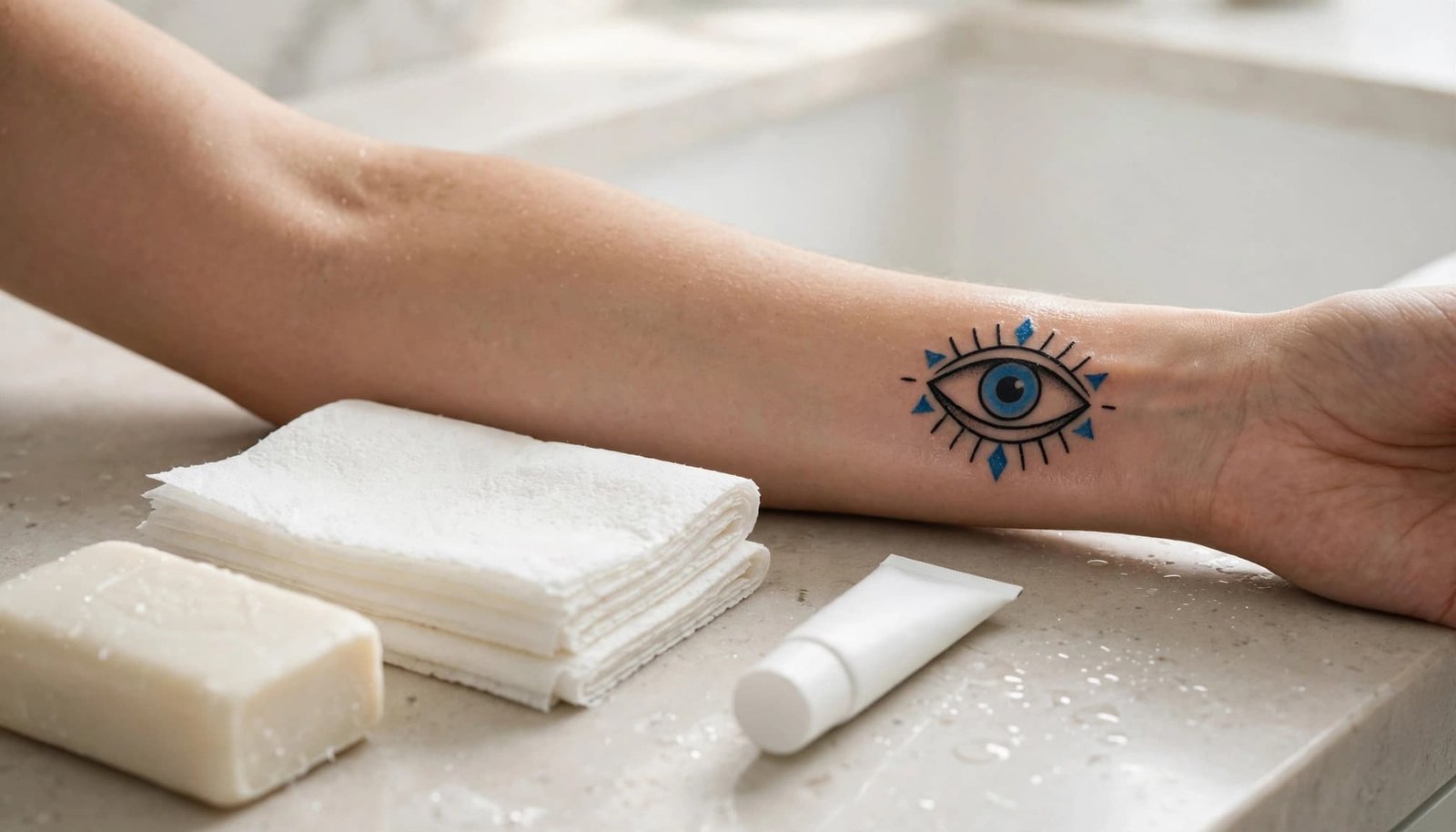
Once your artist says it’s time to remove the covering, follow a gentle routine:
- Wash your hands before touching the tattoo.
- Clean the area with warm water and mild, fragrance-free soap. Use your fingertips gently, without scrubbing.
- Pat the tattoo dry with a clean paper towel. Rubbing can irritate the skin and disturb healing.
- Apply only the light moisturizer recommended by your artist, using a thin layer.
Mayo Clinic also recommends gentle soap-and-water washing and avoiding direct shower spray on a new tattoo. Follow this tattoo healing and sensation guide if you want to know which tenderness, peeling, and itching can occur during normal healing.
Avoid scratching, picking scabs, or pulling peeling skin. Tight clothing can rub the design, while swimming, hot tubs, baths, and saunas expose healing skin to prolonged moisture and possible contaminants. Keep the tattoo away from direct sunlight as it heals. Don’t use hydrogen peroxide, rubbing alcohol, or heavy ointments unless a medical professional specifically instructs you to do so.
Sunscreen belongs on a fully healed tattoo, not fresh or open skin. After healing, apply broad-spectrum SPF 30 or higher when the design is exposed to sunlight to help reduce fading.
Know when to seek medical care
Some redness and soreness can occur early, but symptoms should gradually improve. Contact a medical professional if redness spreads or worsens, pain becomes severe, swelling increases, or the tattoo develops pus, foul-smelling drainage, fever, red streaks, or unusual warmth. Prompt care can prevent a minor healing problem from becoming a serious infection.
Conclusion
An evil eye tattoo can hold personal meaning while drawing on a symbol with roots in several living cultural traditions. Whether you choose a tiny nazar bead, a floral design, or a detailed ornamental eye, let the artwork express your idea of protection, awareness, or heritage.
Choose a style that suits your preferred level of detail, body placement, and personal story instead of following a passing trend. Research the symbol and any companion imagery, then work with a skilled tattoo artist who can create an original design that will remain clear over time. For placement and healing considerations, review this guide to choosing the right spot for a tattoo before booking.
With careful planning and proper aftercare, one of these 25 concepts can become a meaningful piece of art that feels distinctly yours.
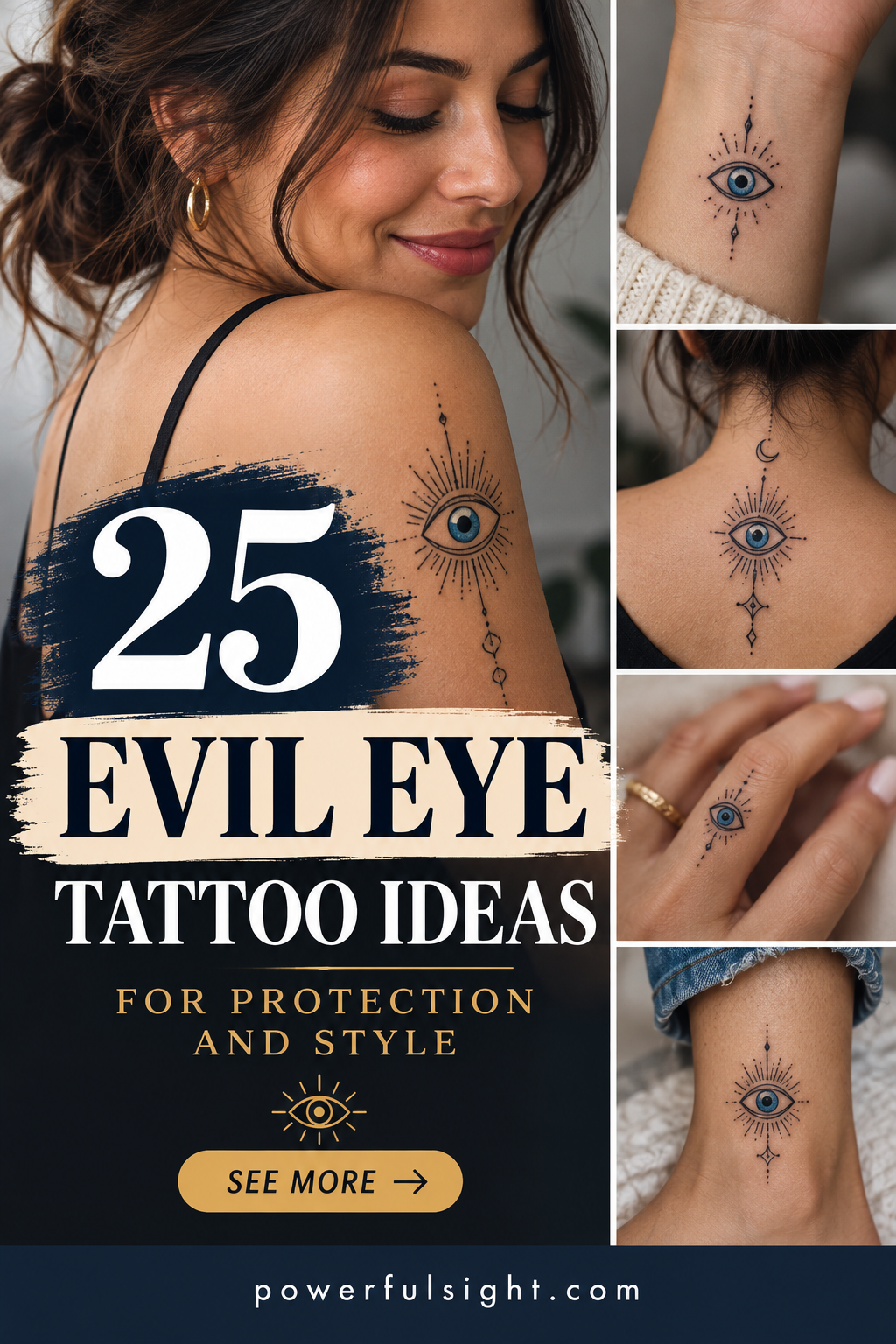
Save the pin for later

- 60 Color Tattoos That Healed Beautifully - 25/09/2026
- 40 Most Painful Tattoo Spots - 24/09/2026
- 20 Tattoo Aftercare Mistakes That Ruin Fresh Ink - 23/09/2026

