Getting a tattoo after 40 can mark a new chapter, honor your family, celebrate healing, or express your personal style. The best tattoo ideas for women over 40 balance meaning with elegance, visibility, and long-term wear, so your design feels personal now and continues to suit you over time.
This collection features 25 ideas, including delicate florals, meaningful dates, symbolic animals, celestial designs, and discreet placements. You’ll also find practical guidance on choosing the right tattoo placement, selecting a skilled and hygienic artist, considering changes in skin texture, and caring for fresh ink safely. Placement affects comfort, clothing friction, privacy, and how much sunlight your tattoo receives, while proper aftercare helps protect the design as it heals.
Start with these thoughtful tattoo ideas, then choose the size, location, and style that best reflects your story.
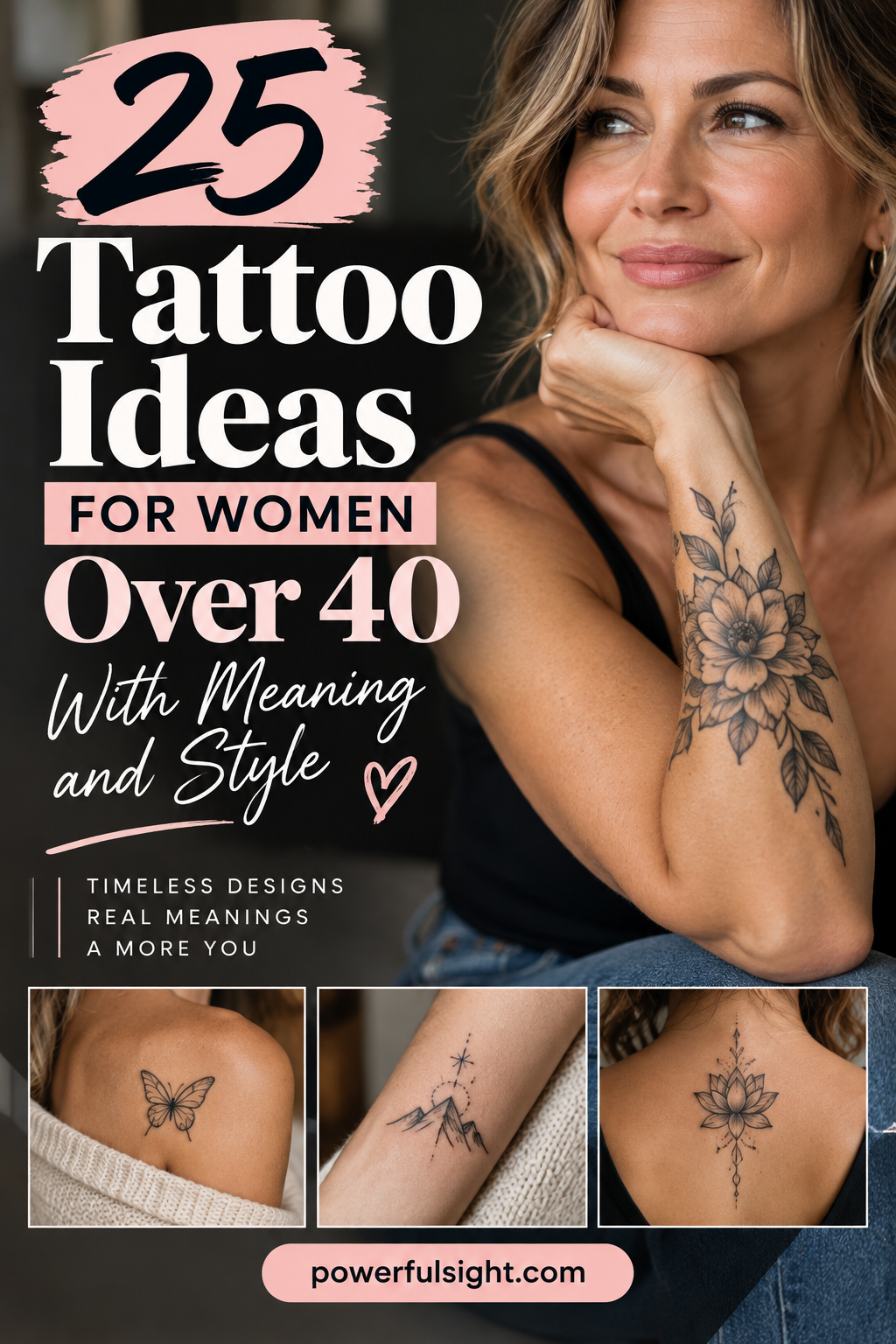
25 Tattoo Ideas for Women Over 40 With Meaning and Style
These ideas favor personal meaning, clear shapes, and designs that suit real life. The goal isn’t to make every tattoo tiny. Slightly larger, simpler artwork often ages better than crowded micro-detail, especially when each element has room to breathe.
Birth Flowers and Botanical Tattoos
Botanical tattoos can feel feminine without looking overly delicate. A single birth flower can honor your birth month, while a small bouquet can represent children, grandchildren, or loved ones. A wildflower sprig suggests independence and natural beauty, and an olive branch reflects peace, endurance, and resilience. You could also choose a favorite plant or herb, such as lavender for calm or rosemary for remembrance.
Black ink creates a classic look, while soft shading adds depth without making the design heavy. Restrained color, such as muted green or dusty rose, can bring the flower to life. Consider the forearm, shoulder, collarbone, upper arm, or ankle. Keep stems and petals spaced apart so the design remains clear as it heals and ages.

Names, Initials, Dates, and Handwriting
Personal lettering works best when the message stays short and easy to read. Choose a child’s or grandchild’s initial, a meaningful date in simple number formatting, or a loved one’s handwritten word. A short family phrase can carry shared meaning, while a name paired with a tiny heart, star, flower, or bird adds a visual detail.
Ask for simple lettering that is large enough to remain readable over time. Before your appointment, check every spelling, number, date, and handwritten sample carefully. Suitable placements include the inner forearm, ribs, collarbone, shoulder blade, or upper arm. For more ideas, browse these timeless meaningful tattoo designs.
Coordinates, Maps, and Life-Marker Tattoos
Location-based tattoos can honor a hometown, marriage, recovery, career change, or memorable trip without explaining the full story to everyone. Try the coordinates of a meaningful place, a tiny outline of a state or country, or a route line from an important journey. A favorite landscape, such as mountains or ocean waves, can capture a place through its visual character. A small compass or location pin offers a simpler symbol.
Test the design at its actual size before choosing the forearm, upper arm, shoulder, thigh, or rib area. Fine lines and small map details need enough space to stay distinct, so enlargement may improve the final result.
Nature, Celestial, and Animal Symbols
A butterfly can express transformation, while a bird suggests freedom and a fresh direction. A crescent moon with stars creates a graceful celestial design. You might connect a sun or constellation to your birth date, or choose a meaningful animal, such as a cat, dog, or hummingbird, to honor companionship.
Favor clear outlines and graceful silhouettes rather than dense detail. These symbols can feel mature and stylish without depending on a passing trend. The wrist, inner arm, shoulder, collarbone, ankle, or upper back can all suit these designs.
Family, Remembrance, and Personal Strength Designs
A simple family tree can show connection, while a memorial flower can honor someone who has died. An infinity symbol with initials offers a lasting tribute, and a semicolon or recovery symbol can reflect survival and continued strength. For a more personal option, consider a fine-line portrait of a loved one or pet.
Portraits need more room and an artist with strong experience in facial detail. Simpler tribute symbols are often easier to maintain. Choose the upper arm, shoulder blade, chest, forearm, or thigh, and select a design that honors your story without requiring you to explain it.
How to Choose a Tattoo Design That Will Age Well
Choosing a tattoo that ages well means balancing delicate detail with long-term clarity. Skin naturally changes with age, and mature skin may be drier, more delicate, and slower to heal. Clear lines, open space, and a design with room to breathe can help your tattoo remain attractive as the years pass.
Before booking, look through these meaningful tattoo ideas for women and notice which designs still look clear at a glance. Then ask an experienced artist to adapt your favorite concept to your skin, placement, and preferred size.
Fine-Line Versus Bold, Simple Artwork
Fine-line tattoos can look elegant and understated, especially for florals, initials, stars, and small symbolic designs. However, extremely tiny details and tightly packed lines may become harder to read as lines soften or spread over time. Two thin lines placed too close together can eventually appear as one.
Slightly thicker outlines usually provide more staying power. Open spaces between petals, letters, or symbolic elements also help each part remain distinct. A simplified silhouette may age more gracefully than a crowded design filled with miniature details.
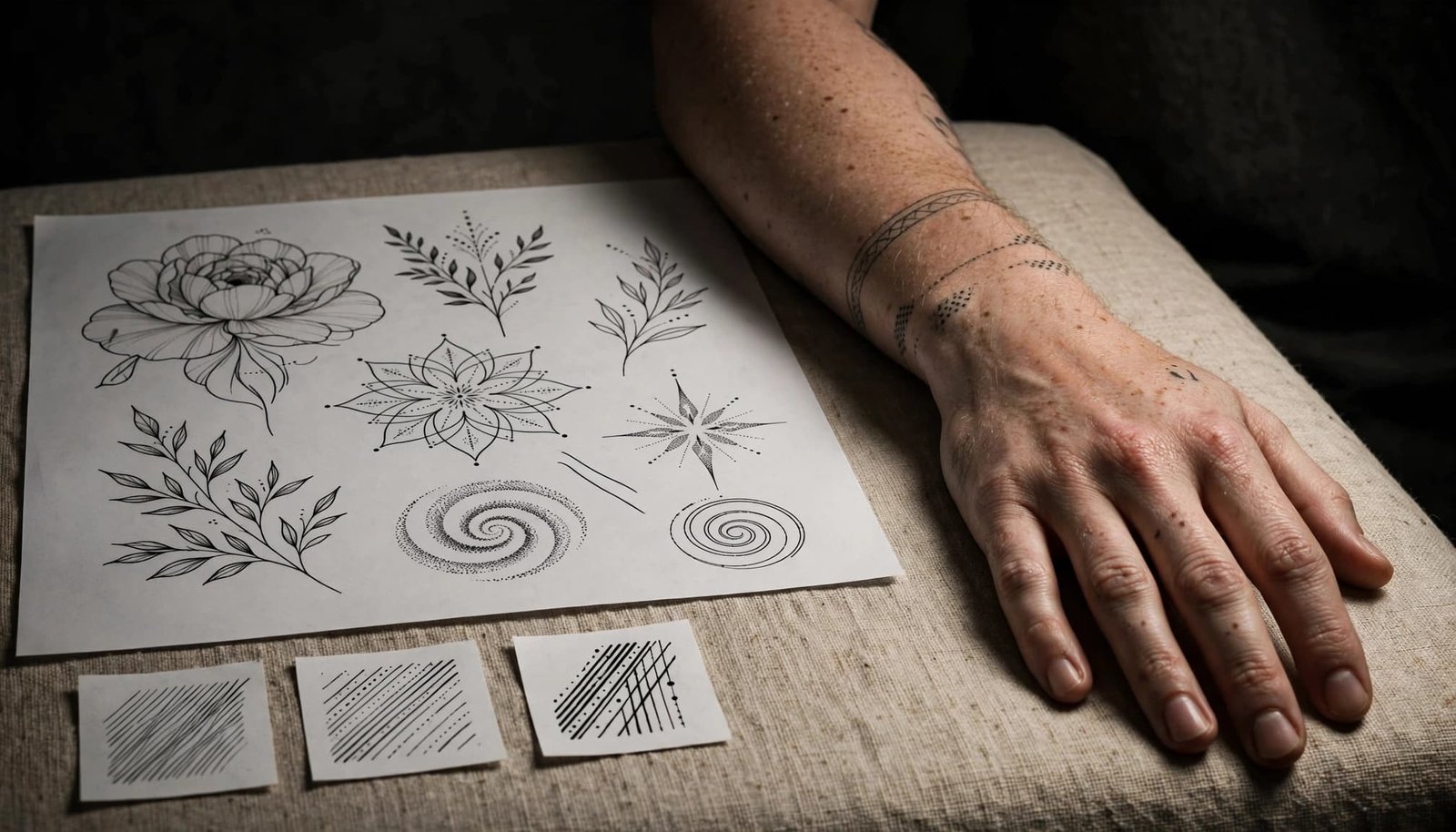
Bring reference images to your consultation, but stay open to changes in scale and line weight. Your artist may enlarge the design, remove small details, or strengthen selected outlines so it suits your chosen body area.
Choosing Color, Black Ink, or Black and Gray
Black ink usually creates the strongest contrast and gives simple designs a classic appearance. Black and gray tattoos add softness through shading while keeping enough definition for many botanical, animal, and memorial designs. They can also make a meaningful tattoo feel refined without relying on bright color.
Color offers more variety and can make flowers, birds, or celestial designs feel lively. Pale colors, white highlights, and soft pastels may fade sooner, especially with frequent sun exposure, so they can need more protection and occasional touch-ups. All ink colors change over time, and sun protection for tattoos helps slow that process.
Your artist’s technique, ink quality, skin type, healing, and daily sun exposure all affect the result. No single style suits everyone, so choose the palette that fits your personal taste and maintenance habits.
How Size and Body Changes Affect Longevity
Larger, well-spaced artwork often preserves detail better than extremely small tattoos. Areas that stretch, wrinkle, rub against clothing, or receive regular sunlight may change more noticeably. Hands, feet, inner wrists, and waistlines can experience more friction and movement than the upper arm or shoulder blade.
Ask your artist how the placement may age and whether the design should be enlarged or simplified. Before approving the stencil, view it at its actual size and check that every feature remains easy to recognize.
Use this short checklist before making your final choice:
- Choose a design with personal meaning and lasting appeal.
- Avoid overcrowded details and tightly packed lines.
- View the artwork at its actual size.
- Ask how the artist expects it to age in that placement.
- Follow healing instructions and protect healed, exposed ink from the sun.
The Best Tattoo Placements for Women Over 40
The best tattoo placement depends on more than appearance. Think about your work clothes, family events, sun exposure, skin movement, and how often you want the design visible. A placement that fits your daily life will feel more comfortable long after the appointment.
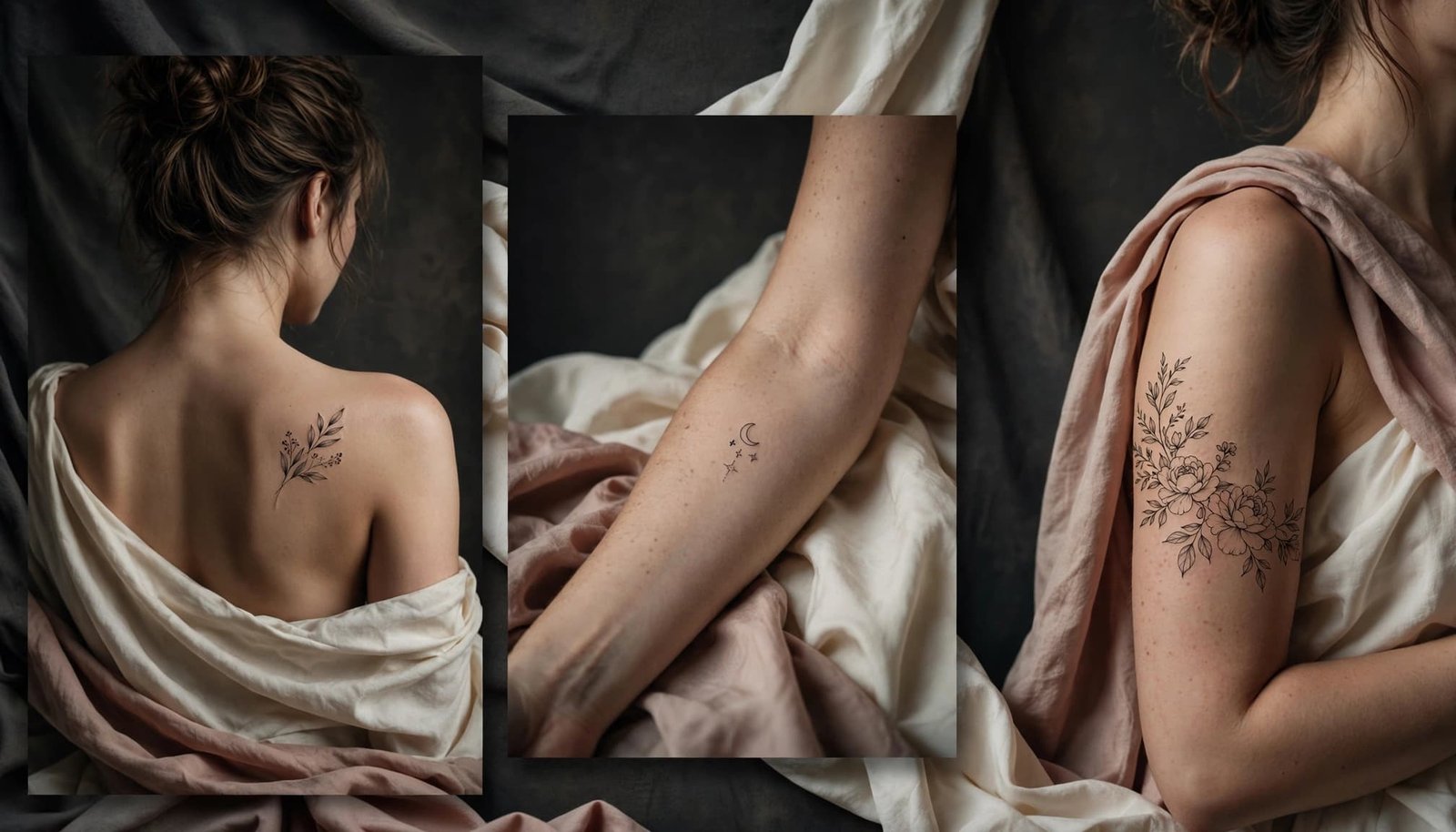
Discreet Placements That Are Easy to Cover
The inner upper arm, shoulder blade, ribs, thigh, hip, and upper back offer privacy without limiting your design choices. Clothing can cover these areas for work, formal events, or family gatherings, while a sleeveless top, swimsuit, or low-back style can reveal the tattoo when you choose.
These placements suit tattoos with personal meaning, such as coordinates for a special place, a short quote, a memorial symbol, or a loved one’s portrait. They also give medium-sized botanical designs enough room for clean stems, open petals, and balanced shading. The upper back and shoulder blade work especially well for centered florals, while the thigh and hip provide a broader canvas with softer visibility. For more placement ideas, browse these hip tattoo designs for women and elegant thigh tattoo ideas.
Visible Placements for Small Meaningful Tattoos
The wrist, inner forearm, outer forearm, collarbone, and ankle keep small tattoos easy to see. These areas work well for initials, tiny flowers, crescent moons, stars, butterflies, birds, and simple animal silhouettes. The inner forearm usually offers more space than the wrist, making it a better choice for short script or a slightly wider floral sprig.
Visibility can also help you stay connected to the meaning behind your tattoo. However, exposed locations require more maintenance. The wrist, hand, ankle, and fingers receive regular sunlight, washing, bending, and friction from jewelry, shoes, or daily tasks. Finger tattoos often fade faster and may need more touch-ups. The American Academy of Dermatology recommends broad-spectrum, water-resistant SPF 30 or higher on healed tattooed skin exposed to sunlight. During healing, protect the area with clothing and avoid applying sunscreen until the skin has recovered. See the American Academy of Dermatology tattoo care guidance for more sun-protection advice.
Placements That Give Larger Designs Room to Breathe
The upper arm, shoulder, thigh, back, and chest provide enough surface area for family trees, landscapes, portraits, larger floral pieces, and detailed tribute tattoos. Extra room lets your artist use readable lines and proper spacing instead of forcing every feature into a tiny shape.
Before choosing, consider how clothing covers the area and how the skin moves when you sit, bend, or exercise. A back tattoo may rub against bra straps, while a chest design may feel more private than an upper-arm piece. You can view larger back tattoo layouts before deciding.
Print the design or trace it at its actual size, then place it on your body with temporary tattoo paper or a skin-safe marker. Live with it for several days, wearing your usual clothes, before booking the appointment.
Before You Book: Safety, Artist Selection, and Tattoo Preparation
A meaningful tattoo deserves careful planning before you book the appointment. Review the artist’s work, confirm safe studio practices, and prepare your skin and body for the session. If you have allergies, take regular medications, or have a skin condition, scarring history, or healing concern, discuss tattooing with a qualified health professional first.
How to Find an Artist for Your Chosen Style
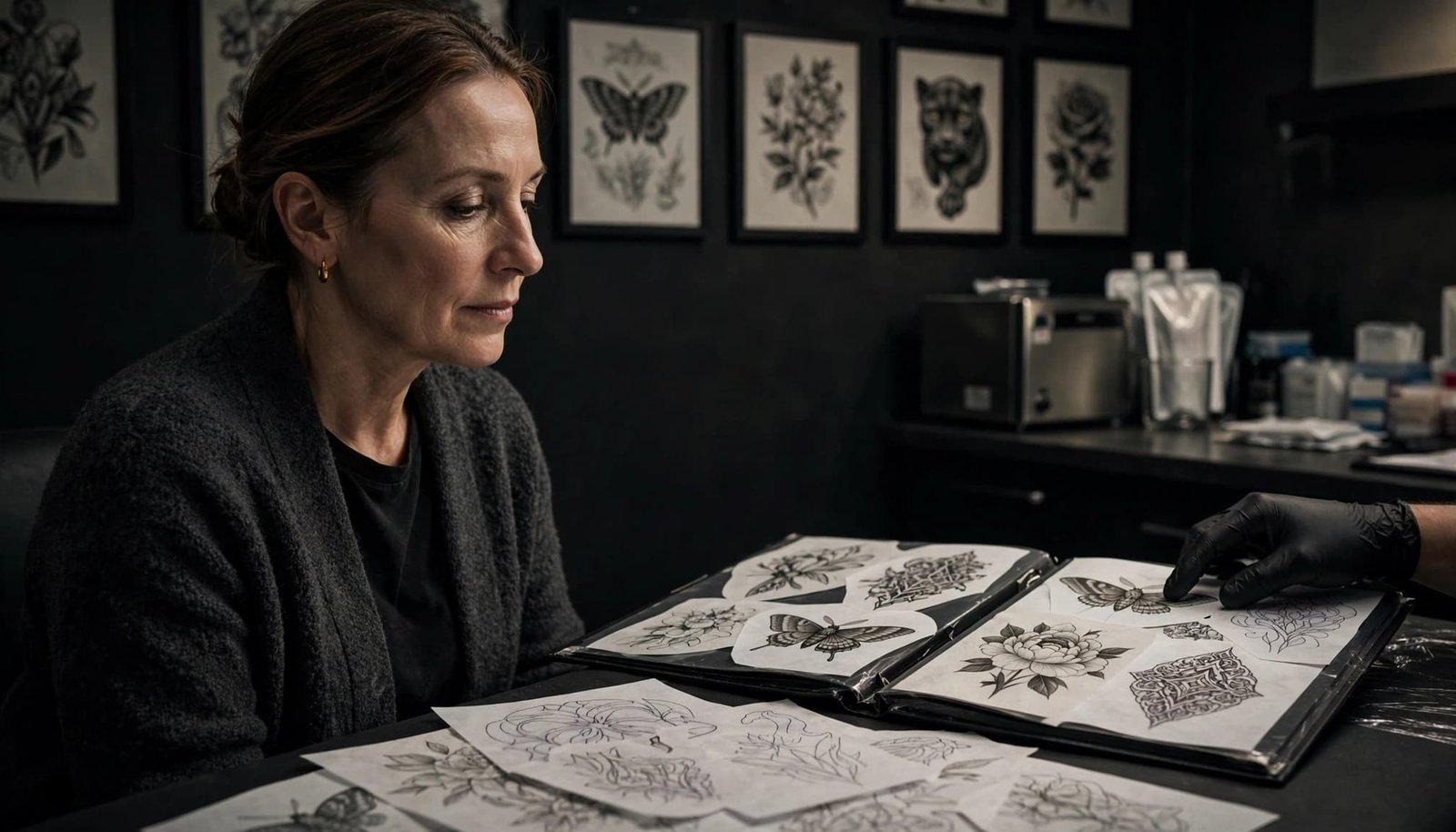
Choose an artist who regularly creates the style you want, whether that’s fine-line florals, lettering, portraits, or black and gray work. Review a portfolio for close-up images, then ask to see healed examples, not only fresh tattoos photographed immediately after the appointment. Healed work shows how the artist’s line weight, shading, and color hold up over time.
Read recent studio reviews and look for comments about cleanliness, communication, punctuality, and aftercare support. During a consultation, discuss how the artist adjusts designs for mature skin, including changes in texture, elasticity, or healing speed. Ask about the proposed size, placement, line weight, and whether the tattoo may need touch-ups later.
Skill should carry more weight than the lowest price. A cheaper appointment may cost more if poor technique leads to blurred lines, uneven shading, or correction work. You can also review what to expect during a tattoo session before making your decision.
Questions to Ask Before the Appointment
A professional artist should answer safety and design questions clearly. Ask:
- Does the studio use sterile, single-use needles for every client?
- How does the studio sterilize reusable equipment and prevent cross-contamination?
- Which ink brands and pigments do you use, and what should I know about possible reactions?
- How long should healing take for this placement and design?
- When can I return to swimming, hot tubs, intense exercise, and direct sun?
- What is your touch-up policy, and does it have a time limit?
- Will this design age better if we make it larger or remove tiny details?
Before work begins, confirm the final design, spelling, numbers, placement, and total price. Bring reference images and the exact spelling of any name, phrase, or date. Never rely on memory for permanent lettering.
What to Expect During Healing
Healing requires patience, especially when skin is more delicate or slower to recover. Follow the artist’s written instructions, wash the tattoo gently as directed, and avoid picking, scratching, or peeling flakes and scabs.
Keep fresh ink away from pools, hot tubs, baths, and other soaking water until it heals. Don’t apply sunscreen to a fresh, unhealed tattoo. Use clean clothing or shade for protection, then apply broad-spectrum, water-resistant SPF 30 or higher once the skin has fully healed, as recommended in the American Academy of Dermatology’s tattoo care guidance.
Some redness, soreness, swelling, itching, flaking, or clear fluid can occur during normal healing. Seek medical care if redness spreads or worsens, pain increases, pus appears, fever develops, or the tattoo shows an unusual rash or reaction.
Tattoo Aftercare That Protects Your Design for Years
Good tattoo aftercare has two stages: careful healing during the first few weeks, followed by consistent sun and skin protection. Your artist’s instructions should guide the process because products, bandages, ink, placement, and skin sensitivity can vary.
The First Few Weeks After Getting Inked
During the first several days, your tattoo may look red, feel tender, or release a small amount of clear fluid. Mild swelling can also occur. Over the next week or two, peeling and itching are common as the outer layer of skin repairs itself, although healing time varies by person and placement.
Wash the area gently with clean hands and the cleanser recommended by your artist. Apply only the product they approve, usually a light, fragrance-free moisturizer or water-based lotion. Don’t scratch, peel flakes, or remove scabs, even when the skin feels irritating. Picking can disturb the ink and increase the risk of scarring or infection.
Avoid swimming, hot tubs, baths, and prolonged water exposure until the tattoo has fully healed. Keep it protected from direct sunlight with loose clothing or shade, and don’t apply sunscreen to broken or peeling skin. If redness spreads, pain worsens, pus appears, or you develop a fever or unusual rash, contact a healthcare professional.
Your friend’s aftercare routine may not suit your tattoo. Follow the written instructions from your own artist instead.
Sun Protection and Skin Care After Healing
Once the skin has fully healed, make sun protection part of your normal routine. Ultraviolet exposure can fade ink and add to premature skin aging and sun damage, especially on tattoos placed on the arms, shoulders, chest, and legs.
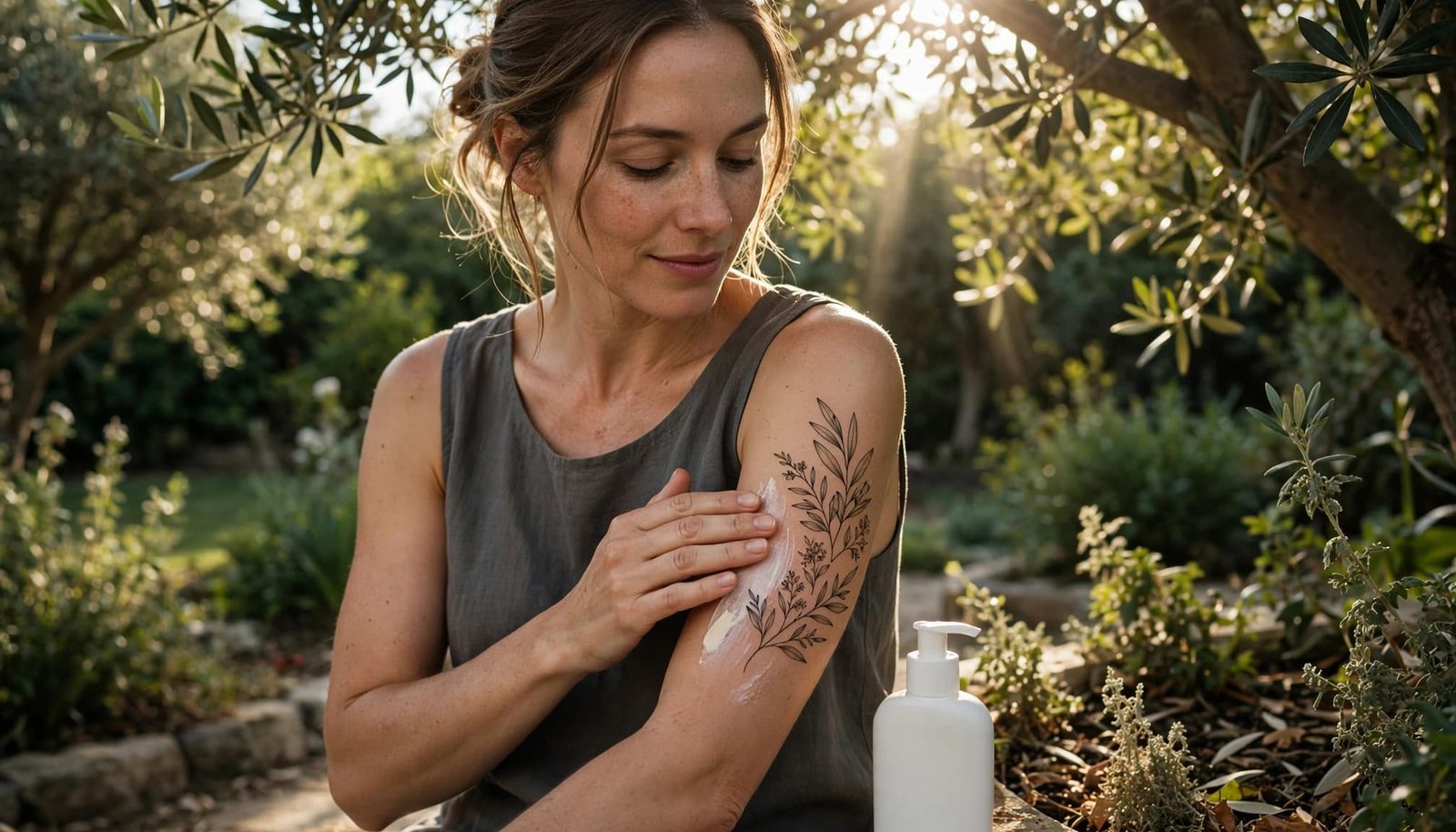
Use a broad-spectrum, water-resistant SPF 30 or higher on exposed tattooed skin. Apply it about 15 minutes before going outside, then reapply at least every two hours when you’re outdoors, swimming, or sweating. Shade, tightly woven clothing, and wide-brimmed hats add protection. Avoid tanning beds and sunlamps, which can fade ink and damage skin.
Clean healed tattoos with a gentle cleanser and moisturize with a simple, fragrance-free product when the skin feels dry. Regular hydration supports the appearance of the surrounding skin, but no cream can prevent normal ink changes over time. Avoid exfoliating acids, retinoids, fragranced products, or other irritants if the area becomes sensitive.
When a Touch-Up May Be Worth Considering
Some fading is normal, particularly in high-friction or high-sun areas such as fingers, wrists, ankles, feet, and shoulders. A touch-up can refresh softened lines or restore color after the tattoo has healed fully.
Timing depends on the design, ink, placement, sun exposure, healing process, and your artist’s assessment. Return to the original artist when possible because they already understand the technique and pigments used. Never tattoo over skin that remains sore, peeling, scabbed, or otherwise unhealed. For future placement planning, these graceful sternum tattoo ideas can help you compare designs that give delicate artwork enough room to age clearly.
Conclusion
There is no age limit on meaningful body art. The right tattoo reflects your personal story while fitting your daily life, whether you choose a birth flower, coordinates, family symbol, celestial design, or simple quote.
Choose artwork with enough size and spacing to remain clear, select a placement that suits your clothing and routine, and work with a skilled artist who understands how tattoos change over time. Protect healed ink from sun exposure, and follow careful aftercare while it heals.
Your tattoo can become a lasting reminder of the person you are now and the life you have lived.
Save the pin for later

- 25 Gothic Tattoo Ideas for a Bold, Dark Look - 21/09/2026
- 34 Black Fine Line Tattoo Ideas for a Delicate Look - 21/09/2026
- 23 Micro Tattoo Ideas for Women With Meaning - 21/09/2026

