Traditional tattoos have lasted because their bold outlines, strong colors, and simple shapes remain easy to recognize at a glance. American traditional tattoo art turns familiar images into memorable designs, with clear symbols that can feel personal without needing elaborate detail.
This collection features 25 traditional tattoo ideas inspired by classic nautical images, roses and other flowers, powerful animals, symbols of luck, and recognizable character designs. Each idea includes a short meaning or design angle to help you decide what fits your story, although symbolism isn’t fixed and can change from person to person.
If you’re also considering designs built around personal symbolism, these meaningful tattoos for women offer more inspiration. Start with the classic ideas below, then choose the image and details that feel most like you.
25 Traditional Tattoo Ideas You’ll Love
American traditional tattoos rely on thick black outlines, flat color fills, limited shading, and a focused palette of black, red, yellow, green, and blue. These 25 ideas keep that classic look while leaving room for personal meaning.
Classic Nautical Designs With a Story to Tell
Nautical tattoos often carry themes of loyalty, safe return, adventure, and finding your way home.
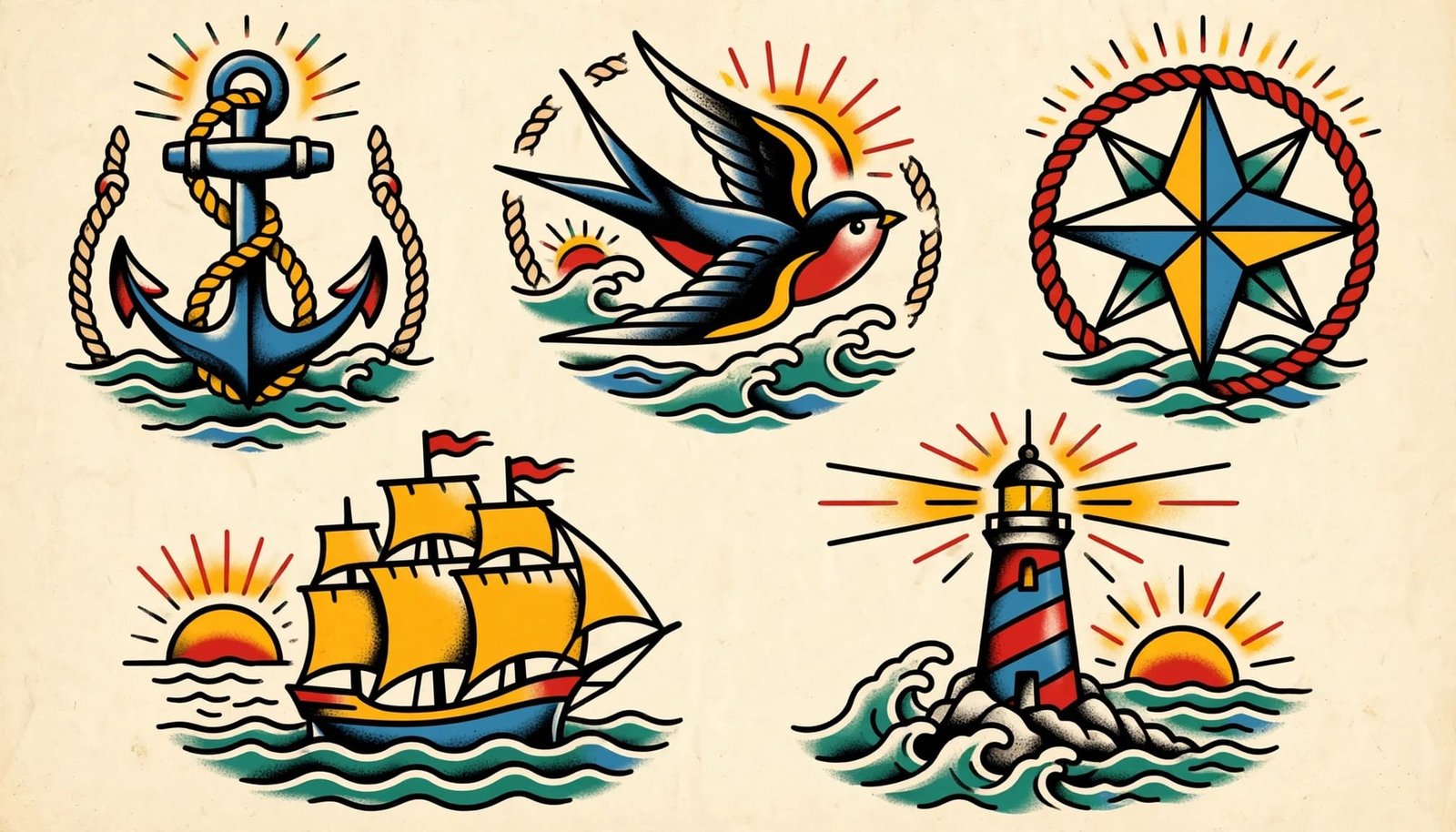
- An anchor suggests stability and safe harbor. Add rope, waves, or a small name, and place it on the forearm or upper arm.
- A swallow can honor loyalty, travel, and returning home. Pair two birds for a loved one or a long journey.
- A sailing ship captures adventure and courage. Waves, a sunset, or a banner can personalize the scene, which may need the calf, thigh, chest, or back.
- A nautical star points toward guidance and protection. Its compact shape works well on the forearm or upper arm.
- A lighthouse symbolizes direction and finding the way home. Give it room on the calf, thigh, chest, or back for clear stripes and waves.
Flowers and Lucky Symbols With Classic Color
Traditional floral and lucky designs use strong contrast to make familiar symbols easy to recognize.
- A red rose may suggest love, beauty, sacrifice, or remembrance. Add a date or a loved one’s initials only after checking the lettering carefully.
- A rose and dagger balances tenderness with danger, loss, or strength. Red petals and a blue or green handle create classic contrast.
- A heart with a banner offers space for a meaningful name or date. Ask your artist to confirm every letter and number before tattooing.
- A cherry pair can suggest sweetness, youth, or temptation. Red cherries with green stems make a compact forearm or ankle design.
- A horseshoe is linked with luck and protection. Use yellow or gold tones with black outlines, keeping the opening pointed upward if that suits your intention.
Bold Animals That Show Strength and Character
Animals bring movement and personality to traditional tattoo flash. Strong eyes, open mouths, curved bodies, feathers, and clean color areas keep these designs readable.
- A crawling panther suggests courage and fearlessness. Its long body can wrap around an arm or leg.
- A tiger head conveys power and confidence through bold stripes and an open mouth. The shoulder, chest, or thigh gives the face enough room.
- A coiled snake can express transformation, protection, or readiness. For more serpent inspiration, explore these traditional snake tattoo designs.
- An eagle often represents freedom and strength. Spread wings suit the chest, shoulder, or upper back.
- An owl is associated with wisdom and protection. Large eyes and layered feathers work best where the artist can preserve clear detail.
Tough Memento Mori and Adventure Motifs
These motifs can acknowledge mortality, struggle, time, and survival without becoming purely dark.
- A skull can mean mortality, resilience, or fearlessness. Soften it with roses, birds, or a short banner.
- A dagger may suggest protection, sacrifice, or overcoming hardship. Add a flower or date for a personal contrast.
- An hourglass reflects passing time and meaningful change. A limited red accent can highlight the sand.
- A spiderweb can symbolize endurance, confinement, or surviving difficult seasons. Keep the lines bold so they remain readable.
- Crossed swords suggest conflict, defense, or victory. A small banner can identify the struggle you overcame.
Retro Characters and Playful Flash Designs
Character tattoos feel personal because pose, hairstyle, clothing, expression, and lettering can change the entire mood.
- A pin-up portrait can feature a chosen hairstyle, outfit, or expression. Select an artist experienced with faces and traditional proportions.
- A sailor figure celebrates maritime history and adventure. Customize the uniform, pose, or banner without relying on outdated labels.
- A mermaid combines mystery, independence, and ocean imagery. Hair movement and tail color create a distinctive composition.
- Lucky dice symbolize risk, chance, and taking a bold opportunity. Their compact shape fits the forearm or upper arm.
- A classic bird with a banner can carry a name, date, or short phrase. Confirm the exact text and spelling before the needle starts.
What Makes Traditional Tattoo Art Look So Distinctive?
American traditional tattoo art is easy to recognize because it favors clarity over delicate detail. Heavy outlines, solid colors, and familiar symbols give each design a strong identity, even when viewed from across a room.
A Style Shaped by Sailors and Port Cities
The style developed in American port cities during the late 19th and early 20th centuries. New York’s Chatham Square became an early tattoo center, where sailors and other travelers sought permanent reminders of their journeys, loyalties, and experiences.
Samuel O’Reilly helped move American tattooing into the modern studio era. He opened a New York studio in 1875 and patented an electric tattoo machine in 1891. The machine made tattooing faster and more consistent, which supported the growth of commercial shops and pre-drawn flash designs.
Sailor Jerry Collins later helped define the look many people associate with old-school tattoos. His Honolulu shop served sailors and military personnel moving through the Pacific, and his work combined classic American symbols with selected influences from Japanese tattooing. Anchors, swallows, roses, eagles, ships, and pin-up figures became part of a shared visual vocabulary.
Bold Lines, Flat Color, and Strong Contrast
Traditional tattoos use heavy black outlines around nearly every major shape. These lines separate the design from the skin and keep its structure readable as the tattoo ages. Artists usually apply flat, opaque fills instead of soft gradients, using a limited palette such as red, yellow, green, blue, and black.
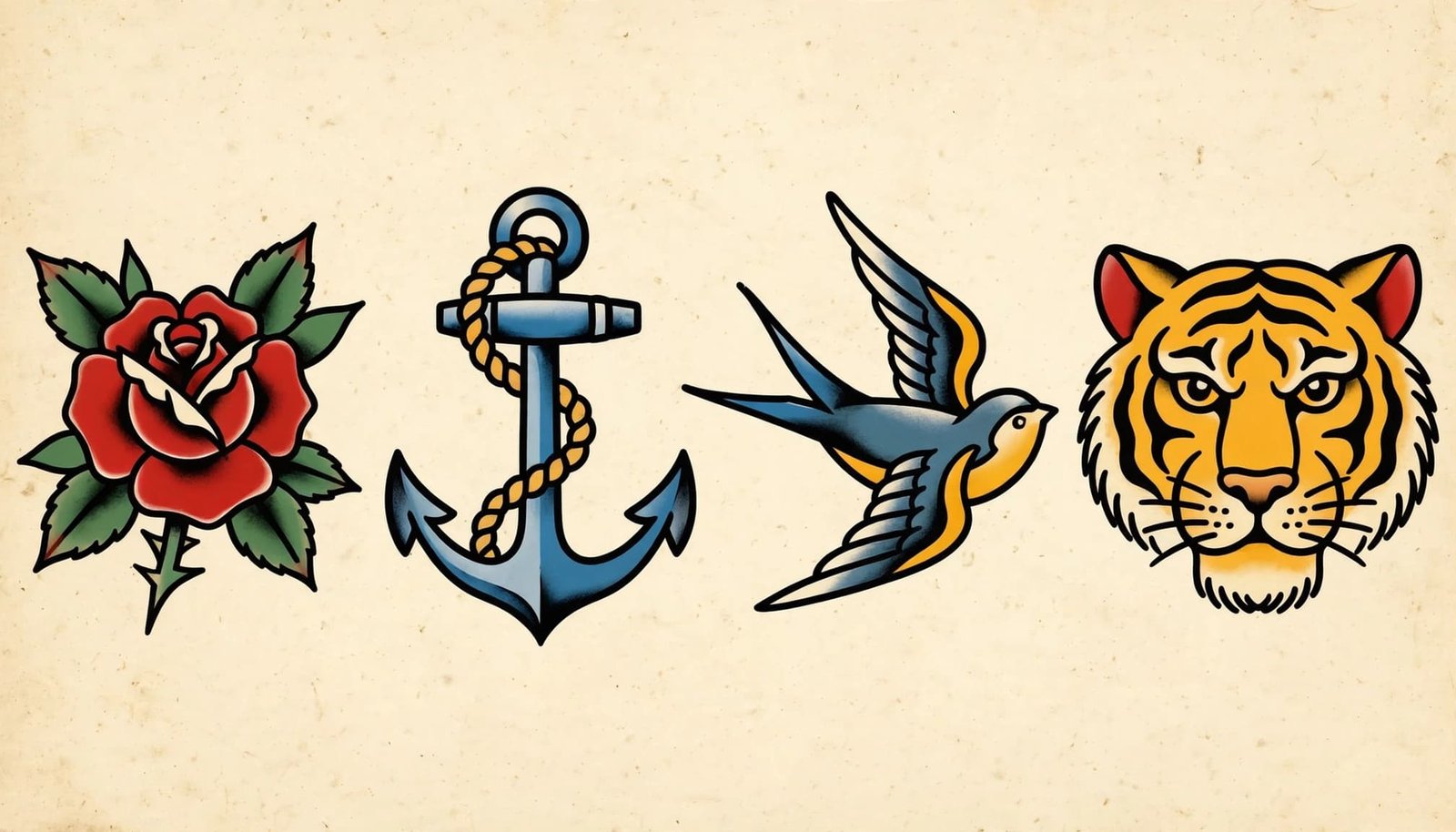
The result is compact, high-contrast artwork with little visual clutter. A traditional rose still reads as a rose because its petals, leaves, and outline remain distinct. That practical structure helps the design stay recognizable as lines soften and colors lose some intensity over time. You can see the core visual traits in this American traditional style guide.
Traditional tattooing uses simplicity as a strength. Every line and color area has a clear job.
How It Compares With Other Tattoo Styles
Fine-line tattoos use thin strokes and often create a lighter, more understated appearance. Realism focuses on lifelike shading, texture, and accurate proportions, while watercolor tattoos imitate loose brushwork with softer edges and less-defined color.
American traditional tattoos take the opposite approach. They suit people who want visible outlines, saturated color, and symbols that remain clear without photorealistic detail. If you prefer softer or more delicate artwork, fine-line or watercolor designs may fit your taste better. For broader style comparisons, these meaningful tattoo ideas show how different visual approaches can carry personal symbolism.
Choose the Right Placement for a Traditional Tattoo
Placement affects how your traditional tattoo looks, heals, and fits into your daily life. Before choosing a spot, consider the design’s size, body shape, visibility, pain tolerance, and whether you may build a larger sleeve later.
Match the Design to Your Body Area
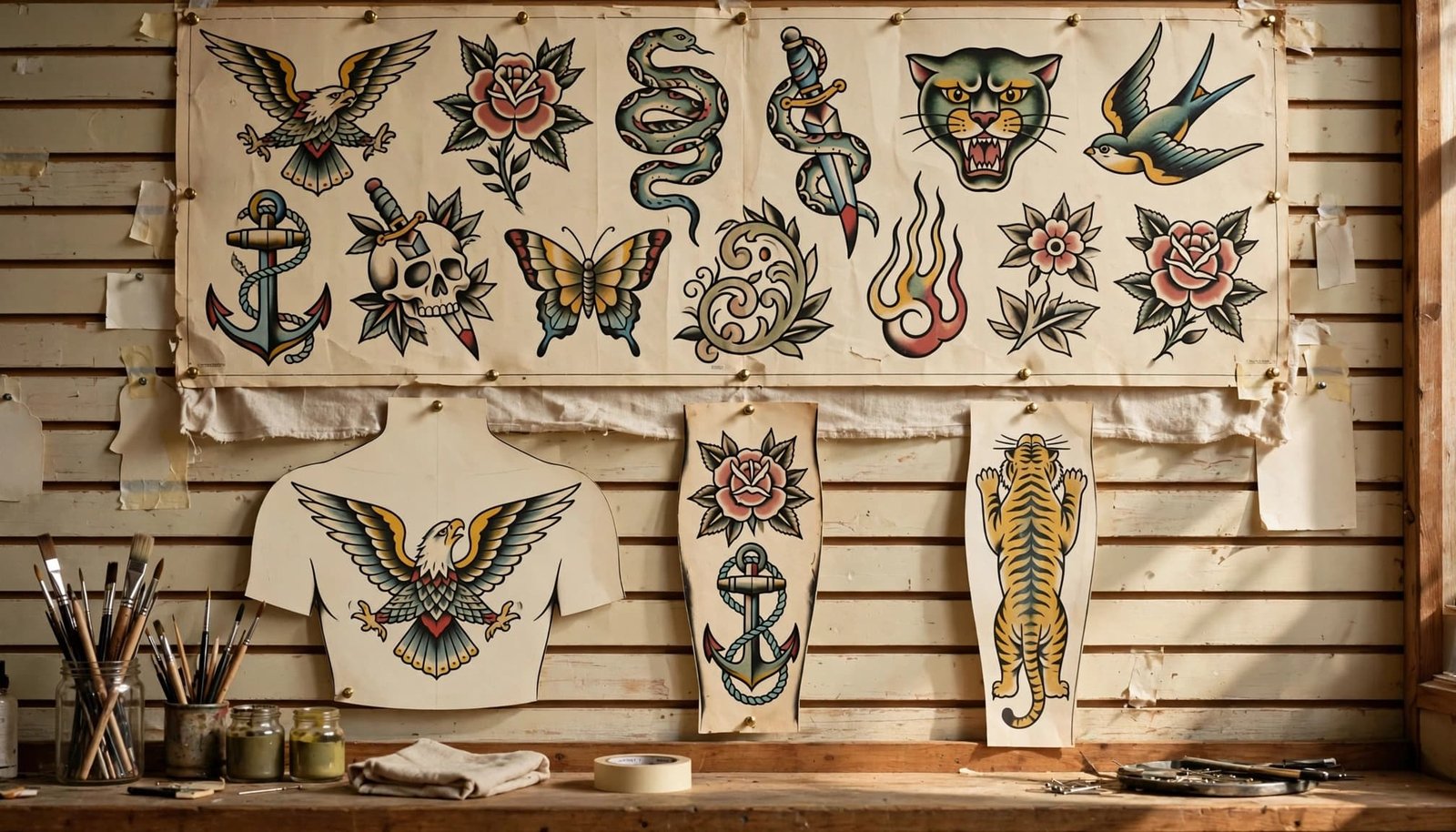
The forearm and upper arm suit medium-sized flash designs because they offer a broad, fairly stable surface. Anchors, roses, daggers, birds, and tiger heads remain easy to read there, while the outer upper arm gives you room for a future sleeve. These placements also let you cover the tattoo with a long-sleeved shirt when needed. For more placement inspiration, see these best tattoo placement ideas.
The chest works especially well for designs with a strong central shape. Eagles can spread across the chest, while hearts, banners, and large roses can follow the body’s natural width. However, chest tattoos may feel more intense because the skin sits close to bone, especially around the sternum and collarbone.
For animals and vertical designs, choose an area that gives the artwork room to breathe. A crawling panther can follow the thigh or upper arm, while a snake, dagger, lighthouse, or mermaid may look natural along the calf. These areas also support larger designs without forcing the artist to crowd the details.
The back offers the most space for a large scene or a tattoo collection that may grow over time. A ship, eagle, or dramatic arrangement of traditional symbols can occupy the upper back, shoulder blade, or full back. If you plan to add more pieces, discuss spacing and flow with your artist before starting.
Consider Visibility, Movement, and Fading
Your workplace, clothing choices, and comfort with attention should guide the final decision. A forearm, hand, neck, or lower-leg tattoo stays visible more often than a thigh, upper back, or chest design. Choose a placement that fits your current life and any professional plans you may have.
Hands, fingers, and knuckles are advanced placements because they experience constant movement, washing, friction, and sun exposure. As a result, tattoos there may fade faster and often need touch-ups. They can also heal poorly when rings, gloves, or daily work rub against fresh ink.
A tattoo’s placement affects its maintenance as much as its appearance.
Finally, consider how your body moves and whether the design may become part of a sleeve. Ask your artist to show the stencil from several angles before tattooing. That small step helps you catch awkward placement, crowded spacing, or a shape that doesn’t follow your natural lines.
How to Personalize Your Traditional Tattoo Idea
A traditional tattoo becomes personal through a few deliberate choices, not a crowded collection of symbols. Start with the meaning, choose one main subject, select a body area, decide on color, and then review an artist’s portfolio before booking.
Build the Design Around One Clear Idea
First, write down what you want the tattoo to express. A rose may honor someone, while an anchor may reflect stability or a safe return. Once you know the meaning, choose one main subject that carries most of the message.
Next, match the design to your body area. A small heart or horseshoe suits the wrist or forearm, while a ship, eagle, or panther needs more room on the thigh, chest, back, or upper arm. Placement affects scale, visibility, and how well the tattoo will read from a normal viewing distance.
Small changes can make familiar flash feel like your own:
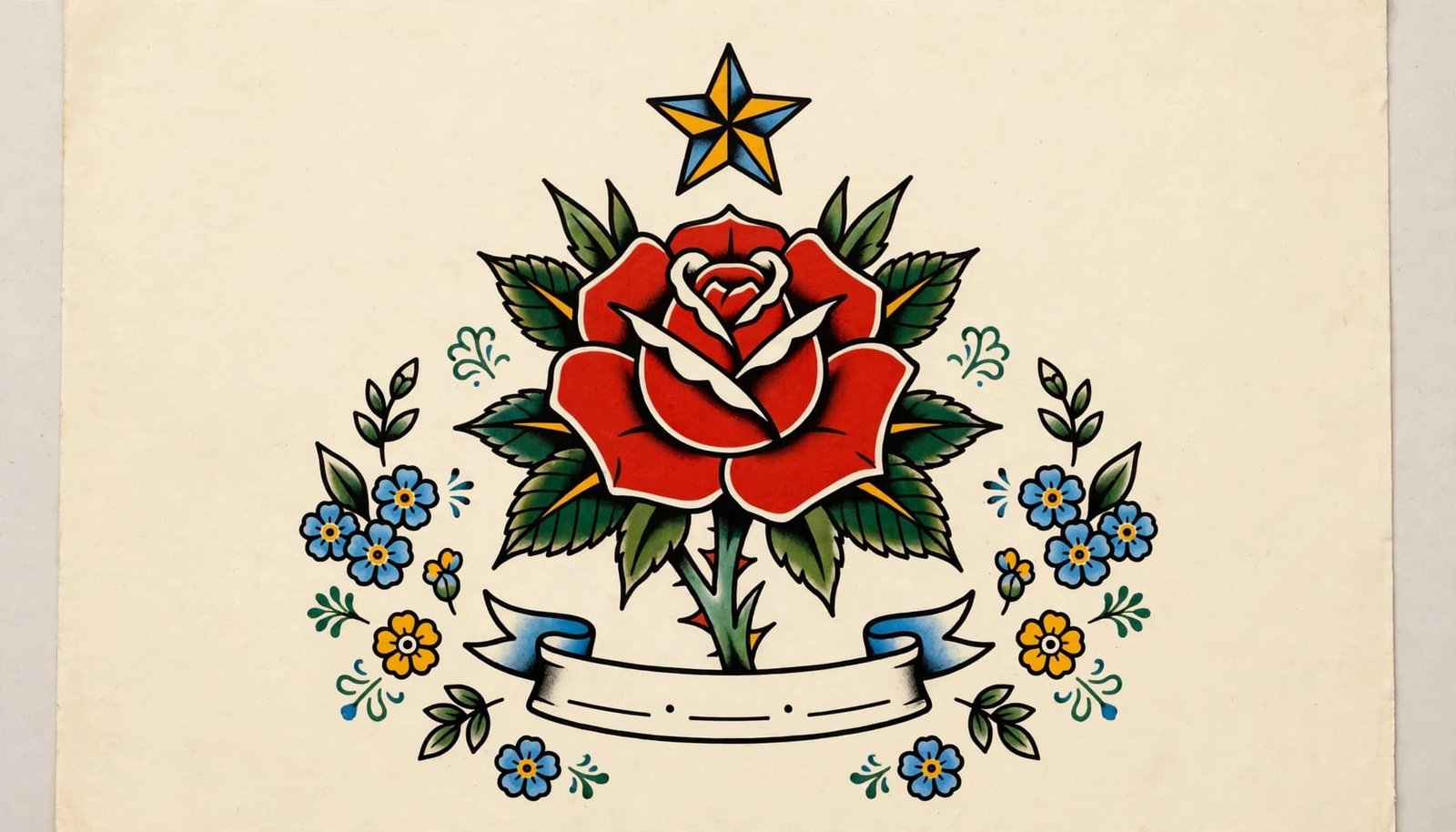
- Add a banner with a short name, date, or meaningful phrase.
- Use initials, stars, flowers, or small background details connected to your life.
- Change the palette to include a favorite color while keeping strong contrast.
- Adjust the pose, expression, flower type, or surrounding leaves.
- Include a significant date only when the numbers will remain easy to read.
Avoid adding every meaningful object to one design. Too many details can weaken the bold structure that makes traditional tattoos recognizable.
Review the Artist’s Work Before You Commit
Bring a few reference images that show the mood, subject, color, and composition you like. However, give your tattoo artist room to redraw the concept. A skilled artist can adjust the proportions, line weight, symmetry, and spacing for your body instead of copying an image that was designed for someone else.
Review completed tattoos on real skin, including healed examples, rather than judging a portfolio by sketches alone. These artist portfolio tips can help you compare consistency, placement, and healed linework.
Before the appointment, check every letter, initial, and number. Ask how the design will look at its intended size, whether the details may blur or fade, and how your skin tone may affect color contrast. Symmetrical elements should look balanced from several angles.
Finally, choose a professional studio that uses sterile, single-use needles, clean surfaces, fresh gloves, and identifiable tattoo inks. The artist should explain the healing process and provide written aftercare instructions. Clear communication before the appointment protects both the meaning and the quality of your tattoo.
Color, Healing, and Aftercare for Bold Traditional Tattoos
Traditional tattoos depend on high contrast, heavy outlines, and solid color fills. Red, yellow, green, and blue stay visually strong because each color sits clearly against black linework and open skin. However, your final palette should suit your skin tone, personal taste, and the artist’s approach. A skilled artist can adjust saturation, contrast, and color placement without losing the classic look.
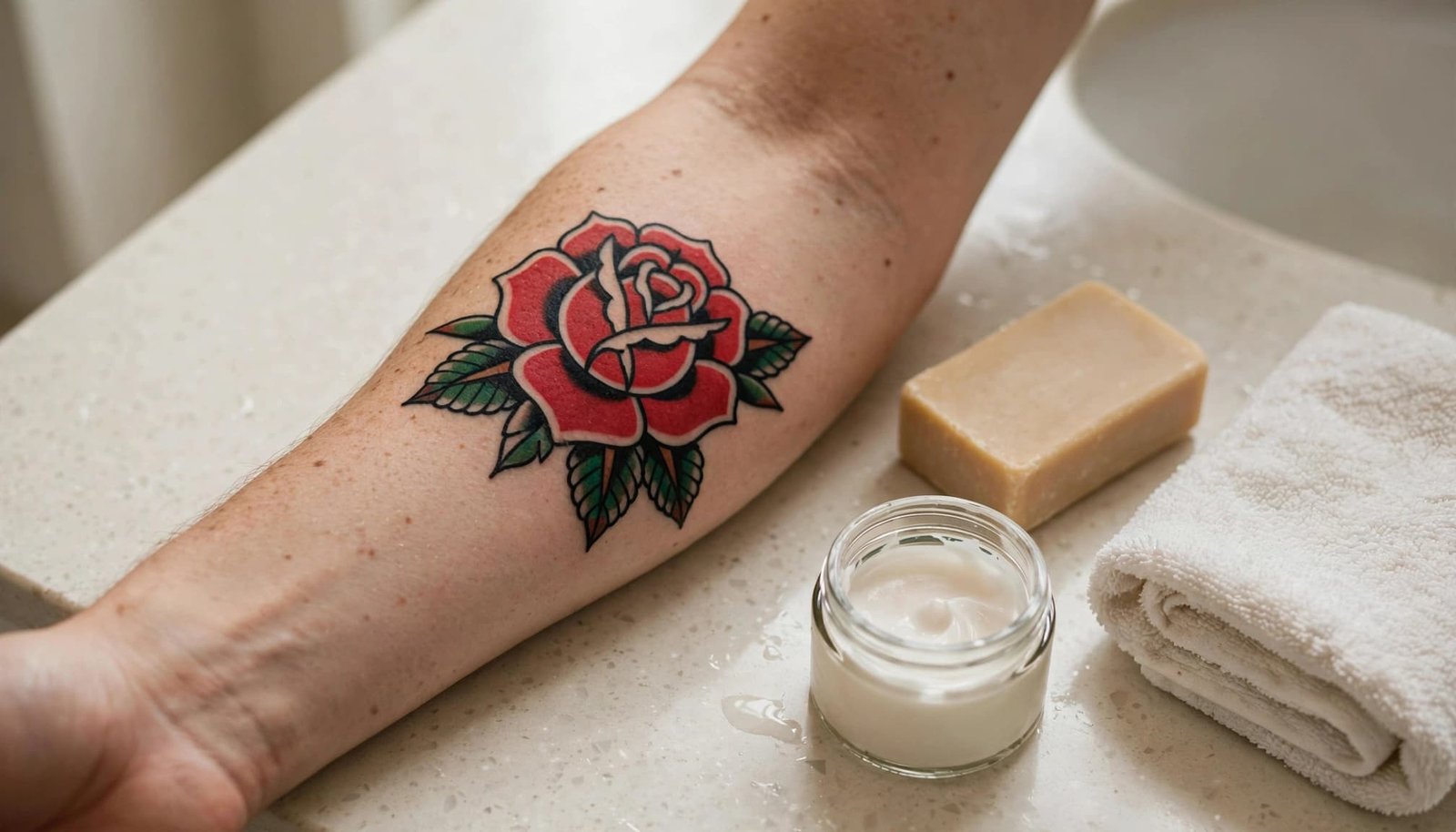
Give Dense Color and Heavy Lines Time to Heal
Your artist should explain when to remove the wrap because timing depends on the dressing used. Once they tell you to remove it, wash your hands first, then clean the tattoo gently with lukewarm water and mild, fragrance-free soap. Don’t scrub the skin or aim a strong shower spray directly at it.
Pat the area dry with a clean towel or disposable paper towel. After it dries, apply a light layer of unscented moisturizer or the product your artist recommends. Too much product can leave the tattoo overly wet and irritate healing skin. For additional guidance, review this tattoo aftercare advice.
Peeling, itching, mild tenderness, and small scabs can occur during normal healing. Never pick at peeling skin or scabs, even when they feel tempting to remove. Dense color areas and thick outlines need careful handling because scratching can disturb the surface and leave fills uneven or edges less crisp.
A bold tattoo needs a gentle healing period so its solid fills and clean outlines settle properly.
Protect the Tattoo From Water, Sun, and Friction
Avoid direct sun while the tattoo heals. You should also skip swimming, baths, hot tubs, and other soaking until the skin has fully closed. Showers are generally easier to manage, but keep the fresh tattoo away from prolonged water exposure and unnecessary rubbing.
After healing, protect the colors with broad-spectrum, water-resistant SPF 30 or higher. Sun exposure can fade tattoo ink over time, especially on exposed areas such as the forearm, hand, calf, and shoulder. You can find more guidance on healing tattooed skin, including sun protection and avoiding soaking.
Before booking, choose a licensed or properly regulated studio where applicable. Confirm that the artist uses sterile, single-use needles, fresh ink cups, clean gloves, and suitable coverings. Ask about touch-ups as well, since some tattoos need minor adjustments after healing, particularly on high-friction areas or where dense color has settled unevenly.
Conclusion
Traditional tattoos remain appealing because bold outlines, readable colors, and decades of visual history give each design a clear identity. Their symbolism also stays flexible, so an anchor, rose, bird, or dagger can carry a meaning that belongs to you.
Save a few favorite ideas, then discuss the symbolism, placement, size, color, and your artist’s strengths before booking. Take extra time with permanent lettering or highly visible areas, and choose a reputable tattoo artist who can adapt the design to your body. A classic motif becomes most meaningful when it connects naturally to your own story.
Save the pin for later


- 60 Color Tattoos That Healed Beautifully - 25/09/2026
- 40 Most Painful Tattoo Spots - 24/09/2026
- 20 Tattoo Aftercare Mistakes That Ruin Fresh Ink - 23/09/2026

