The alarm rings, backpacks wait by the door, and breakfast can feel like one more task to squeeze into a busy school morning. Fortunately, it doesn’t need to be perfect. A simple, filling, enjoyable meal can give your child a steady start without adding stress to your routine.
These healthy breakfast ideas for kids combine fruits, vegetables, whole grains, protein, and dairy or fortified alternatives in practical ways. For even smoother mornings, try these make-ahead breakfasts for busy mornings, and adjust each serving’s portion and texture to your child’s age, appetite, allergies, and chewing skills. Start with these eight kid-friendly ideas that fit real family mornings.
Key Takeaways
- Build breakfast around whole grains, fruit, protein, and dairy or fortified soy alternatives for a balanced start.
- Choose quick options such as oatmeal with fruit, egg muffins, yogurt bowls, smoothies, or whole-grain toast.
- Use MyPlate’s breakfast guidance to keep portions age-appropriate and limit added sugar, saturated fat, and sodium.
- Prepare ingredients the night before, or try these quick and balanced morning meals.
- Let your child choose between two healthy options to make busy mornings easier and more positive.
8 Healthy Breakfast Ideas for Kids That Are Easy to Make
A balanced breakfast can be simple. Combine two or three MyPlate food groups, then adjust the portion to your child’s age, appetite, and chewing skills. Whole grains, fruit, vegetables, protein, and dairy or fortified soy milk can all fit into a quick morning meal.
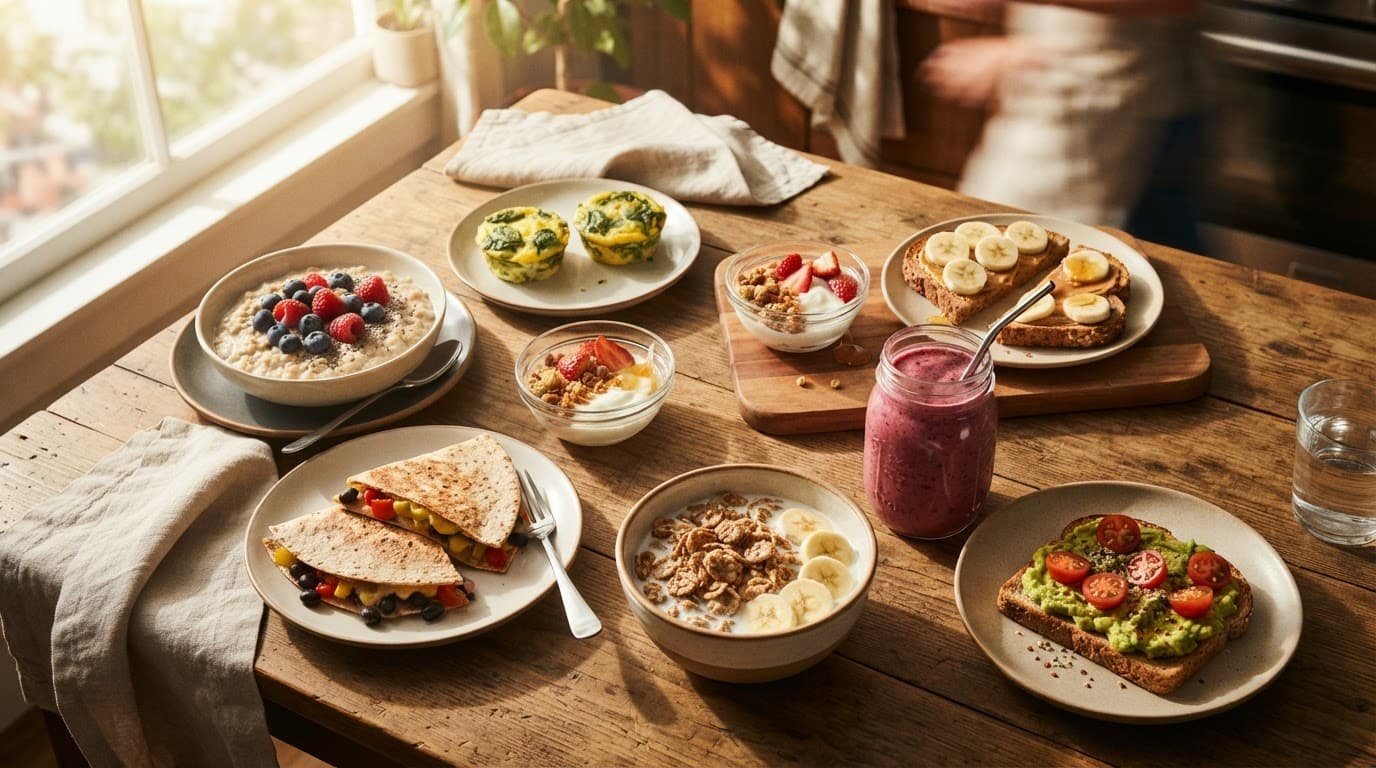
1. Oatmeal With Fruit and Nut Butter
Warm oatmeal offers whole-grain fiber, while milk adds protein and calcium. Stir in sliced banana, berries, or diced peaches, then add a small spoonful of peanut or almond butter for extra staying power. For a faster option, prepare overnight oats in the refrigerator and serve them cold or warmed.
2. Egg, Toast, and Fruit
Pair one scrambled or hard-boiled egg with a slice of whole-grain toast and a few orange slices. The egg supplies protein, the toast adds whole grains, and the fruit brings color and natural sweetness. If mornings feel rushed, bake egg muffins with chopped spinach or peppers ahead of time.
3. Yogurt and Berry Bowl
Plain yogurt, berries, and a sprinkle of oats create a cool breakfast with dairy, fruit, and whole grains. Choose unsweetened yogurt when possible, then let fruit provide the sweetness. A child who dislikes mixed textures may prefer the ingredients served separately in small sections.
For more batch-friendly combinations, try these easy make-ahead breakfast recipes.
4. Peanut Butter Banana Toast
Spread peanut butter on whole-grain toast and top it with thin banana slices. This combination brings together whole grains, fruit, and protein in minutes. If your child has a peanut allergy, use sunflower seed butter or another allergy-safe spread approved for your family.
5. Vegetable and Cheese Quesadilla
Fill a small whole-grain tortilla with shredded cheese and finely chopped peppers, spinach, or leftover vegetables. Warm it in a skillet, then cut it into manageable pieces and serve with fruit. For picky eaters, start with cheese alone and place vegetables on the side for optional tasting.
6. Fruit Smoothie With Toast
Blend milk or fortified soy milk with banana, berries, and plain yogurt. Add a small handful of spinach if your child accepts green smoothies, then serve the drink with whole-grain toast. A frozen banana can make the smoothie creamy without added sugar, while pre-portioned freezer bags save time.
7. Whole-Grain Cereal With Milk
Choose a whole-grain cereal with little added sugar and pair a modest bowl with milk and fresh fruit. Strawberries, banana, or sliced pear can make a plain cereal more appealing. When your child wants variety, mix two cereals together while keeping the sweeter option smaller.
8. Avocado Toast With an Egg
Mash avocado onto whole-grain toast and add a sliced egg on top or beside it. Avocado provides healthy unsaturated fat, while the egg and toast add protein and whole grains. If the texture causes resistance, serve the avocado as a dip and offer toast fingers with fruit.
The USDA MyPlate guidance can help you keep these meals flexible. Start with a small serving, offer water or milk, and allow your child to ask for more when hungry.
How to Build a Balanced Breakfast for Kids
A healthy breakfast doesn’t need five separate dishes. Use the simple MyPlate approach: include two or more food groups, then offer different foods throughout the day. This keeps busy mornings practical while giving your child more variety over time.

Start With a Simple Mix-and-Match Formula
A useful breakfast formula is whole grain + protein + fruit. Add vegetables, dairy, or a fortified soy alternative when they fit the meal.
- Whole grains, such as oatmeal, whole-grain toast, or low-sugar cereal, provide fiber and lasting energy.
- Fruit adds natural sweetness, color, and important nutrients. Berries, bananas, apples, and oranges are easy choices.
- Vegetables can add variety through spinach in an egg muffin, avocado on toast, or finely chopped peppers in a quesadilla.
- Protein foods include eggs, beans, yogurt, nut butter, seeds, and tofu.
- Dairy or fortified soy alternatives, such as plain milk or yogurt, provide protein and calcium.
Pairing protein with fiber-rich carbohydrates may help your child feel satisfied longer during school. For example, oatmeal with peanut butter and banana may keep hunger away longer than a sweet pastry by itself. These easy breakfasts that keep kids full can give you more combinations to try.
Use the Formula for Any Morning
The same pattern works whether you have two minutes or twenty. For a no-cook breakfast, serve whole-grain cereal with plain yogurt and sliced fruit. A make-ahead option could be overnight oats with milk, chia seeds, and berries. For a hot breakfast, try an egg, whole-grain toast, and orange slices.
You don’t need every food group at every meal. A breakfast with toast, egg, and fruit can balance well, while vegetables and other foods can appear at lunch or dinner. Variety across the day matters more than creating a perfect plate each morning.
Keep Sugar and Drinks in Perspective
For children age 2 and older, the Dietary Guidelines for Americans recommend keeping added sugars below 10% of daily calories. Children under age 2 should avoid foods and drinks with added sugars. Check sweetened cereals, flavored yogurt, pastries, and breakfast drinks before adding them to the routine. See the official added sugar guidance for the full recommendation.
Offer water or plain milk more often than sugary beverages. Although 100% fruit juice counts as fruit, it isn’t the same as whole fruit because it contains less fiber and is easier to drink quickly.
Finally, respect your child’s appetite. Serve a small portion, allow seconds, and avoid pressuring them to clean their plate. Children may eat more on some mornings and less on others.
Safe Breakfast Choices for Toddlers and Children With Allergies
Breakfast should feel calm and familiar, even when your child has food allergies or is still learning to chew. Focus on safe ingredients, age-appropriate textures, and a routine that gives you time to check labels before everyone heads out the door.

Reduce Choking Risks With Safer Textures
Children under 4 may struggle with foods that are hard, round, sticky, or difficult to chew. Whole nuts, whole grapes, hard raw apple pieces, seeds, large spoonfuls of nut butter, popcorn, and large chunks of cheese can block a young child’s airway. The American Academy of Pediatrics choking prevention guidance offers a helpful reference for caregivers.
Prepare breakfast according to your child’s age and chewing skills:
- Cook vegetables until soft, then chop them into small pieces.
- Cut grapes lengthwise into small portions instead of serving them whole.
- Soften hard fruit by steaming it, grating it, or choosing ripe pieces.
- Spread peanut, tree nut, or seed butter thinly on toast rather than serving a thick spoonful.
- Grate cheese or use soft, finely shredded pieces instead of hard cheese cubes.
- Keep your child seated and supervise the entire meal, rather than allowing them to eat while walking or riding in the car.
Because development varies, ask your child’s pediatrician which textures and portions fit your child’s needs.
Manage Common Breakfast Allergens
Milk, eggs, peanuts, tree nuts, wheat, soy, and sesame are common breakfast allergens. They can appear in obvious foods such as yogurt, scrambled eggs, toast, nut butter, and cereal, but they may also hide in granola, baked goods, protein bars, and flavored drinks.
Read the ingredient list and the “Contains” statement every time you buy a packaged food. Manufacturers can change recipes, and foods that seem familiar may contain a new allergen. Also watch for cross-contact, which happens when an allergen unintentionally transfers through shared utensils, cutting boards, toasters, or containers.
For a child avoiding dairy, soft yogurt may become a suitable alternative to hard cheese cubes if the product fits their allergy plan. Soft banana or ripe pear can replace crunchy raw apple pieces. Sunflower seed butter may replace peanut butter when appropriate, but substitute products have different allergen and nutrition profiles, so check each label carefully.
Keep your child’s individual allergy action plan available at home, school, and child care. Follow it during a suspected reaction, and ask the pediatrician or allergist before introducing unfamiliar foods or making major dietary changes.
Make Healthy Breakfasts Easier for Picky Eaters and Busy Mornings
A calm breakfast usually starts the night before. You don’t need to prepare a full menu, but a few ready-to-grab ingredients can turn a rushed morning into a manageable one.
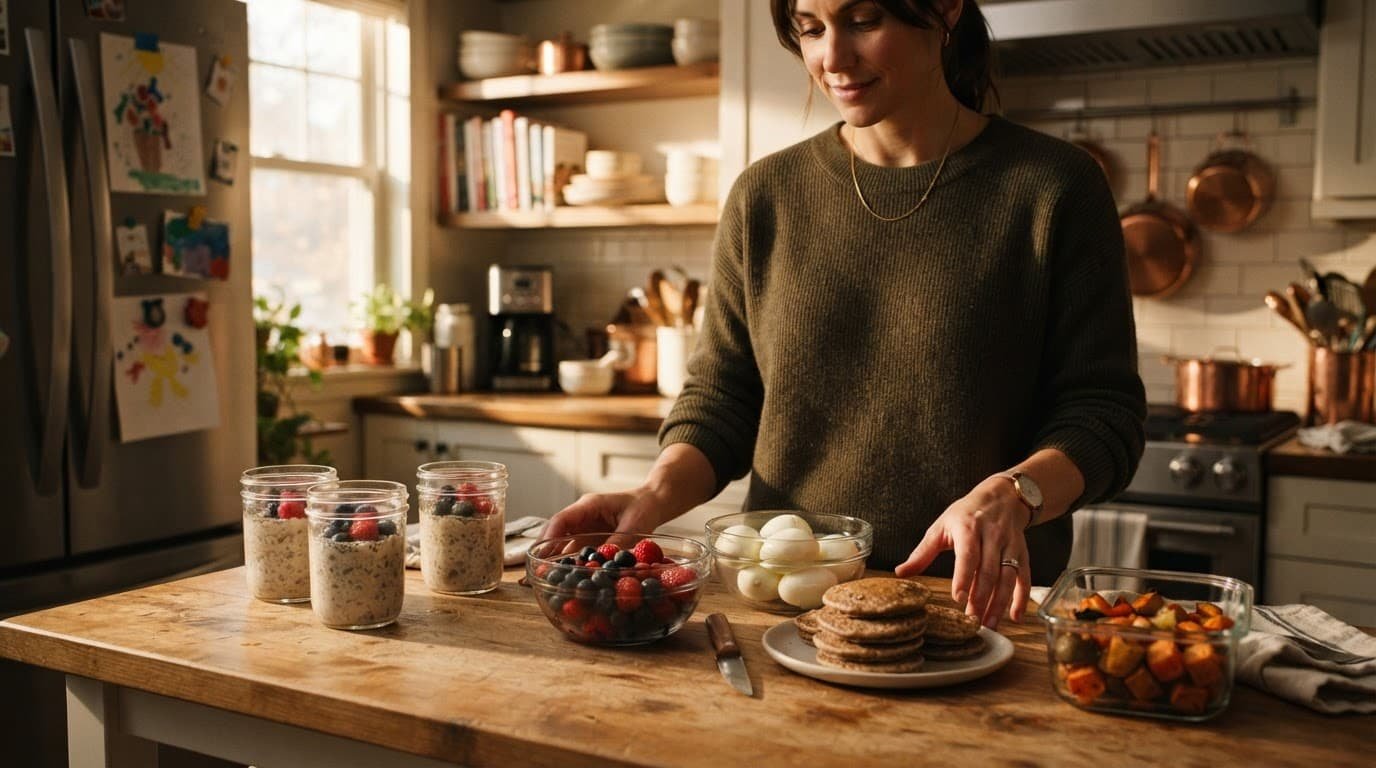
Prepare a Few Building Blocks Ahead
Choose one short prep session each week. Make overnight oats, wash fruit, cook hard-boiled eggs, portion pancakes, and chop cooked vegetables into small containers. You can then mix and match breakfast components instead of starting from an empty kitchen every morning.
Keep perishable foods refrigerated at 40°F or below. The USDA says hard-cooked eggs should be used within one week, while most properly stored leftovers keep for three to four days. Reheat cooked foods to 165°F, especially egg dishes, and discard anything left at room temperature for more than two hours. Follow the USDA’s leftovers safety guidance when preparing meals in advance.
For budget-friendly staples, keep oats, eggs, beans, bananas, frozen berries, whole-grain bread, and plain yogurt on your shopping list. These foods stretch across several meals and don’t require expensive specialty ingredients. Frozen fruit can also reduce waste because you can use only what you need.
Use Familiar Foods to Reduce Resistance
Picky eating often becomes harder when every item on the plate feels new. Instead, serve one familiar food with one less familiar food. Pair toast with a small spoonful of mashed beans, or place a few berries beside a food your child already enjoys.
Small portions make new foods feel less intimidating. Your child can look at, touch, smell, or taste the unfamiliar item without pressure to finish it. Repeated, low-pressure exposure works better than forcing bites or turning breakfast into a negotiation.
Children who dislike mixed textures may prefer deconstructed meals. Serve yogurt, oats, and berries in separate sections rather than blending them together. When appetite is low, offer a small breakfast such as half a banana with toast, then pack a balanced snack if your child’s school allows it.
You can also offer two choices that you feel comfortable serving:
- Yogurt with berries or toast with an egg.
- Banana oatmeal or cereal with milk and fruit.
- A bean-and-cheese tortilla or a small pancake with yogurt.
These high-fiber breakfast ideas can provide more inspiration for using oats, fruit, and other affordable ingredients. A healthy pattern matters more than making every breakfast perfect.
Conclusion
Busy school mornings don’t require a perfect meal. A healthy breakfast for kids can be colorful, familiar, quick, and flexible when you combine a whole grain or another fiber-rich food with protein and fruit or vegetables. Keeping added sugar low also helps make everyday choices more balanced.
Adjust each breakfast for your child’s age, appetite, allergies, chewing skills, and personal preferences. Use safe textures, offer small portions, and let your child decide how much to eat without pressure.
Choose one of these breakfast ideas to prepare this week, then invite your child to pick a topping, filling, or fruit. That small choice can make breakfast feel more enjoyable and easier to repeat.
Save the pin for later

- Healthy Air Fryer Recipes for Beginners - 21/09/2026
- Healthy Snacks for Late Night Cravings - 21/09/2026
- High Protein Meal Prep Ideas for Easy Weekly Meals - 21/09/2026

