Cross tattoos have lasting appeal because a simple shape can carry deeply personal meaning. For some, the symbol expresses faith, sacrifice, hope, protection, heritage, remembrance, or the strength to keep moving through difficult seasons.
These 25 cross tattoo ideas with meaning range from traditional religious designs to modern minimalist styles. The right choice depends on the cross style, added symbols, your personal story, and practical details such as size and placement; if you’re considering other spiritual tattoos and their meanings, cultural context matters too. Explore the designs below to find a cross tattoo that feels personal rather than purely decorative.
What Does a Cross Tattoo Mean?
A cross tattoo often expresses faith, devotion, and a personal connection to Christianity. For many people, it recalls Jesus Christ’s crucifixion and the sacrifice associated with it. However, the symbol also points to resurrection, grace, forgiveness, hope, and the promise of spiritual renewal. The Christian cross as a religious symbol carries several connected meanings, so no single interpretation applies to everyone.
Faith, Sacrifice, and Hope
Some people choose a cross tattoo as a permanent reminder of their beliefs or commitment to God. A plain Latin cross can express devotion through its simplicity, while a crucifix may focus more directly on Christ’s suffering and sacrifice.
The cross can also represent:
- Resurrection, especially when the design includes light, rays, or an empty cross.
- Grace and forgiveness, as a reminder of redemption and unconditional love.
- Hope during hardship, including the strength to continue through grief, illness, or major life changes.
- Spiritual protection, particularly when the cross is worn as a personal symbol of trust and guidance.
- Remembrance, whether honoring Christ’s sacrifice or keeping a loved one’s memory close.
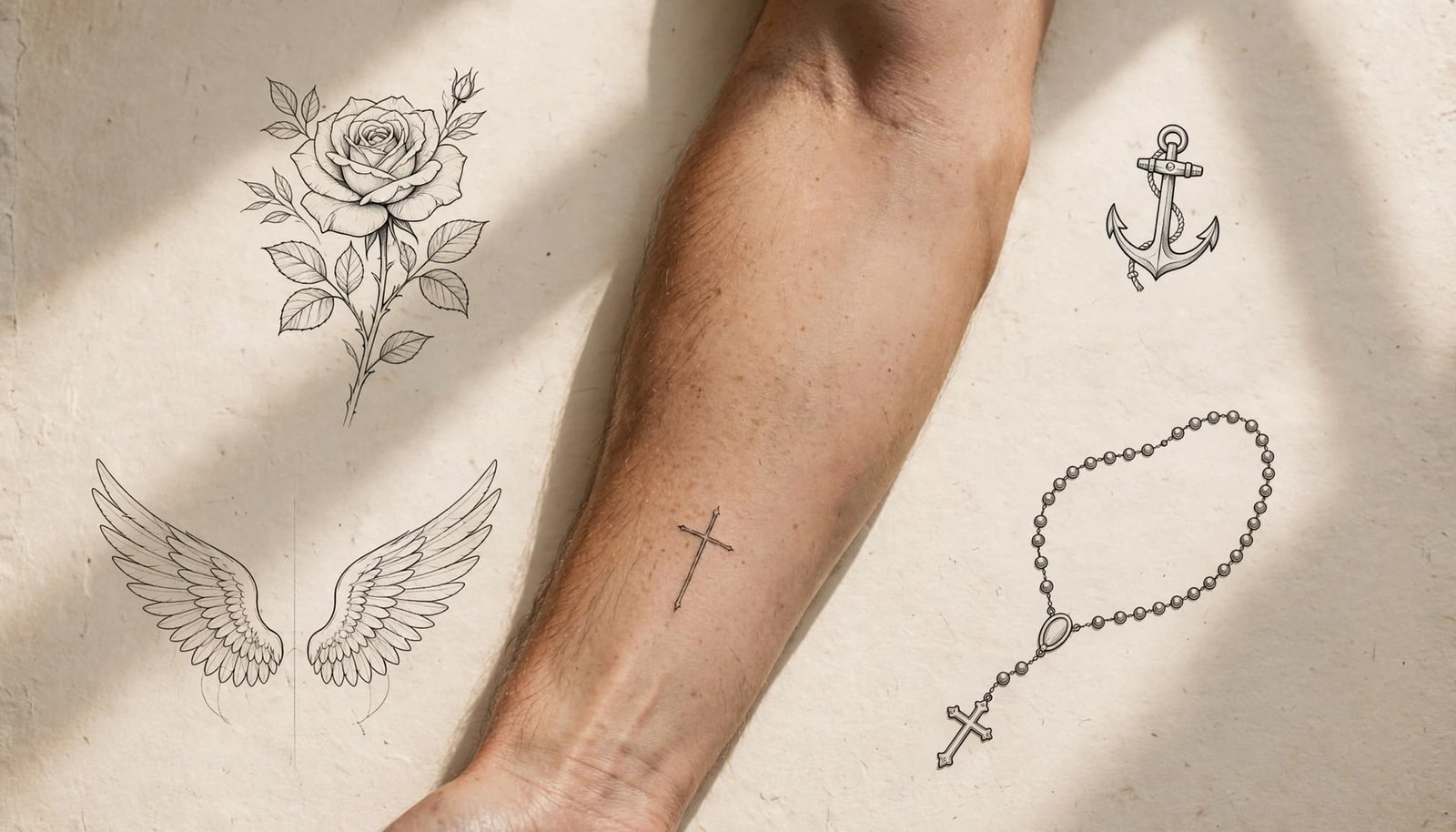
Personal and Family Meaning
A cross does not always reflect strictly religious belief. Some people connect it to family heritage, a faith tradition passed through generations, or a childhood shaped by church. Others see the intersecting lines as a symbol of balance, two life paths meeting, or a turning point that changed their direction.
The surrounding details can shift the message. Roses may add love, grief, or beauty after pain. Wings can suggest guidance or a loved one’s presence, while an anchor often adds stability and perseverance. A rosary emphasizes Catholic devotion, and scripture or memorial text can make the tattoo specific to one relationship or season of life.
Before choosing a design, ask what you want the symbol to remind you of years from now. Your cross tattoo should reflect your beliefs, memories, and experience, rather than follow a universal definition. For more ideas, explore these memorial and tribute tattoo ideas for ways to personalize remembrance.
25 Cross Tattoo Ideas With Meaning
These cross tattoo ideas combine traditional Christian imagery with personal symbols, modern styling, and placement choices. Visual details matter, because a crucifix communicates something different from an empty cross, while size and location can change the tattoo’s mood.
Classic Cross Designs for Faith and Devotion
- Latin cross: Its longer vertical beam is a clear Christian symbol of faith, sacrifice, devotion, and resurrection.
- Crucifix: A Latin cross with Jesus attached focuses on suffering, redemption, and Catholic or Orthodox devotion.
- Empty cross: Without Christ’s figure, it often suggests resurrection, hope, and the tomb left behind.
- Celtic cross: A ring surrounds the intersection, linking the design with Irish or Scottish heritage, eternity, and continuity.
- Orthodox cross: Three horizontal bars, including a slanted footrest, connect this form with Orthodox Christian tradition.
- Three-cross Calvary scene: Three crosses create a narrative image of the crucifixion, making it suitable for someone who wants a detailed expression of faith.
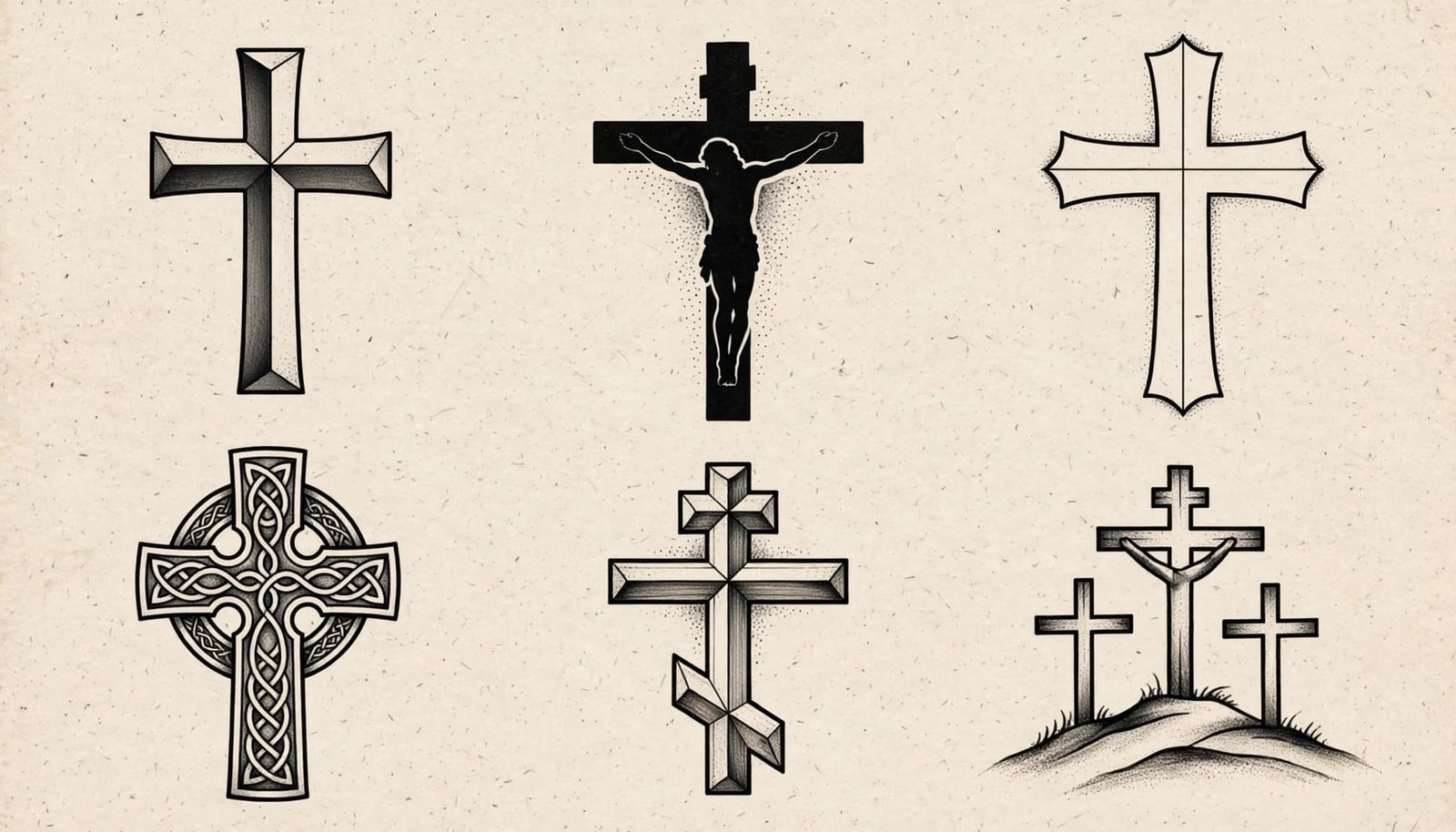
The main Christian cross variations differ in their beams, bars, rings, and figures. Choose a form that fits your faith tradition, family background, or personal understanding.
Meaningful Cross Tattoos With Other Symbols
- Anchor cross: Combining an anchor and cross adds faith, hope, stability, and strength during uncertain times.
- Cross with roses: Roses can introduce love, grief, beauty, growth, or remembrance, depending on the person’s story.
- Cross with wings: Wings may suggest angelic protection, heaven, freedom, or tribute to someone who has died.
- Rosary cross: Beads wrapped around the design express Catholic devotion, prayer, and a personal spiritual practice.
- Cross with scripture: A short Bible verse or meaningful phrase makes the tattoo more personal and specific.
- Memorial cross: Add initials, a name, or an important date to honor someone you want to remember.
- Cross over the heart: Chest placement can connect the symbol with devotion, love, grief, or a cherished relationship.
The added element should support your own meaning rather than follow a fixed formula. For more tribute inspiration, compare these meaningful memorial tattoo ideas.
Simple and Modern Cross Tattoo Styles
- Minimalist cross: Fine lines and a small shape create a quiet, understated expression of faith.
- 3D cross: Shading and contrast give the design depth, making it better suited to a bold, realistic style.
- Geometric cross: Clean angles, symmetry, and abstract forms create a contemporary tattoo with a structured mood.
- Tiny wrist cross: This visible but compact design works as a daily reminder without requiring a large tattoo.
- Behind-the-ear cross: Its discreet location suits a very small symbol that can remain private.
- Hand or finger cross: A simple, readable shape creates a highly visible statement, though friction may cause faster fading.
Fine lines create a delicate look, while heavier outlines usually preserve readability longer. Dense shading needs room, so larger designs often age more clearly than tiny, detailed ones.
Cross Tattoos Chosen for Placement and Personal Meaning
- Forearm cross: This practical location supports small or medium designs and offers easy visibility.
- Chest or sternum cross: A centered cross can express devotion or keep a memorial close to the heart.
- Back cross: Broad skin allows wings, scripture, detailed scenes, or large ornamental work. Explore these full-back tattoo ideas with meaning for larger layouts.
- Neck or nape cross: This placement offers visibility while allowing coverage in many settings.
- Ankle cross: A small ankle design feels discreet and elegant, especially with a simple outline.
- Shoulder or upper-arm cross: This area gives a medium or large tattoo room for flowers, dates, wings, or shading.
Placement changes the feeling of the same design. Consider visibility, body shape, sun exposure, friction, and enough space for every line to remain clear.
How to Choose the Right Cross Tattoo Design
Choosing among 25 cross tattoo ideas becomes easier when you identify the message you want the design to carry. Ask yourself whether the tattoo is mainly about faith, heritage, protection, remembrance, or personal survival. That answer gives you a direction before you compare shapes, details, and placement.
Match the Cross to Its Meaning
A plain Latin cross is a clear choice for personal faith, devotion, or hope. Its simple shape also works well at a small size. Choose a crucifix if you want the design to focus on Christ’s suffering, sacrifice, and redemption.
A Celtic cross may suit you better when Irish or Scottish heritage, family history, eternity, or continuity matters. If your story centers on healing or a specific person, consider adding symbolic details such as:
- A rose for love, grief, or remembrance.
- Wings for protection, heaven, or a memorial.
- An anchor for stability during hardship.
- A date, name, or short verse for a personal connection.
Before adding text, ask whether the words will still feel meaningful years from now. Long quotes can become difficult to read, especially in small spaces. A short phrase, meaningful date, or initials usually gives the artist more room to create clear lettering.

Choose a Style and Placement That Fit
Your preferred mood should guide the tattoo style. Fine-line work feels delicate and understated, while blackwork creates stronger contrast. Realism suits detailed crucifixes, portraits, and memorial designs. Traditional tattoos use bold outlines and classic color, whereas geometric and ornamental styles create a cleaner or more decorative appearance.
Detail also affects size. A tiny cross needs open space and simple lines, while Celtic knots, wings, rosaries, and scripture need enough room to stay readable as the tattoo ages. Inner forearms, upper arms, shoulders, and chests often provide steadier surfaces. Hands, fingers, wrists, and ankles receive more friction and may fade or distort faster.
Decide whether you want a private reminder or a visible statement. Then bring several reference images to a reputable tattoo artist, explaining what you like about each one. Ask for a custom drawing, rather than copying another person’s tattoo, so the final design fits your body, meaning, and preferred level of detail. Reviewing the artist’s healed work can also show how their lines and intersections hold up over time.
Best Placement Ideas for a Cross Tattoo
The best placement for a cross tattoo depends on its size, detail, meaning, and how often you want to see it. Flat, central areas preserve symmetry and readability, which matters when the design has equal beams, lettering, wings, or ornamental details.
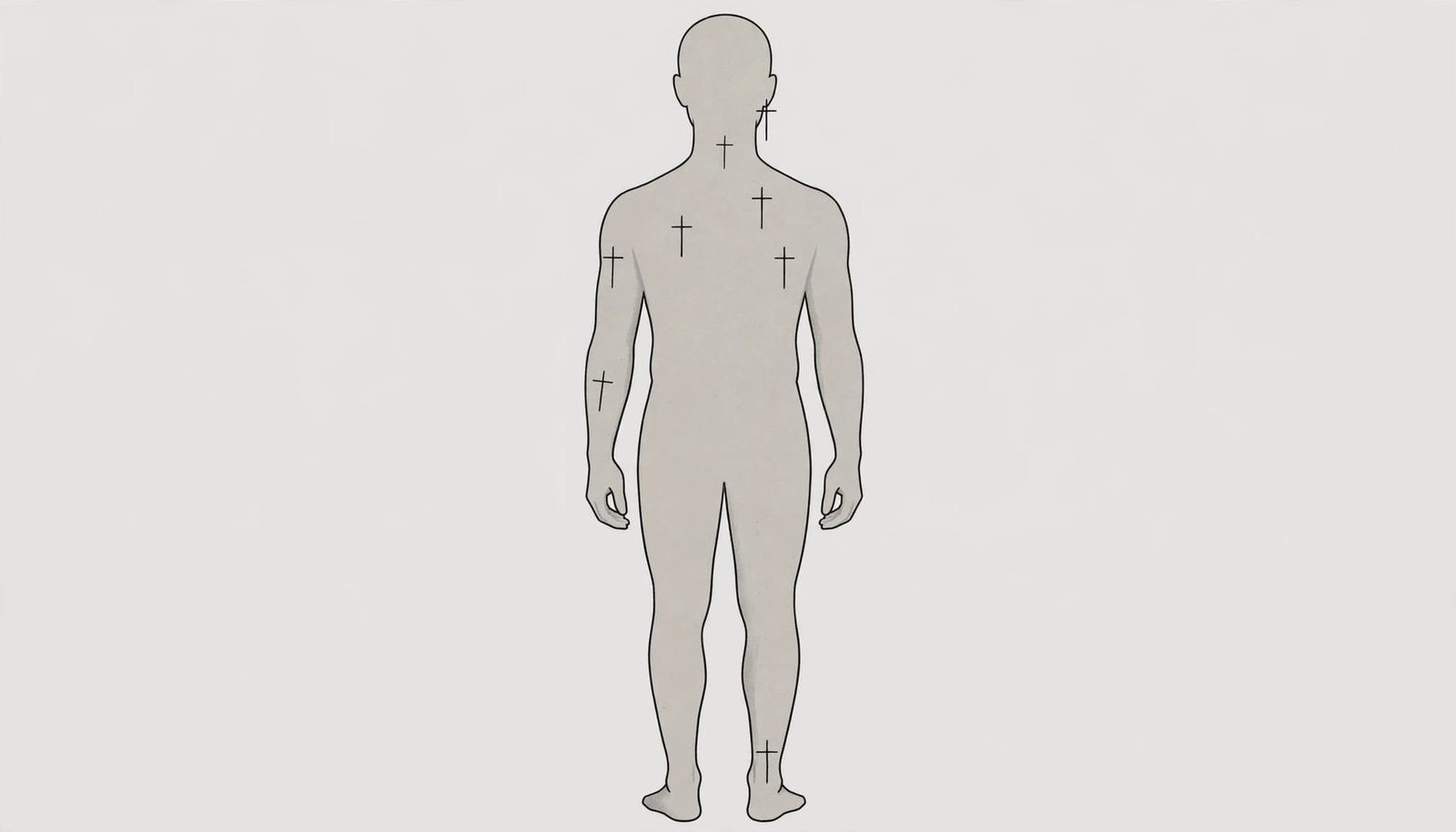
Visible and Meaningful Cross Tattoo Placements
The inner forearm is one of the most practical choices for a cross tattoo. You can see it throughout the day, making it suitable for a daily reminder of faith, hope, or a personal promise. It also provides a relatively flat surface for a vertical cross, short scripture, or small memorial detail. For more guidance on visibility and privacy, compare these tattoo locations for visibility and privacy.
A wrist or finger cross works best when the design is small and uncomplicated. These areas suit a plain outline or tiny solid cross, but fine details may lose clarity as the tattoo ages. Hands and fingers receive frequent washing, sun exposure, and friction, so they often need more touch-ups than protected areas.
For devotion or remembrance, the chest and heart area carry strong personal meaning. A cross placed over the heart can honor a loved one, express religious commitment, or keep an important belief close to you. The sternum offers a centered, symmetrical position for a larger cross, especially when the design extends vertically along the body.
The back gives an artist the most room to work. A large cross with wings, scripture, rays, or a detailed scene can remain readable because the upper back provides a broad, stable canvas. However, sun exposure and clothing coverage still matter during healing and long-term care.
The shoulder and upper arm offer a flexible middle ground. These placements can hold a medium-sized cross with roses, dates, or ornamental shading, while sleeves and everyday clothing can hide the tattoo when needed. A design can also follow the shoulder’s natural curve without losing its central shape.
Discreet Cross Tattoo Locations
The neck or nape creates a visible but partly concealable tattoo. The nape is easier to cover with longer hair or a collared shirt, while the side of the neck makes a stronger statement. Review these neck and nape tattoo placement ideas before choosing a vertical or centered design.
For a private option, consider the ankle or behind the ear. Both areas suit small crosses, but feet, ankles, and wrists experience movement and friction from shoes, socks, watches, and clothing. Once the tattoo heals, protect exposed ink with SPF 30 or higher, as recommended in these tattoo aftercare tips.
Before booking, consider workplace visibility, pain tolerance, skin movement, and the artist’s experience with that body area. A skilled artist can adjust the cross’s scale and orientation so it stays balanced as you move.
Before You Get Your Cross Tattoo
A meaningful cross tattoo needs more than a strong symbol. Before booking, confirm the design, tradition, wording, size, placement, and artist so the tattoo still feels clear and personal years later.
Confirm the Symbol and Details
If you choose a Celtic, Orthodox, or crucifix design, verify its religious and cultural details first. These forms have distinct visual features and traditions, so a small mistake can change the design’s meaning or make it look inaccurate. Ask a knowledgeable artist to check the cross style, proportions, bars, ring, footrest, or figure of Christ before finalizing the stencil.
Check every letter, scripture reference, name, and date several times. Compare Bible verses with a trusted edition, confirm spelling with family members, and write dates in a format that cannot be misread. A short phrase is usually easier to keep legible than a long quotation.
Plan for Long-Term Clarity
Small details may blur as ink spreads naturally beneath the skin. Fine lines, tiny lettering, narrow gaps, and dense shading need enough room to remain readable. Ask your artist whether the design should be enlarged, simplified, or given thicker lines.
Contrast also affects how a cross ages. Strong outlines and clear negative space usually preserve the shape better than crowded details with similar tones. If you want wings, roses, beads, or scripture, give each element enough space instead of forcing everything into a small tattoo.

Choose the Artist Carefully
Choose a licensed, experienced tattoo artist whose portfolio matches your requested style. Review healed examples when available, especially if you want fine-line work, realism, lettering, geometric details, or a traditional religious design. Licensing and health requirements vary by location, so check that the studio follows local rules.
Before the needle starts, review the stencil from the front, side, and a natural standing position. Confirm its size, orientation, spacing, and exact placement. Once the tattoo begins, moving the design becomes difficult.
Protect the Tattoo While It Heals
Follow your artist’s aftercare instructions because bandage types and skin needs can differ. Keep healing skin clean, avoid unnecessary friction, and protect it from direct sun with loose clothing or shade. Don’t apply sunscreen to open or freshly healing skin. After it fully heals, broad-spectrum, water-resistant SPF 30 or higher helps protect exposed ink.
Seek medical advice if you notice unusual healing, such as worsening pain, spreading redness, significant swelling, drainage, or a persistent rash. Proper care gives your cross tattoo the best chance to stay sharp and meaningful.
Conclusion
A cross tattoo can express faith, hope, protection, heritage, love, or remembrance, but no single design carries the same meaning for everyone. Its message depends on your story and the details you choose, whether that’s a plain cross, a memorial date, a rose, wings, scripture, or another personal symbol.
Choose the cross style, added elements, and placement that feel honest to you. A centered design may suit those considering meaningful sternum tattoo designs, while another location may better fit your daily life and privacy needs.
Most importantly, prioritize thoughtful design, clear symbolism, a skilled tattoo artist, and a placement that stays comfortable and meaningful over time. The best cross tattoo is one that continues to reflect your values long after the session ends.
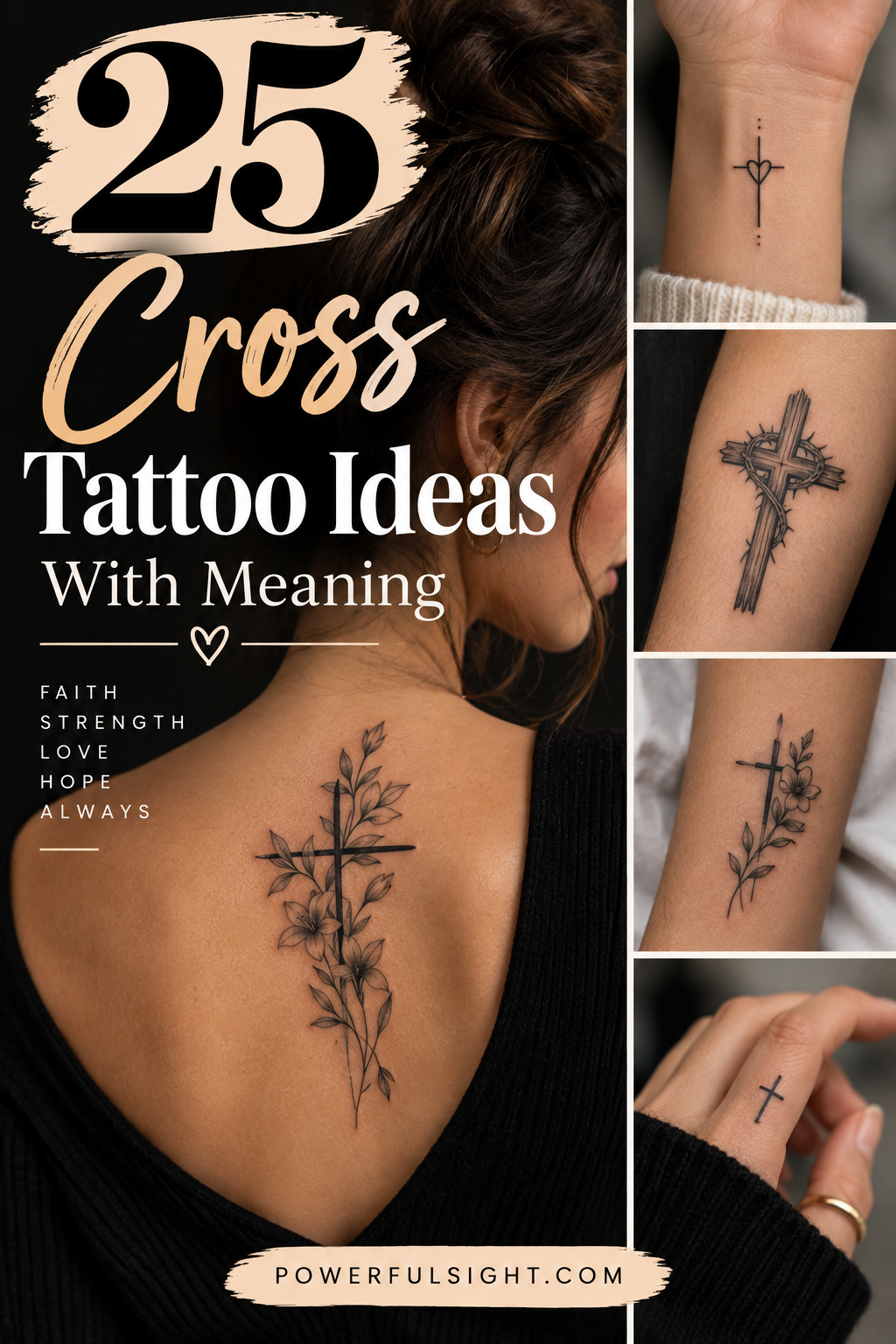
Save the pin for later

- 60 Color Tattoos That Healed Beautifully - 25/09/2026
- 40 Most Painful Tattoo Spots - 24/09/2026
- 20 Tattoo Aftercare Mistakes That Ruin Fresh Ink - 23/09/2026

