Turning 30 isn’t a deadline or a reason to follow extreme wellness rules. It’s a useful time to build simple habits that protect your energy, heart health, bones, mental well-being, and reproductive health.
This guide focuses on practical steps for movement, balanced meals, sleep, stress care, preventive visits, and age-based screenings, including health habits to start in your 30s. Your ideal routine may look different if you have a specific health history, take medication, are pregnant, plan to become pregnant, or have a family risk factor, so use these ideas as a starting point before personalizing them with your clinician.
Healthy Habits for Women Over 30 That Support Long-Term Health
A realistic health routine depends on small actions you can repeat, not strict rules you abandon after one difficult week. Build your plan around regular movement, balanced meals, restorative sleep, and care for your mental health.
For activity, adults should aim for 150 to 300 minutes of moderate exercise each week, or 75 to 150 minutes of vigorous exercise, plus muscle-strengthening work on at least two days. You can spread that time across the week and break it into short sessions. If you manage a medical condition, are recovering from an injury, or are pregnant, ask a health professional before making major changes.
Make movement easier with walking, short workouts, and strength training
Brisk walking is one of the simplest ways to increase your weekly activity. A 20-minute walk before work, a short walk after dinner, or a few extra laps during a lunch break can add up. Cycling, dancing, swimming, and active housework can also raise your heart rate without requiring a traditional gym routine.
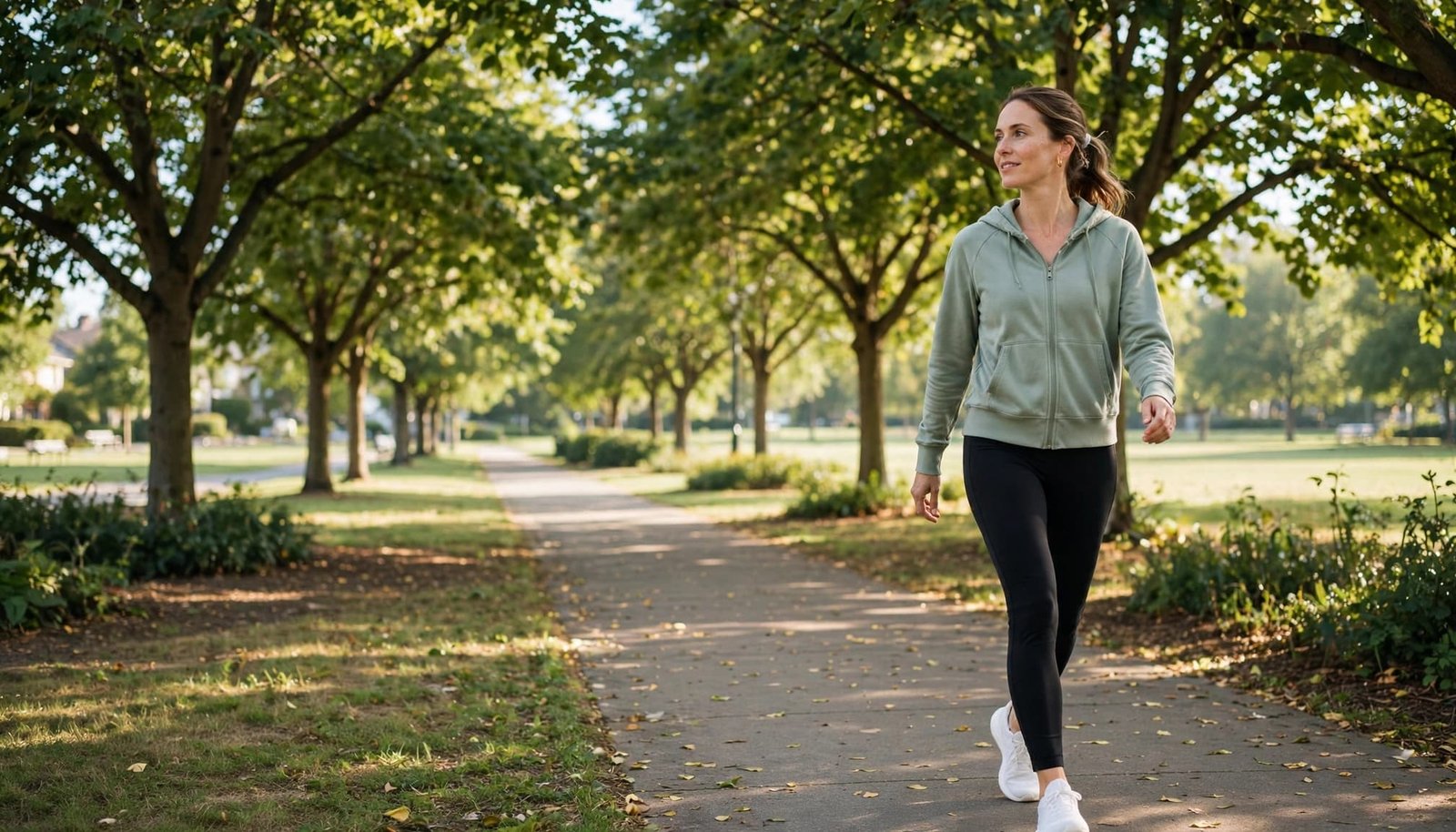
Short movement breaks matter when you spend much of the day sitting. Stand up every hour, stretch your hips and shoulders, walk while taking a phone call, or complete a few bodyweight exercises between tasks. The CDC’s adult activity guidelines support moving more throughout the day, even when you cannot complete a long workout.
Strength training helps you maintain muscle, support your joints, and make everyday tasks easier. Focus on exercises that use the major muscle groups, including:
- Squats or sit-to-stands for your legs and hips.
- Rows for your back and arms.
- Presses for your chest and shoulders.
- Lunges for your legs and balance.
- Carrying weights to challenge your grip, arms, core, and posture.
Start with manageable sessions, such as two 15-minute workouts each week. Use your body weight, resistance bands, or light dumbbells, and focus on controlled form before adding more resistance. Once the exercises feel comfortable, increase the time, repetitions, or weight slowly.
Eat for steady energy instead of chasing a perfect diet
Healthy eating after 30 doesn’t require eliminating favorite foods or following a rigid meal plan. A balanced pattern gives you room to enjoy different foods while providing the protein, fiber, vitamins, minerals, and healthy fats your body needs.
Build regular meals around vegetables, fruit, beans, whole grains, nuts, seeds, lean proteins, fish, and other protein choices. Add sources of healthy fat, such as avocado, olive oil, nuts, and seeds, to make meals more satisfying. Drinking water throughout the day can also support energy and concentration, especially during exercise or hot weather.
Flexible portions work better than labeling foods as good or bad. Your appetite may change with your activity level, menstrual cycle, stress, sleep, pregnancy, or breastfeeding. Allergies, digestive conditions, medications, and other medical needs can also affect your nutrition. If you want practical ideas for combining food, movement, and wellness goals, explore these balanced health goals for women.
Try keeping easy options available, such as Greek yogurt and fruit, bean soup, eggs with whole-grain toast, vegetables with hummus, or a grain bowl with fish or tofu. These choices can help you eat consistently when your schedule becomes busy.
Protect sleep and mental health as part of physical health
Sleep supports mood, concentration, immune function, and physical recovery. Keep a regular bedtime and wake time when possible, limit caffeine later in the day, and reduce screen use before bed. A cool, dark, comfortable bedroom can also make it easier to settle down.
Stress care should fit your actual life. A few slow breaths between meetings, a short journal entry, time outdoors, or a conversation with someone you trust can create useful pauses during a demanding week. Therapy can provide more structured support, while healthy boundaries may reduce the pressure that keeps your mind active at night.
Small habits become easier when you attach them to routines you already follow. You might stretch after brushing your teeth, walk after lunch, or write down tomorrow’s priorities before bed. For more ideas, see these self-care habits for better mental health.
Seek professional help if sadness, anxiety, burnout, or sleep problems continue, worsen, or interfere with daily life. Contact emergency services or a crisis line immediately if you have thoughts of self-harm. Asking for support is part of protecting your health, not a failure to manage it alone.
Preventive Care for Women Over 30: Screenings and Health Visits
Prevention is not only about reacting when symptoms appear. A yearly conversation with a primary care clinician helps you review risks before they become urgent problems. Your visit may include blood pressure, vaccines, cholesterol, diabetes risk, medications, family history, mental health, sexual health, and lifestyle goals.
Screening schedules are starting points, not permanent rules. Your clinician may adjust them based on symptoms, pregnancy, personal or family history, previous results, medications, and shared decision-making. Keep a record of your last screenings and bring questions to each appointment.

Stay on track with cervical cancer screening after age 30
For women ages 30 to 65 at average risk, the U.S. Preventive Services Task Force recommends three acceptable cervical cancer screening strategies:
- Cervical cytology, also called a Pap test, every three years.
- High-risk human papillomavirus (HPV) testing alone every five years.
- Co-testing with high-risk HPV testing and cervical cytology every five years.
These are alternative strategies, so you generally do not need all three tests during the same appointment. Ask which option fits your medical history, access to testing, and preference. The USPSTF preventive care recommendations provide the current screening intervals for average-risk adults.
Women ages 21 to 29 generally receive cervical cytology alone every three years. An abnormal result may require a different follow-up plan, such as repeat testing sooner, HPV testing, colposcopy, or another evaluation. The next step depends on the result, your age, previous results, and treatment history.
Some women need individualized guidance. For example, screening may differ after treatment for a high-grade cervical lesion, with certain immune conditions, or after a hysterectomy. A routine screening schedule also does not replace an appointment for unusual bleeding, pelvic pain, or other new symptoms.
Know when mammograms and bone health checks matter
The USPSTF recommends screening mammography every other year for women ages 40 to 74. Since breast cancer risk varies, your clinician may discuss earlier or more frequent screening if you have a strong family history, a genetic risk, dense breasts, a prior breast condition, or another concern. Your preferences also matter because screening involves both potential benefits and drawbacks.
Before menopause, you can support bone strength through habits that challenge your muscles and skeleton. Resistance training, brisk walking, stair climbing, jogging when appropriate, and other weight-bearing activities help maintain physical strength. Adequate calcium, vitamin D, and overall nutrition also support bone health.
Avoiding tobacco and moderating alcohol matter as well. If you have a history of fractures, low body weight, certain medical conditions, long-term steroid use, or early menopause, ask whether you need an earlier bone health assessment.
The USPSTF recommends osteoporosis screening for all women ages 65 and older. It also recommends screening postmenopausal women younger than 65 who have increased fracture risk. Your clinician may begin with a risk assessment and then recommend a bone density scan if your risk is elevated.
Keep sexual and reproductive health in the routine
A preventive visit gives you space to discuss contraception, pregnancy planning, fertility concerns, menstrual changes, painful sex, vaginal symptoms, and sexually transmitted infection testing. You can also ask about heavy bleeding, missed periods, new pelvic pain, or changes that affect daily life. Persistent cycle changes may deserve evaluation for conditions such as thyroid disease, endometriosis, or low estrogen. Learn more about when to get evaluated for low estrogen if you notice symptoms such as irregular periods, hot flashes, vaginal dryness, or reduced sexual desire.
Sexually active women ages 24 and younger should receive chlamydia and gonorrhea screening. Women ages 25 and older should be screened when they have increased risk, such as a new partner, multiple partners, a partner with an STI, inconsistent condom use, or another risk factor identified by a clinician. Testing may involve a urine sample or a vaginal, cervical, or throat swab, depending on the type of sexual contact.
Pregnancy and postpartum care also belong in this conversation. Moderate activity can remain part of pregnancy and postpartum routines for many women, but the right amount depends on health history, pregnancy complications, delivery recovery, and symptoms. Follow your clinician’s guidance, especially if you experience bleeding, dizziness, chest pain, painful contractions, fluid leakage, or shortness of breath. Planning ahead with important prenatal care appointments can help you address medications, vaccines, nutrition, and health conditions before or during pregnancy.
How to Turn Healthy Habits Into a Routine You Can Keep
A healthy routine becomes easier when you turn broad intentions into a few actions you can complete during a normal week. Instead of changing your meals, workouts, sleep schedule, stress habits, and appointments at the same time, choose one goal in four areas:
- One movement goal.
- One food goal.
- One sleep or stress goal.
- One preventive-care task.
This gives your week structure without making it feel like another full-time job. You can also find more ideas in these healthy consistency habits for women.
Use small weekly goals that fit your schedule
Choose actions that are clear enough to complete and small enough to repeat. For example, your movement goal could be a 10-minute walk after lunch on four days, or two 15-minute strength sessions before dinner. A food goal might be adding a vegetable to one meal each day, preparing a protein-rich breakfast twice, or keeping fruit and yogurt available for busy mornings.
Your sleep or stress goal should also match your current life. You might set a consistent bedtime on weeknights, turn off work notifications 30 minutes before bed, or take five slow breaths after brushing your teeth. For preventive care, you could call the office about a delayed screening visit, check your vaccination record, or write down questions for your next appointment.
Attach each action to something you already do. Walk after lunch instead of waiting for free time to appear. Complete strength exercises after changing out of work clothes. Add vegetables while preparing the meal you already planned. Place your appointment reminder next to your keys so you see it before leaving home.
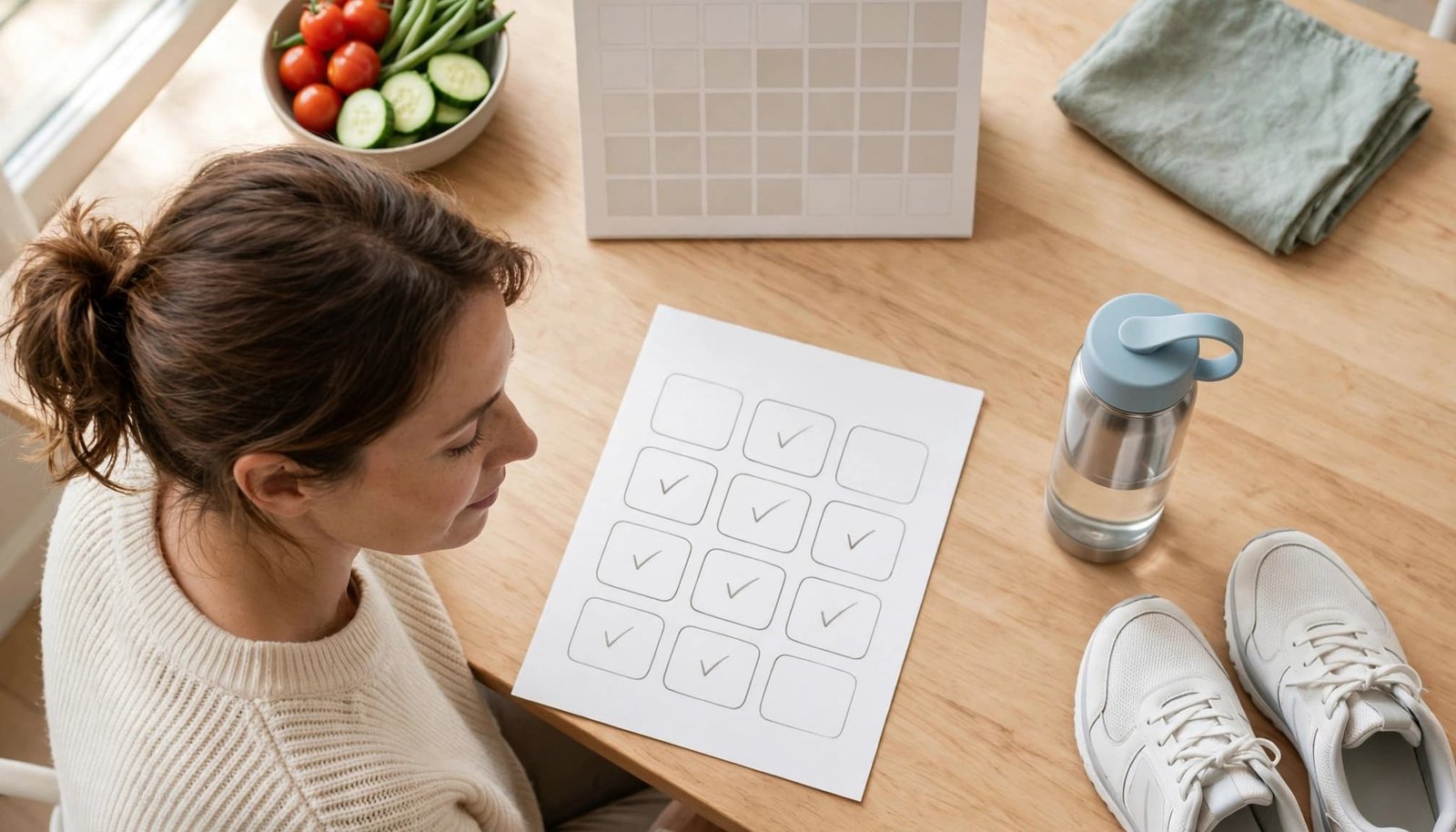
A simple weekly plan might look like this:
- Walk for 10 minutes after lunch on Monday, Wednesday, Thursday, and Friday.
- Add a vegetable to lunch or dinner each day.
- Start your bedtime routine at the same time on four nights.
- Call your clinician about a screening or follow-up visit.
Small actions repeated often are more useful than intense plans that leave you exhausted. You don’t need to complete a perfect workout or follow an elaborate meal plan to make progress. A routine that fits your real schedule has a better chance of surviving work deadlines, family needs, travel, and low-energy days.
Track your progress without turning it into a test of your worth. A calendar checkmark, a note in your phone, or a weekly reflection can show what worked. Record whether you completed the habit, not every calorie, step, or symptom unless a clinician has asked you to monitor those details.
Adjust your plan for changing seasons of life
Your best routine may change as your responsibilities and health change. A demanding job may leave less time for exercise. Caregiving may interrupt your sleep. Pregnancy, postpartum recovery, perimenopause, an injury, or a chronic condition may require different goals and a slower pace.
During a difficult season, create a minimum version of each habit. Instead of two full strength sessions, your minimum might be five minutes of gentle exercises. Instead of cooking every meal, you could keep frozen vegetables, canned beans, eggs, or prepared soups available. A consistent bedtime may mean protecting one earlier night rather than expecting perfect sleep every night.
Flexible goals help you stay connected to your routine without ignoring what your body needs. If pain increases, bleeding changes, fatigue becomes severe, or a new symptom affects daily life, pause the plan and speak with a qualified clinician. Pregnancy and postpartum recovery also deserve individualized guidance, especially when activity causes dizziness, chest pain, shortness of breath, bleeding, painful contractions, or fluid leakage.
Support can make healthy habits easier to maintain. Ask a partner to handle one household task while you exercise, invite a friend on a walk, use childcare during an appointment, or ask your clinician for a safer starting point. You don’t have to prove that you can manage every health responsibility alone.
A missed day doesn’t erase your progress. Restart with the next realistic opportunity, then reduce the goal if it keeps falling apart. For example, replace a 30-minute workout with 10 minutes, or schedule one strength session instead of two for the next week. Consistency comes from returning to the plan, not from avoiding every setback.
Conclusion
Healthy habits for women over 30 work best when they fit your real life. Move regularly, include strength training, eat balanced meals, protect your sleep and mental health, and keep preventive care current. For more guidance, review these strength training tips for women.
Choose one small action today, such as taking a walk, planning a healthier meal, or scheduling a checkup. Healthy habits build over time, while personalized medical advice should come from a qualified health professional.
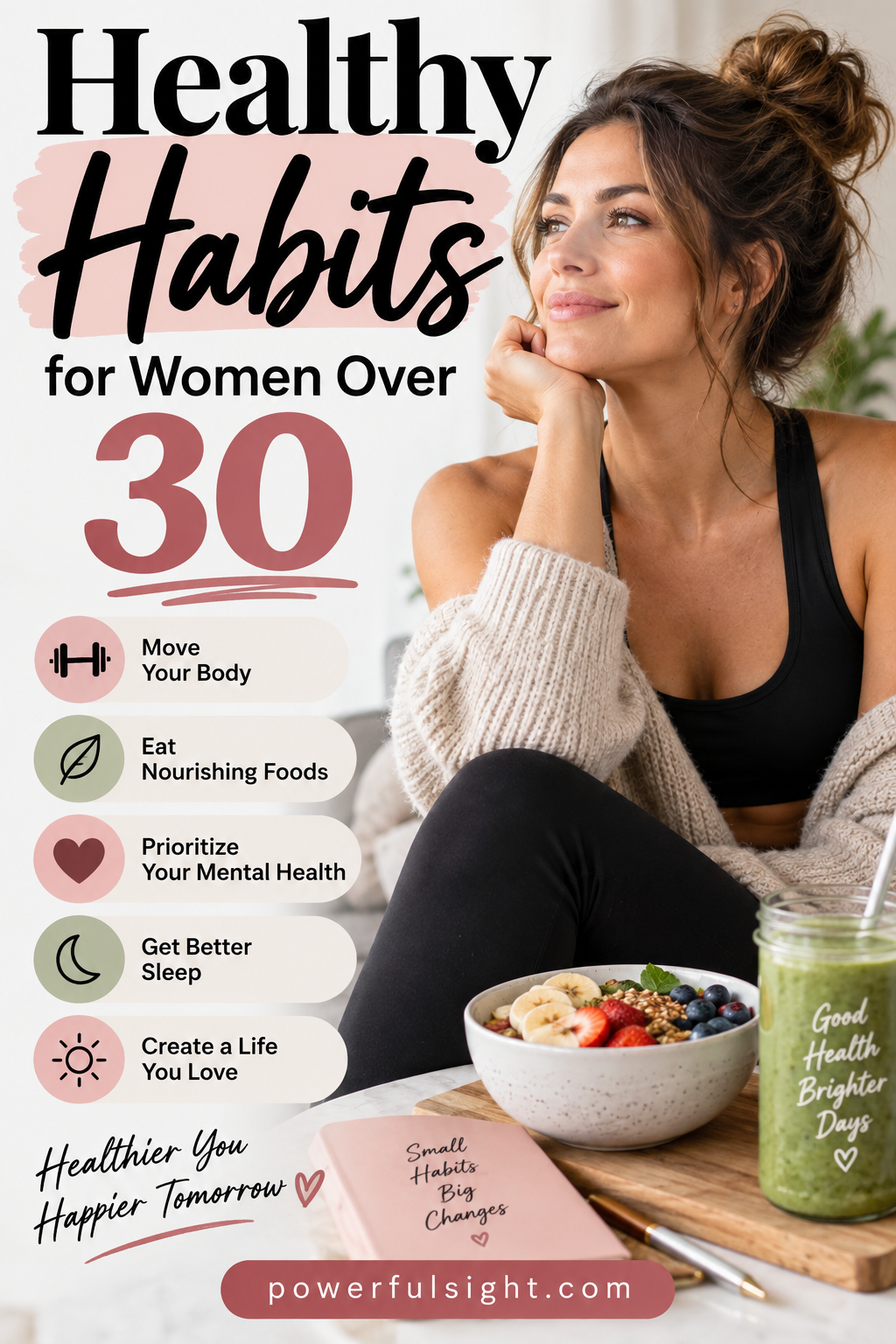
Save the pin for later

- Healthy Air Fryer Recipes for Beginners - 21/09/2026
- Healthy Snacks for Late Night Cravings - 21/09/2026
- High Protein Meal Prep Ideas for Easy Weekly Meals - 21/09/2026

