Fine line tattoos appeal to anyone who wants body art that feels light, clean, personal, and easy to style. A tiny flower, meaningful date, or simple symbol can carry deep meaning without taking over your look, especially when the design has enough space to remain clear as it heals.
These fine line tattoo ideas include botanical, celestial, symbolic, and minimalist designs, along with practical guidance on placement, sizing, fading, healing, and aftercare. You’ll also find helpful placement ideas for a delicate tattoo before choosing the design that suits you best.
Fine Line Tattoo Ideas for a Delicate and Modern Look
Fine line tattoos use thin, precise strokes with little or no heavy shading. Their clean appearance suits small symbols, graceful botanicals, and personal details, but the best design depends on your meaning, available space, skin movement, and artist’s experience.
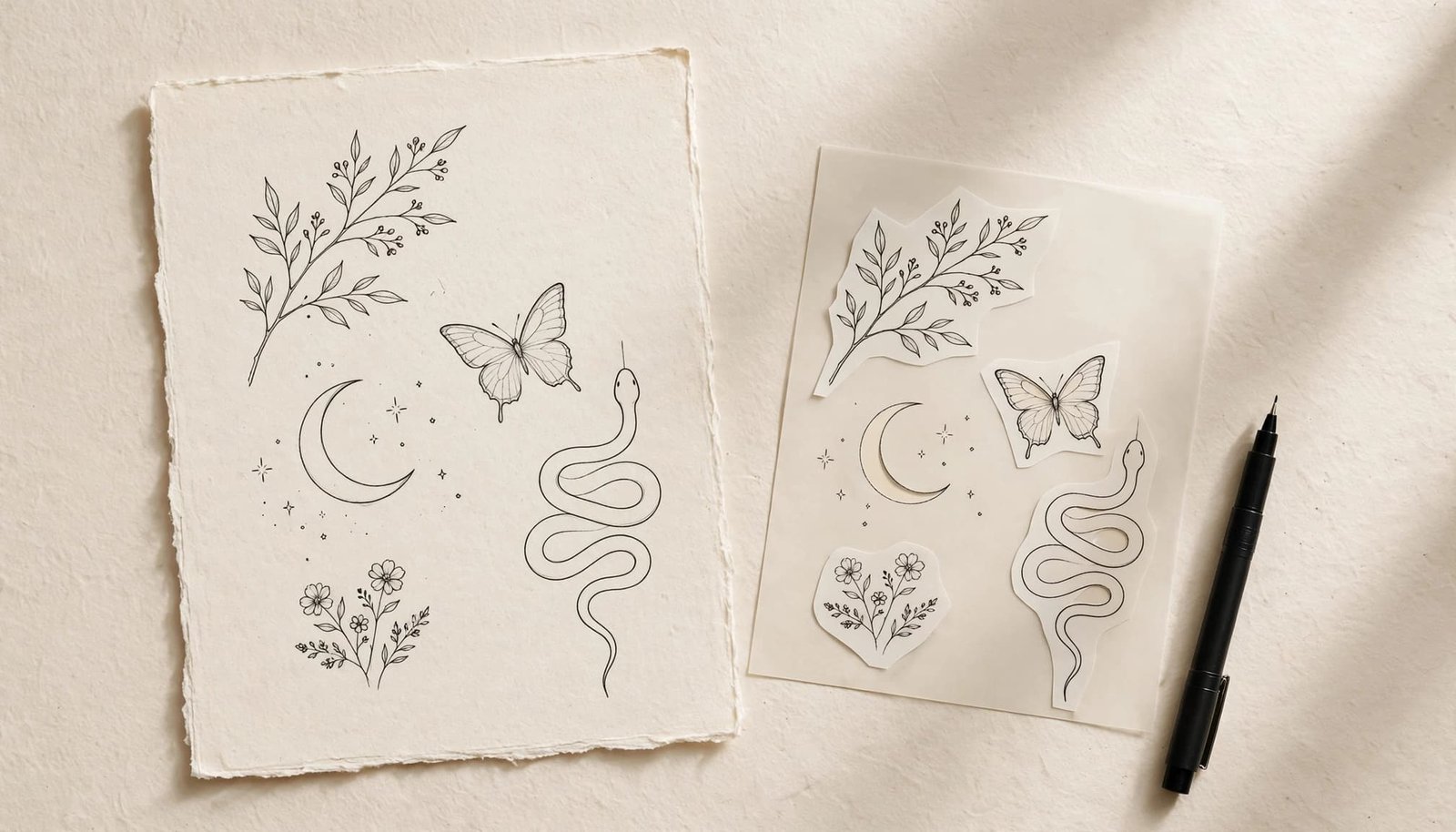
1. Tiny Wildflower, 2. Olive Branch, 3. Lavender Stem
A tiny wildflower can suggest growth, a favorite place, or a simple love of nature. An olive branch brings a slender, graceful shape that some people connect with peace, resilience, or family history. Lavender works well as a vertical tattoo on the forearm, rib, or ankle, with narrow leaves and small blossoms creating a soft silhouette. Keep botanical details open rather than tightly packed, since crowded lines can lose clarity as the tattoo ages.
4. Crescent Moon, 5. Sun and Moon, 6. Constellation
Celestial designs give you plenty of room for personal interpretation. A crescent moon may reflect change, intuition, or a nighttime memory, while a sun and moon pairing can symbolize balance between contrasting parts of life. A constellation becomes more personal when you choose stars connected to a birthday or meaningful location. These designs suit the collarbone, shoulder, back of the arm, and upper back, where the skin offers enough space for clean spacing.
7. Minimalist Heart, 8. Initial in a Circle, 9. Meaningful Date
A minimalist heart can honor self-love, a relationship, or someone you miss. For more inspiration, browse these delicate fine-line heart tattoos and consider which placement feels natural to you. An initial inside a fine circle keeps a loved one’s identity private, while a meaningful date turns an important memory into a discreet mark. Use simple numerals and leave room between characters so they remain readable.
10. Fine Line Butterfly, 11. Dragonfly, 12. Tiny Bee
A butterfly may represent personal change, freedom, or a new chapter, although its meaning is yours to define. Dragonflies create an airy design with slender wings and a narrow body, making them suitable for the wrist or shoulder. A tiny bee adds a compact natural motif that can suggest community, focus, or appreciation for the outdoors. Ask your artist to avoid excessive wing detail in very small versions.
13. Single-Line Snake, 14. Miniature Cat Silhouette, 15. Small Bird
A single-line snake curves naturally around the wrist, forearm, or ankle and can suggest renewal, strength, or a personal connection to the animal. A miniature cat silhouette makes a subtle tribute to a pet without requiring a realistic portrait. A small bird can represent independence, travel, or a person who encouraged you. Curved designs need careful placement because frequent bending can affect how their lines appear.
16. Mountain Outline, 17. Ocean Wave, 18. Tiny Sailboat
Mountain outlines work well for hikers, travelers, or anyone who associates peaks with a particular memory. A single ocean wave keeps the look modern while allowing meanings such as calm, movement, or emotional strength. A tiny sailboat adds a slightly more detailed scene and may recall a trip, a hometown, or a desire for freedom. These ideas often look best on the upper arm, ribs, or ankle.
19. Roman Numerals, 20. Paper Airplane, 21. Geometric Sun
Roman numerals can mark a private date, while a paper airplane offers a light symbol for travel, childhood, or taking a new direction. A geometric sun combines a clean circle with fine rays and can bring structure to a delicate design. Choose an artist who regularly shows healed fine line work, not only fresh tattoos. Thin ink can soften faster on high-friction areas, so compare your preferred idea with practical small ankle tattoo ideas before booking.
Fine line work still needs careful aftercare. Its delicate appearance doesn’t make it maintenance-free.
During healing, follow your artist’s written instructions, avoid picking or soaking the tattoo, and keep it out of direct sun. The American Academy of Dermatology’s tattoo guidance also recommends choosing a studio that follows proper sanitation and sterilization practices.
Where Fine Line Tattoos Look Best and Last Longer
Placement affects more than how visible your tattoo looks. It also changes your comfort during healing, how often the skin moves, and how well thin ink stays clear over time. Stable areas with less rubbing usually give fine line designs the best chance of aging well.
Best placements for comfort and longevity
The inner forearm, upper arm, shoulder, thigh, collarbone, and upper back are popular choices because they offer relatively smooth skin and enough room for clean spacing. These areas also make it easier to protect a healing tattoo from constant contact with shoes, watches, tight waistbands, or rough surfaces.
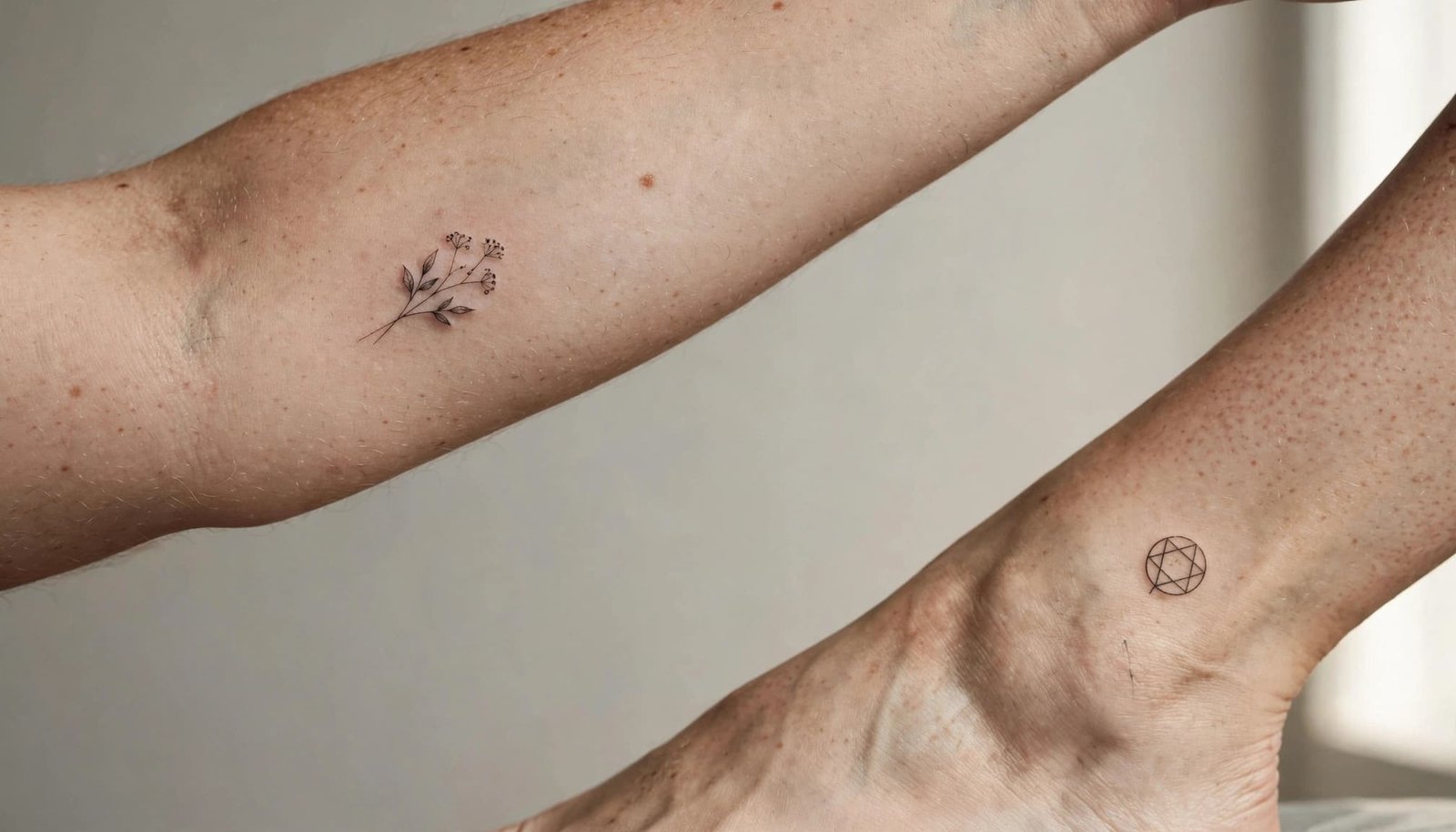
The inner forearm works well for vertical botanicals, dates, and small symbols. An upper-arm or shoulder tattoo can remain discreet under clothing while giving the artist a broader, steadier surface. Meanwhile, the thigh and upper back suit slightly larger designs because their shape allows more breathing room between lines.
The collarbone offers strong visibility, but the area can feel more sensitive because the skin sits close to bone. The ankle and wrist create attractive, easy-to-see placements, although they experience more movement and daily contact. For ankle inspiration, review these fine-line ankle tattoo placement ideas before choosing a design.
Areas that may fade or blur sooner
Hands, fingers, feet, elbows, knees, and parts of the wrist or ankle often need more maintenance. These areas bend, wash, sweat, and rub against clothing or footwear. Sun exposure adds another source of fading, especially on hands and feet.
Fingers are particularly demanding because the skin creases and experiences frequent contact with water, surfaces, and neighboring fingers. If you’re considering this location, these fine-line finger tattoo ideas can help you compare visibility with long-term wear. Shoes and socks create similar problems for foot and ankle tattoos, while elbows and knees stretch repeatedly as you move.
Thin ink usually holds best where skin experiences less friction, less bending, and less direct sun.
Match the design’s size and shape to the body area. A narrow stem suits the forearm or ankle, while a wider symbol needs the shoulder, thigh, or upper back. Avoid packing many tiny details into a very small space, since softened lines can merge as the tattoo ages.
During healing, keep the tattoo clean, avoid soaking and rubbing, and follow your artist’s instructions. Research published through the National Library of Medicine’s tattoo aftercare review also links sun exposure with premature fading and irritation during healing. Your skin, work routine, clothing, and activity level all matter, so the best placement is the one you can protect consistently.
How to Choose a Fine Line Tattoo Design That Fits You
The most personal fine line tattoo usually starts with a memory, not a trend. Before saving dozens of tattoo photos, ask yourself what you want to carry with you: a person, place, object, experience, or value. That answer gives your design a clear emotional center.
Start with meaning, then choose the visual style
Write down a few details connected to your idea. A childhood garden could become a specific flower, while a favorite hiking trail might inspire a mountain outline, tree, or small map coordinate. If you want to honor someone, consider an object associated with them instead of copying their name or handwriting.
Once you know the meaning, choose the style that fits it. A single flower may suit a clean botanical outline, while a memory connected to the ocean could work as a wave, shell, or tiny sailboat. You can also browse custom cross tattoo designs if faith or family history is part of your concept.
Create a reference folder with five to ten images. Save examples that show:
- The type of subject and symbolism you prefer.
- Line weight, spacing, and shading that appeal to you.
- Placements and sizes that look natural on the body.
- Details you want to avoid, such as heavy fill or crowded elements.
Use the folder to communicate direction, not to request an exact copy. Then ask your tattoo artist to create a custom sketch based on your meaning, body placement, and preferred level of detail.

Match line weight and scale to your skin
Fine line doesn’t always mean single needle. Artists may use different needle groupings and line weights to create detail that heals with better definition. Ask which needle configuration the artist recommends for your design, then review healed examples rather than judging only fresh tattoos.
Scale matters just as much as style. A tiny design cannot hold several petals, letters, stars, and shading areas without becoming crowded. Give each detail room to breathe, especially if you want lettering, dates, or intersecting geometric lines.
Black ink usually provides the clearest contrast, but limited color can work when the artist chooses shades that suit your skin. Skin tone affects how colors and fine lines appear after healing. Ask to see healed tattoos on skin tones similar to yours, particularly if you want pale colors, soft gray, or muted pastels.
A design that looks crisp on a fresh tattoo photo may soften after healing, so portfolio evidence matters more than a polished close-up.
Before booking, confirm the artist regularly creates fine line work and can show healed results several months old. Discuss the final size, line weight, placement, ink color, and likely touch-up needs during the consultation. A strong custom sketch should feel connected to your story while still remaining simple enough to age well.
Do Fine Line Tattoos Fade Faster? Care and Long-Term Expectations
Honest answer first: yes, fine line tattoos can fade faster and soften more visibly than bold, heavily shaded work. Thin strokes hold less ink, so when the skin sheds cells, heals over friction, or catches sun, the change shows sooner. That doesn’t mean your delicate wildflower will vanish in a year. It means design choices, placement, and daily habits carry more weight with fine line work than with a bold traditional piece.
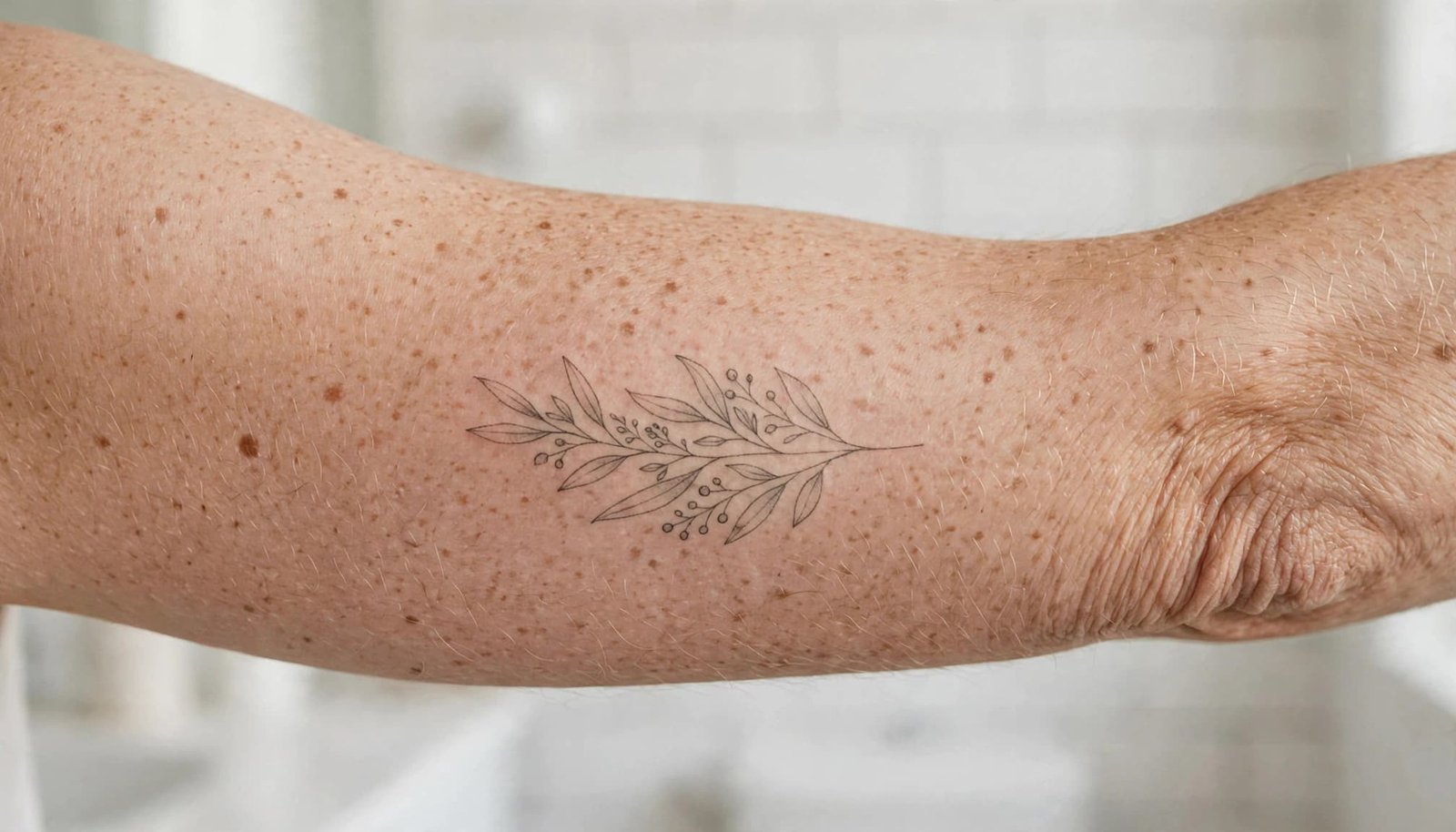
The same is true for other delicate styles. If you like airy, low-density work, dotwork tattoo aftercare tips cover similar ground, since small points and fine shading also lose contrast faster under careless rubbing or sun exposure.
What healing actually looks like
Expect some unevenness early on. A fine line tattoo may look patchy or faint during the first couple of weeks because your skin is shedding damaged cells and rebuilding its surface. Scabs and peeling can temporarily hide ink. This is normal, and many artists ask clients to wait before judging the result.
The tattoo continues settling for several weeks after the surface heals. Colors soften slightly, lines sharpen up in some spots, and the skin returns to its natural texture. Most healing takes one to three weeks for the surface, with deeper settling continuing for a month or more.
Aftercare that protects thin lines
Your artist’s instructions come first, because bandage types, ointments, and second-skin timing vary between studios. That said, most protocols share the same core steps:
- Wash gently with mild, fragrance-free soap and warm water, then pat dry with a clean towel.
- Apply a light layer of the recommended moisturizer so the skin doesn’t crack or itch.
- Never pick scabs or flaking skin, since pulling ink out early leaves pale gaps.
- Avoid soaking in baths, pools, and hot tubs, and skip direct sun while the skin is open.
- Wear loose clothing over the area to prevent friction.
Once the skin has fully healed, the American Academy of Dermatology’s tattoo care guidance recommends a broad-spectrum, water-resistant sunscreen of SPF 30 or higher, applied before sun exposure and reapplied every two hours. Do not put sunscreen on healing skin; protect it with shade or clothing until it closes completely.
A fine line tattoo lives or dies on sun protection. UV light fades thin strokes faster than any other factor you control.
Warning signs that need a medical opinion
Some redness and tenderness are normal in the first days. Contact a doctor if you notice spreading redness, worsening pain, heat around the tattoo, pus, fever, swollen lymph nodes, or a rash near the design. The Cleveland Clinic’s guide to tattoo infection lists these as signs that need treatment rather than wait-and-see care. Skin that changes color, bumps up, or reacts to certain ink shades also deserves a professional look.
With steady care, a well-placed fine line tattoo stays readable and elegant for years. Expect softening, plan touch-ups if you want them, and treat the aftercare phase as seriously as the design itself.
Conclusion
Fine line tattoos offer a flexible way to wear meaningful art with a clean, modern finish. A tiny wildflower, a private date, or a single-line symbol can carry real weight without demanding attention.
The strongest choice balances personal meaning with a clear design, suitable placement, an experienced artist, and honest expectations about fading. When those pieces line up, delicate ink ages beautifully. For more inspiration on placements that suit thin lines, browse these fine-line spine tattoo designs.
Save a few favorite ideas, then refine the concept with a professional tattoo artist who can show healed work. Above all, choose patient aftercare over rushing the healing process.
Save the pin for later


- 25 Gothic Tattoo Ideas for a Bold, Dark Look - 21/09/2026
- 34 Black Fine Line Tattoo Ideas for a Delicate Look - 21/09/2026
- 23 Micro Tattoo Ideas for Women With Meaning - 21/09/2026

