Dotwork tattoos appeal to women who want detailed, delicate, or meaningful body art without large blocks of solid ink. Instead of relying on smooth filled shading, this style uses carefully placed dots to create depth, texture, patterns, and soft transitions that can suit both subtle pieces and bold statement designs.
The 30 ideas ahead include floral sprigs, geometric mandalas, ornamental accents, celestial symbols, animals, and minimalist designs.
You’ll also find practical guidance on sizing, placement, symbolism, choosing an experienced artist, and basic aftercare, so your design feels personal and fits your everyday life. For more inspiration, browse these meaningful tattoo ideas for women before settling on a concept.
Start by exploring the dotwork styles that can make each tattoo look softer, darker, airier, or more graphic.
30 Dotwork Tattoo Ideas for Women That Feel Personal and Stylish
Dotwork designs can shift from soft and delicate to bold and graphic through size, spacing, color, and dot density. Any idea below can become subtle black-and-gray ink, a colorful statement, or a stronger piece with darker shading.
Floral and Botanical Dotwork for a Soft, Natural Look
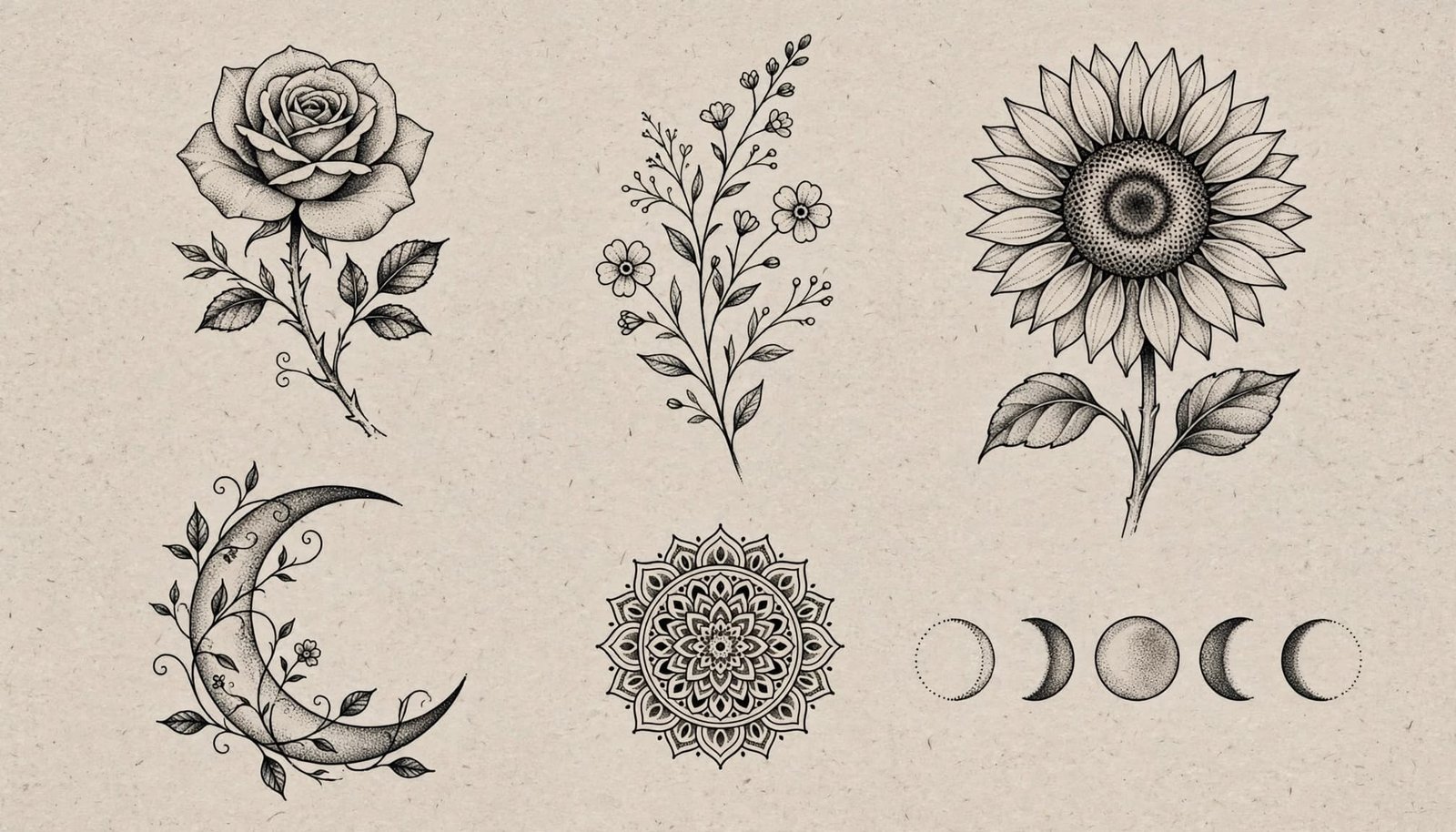
Botanical tattoos work well with stippling because closely placed dots create soft petals, gentle shadows, and realistic texture without heavy fill. Consider the best tattoo placements for women before choosing a final size.
- A fine-line rose with stippled petals suits the collarbone or forearm. Dense dots can shade each fold, while the flower may suggest love, healing, or a personal memory.
- A wildflower sprig fits the ankle, wrist, or behind the ear. Small clusters and scattered dots create an airy look connected to growth, freedom, or a love of nature.
- A sunflower with a dotted center works beautifully on the shoulder or upper arm. Concentrated stippling adds seed texture, while the bright motif may express confidence, warmth, or optimism.
- A crescent moon filled with vines can curve along the ribs or hip. Leaves soften the shape, and the design may reflect change, renewal, or a private connection to nighttime.
- A botanical shoulder piece can combine leaves, stems, and small flowers around the shoulder cap. Layered dot shading gives it dimension, while the subject may honor growth, healing, or an important season of life.
- A delicate lavender or eucalyptus stem looks refined on the forearm, ankle, or behind the ear. Light stippling creates a natural texture that may recall calm, remembrance, or time spent outdoors.
Mandalas, Sacred Geometry, and Ornamental Patterns
Mandalas depend on balance, repeated dots, negative space, and graduated shading. Curved areas such as the sternum, shoulder blade, spine, and hip help symmetrical patterns follow the body naturally. For chest inspiration, browse these sternum tattoo ideas for women.
- A small wrist mandala should use clean, simple shapes so its details remain readable. It can feel centered and calming without taking over the wrist.
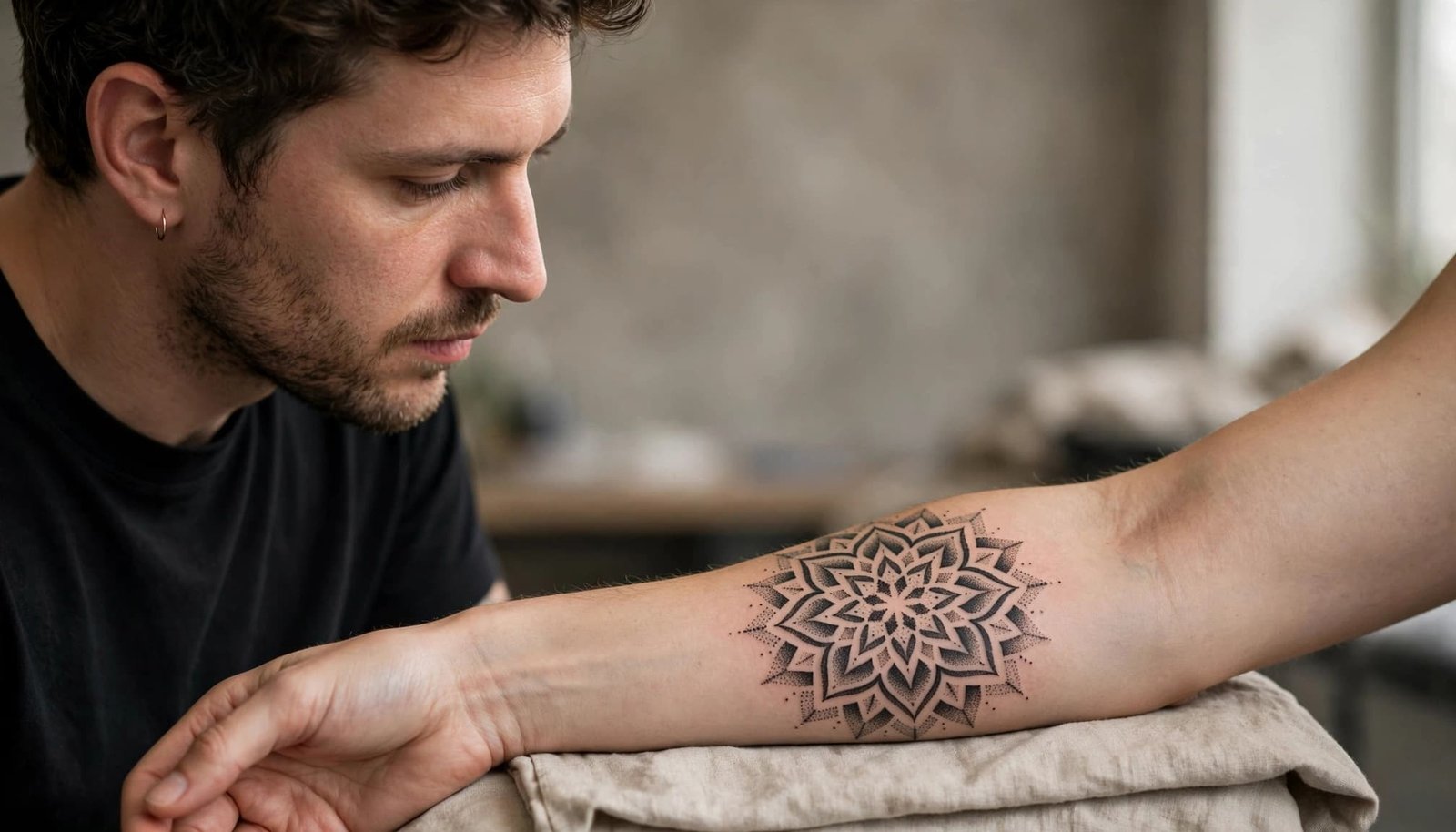
- A detailed forearm mandala allows several rings of petals and graduated shadows. Its structure may suggest focus, balance, or personal order.
- A geometric flower combines pointed petals with evenly spaced dots. Place it on the shoulder blade or thigh for a polished design that can express individuality.
- A sacred-geometry triangle suits the forearm, ribs, or upper back. Repeating circles and open skin create a thoughtful symbol of direction, connection, or curiosity.
- An ornamental sternum chandelier can taper from a central jewel-like shape toward the abdomen. Symmetry and soft stippling create an elegant focal point.
- A lace-inspired under-breast design follows the curve beneath the chest. Fine dots and negative space keep it light, personal, and decorative.
- A symmetrical spine ornament can stretch from the upper back toward the waist. Its vertical rhythm may feel grounding, while larger sizing preserves the fine details.
- A sunburst mandala fits the shoulder, hip, or upper back. Radiating dots create movement and may suggest confidence, energy, or a fresh beginning.
Small mandalas need restraint, while larger designs give the artist room for sharper geometry and richer shading. Hip designs can also be adapted from these women’s hip tattoo ideas.
Celestial and Mystical Dotwork Designs
Stippling can create a starry night effect and soft gradients without relying on solid black fill. Celestial symbols may suggest change, intuition, dreams, protection, or curiosity, but their meaning belongs to the person wearing them.
- A sun and moon pair works on the upper arm or collarbone. Their contrast may represent balance, duality, or two important sides of your identity.
- A constellation with tiny stars fits the ribs, ankle, or shoulder. Fine dots can reference a birth sign, a favorite sky, or a meaningful point in time.
- A moon-phase band looks elegant around the forearm or upper arm. Repeated phases may express change, patience, or acceptance of life’s cycles.
- A moon-and-forest circle suits the thigh or upper back. Layered trees inside a dotted moon create a private scene connected to dreams or nature.
- A cosmic eye can sit on the forearm or shoulder blade. Dotted rays and star points may suggest intuition, awareness, or protection.
- A planet with orbit lines fits the ankle, wrist, or collarbone. Its compact shape can express curiosity, imagination, or interest in astronomy.
- A celestial snake wrapped around a crescent works best on the thigh, ribs, or upper arm. The pairing may reflect transformation, instinct, protection, or personal power.
Animal, Insect, and Minimalist Dotwork Tattoos
Animal portraits and wings usually need more space than simple symbols. Use the wrist, finger, ankle, or behind the ear for compact designs, while the forearm, shoulder, calf, and thigh suit larger compositions.
- A butterfly with dotted wings fits the forearm or shoulder. Graduated dots may express transformation, freedom, or a new chapter.
- A moth with a moon works well on the upper arm, ribs, or thigh. Its night imagery may connect with intuition, dreams, or quiet strength.
- An owl with geometric details needs the forearm or calf for clear eyes and feathers. It may suggest wisdom, observation, or a love of learning.
- A koi fish in a circular composition suits the thigh or shoulder blade. Flowing scales and water dots can symbolize perseverance, movement, or a meaningful journey.
- A small elephant works on the ankle, wrist, or behind the ear. Its compact outline may carry ideas of loyalty, memory, family, or gentle strength.
- A fox portrait belongs on the forearm, upper arm, or calf. Fine facial shading can suggest independence, adaptability, or a connection to cleverness.
- A phoenix needs the thigh, back, or shoulder for readable feathers and a full wing shape. It may express resilience, recovery, or a personal rebirth.
- A hummingbird looks graceful on the collarbone, forearm, or shoulder. Dotted wings create motion, while the motif may evoke joy, freedom, or cherished energy.
- A minimalist heart or abstract symbol made from dots suits the finger, wrist, ankle, or behind the ear. Its simplicity leaves room for your own meaning, whether that involves love, identity, remembrance, or a private promise.
Before booking, ask about ink brands and studio hygiene. The FDA’s tattoo safety guidance also recommends knowing what ink is used and watching for unusual healing reactions.
How to Choose the Right Dotwork Tattoo Style and Placement
The best dotwork tattoo balances your personal style, desired visibility, body shape, and the amount of detail you want to preserve. Before choosing a design, decide whether you prefer a quiet symbol, decorative ornament, natural imagery, or a realistic subject with layered shading.
Match the Style to Your Personal Taste
Each dotwork style creates a different impression:
- Minimalist dotwork works well if you prefer subtle tattoos with clean outlines and plenty of open skin. Small hearts, stars, initials, and abstract symbols suit the wrist, ankle, finger, or behind the ear.
- Floral dotwork feels softer and more organic. Stippled petals and leaves work beautifully on the forearm, shoulder, collarbone, or thigh.
- Geometric dotwork depends on precision, repetition, and symmetry. Mandalas, triangles, and sacred-geometry patterns need a placement that gives the artist enough room to keep every line balanced.
- Ornamental dotwork creates a jewelry-like effect around the sternum, spine, hip, or upper back. Larger designs allow decorative borders and graduated shading to remain clear.
- Celestial dotwork suits people drawn to moons, stars, planets, and sun symbols. These designs can stay small and delicate, or expand into a larger night-sky composition.
- Realistic dotwork needs more space because faces, feathers, wings, and animal features depend on subtle tonal changes. A forearm, calf, shoulder blade, or thigh usually offers better readability than a tiny placement.
Your reference images can show an artist the mood, scale, and technique you like. However, ask for an original design rather than copying another person’s tattoo. A skilled artist can combine your preferred details with a composition that fits your anatomy.
Choose a Size That Will Stay Readable
Small tattoos are discreet and easy to cover, but extreme detail can blur together as the ink settles and the skin changes over time. Keep tiny designs simple, with strong spacing between dots and enough negative space around the main shape.
Medium tattoos offer a useful balance. A forearm flower, collarbone constellation, or shoulder mandala can include texture without becoming difficult to read. Large pieces provide the most room for realistic shading, ornate borders, and smooth transitions. They also require more planning because the design must follow the body’s movement.
Fine details need physical space. If every element feels crowded on the stencil, the finished tattoo may look unclear later.
Let Placement Guide the Final Design
Visible areas such as the forearm and collarbone make it easy to enjoy your tattoo and show it with short sleeves or open-neck clothing. They also receive more sunlight, so consistent protection matters. The American Academy of Dermatology explains that tattoos can develop sun-related skin reactions, including reactions that return when sunlight reaches the inked area, so consider your daily exposure before choosing an uncovered placement (tattoo skin reaction guidance).
Private areas, including the ribs, sternum, hip, and upper thigh, offer more control over when others see the design. However, ribs and sternum tattoos often feel more intense because the skin sits close to bone. Waistbands, bras, and tight clothing can also create friction during healing. The hip and upper thigh usually provide more padding, while the body’s curves may require an ornamental design to bend rather than remain perfectly flat.
Movement affects symmetry as well. A mandala may look centered while standing but shift slightly when the shoulder rotates or the hip bends. Ask your artist to apply the stencil in your natural posture, then check it while sitting, standing, and moving. For larger back pieces, review lower back tattoo ideas for women to compare symmetry, spacing, and clothing coverage before booking your appointment.
What to Know Before Booking a Dotwork Tattoo Artist
Choosing a dotwork artist takes more than finding a design you like on social media. This technique depends on consistent spacing, controlled shading, and patience, so the artist’s portfolio should match the level of detail you want. Before you book, review healed work, inspect the studio’s safety practices, and discuss how your design will fit your skin and daily life.
Review Healed Dotwork, Not Only Fresh Tattoos
Fresh tattoos often look darker and sharper than they will after healing. Healed photos show whether the dots stayed distinct, whether fine lines softened too much, and whether the shading still has a smooth gradient. Ask to see healed examples that resemble your preferred size, subject, and placement.
Look closely for:
- Clean, even dot spacing without random gaps or crowded patches.
- Smooth transitions from dark shading into open skin.
- Balanced symmetry in mandalas, ornaments, and geometric patterns.
- Fine lines that remain clear instead of looking shaky or overly thick.
- Enough contrast for the design to stay readable as the tattoo ages.
A strong portfolio should include more than one successful piece. If an artist only posts fresh tattoos, avoids questions about healed results, or shows little dotwork experience, keep looking. You can also review what getting a tattoo feels like to prepare for how size and placement may affect your session.
Check Studio Safety and Plan the Consultation
Confirm that both the artist and studio follow local licensing, inspection, and hygiene rules. Requirements vary by state and county, so check your local health department rather than relying on a studio’s social media claims. For example, West Virginia requires tattoo studios to obtain an operational permit through the local health department, while Florida requires tattoo establishments to hold a license. You can review your area’s rules through its official public-health office or compare them with tattoo studio permit guidance.
During a visit, look for sealed, single-use needles, fresh gloves, protected surfaces, and single-use ink caps. Reusable equipment should go through proper sterilization, not a quick wipe. If the artist dismisses hygiene questions or refuses to show unopened supplies, leave.
Dotwork may take longer than a simple solid-ink design because the artist builds tone point by point. A small piece can still require several hours, while a larger mandala may need multiple sessions. During your consultation, discuss:
- How small the details can be before they lose clarity.
- The minimum size the artist recommends for your design.
- How the placement, skin tone, and contrast will affect the final look.
- Whether the dots and fine lines are likely to age well in that location.
- How long the session may take and whether breaks are available.
- Whether touch-ups are included, and when one may be needed.
- Whether pricing is hourly, flat-rate, or based on session time.
Rates vary by location, artist, design size, and appointment length, so ask for an estimate instead of expecting a fixed price. Bring reference images, but let the artist adapt the composition to your anatomy. A good consultation should leave you with a clear design plan, realistic timing, and confidence in the studio.
Dotwork Tattoo Aftercare and Long-Term Care Tips
Proper aftercare helps your dotwork tattoo heal cleanly and keeps its fine shading easier to read over time. Because dotwork depends on small points and open skin, careless rubbing, heavy scabbing, or prolonged sun exposure can affect the design’s contrast.
Care for Your Tattoo While It Heals
Your tattoo artist’s written instructions should come first, especially because bandage types and recommended products vary. Follow their guidance for removing the covering and beginning your cleaning routine.
Before touching the tattoo, wash your hands thoroughly with soap and water. Then gently clean the area with lukewarm water and mild, fragrance-free soap. Don’t scrub, use a washcloth, or direct a strong shower spray at the skin. When you’re finished, pat the tattoo dry with a clean paper towel or a freshly washed towel.
Apply only the amount of aftercare product your artist recommends. A thin layer is usually enough once the tattoo begins to feel dry. Too much ointment can trap moisture and irritate the skin, while fragranced products may cause stinging or redness. These tattoo aftercare tips for full-back designs are also useful when caring for larger pieces that take longer to heal.
While the surface remains tender or peeling, avoid:
- Picking scabs or pulling away loose flakes.
- Scratching the tattoo, even when itching becomes distracting.
- Swimming in pools, lakes, oceans, or hot tubs.
- Soaking in a bath or spending time in a sauna.
- Wearing tight clothing that repeatedly rubs the area.
- Exposing fresh skin to strong sunlight.
Showers are generally acceptable, but keep the tattoo out of prolonged water. Wait until the skin has fully closed and healed before swimming or applying sunscreen directly to it. If redness spreads, pain worsens, swelling increases, or you notice pus, fever, foul-smelling drainage, or an unusual rash, contact a healthcare professional.
Protect Healed Dotwork for the Long Term
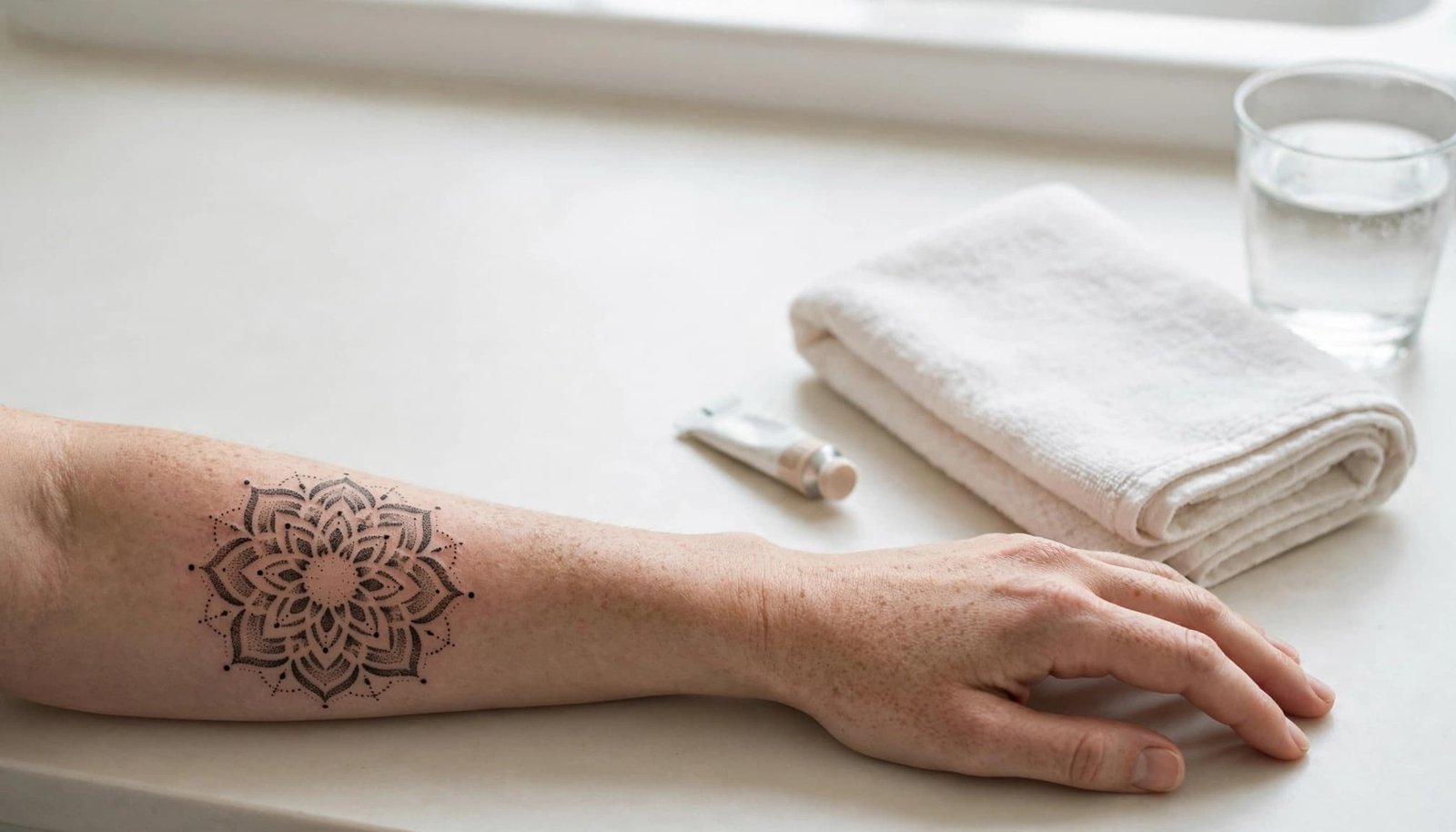
A healed dotwork tattoo can look softer than it did on the first day. Mild fading and settling are normal, but regular sun exposure can reduce contrast faster, especially in delicate designs with light spacing. Once the skin has healed completely, apply a broad-spectrum, water-resistant sunscreen rated SPF 30 or higher when the tattoo will be outdoors. Covering the area with clothing and choosing shade also helps.
Daily friction matters too. Finger, wrist, ankle, and waistband placements may experience more rubbing than tattoos on the upper arm or thigh. Keep the skin moisturized with a gentle, fragrance-free product if it becomes dry, and avoid harsh exfoliation directly over the tattoo.
Some dotwork tattoos may need a touch-up, particularly when they contain tiny details or sit in areas exposed to friction. Don’t schedule one while the tattoo is still peeling or tender. Let the tattoo heal fully, then ask the original artist whether any softened dots or light areas need attention.agext
Conclusion
The best dotwork tattoo combines a meaningful idea with a design that suits the chosen body area. Delicate botanicals and minimalist symbols can create a subtle look, while bold mandalas, ornamental sternum tattoos, animals, and celestial scenes allow for more detail and visual weight.
Choose a size that gives every dot, line, and shaded area enough room to stay readable. Placement also affects visibility, friction, comfort, and long-term care, so review options such as dotwork spine tattoo designs before making a final decision. An experienced dotwork artist can adapt your concept to your anatomy and recommend spacing that supports the finished design.
Take time to personalize the subject, scale, and placement instead of choosing a design based only on a current trend. The right tattoo should feel like your own and still feel right as your style and life change.
Save the pin for later

- 60 Color Tattoos That Healed Beautifully - 25/09/2026
- 40 Most Painful Tattoo Spots - 24/09/2026
- 20 Tattoo Aftercare Mistakes That Ruin Fresh Ink - 23/09/2026

