Lion tattoos remain popular with men and women because their bold appearance can carry many personal meanings. A lion may represent courage, strength, leadership, protection, family loyalty, or quiet confidence, while the design itself can range from dramatic to subtle.
The 30 lion tattoo ideas below include realistic portraits, lionesses, lion-and-cub family tattoos, minimalist outlines, geometric compositions, and symbolic combinations featuring crowns, roses, clocks, or other meaningful elements. You’ll also find inspiration for lion and cub tattoo ideas that express love, protection, and family bonds without assigning certain styles to one gender.
The best choice depends on the message you want to express, along with your preferred style, tattoo size, body placement, and desired level of detail. A highly detailed portrait needs more room than a fine-line outline, while a small tattoo may work better with simple shapes and open space. Consider where to place a tattoo before settling on a design, then explore these ideas to find a lion tattoo that feels personal and practical.
What Does a Lion Tattoo Mean for Men and Women?
A lion tattoo can express courage, strength, leadership, protection, pride, wisdom, independence, family loyalty, survival, or personal growth. These meanings apply to anyone, regardless of gender. The design becomes personal through the lion’s expression, pose, size, and surrounding symbols.
Lion symbolism often centers on controlled power rather than aggression alone. A tattoo may remind you to face difficulty, protect the people you love, or trust your ability to rebuild after a major change. Traditional lion symbolism also commonly connects the animal with courage and bravery, as explained in this guide to lion symbolism.
Common Lion Tattoo Meanings
A lion’s expression can change the message immediately. A roaring lion suggests active courage, confidence, and the willingness to defend your values. It may suit someone who has overcome fear or wants a daily reminder to speak up.
By comparison, a calm or resting lion can suggest patience, wisdom, and quiet confidence. The lion doesn’t need to show aggression to appear strong. Its stillness may represent self-control, emotional maturity, or the ability to wait for the right moment.
Many people choose a lion tattoo to represent:
- Strength, including physical power and inner resilience.
- Leadership, self-discipline, and responsibility.
- Protection, especially toward family, friends, or personal values.
- Pride and dignity, without suggesting arrogance.
- Independence, self-trust, and freedom from outside approval.
- Survival, after illness, loss, trauma, or another difficult period.
- Personal growth, confidence, and a new stage of life.
A lion may also symbolize family because lions are associated with pride and group loyalty. For related inspiration, explore these family tattoo ideas for dads, especially if your design honors a child or protective family bond.
What Different Lion Designs Represent
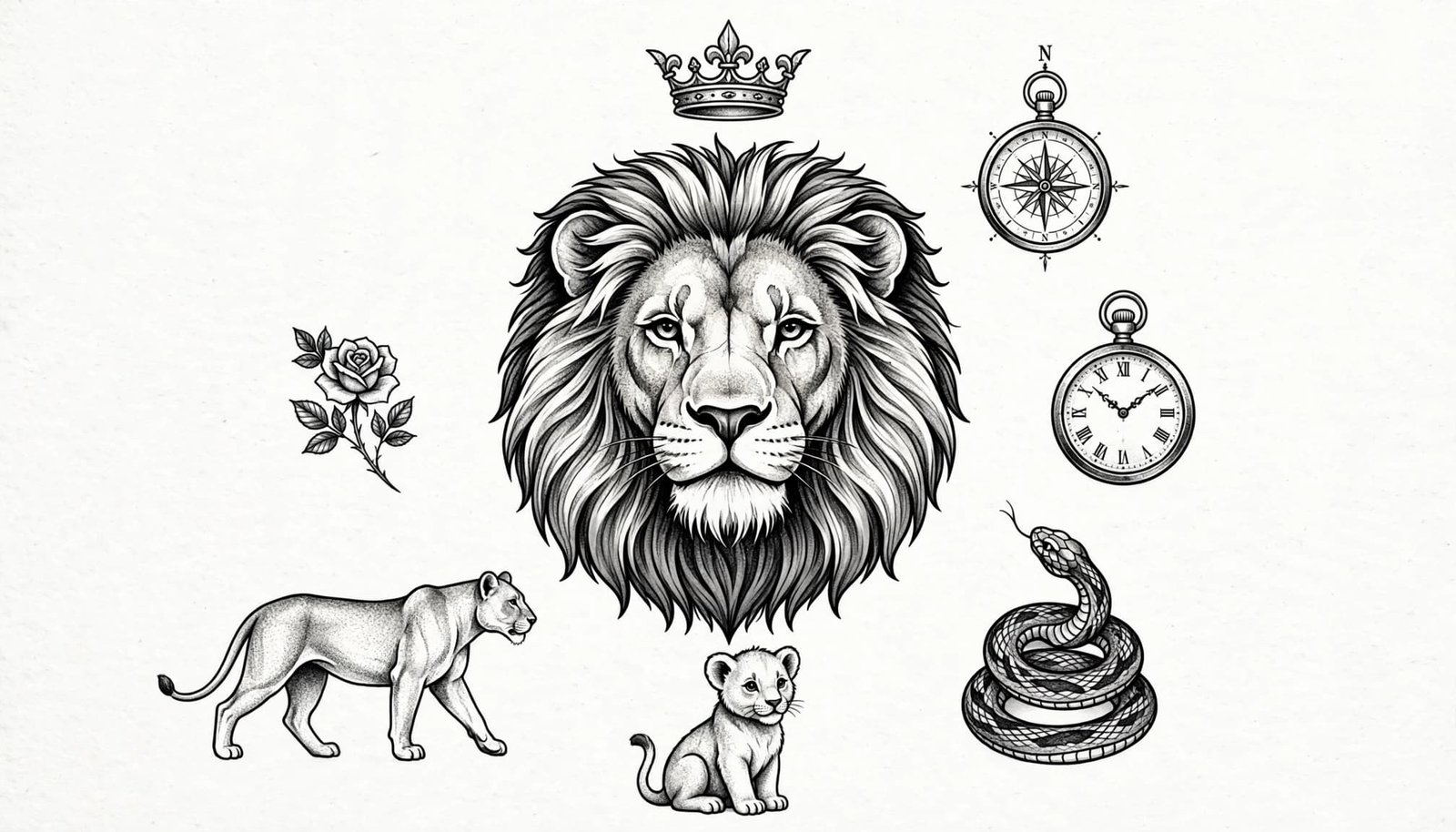
A lioness tattoo often expresses fierce protection, motherhood, independence, and feminine strength. However, women aren’t the only people who choose lioness designs. Anyone may use one to honor a strong mother, partner, guardian, or personal identity.
A lion and cub tattoo usually suggests family love, guidance, protection, and devotion to children. It can honor a parent-child relationship or symbolize the part of you that still needs care and reassurance.
A crowned lion emphasizes royalty, authority, leadership, and self-rule. It may represent taking control of your choices after allowing other people to direct your life.
A lion with a rose creates a softer contrast between strength and love, beauty, vulnerability, or remembrance. A lion with a snake may suggest danger, transformation, conflict, or the balance between control and instinct.
A lion with a clock or compass can connect strength with time, direction, and purpose. The clock may honor a major turning point, while the compass can represent guidance or staying true to your path. Finally, a half-face lion often expresses duality, such as human identity paired with instinct, softness balanced by strength, or a private side contrasted with a confident public self.
No symbol has only one fixed meaning. Your lion tattoo can tell a story that looks familiar to others but remains entirely yours.
30 Lion Tattoo Ideas for Men and Women
Lion tattoos can look bold, delicate, personal, or symbolic. Choose the design according to your message, available space, and how much detail you want the tattoo to hold over time.
Realistic and Powerful Lion Portraits
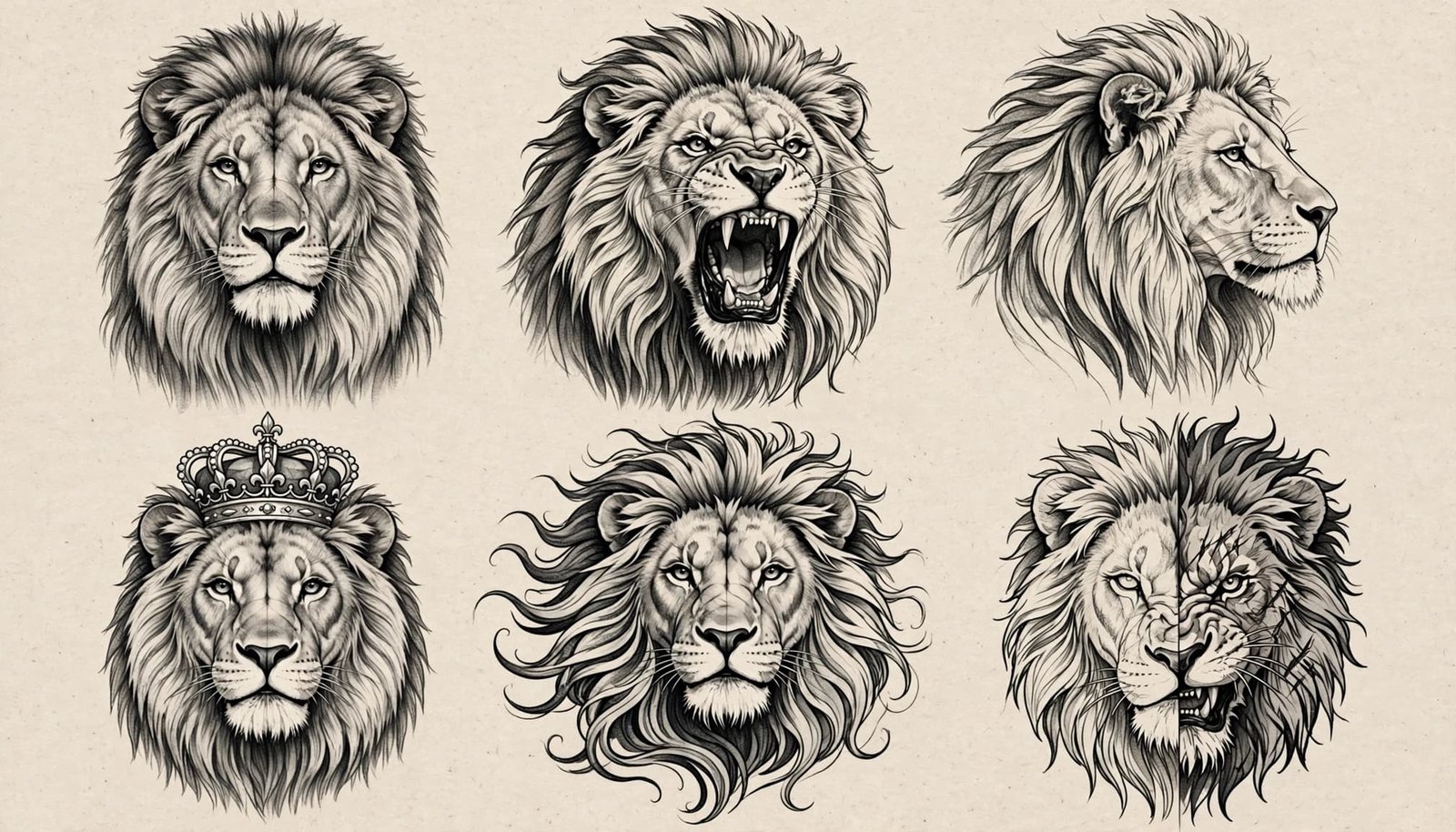
Realistic lion faces need room for clear eyes, noses, whiskers, and mane texture. Upper arms, shoulders, chests, forearms, thighs, and backs usually suit larger portraits.
- A black-and-gray lion head uses layered shading to express strength, wisdom, and quiet confidence. It suits anyone who wants a classic tattoo on the upper arm, chest, or thigh.
- A roaring lion portrait shows teeth, movement, and a raised mane. The expression suggests active courage and protection, especially in a large chest, back, or shoulder design.
- A calm lion in profile creates a more thoughtful mood. Its relaxed eyes can symbolize patience, emotional control, and confidence without aggression.
- A crowned lion adds ideas of leadership, authority, and self-rule. Place it on the upper arm, chest, or back, then customize the crown with simple or ornate details.
- A lion with a bold mane focuses on sweeping hair, deep shadows, and a strong silhouette. Heavier line weight can make the mane feel powerful, while softer shading creates a gentler result.
- A split-face lion shows one calm side and one wild side. This design can express the balance between self-control and instinct, with the two halves divided by shading, texture, or a fine line.
Lioness, Family, and Protective Designs
Lioness tattoos can express independence, motherhood, loyalty, and protection. Softer details, such as flowers or fine-line shading, can add emotion without weakening the design. For more personal inspiration, browse these meaningful family tattoo designs.
- A fierce lioness uses narrowed eyes and a forward-facing pose to show courage and independence. The shoulder, forearm, or thigh gives the face enough space.
- A lioness with flowers combines protective strength with love, beauty, or vulnerability. Choose roses, birth flowers, or wildflowers in fine-line or muted color.
- A mother lioness with cubs honors motherhood, guidance, and family safety. A larger back, rib, or thigh composition can include several natural poses.
- A lion and cub portrait focuses on closeness between parent and child. Add a name, birth date, or small symbol only if the design has enough open space.
- A pair of lions can symbolize a couple, siblings, close friends, or shared loyalty. Matching tattoos may mirror each other, while one larger composition can show both animals together.
- A lion family walking together creates a sense of unity and family pride. Place the scene across the back, ribs, or thigh, using lighter shading for distance.
Minimalist, Fine-Line, and Geometric Lions
Simplified lions work well on the wrist, ankle, inner forearm, behind the ear, calf, or upper arm. Small tattoos need clean shapes, open negative space, and limited detail so they remain readable after healing.
- A small lion outline gives you a subtle reminder of courage. Keep the line weight consistent and avoid squeezing mane texture into a tiny design.
- A fine-line lion profile offers a graceful, recognizable shape. It suits the inner forearm, ankle, or upper arm and can include a small initial or date.
- A lion silhouette relies on the mane and facial outline instead of interior detail. This strong black design works well on the calf, wrist, or behind the ear.
- A geometric lion head combines facial planes with circles, triangles, or measured lines. The structure can suggest order, focus, balance, and controlled instinct.
- A low-poly lion breaks the face into angular shaded sections. Use black-and-gray for a modern look, or add one accent color to the eyes or mane.
- A single-line lion follows the face and mane with one continuous flowing mark. It fits minimalist tastes and works well on the forearm, collarbone, or upper arm.
Lion Tattoos with Meaningful Symbols
Symbols change the story of a lion tattoo, but several elements need enough room to remain clear. Choose a larger chest, back, thigh, or shoulder design when combining objects.
- A lion with a rose balances strength with love, remembrance, and vulnerability. Use realistic shading for drama or fine-line petals for a lighter composition.
- A lion with a snake suggests conflict, transformation, danger, or controlled instinct. A winding snake can frame the mane or create movement across the forearm.
- A lion with a clock connects courage with mortality, time, and legacy. Add Roman numerals or a meaningful time, but keep lettering large enough to heal clearly.
- A lion with a compass expresses direction, purpose, and trust in your chosen path. This design suits the chest, shoulder, or upper arm.
- A lion with a shield or armor emphasizes defense, loyalty, and protection. Metallic gray shading can make the piece feel strong without requiring bright color.
- A lion surrounded by a sun or moon explores balance between light and darkness. A sun can suggest energy and renewal, while a moon creates a calmer, more private mood.
Creative Lion Styles and Statement Pieces
Large statement tattoos allow more freedom with color, scenery, and movement. Black-and-gray often ages cleanly, while color works best when it supports the focal point rather than competing with the face. If you honor family through a design, these mother-and-child tattoo ideas may offer useful customization ideas.
- A watercolor lion uses loose splashes behind a defined face. Blue, gold, rust, or violet can add emotion, but solid black outlines should preserve the main features.
- A color lion with blue or gold eyes makes the gaze the central detail. Use limited color for contrast, especially on the shoulder, chest, or thigh.
- A full-body walking lion captures motion, confidence, and independence. The back or thigh gives the artist room to shape the paws, tail, and changing mane.
- A lion in a sleeve composition can connect the face with flowers, leaves, geometric shapes, or symbolic dates. Plan the whole arm before tattooing so each element flows naturally.
- A lion with African-inspired landscape elements may include savanna grasses, mountains, acacia trees, or a sunset. Research the culture and region behind any specific pattern, script, mask, or regalia, and avoid copying sacred symbols as decoration.
- A matching lion tattoo for partners or friends can use two mirrored faces, matching eyes, or complementary halves. Keep each tattoo recognizable alone, then personalize the pair with different poses, line weights, or small lettering.
Where Should You Place a Lion Tattoo?
The best lion tattoo placement depends on the design’s size, detail, visibility, and meaning. A realistic portrait needs more room than a simple outline, while a family design may look better on a broad, private area.
Before choosing a spot, consider your work requirements, pain tolerance, clothing, and how often you want the tattoo to show. You should also account for skin movement, friction, and the body’s natural curves.
Forearm for Visible Medium-Detail Portraits
The forearm is a strong choice for a medium-detail lion portrait. It offers enough space for clear eyes, facial shading, and a defined mane without requiring a full sleeve. An outer forearm placement is usually easier to show, while the inner forearm gives the tattoo a more personal feel.
Because the forearm stays visible with short sleeves, check whether your workplace has tattoo restrictions. It also receives regular sun exposure, so healed ink needs protection with sunscreen. A lion facing toward the hand or elbow can look distorted if the artist ignores the arm’s length and taper.
Upper Arm and Shoulder for Classic Lion Heads
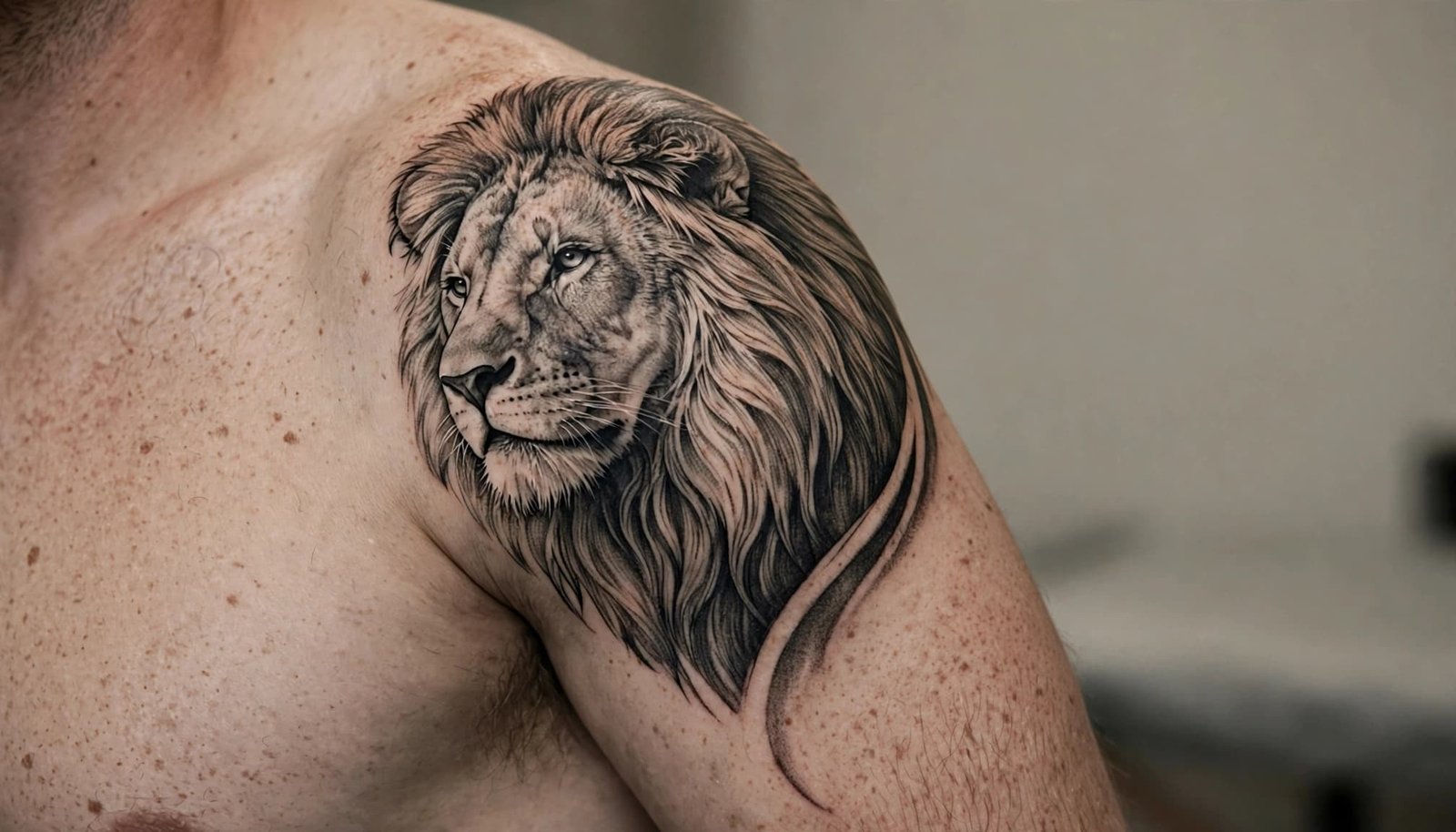
The upper arm and shoulder suit classic lion heads, crowned lions, and designs with large mane shapes. These areas provide more padding than many bony locations, which can make longer sessions easier to manage.
A shoulder placement also lets the mane spread around the rounded deltoid. Instead of placing a flat lion image over the curve, your artist should angle the face and extend the mane along the natural flow of the arm. An outer upper-arm tattoo is easier to cover, while a shoulder cap may show with tank tops and sleeveless clothing.
Chest for Symmetrical or Personal Designs
The chest works well for symmetrical lion faces, matching designs, and tattoos with personal symbols. A centered lion can sit over the sternum, while a larger composition can extend across the pectoral muscles.
Chest tattoos may feel more painful near the sternum and collarbone because those areas have less cushioning. Skin movement from breathing can also affect how a symmetrical design appears. For a balanced result, ask your artist to position the eyes, nose, and mane according to your body’s centerline rather than relying on a perfectly flat reference image.
Back and Shoulder Blade for Large Realistic Pieces
The back and shoulder blade provide some of the best space for a large realistic lion. You can include a full mane, landscape, clock, crown, or lion family without forcing the details together. A shoulder blade composition can also remain easy to cover at work.
However, the back is not one flat surface. The spine, shoulder blades, ribs, and waist all move differently, so the artist should shape the design around those changes. Review these large back tattoo placement ideas when planning a detailed piece.
Thigh and Calf for Moving Lion Designs
The thigh gives a full-body lion enough vertical and horizontal space for accurate proportions. It suits walking lions, lionesses with cubs, and dramatic scenes that need room for the legs, tail, and surrounding elements. The area is also easier to conceal and often more forgiving during a long session.
The calf works better for vertical designs, such as a standing lion, narrow portrait, or descending mane. Its shape naturally guides the tattoo from the knee toward the ankle, but the design should avoid crowding the joint.
Wrist, Ankle, and Hand Placements
The wrist and ankle suit small lion outlines, silhouettes, and simplified profiles. Since these areas bend, rub against clothing, and sit close to bone, bold lines and open space usually age better than tiny facial details. You can compare how tattoo placement affects pain before choosing one of these spots.
Hand tattoos are highly visible and make a strong statement, but they are harder to hide and may fade or blur sooner because of sunlight, washing, and frequent friction. Keep hand designs bold, simple, and proportioned to the fingers or back of the hand.
How to Choose the Right Lion Tattoo Style, Size, and Artist
Choosing a lion tattoo starts with the message you want it to carry. Decide whether your design should express courage, family protection, leadership, survival, independence, or quiet confidence. That decision guides every later choice, including the lion’s expression, body position, style, and placement.
Match the Design to Your Message
A roaring lion creates an active, forceful mood, while a calm profile suggests patience and self-control. Choose a lioness or lion-and-cub composition when family, motherhood, protection, or loyalty matters most. If you want a personal reminder rather than a dramatic statement, a small outline or minimalist profile may communicate more effectively.
Next, choose the visual style. Realism captures lifelike eyes, whiskers, fur, and mane texture, but those details need enough space to remain clear. Small tattoos work better as outlines, silhouettes, profiles, or simplified geometric designs. Trying to fit a realistic lion into a few inches can crowd the face and cause fine details to blur as the tattoo ages.
Black-and-gray shading gives a lion a classic, serious appearance and creates strong depth through contrast. Color can add warmth or make the eyes and mane stand out, but too many bright elements may compete with the face. Fine-line work suits delicate, understated designs, while bold linework offers stronger definition in areas exposed to friction or frequent movement.
Pay close attention to contrast. The eyes should remain distinct from the surrounding face, and the mane should have enough separation between dark sections. Without clear contrast, a lion can lose its expression and become a dense patch of ink.
Choose a Size and Placement That Work Together
Size should follow the design, not just your preferred body area. A broad chest, upper arm, thigh, or back can support realistic portraits and symbolic scenes. Smaller spaces, such as the wrist or ankle, usually need a simpler lion with fewer interior details. For additional placement inspiration, compare these spinal tattoo ideas before committing to a long vertical design.
A small tattoo may be discreet, affordable, and easier to hide. However, limited space reduces detail and can make facial features harder to preserve. A large tattoo gives the artist room for accurate proportions, shading, and recognizable eyes, but it costs more, takes longer, and receives greater visibility.
| Tattoo size | Advantages | Possible drawbacks |
|---|---|---|
| Small | Subtle, easier to cover, and suitable for simple symbols | Limited detail and less room for realistic shading |
| Large | Clearer features, stronger contrast, and more design flexibility | Longer sessions, higher cost, and greater visibility |
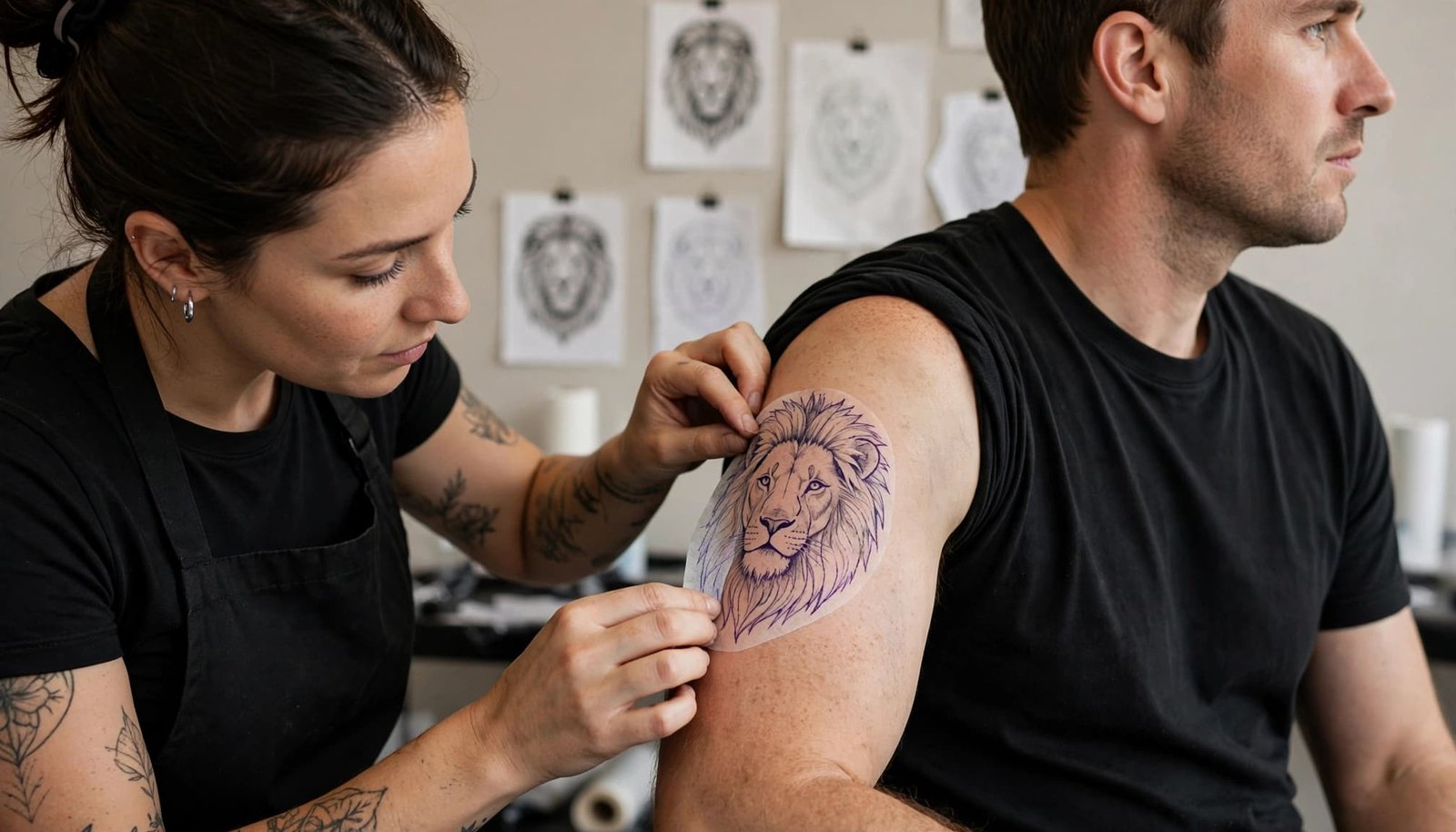
The right choice depends on your lifestyle and the design’s purpose. Ask the artist for a custom stencil in actual dimensions, then check it while standing, sitting, and moving naturally. The lion’s face should follow the body’s shape rather than look stretched across a curve. Confirm its orientation, size, and placement before tattooing begins.
Select an Artist by Style and Healed Results
Choose an artist whose portfolio matches the exact style you want. A skilled fine-line artist may not produce the same results as someone known for realistic black-and-gray animal portraits. Review complete examples, including lion tattoos or similarly detailed faces.
Fresh tattoos often look sharper and darker than they will after healing. Ask to see healed work, ideally several months old, and inspect whether the lines remain smooth, the shading stays even, and small spaces remain open. Also review the artist’s hygiene practices and consultation process. The Mayo Clinic’s tattoo safety guidance covers risks such as infection, allergic reactions, and other skin problems.
Before booking, discuss the reference image, body placement, dimensions, color, expected sessions, and possible touch-ups. A good artist should explain when a design needs more room, fewer details, or a different orientation.
Lion Tattoo Aftercare and Long-Term Care
Proper aftercare helps your new lion tattoo heal cleanly and keeps the details, shading, and expression looking sharper over time. Always follow your tattoo artist’s instructions first because bandage types, removal times, and recommended products can differ.
Caring for a New Lion Tattoo
Once your artist says it’s time to remove the bandage, wash your hands before touching the tattoo. Gently clean the area with warm water and a mild, fragrance-free soap. Avoid scrubbing, washcloths, and direct streams of water, especially if the tattoo feels tender.
After washing, pat the skin dry with a clean paper towel or a fresh, soft towel. Don’t rub, since friction can irritate the skin and catch on peeling areas. When the tattoo feels dry, apply a thin layer of fragrance-free moisturizer or the product recommended by your artist. Too much product can leave the area greasy and may interfere with normal healing.
Keep the routine simple while the skin recovers:
- Wash gently as directed by your artist, usually once or twice daily.
- Apply only a light layer of suitable moisturizer.
- Leave the tattoo uncovered when possible so the skin can stay clean and dry.
- Wear loose, breathable clothing that won’t press against the design.
Mild redness, tenderness, dryness, and peeling can occur during normal healing. However, don’t pick at scabs or pull away peeling skin. Let those areas shed naturally, or you could remove ink and create uneven patches.
For large chest designs, read these sternum tattoo aftercare tips before choosing clothing or planning daily activities. Tight tops, bra bands, backpack straps, and repeated rubbing can irritate a healing tattoo.
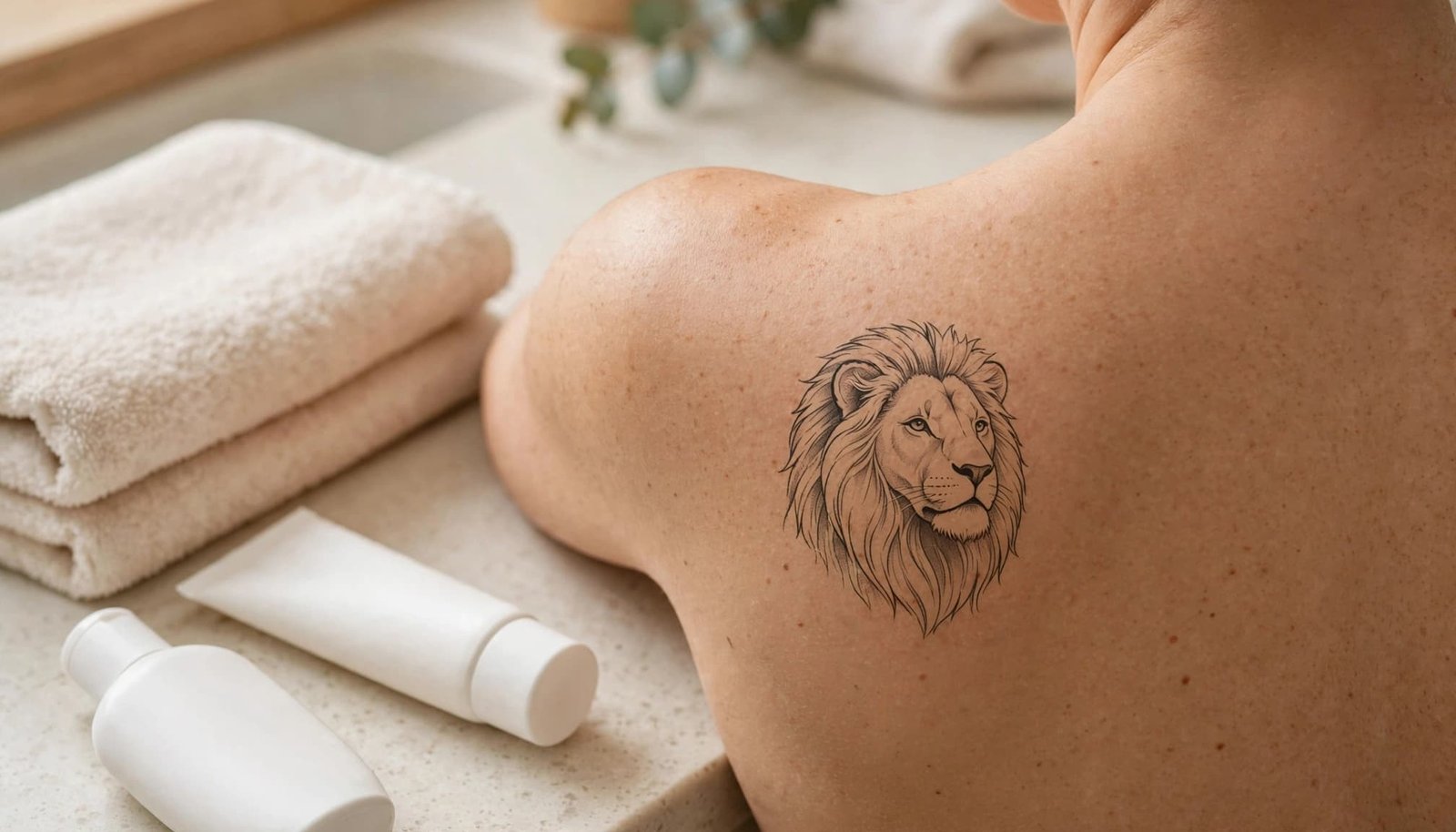
What to Avoid While It Heals
Keep the tattoo out of pools, hot tubs, oceans, lakes, and other bodies of water until the surface has healed. Long baths can also soften the skin and expose the tattoo to contaminants, so take short showers instead. Avoid heavy friction from tight clothing, vigorous rubbing, and activities that cause excessive sweating around the design.
Direct sun can irritate fresh tattooed skin and affect the ink before it settles. Cover the area with loose clothing, but don’t apply sunscreen to an open or peeling tattoo. Surface healing often takes about two to three weeks, although deeper healing can continue longer. Large chest and back pieces may need extra time because they contain more ink and cover skin that moves frequently.
Protecting the Tattoo Long Term
After the tattoo has healed completely, apply a broad-spectrum SPF 30 or higher whenever the lion design will be exposed to sunlight. Reapply regularly, especially after sweating or swimming. Consistent sun protection helps slow fading and preserves contrast in black-and-gray shading, fine lines, and colored details.
Contact a medical professional if you notice spreading redness, worsening pain, pus, fever, severe swelling, increasing warmth, or red streaks. These symptoms can indicate a problem that needs medical attention rather than routine aftercare.
Conclusion
A lion tattoo can carry many meanings, including courage, family, protection, leadership, healing, or a private personal victory. The strongest design begins with the message you want to keep close, then shapes that message through the lion’s expression, pose, and surrounding details.
Use the 30 ideas above to compare styles that fit your story. Realistic portraits need larger areas for clear eyes and mane texture, while minimalist lions suit smaller placements such as the wrist or ankle. Symbolic designs with flowers, clocks, compasses, or family elements can tell a more personal story. You can also explore these meaningful tattoo designs and meanings for additional inspiration.
Before booking, review an artist’s healed portfolio, not only fresh tattoo photos. Discuss the right size, placement, style, hygiene practices, and aftercare instructions during your consultation. Then choose a design you can care for properly and still value years from now.
Save the pin for later


- 60 Color Tattoos That Healed Beautifully - 25/09/2026
- 40 Most Painful Tattoo Spots - 24/09/2026
- 20 Tattoo Aftercare Mistakes That Ruin Fresh Ink - 23/09/2026

