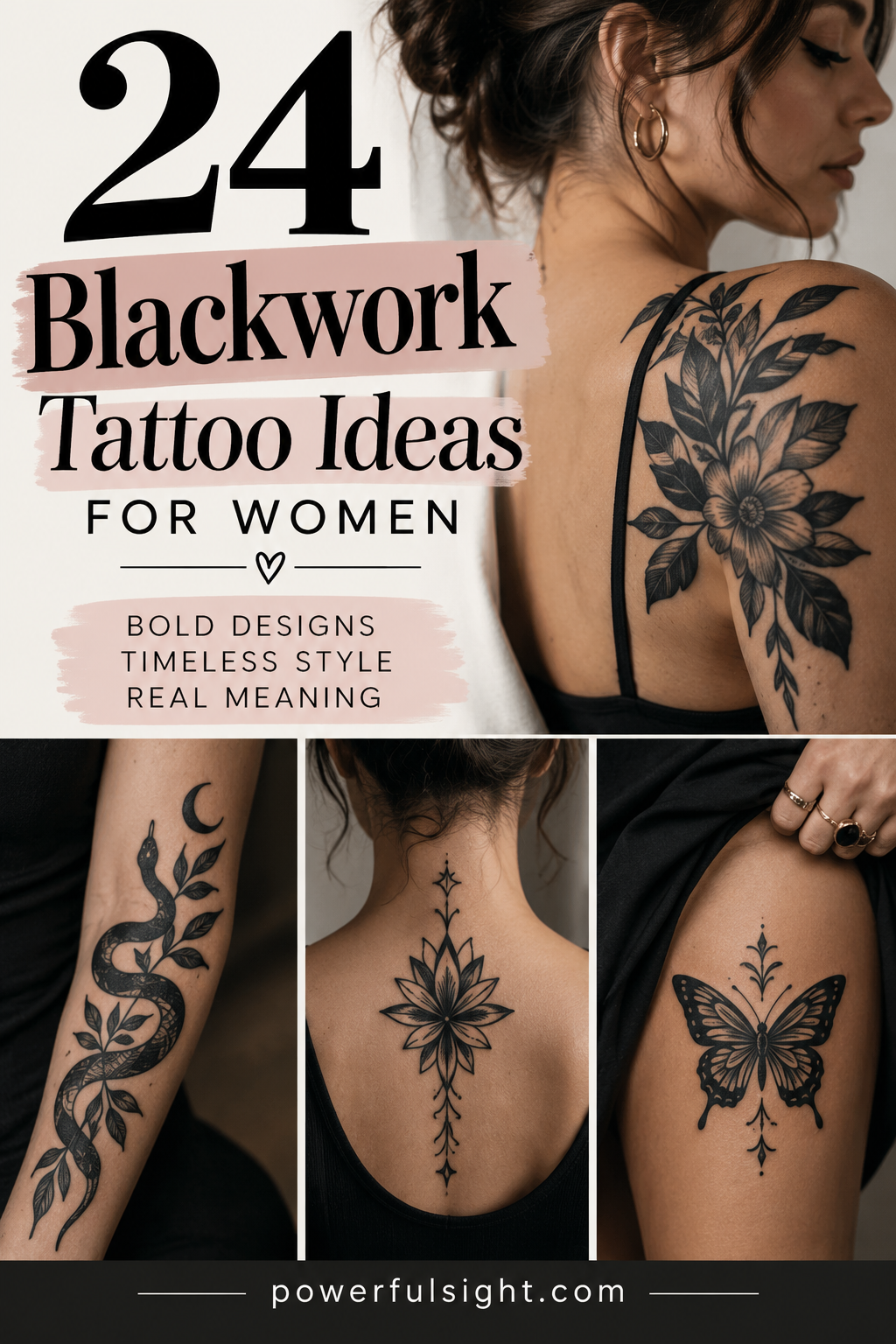
Blackwork tattoos appeal to women who want body art with a bold look and lasting visual impact. Built with solid black ink, strong contrast, and intentional negative space, this style can be delicate and precise or dramatic and heavily saturated.
The 24 ideas ahead range from floral vines and celestial symbols to animal silhouettes, geometric patterns, gothic motifs, and minimalist designs. You’ll also find inspiration for choosing among popular tattoo placements for women, whether you prefer a small ankle piece, a sternum design, or a large back tattoo.
Keep in mind that dense blackwork can require more needle passes, so pain may feel more intense than with fine-line work. Healing often takes several weeks, and placement, clothing friction, sun exposure, and aftercare all affect the result. Choose an experienced blackwork artist who understands saturation, spacing, and how the design will age. Start with these ideas to find a piece that fits your style, body, and story.
24 Blackwork Tattoo Ideas for Women That Feel Bold and Personal
Blackwork can look soft, elegant, mysterious, or powerful. The mood depends on the subject, scale, line weight, and amount of solid fill. Use the ideas below as a starting point, then adjust the details to fit your story and preferred placement.
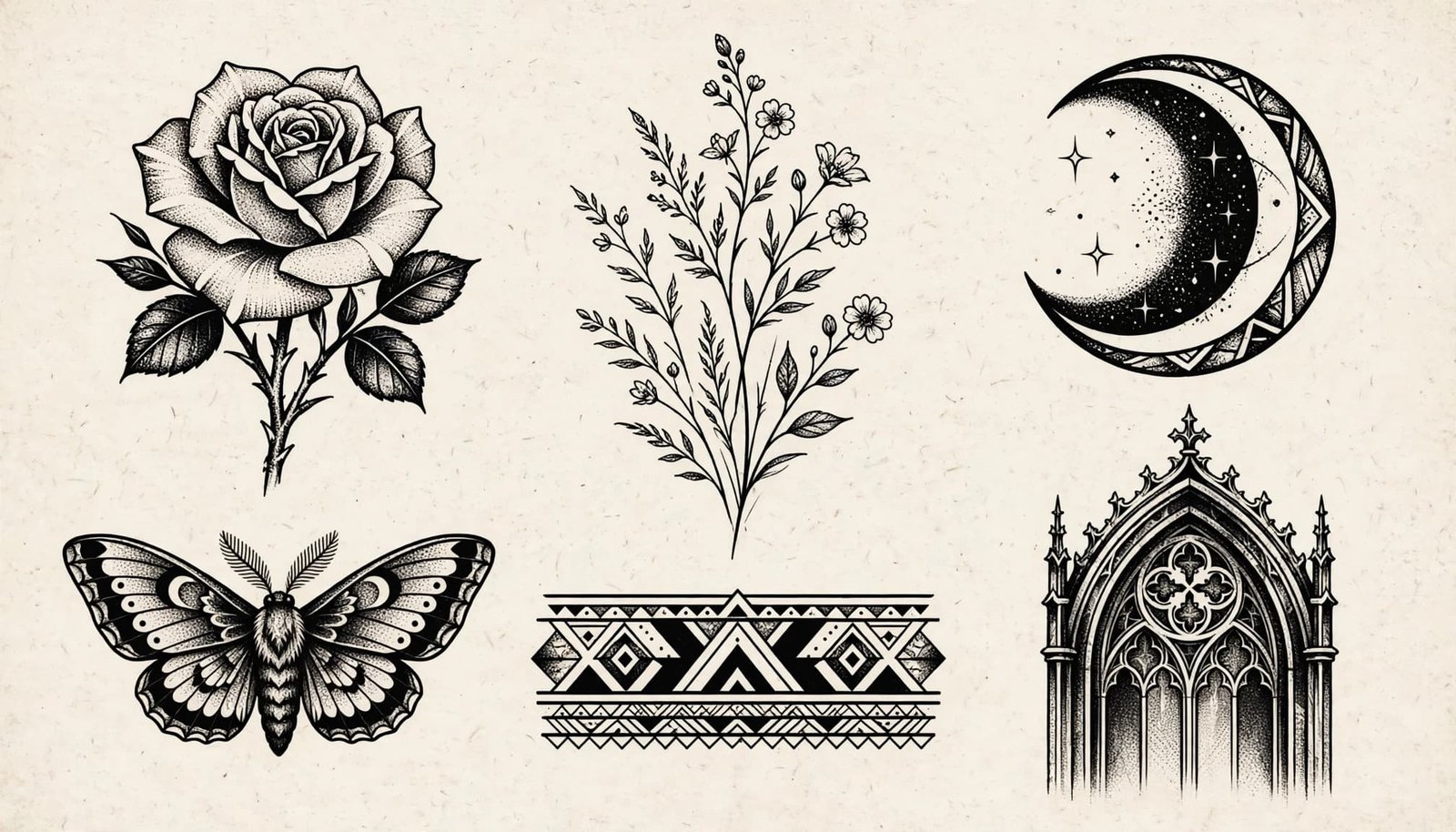
Floral and botanical blackwork designs
Floral tattoos can feel delicate or dramatic without changing the subject. A black rose creates a romantic, moody look on the forearm or shoulder, while wildflower stems feel lighter on the ankle or ribs. A fine botanical branch uses thin lines and open skin for an airy, elegant result.
For stronger contrast, choose a lotus with heavy shading on the thigh or sternum. A floral sleeve panel can combine large blooms, leaves, stippling, and solid fill across the upper arm. Meanwhile, a thorny vine wrapping around the arm or leg creates movement and a slightly gothic mood.
Larger flowers give the artist more room to keep petals and shadows clean. Tiny details may soften over time, especially when lines sit close together. For sternum placement inspiration, browse these sternum tattoo ideas for women.
Celestial and mystical tattoo ideas
A crescent moon with stars can look intimate on the wrist or hip, especially with fine dotwork and generous negative space. A sun and moon pairing feels balanced and ornamental on the sternum or upper back. For a darker mood, an eclipse design can use a solid black circle surrounded by a thin halo of open skin.
A constellation with bold connecting lines creates a graphic look on the collarbone or upper arm. A shaded crystal feels mysterious on the forearm, while an eye surrounded by celestial rays makes a striking centerpiece on the upper back. Ornamental frames, blackout accents, and dotted halos can change the same symbol from delicate to dramatic.
Let the symbolism come from your own experiences. A moon might reflect a private milestone, a crystal could recall a place or person, and an eye may simply appeal to your visual style.
Animal and nature-inspired blackwork tattoos
A moth with decorative wings looks detailed and slightly mysterious on the thigh or shoulder blade. A snake winding through flowers adds movement along the forearm or ribs, while a raven silhouette creates a clean, bold shape on the calf or back.
For a darker geometric effect, choose a butterfly with angular black wings. A wolf or fox portrait feels personal on the upper arm or shoulder blade, but facial details need enough space to stay readable. A graceful botanical bird combines feathers, leaves, and open skin on the ribs or back.
Silhouettes keep the design crisp and graphic. Realism and dotwork require more detail, so choose an artist whose portfolio shows consistent anatomy, shading, and facial features.
Geometric, gothic, and minimalist blackwork
A geometric band creates a structured look around the outer forearm, upper arm, or calf. A blackwork mandala feels symmetrical and ornamental on the sternum or spine, while a gothic arch or window adds a mysterious architectural mood to the upper arm or back.
For a smaller design, consider a dagger with ornamental details on the ankle or outer forearm. A heart made from negative space feels minimal and personal, especially when surrounded by solid black. An abstract blackout shape with fine lines can look modern on the calf or spine.
Symmetry creates order, solid fills add weight, and sharp edges make a design feel graphic. Open skin keeps dense work readable. Because geometric tattoos depend on careful measuring and steady linework, review the artist’s portfolio before booking.
How to Choose the Right Blackwork Tattoo Style and Size
The best blackwork tattoo balances your personality, daily life, wardrobe, and long-term taste. Before choosing one of the designs above, consider how visible you want it to be and whether your career allows bold body art. A dramatic neck or hand tattoo may suit your style, while an upper arm, thigh, hip, or back piece offers easier coverage. These hip tattoo size and placement ideas can also help you compare scale with concealment.
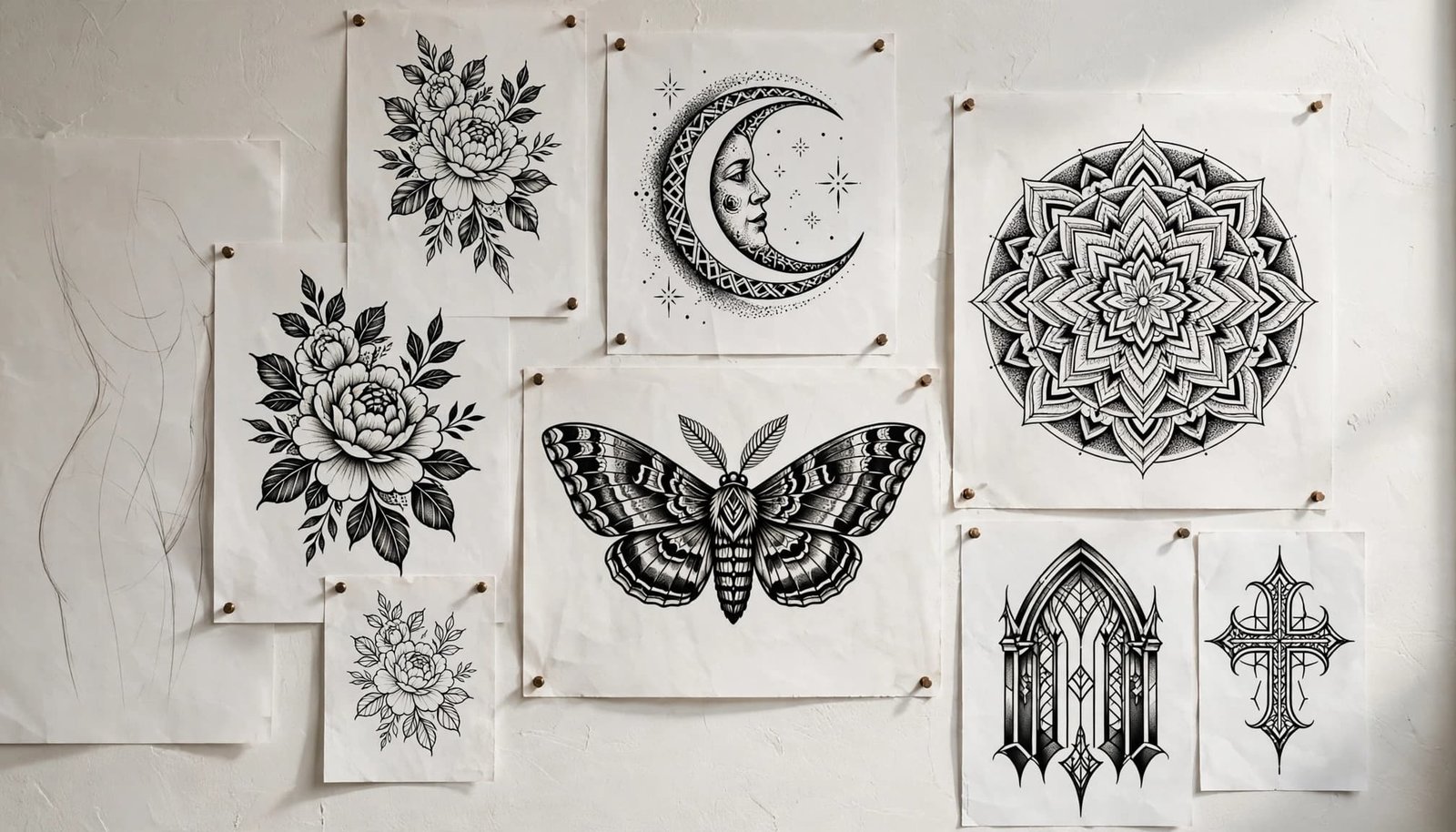
Match the design to your preferred mood
Your subject often sets the emotional tone before the artist adds any shading. Floral and celestial motifs can feel graceful, romantic, or quietly mysterious. Animal designs, such as wolves, snakes, ravens, or moths, may suggest a fiercer or more protective mood. Geometric patterns and gothic arches usually feel modern, structured, and dramatic.
Consider how the tattoo will fit your usual clothes and accessories. Fine-line blackwork and dotwork can blend with a minimalist wardrobe, while solid blackwork and blackout sections create stronger contrast with lighter clothing. Ornamental designs add decoration around a symbol, so a simple moon, heart, or eye can look more complete without becoming overly complex.
Negative space also affects the final impression. Open skin can make a dense tattoo feel lighter and help each shape remain readable. Conversely, close shading and solid fill create visual weight. Choose a subject you will still recognize yourself in years from now, rather than selecting an image only because it is trending.
Bring reference images to your consultation, but use them to communicate mood, texture, and composition instead of copying another person’s tattoo. Ask your artist for a custom sketch that follows the body’s natural curves. A moth may look balanced on a shoulder blade, but its wings may need a different angle on a thigh or ribcage.
Choose a size that protects detail and contrast
Size determines how much room your artist has to preserve contrast and spacing. Moth wings, animal faces, mandalas, lettering, and dense botanical work often need a larger format. At a small scale, wing patterns can merge, facial features can lose expression, and narrow gaps can fill with ink over time.
Small tattoos work best with simple silhouettes, clean contours, and limited fine lines. Heavy black fill packed into a tiny design can overwhelm delicate details, especially as skin naturally changes and ink spreads slightly during healing. For lettering, ask whether every character will remain readable without forcing the text into an uncomfortable size.
Large blackwork pieces may require multiple sessions, longer healing, and a higher budget. They can also involve more soreness and aftercare because the artist covers more skin. Follow professional aftercare guidance, including gentle washing, thin moisturizer, and avoiding soaking or friction while the tattoo heals. Healthline’s tattoo aftercare guidance covers these basic precautions.
Before booking, review healed tattoos in the same style, not only fresh work photographed under bright studio lights. Healed examples reveal whether the artist maintains smooth edges, clear spacing, solid saturation, and readable detail after the skin settles.
The Best Placements for a Feminine Blackwork Tattoo
Placement affects more than visibility. Skin movement, body shape, sun exposure, clothing friction, and available space all influence how a feminine blackwork tattoo looks and ages. Choose the location alongside the design, especially if you want a piece that can grow into a larger composition later.
Placements that are easy to show or cover
The outer forearm is easy to show with short sleeves and simple to cover with a sweater or jacket. Its relatively open surface suits geometric bands, botanical stems, celestial symbols, and medium-sized animal designs. Because the forearm receives regular sun exposure, use strong sun protection after healing to help preserve solid black areas.
The upper arm offers more workplace flexibility, particularly when the tattoo sits on the inner or back portion. It also gives you room for future additions, such as flowers, ornamental framing, or a connected sleeve. A shoulder placement can extend naturally toward the upper arm, collarbone, or back without making the composition feel boxed in.
Curved areas often produce the most graceful flow. Shoulder tattoos can follow the roundness of the deltoid, while thigh designs can sweep vertically or diagonally along the leg. These shapes work well for floral, animal, and ornamental blackwork, including vines, moths, snakes, bouquets, and decorative celestial motifs. Browse these feminine thigh tattoo ideas for examples of how scale and body shape can work together.
The thigh is also easier to cover and provides enough space for large, dense designs. The upper back offers a broad canvas for symmetrical pieces, shoulder-blade compositions, and future expansion. A full-back design needs careful planning because the shoulder blades, spine, waist, and ribs move differently. Review these full-back tattoo ideas for women before choosing a centered or sweeping layout.
The calf provides a practical middle ground. It can hold a vertical botanical design, animal silhouette, or ornamental panel while remaining easy to conceal with pants.
Sensitive areas and high-friction locations
Pain varies from person to person, but thin skin, prominent bone, frequent movement, and friction can make some placements harder to tattoo or heal. Ribs and the sternum often feel more intense, while the spine and shin place the needle close to bone. Ankles and feet also experience constant movement and contact with shoes.
Hands are highly visible but may fade faster because of washing, sun exposure, gripping, and daily friction. Feet and ankles face similar wear from socks and footwear. As a result, these areas may need stronger sun protection and future touch-ups.
The hip can offer privacy and a flattering curve, although waistbands may irritate a fresh tattoo. Large solid-black pieces usually take longer than simple linework and may cause more swelling, scabbing, and discomfort during healing. Wear loose clothing, avoid rubbing and soaking, and follow your artist’s aftercare instructions while the skin recovers.
What to Expect from Pain, Healing, and Black Ink Fading
Pain depends more on placement, session length, needle passes, and personal tolerance than on gender. Solid blackwork can feel more intense than simple linework because the artist makes repeated passes to build dense, even saturation. Ribs, sternum, ankles, feet, and areas close to bone often feel more demanding, while larger designs may become uncomfortable simply because the session lasts longer. Reviewing what tattoo pain and healing sensations feel like can help you choose a placement with realistic expectations.
How to care for a fresh blackwork tattoo
Follow your artist’s instructions first, especially when they use a particular bandage or healing method. In general, keep the bandage on for the instructed time, then wash the tattoo gently with lukewarm water and mild, fragrance-free soap. Pat the area dry with a clean paper towel or soft towel, and apply only a thin layer of the recommended moisturizer when your artist says it’s appropriate.
During the early healing stage, mild redness, tenderness, warmth, clear or slightly pink plasma, peeling, tightness, itching, and light scabbing can occur. Large solid-black fills may feel especially tight or sensitive. The outer layer often settles within a few weeks, but the tattoo can take longer to stabilize beneath the surface.
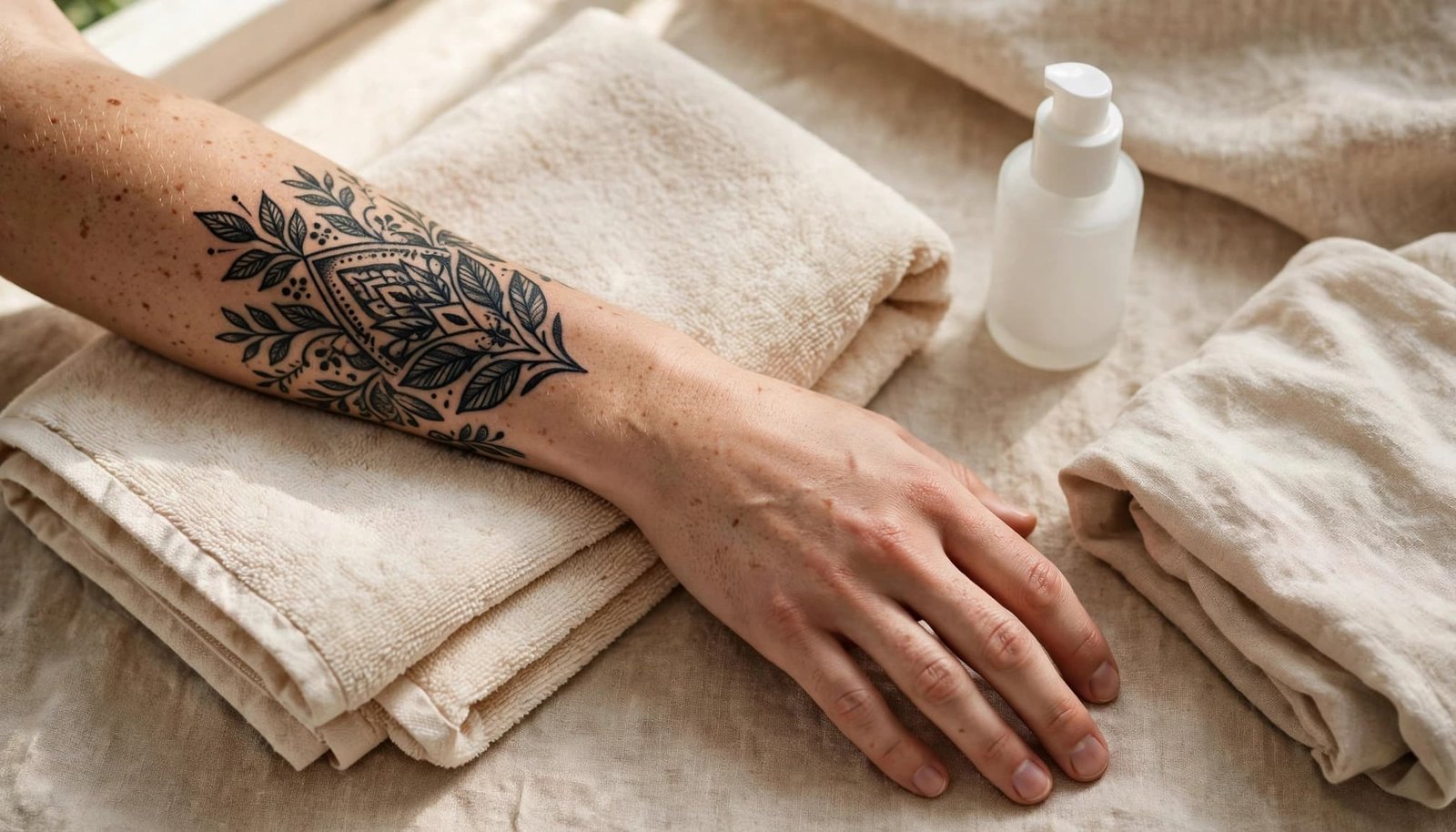
While the tattoo heals, avoid:
- Soaking in baths, pools, hot tubs, lakes, or the ocean.
- Saunas, heavy sweating, and activities that keep the area damp.
- Tight clothing, rubbing, and repeated friction.
- Picking at flakes or scabs, even when the skin feels itchy.
- Unnecessary touching with unwashed hands.
Fresh tattoos also shouldn’t receive sunscreen until the skin has fully healed. Use loose clothing and shade for protection at first. The American Academy of Dermatology’s tattoo skin guidance explains which reactions are common and which require medical attention. Contact a healthcare professional if redness spreads, pain worsens, the area becomes increasingly hot or swollen, or you notice pus, foul-smelling drainage, fever, or red streaks.
How to keep blackwork looking sharp for years
Ultraviolet exposure is one of the biggest causes of fading, even when a tattoo contains heavily saturated black ink. Once the skin has healed completely, apply broad-spectrum SPF 30 or higher to exposed blackwork and reapply it during extended time outdoors. Clothing, shade, and regular moisturizing also help the skin and ink maintain a cleaner appearance.
Bold black shapes often age better than extremely fine details because they remain easier to read as the ink naturally softens. Dotwork, hatching, narrow lines, and tiny gaps may blur or fade sooner, particularly on hands, feet, ankles, and other high-friction areas. A touch-up can refresh faded sections, but large blackout areas may be difficult to remove if your preferences change later. Consider the design’s future as carefully as its first impression before choosing heavy coverage.
How to Find a Skilled Blackwork Tattoo Artist
The right blackwork artist needs more than a strong drawing style. They must understand solid saturation, clean edges, negative space, skin movement, and how heavy ink settles over time. Review the artist’s work carefully, then use a consultation to confirm that their experience matches your design.
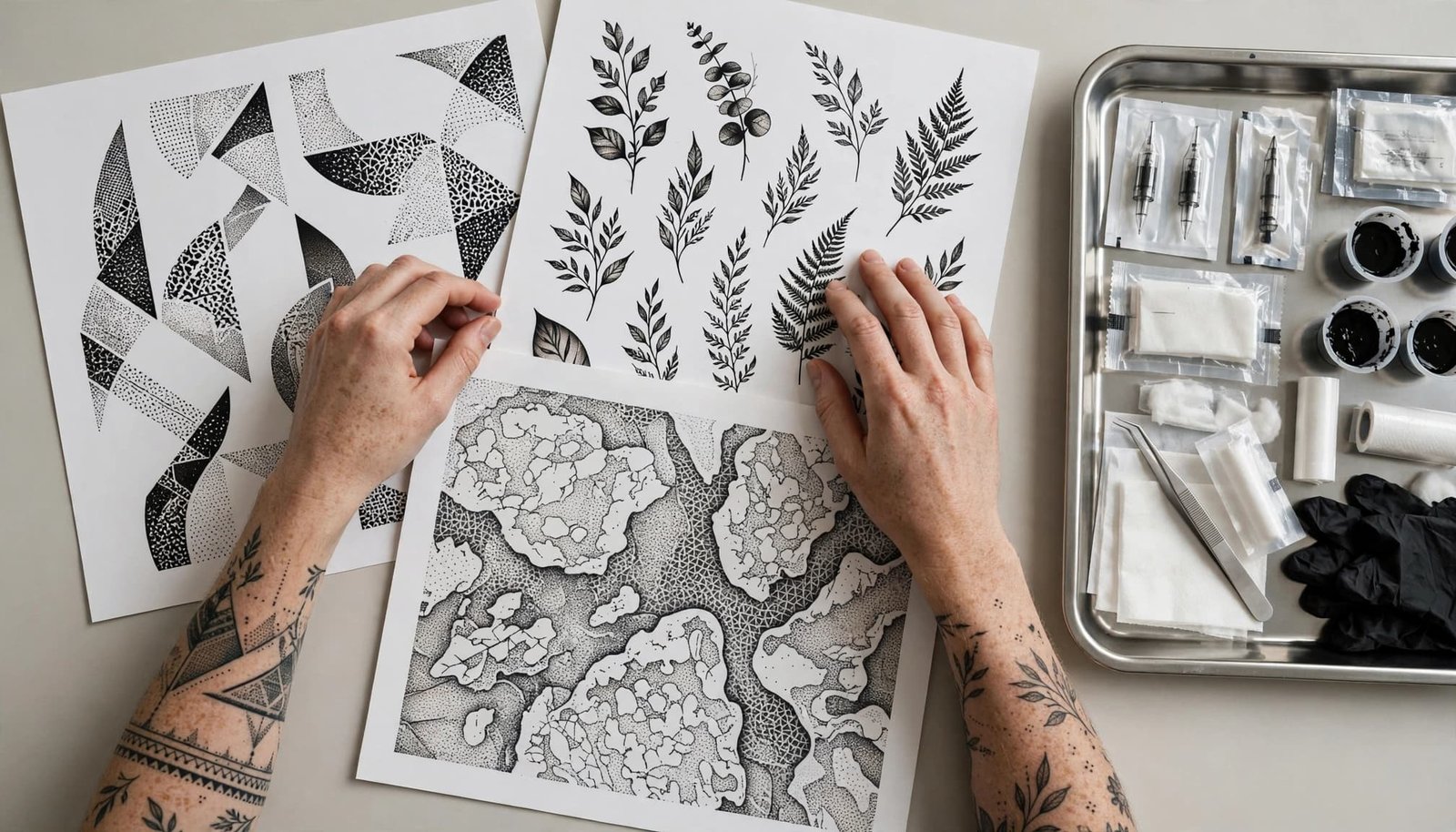
Questions to ask before booking
Start with a portfolio that includes healed blackwork, not only fresh tattoos. Look for close-up photos showing smooth solid fills, clean edges, consistent saturation, and clear negative space. The artist should also have completed designs similar to your planned tattoo in subject, size, and placement. For example, an artist who mainly creates delicate botanical linework may not be the right choice for a large blackout panel or heavily shaded geometric piece. You can review lower back tattoo design inspiration while comparing how different artists adapt designs to the body.
A consultation can happen in person or online, but it should cover more than the basic concept. Discuss the design flow, exact placement, approximate size, expected price, healing requirements, and whether the tattoo will need multiple sessions. Ask these questions before you pay a deposit:
- How many sessions might this design require, and how long will each session last?
- How do you build large solid fills, and how do you prevent patchy saturation or uneven edges?
- Can you show healed examples of similar blackwork, ideally several weeks or months after tattooing?
- How do touch-ups work, and are they included in the original price?
- Which soap, moisturizer, bandage, and sunscreen products do you recommend for aftercare?
Share relevant health information before the appointment. Tell the artist about skin sensitivities, allergies, medical conditions, medications, and any history of unusual scarring, including keloids or difficult wound healing. This information may affect whether the tattoo is appropriate, how your skin responds, or whether you should speak with a healthcare professional first.
Safety deserves the same attention as artistic skill. Choose a clean, licensed studio with clear hygiene practices. Fresh gloves, sterile single-use needles opened in front of you, covered equipment, handwashing, and a nearby sharps container should be standard. Licensing rules vary by location, so check your local requirements and studio records, such as the tattoo licensing regulations that outline sanitation expectations in Illinois.
Finally, don’t choose an artist solely because they offer the lowest price. A rushed session or weak saturation can cost more after corrections, cover-ups, or repeated touch-ups. Choose the artist whose healed work, safety standards, communication, and blackwork experience give you confidence.
Conclusion
The best blackwork tattoo balances personal meaning, strong design, suitable placement, and realistic care needs. Whether you prefer a soft botanical or celestial piece, an animal silhouette, gothic motif, geometric pattern, or bold blackout design, the right choice should fit your style and remain readable over time. For more inspiration, explore these meaningful tattoo ideas for women.
Save a few references, refine the concept with a skilled artist, and review healed work before committing. Thoughtful sizing, sun protection, and proper aftercare help your blackwork tattoo stay striking for years.
Save the pin for later

- 60 Color Tattoos That Healed Beautifully - 25/09/2026
- 40 Most Painful Tattoo Spots - 24/09/2026
- 20 Tattoo Aftercare Mistakes That Ruin Fresh Ink - 23/09/2026

